The New Scarlet Letter(s): AI Shame and Purity Tests
Understanding AI has Sreedhar and I stuck in 19th-century literature.
The New Scarlet Letter(s): AI Shame and Purity Tests
Understanding AI has Sreedhar and I stuck in 19th-century literature.
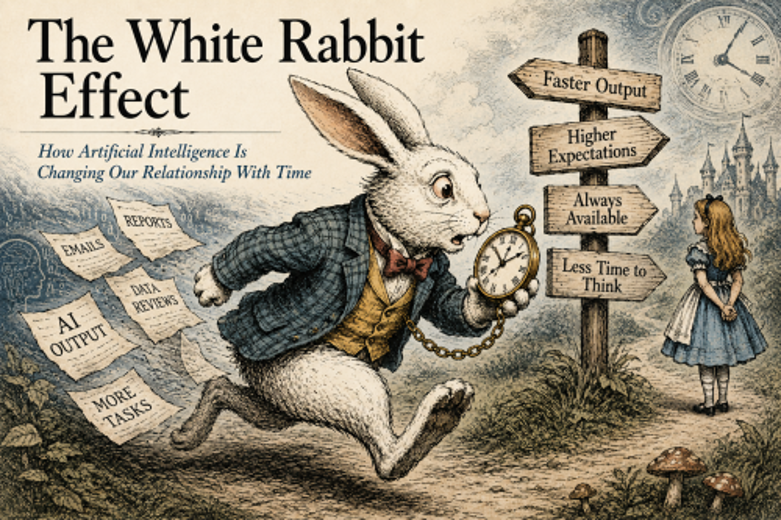
After our post on AI and time compression inspired by the White Rabbit in Alice’s Adventures in Wonderland, we move 15 years back and across the Atlantic to the 1850 novel The Scarlet Letter by Nathaniel Hawthorne.
Set in 17th-century Puritan Massachusetts, the novel explores guilt, shame, hypocrisy, and redemption. And it can help us think about why there seems to be increasing shaming of the use of AI — “clearly this is AI!” — when the accusers probably use plenty of AI themselves.
The technology itself is not the story. The story is how people use it to police identity, merit, belonging, and virtue.
There is an immediate psychological payoff to dismissing. Declaring a boss “toxic,” a colleague “burned out,” or a piece of writing “AI-generated” provides a sense of certainty and closure. It relieves us of the effort of asking follow-up questions or considering alternative explanations. In that sense, dismissal can provide cognitive comfort and a sense of superiority. Unfortunately, what feels satisfying in the moment may also reinforce inaccurate predictions and foreclose opportunities for learning.
In the novel, Hester Prynne has given birth to a daughter, Pearl, while her husband has been missing for years. Because she refuses to reveal the identity of the child’s father, she is publicly shamed and sentenced to wear a scarlet letter “A” (for “Adulteress”) on her clothing for the rest of her life.
The father is Reverend Arthur Dimmesdale. Outwardly admired, he is inwardly tormented by guilt, and his health steadily deteriorates. Hester rebuilds her reputation through hard work, charity, and dignity. Many people come to see the “A” as standing for “Able” rather than “Adulteress.”
The novel asks enduring questions: Is public shame more destructive than private guilt? And can people be redeemed after moral failure?
Using AI and judging others for doing so is not morally equivalent to Hester’s punishment. But the social dynamics of labeling, suspicion, virtue signaling, and public judgment are similar.
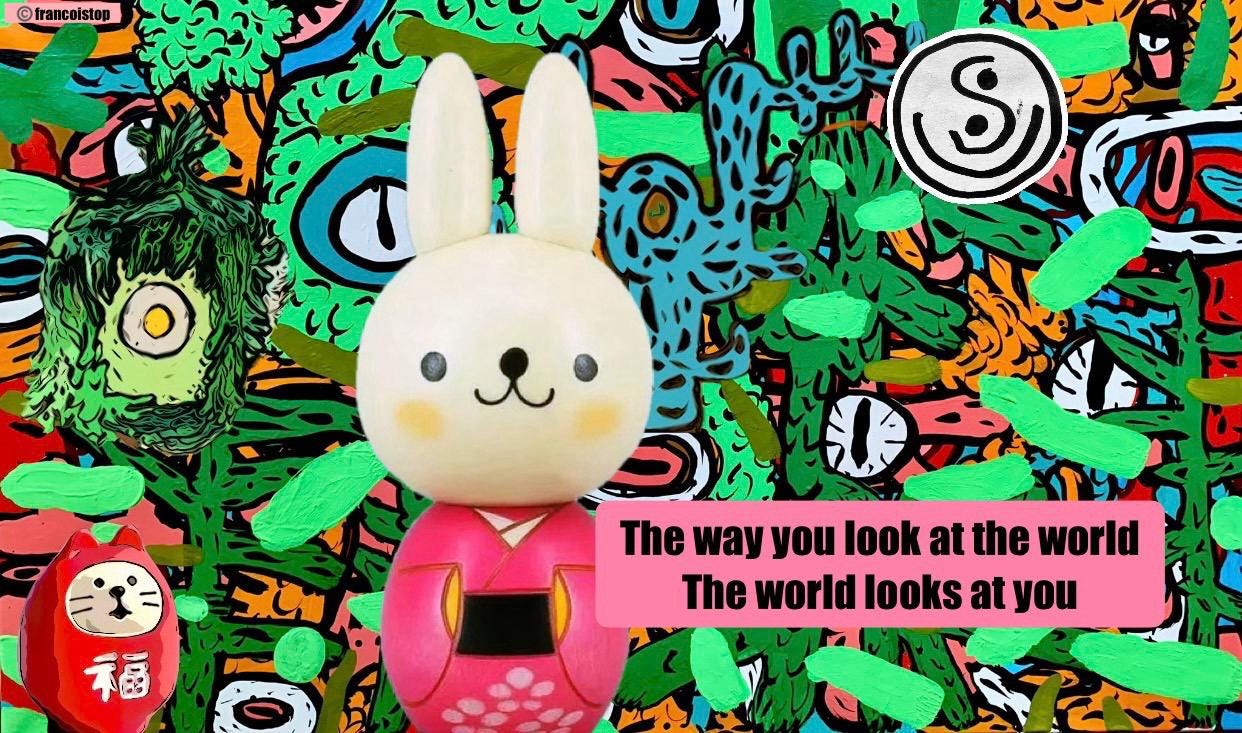
The labels we place on others often reveal ourselves (illustration by Francois Top)
Status Shifts
Today’s debates over AI may say less about technology than about who gets to belong, who earns respect, and whose contributions are considered legitimate. For instance, someone with average writing skills and excellent AI judgment may outperform someone with exceptional writing skills who refuses to use it. That forces us to reconsider what we actually value: the labor, the product, or the judgment behind it. Every generation develops informal rules about what counts as “real work.”
In that respect, AI threatens status, not just efficiency. Throughout history, new technologies have been dismissed by those whose expertise is threatened. When the basis of status changes, societies often respond by policing the old rules before establishing new ones. Sometimes the language sounds moral (“It is cheating”) when, underneath, it is economic or psychological (“My advantage is disappearing”).
Status is more than prestige. It shapes income, opportunity, identity, and our sense of belonging. That is why threats to status often provoke moral arguments rather than economic ones.
You Googled It???
When Google came along, no one asked why we did not spend three days looking up information in library stacks. Google was disruptive; it did not challenge authorship and our identity in the same way AI does. While Google reduced the cost and time of finding information, AI reduces the cost of thinking through information. That is why Gen AI enters domains we associate with intelligence, creativity, and expertise.
Spending hours, days, years searching a library never felt like much of an accomplishment, in part because it was largely invisible. Librarians were not the primary status group in society. The people many of them supported, however, like professors, consultants, writers, lawyers, and managers, derived prestige from producing ideas that were visible: a book, an essay, a strategy, or a speech, for example. Many of these professionals competed on the basis that their talent was scarce. With the abundance of GenAI, people like me who built their status on writing and production may understandably feel uneasy.
No Pain, All Blame
The Scarlet Letter reminds us that social pressure can shape behavior in unexpected ways. AI introduces another dynamic. Across professions and many organizations, many did not simply choose to adopt AI; they have felt pressured or even bullied into using it. This upsets the agency employees might feel about their creative freedom and the ability to determine how they do their work and to develop a sense of ownership over it.
Psychologists might label the ensuing reaction as reactance: the tendency to resist when our freedom to choose is threatened. The resulting resentment is not necessarily directed at AI itself, but at the feeling that someone else has already decided what good work should look like.
Shame and reactance may appear to pull in opposite directions, yet both emerge when people feel that someone else is redefining what counts as legitimate work.
Whether we are shamed for using AI or pressured to embrace it, the underlying issue is often the same: a threat to autonomy. And many professional contexts created a Catch-22: damned if you did not use AI and damned if you did — either because you would be replaced or because others might think less of you and your capabilities.
Effort vs output
AI also violates one of our deepest social norms: we expect effort to be observable. When someone gives a brilliant presentation, we like to imagine the late nights that went into it. We still live in a world in which effort legitimizes achievement. But now AI makes effort invisible, and we cannot tell whether it took six hours to wrestle with an idea or write a Medium post or 20 minutes with a clever prompt. That uncertainty makes people suspicious.
Our educational and professional systems have long relied on effort as evidence of deservingness. Many cultures treat hardship as evidence of character. AI challenges the belief that valuable work must be painful. That can feel almost immoral, even if the outcome is better. If effort is no longer visible, how do we know who deserves the grade, the promotion, or the praise?
When norms are unsettled, societies often reach for shame to rein in bad behavior and develop new standards. Use of AI has become a proxy for debates about merit, identity, and morality.
Muscle vs. Mind
Humans are also remarkably tolerant of tools that extend our muscles but much less comfortable with tools that extend our minds. We rarely accuse anyone who uses a bulldozer of cheating, but we have opinions about the undue advantage conferred by the new carbon-running shoe. And we become uneasy when a machine writes poetry or offers strategic advice because intelligence has long been central to how we distinguish ourselves. There is an implicit belief that if “you” did not type every word, it is somehow less you.
However, most politicians never wrote their own speeches; many authors use ghostwriters; professors use research associates; professional service firm partners present the analysts’ work as their own; and many others relied and still rely on assistants, tutors, editors, mentors, and privileged networks. Ironically, people who never felt ashamed about hiring human help may be the ones who most shame those who use AI.
Needing vs. Needed
AI exposes how much of our identity is built around being needed. Perhaps AI threatens us less by replacing our work than by forcing us to redefine what makes us valuable. We can find it difficult to focus entirely on solving a problem without getting hung up on who provided the resolution
For so-called knowledge workers, in particular, competence is a source of self-esteem. Right after Sam Altman's November 30, 2022 tweet opening consumer access to GenAI tools via ChatGPT, I (Carin) asked my team to consider what our superpower would be. And more generally, if an AI can do much of what makes us special as writers, we should consider who we will become and which skills we need to hone.
My Purity vs. Yours
Every purity culture has visible markers of virtue; confession and concealment; accusations of contamination; and gatekeepers who decide what counts as “pure.”
Today, many people feel compelled to disclose — or deny — their use of AI. Just as food became divided into “clean” and “processed,” work may become divided into “AI-free” and “AI-assisted.” Declaring oneself “100% AI-free” can become less about quality and more about signaling virtue. “This was written without AI” or “AI-assisted” can become modern badges of virtue or stigma. Yet few people boast about doing long division by hand. The stigma often fades once a technology becomes infrastructure.
Of course, there are legitimate concerns about AI use that many of us share across society and our professions. Undisclosed AI assistance, fabricated citations, hallucinations presented as fact, plagiarism, and deception all undermine trust. But those are questions of transparency and responsibility rather than shame.
Something different happens, however, when AI itself becomes a moral marker. In education, we hear, “That paper is clearly AI.” At work, “Anyone can do your job now,” or “You are not a real marketer if AI helped.” One of my favorites is, “I can always tell when something is AI,” often followed by the implication that using AI is lazy. A friend recently remarked that “real engineers code from scratch.”
Or the LinkedIn proclamation that “This post was written without AI,” even though the same work may have relied on Google, Grammarly, spell-check, EndNote, or countless other tools. The implication can seem to be that people who use AI should not be proud of their result.
The Dimmesdale Effect
AI critics often frame objections in moral terms: authenticity, honesty, fairness. In the Hawthorne book, Hester’s real offense is not just breaking a rule but challenging the community’s definition of virtue. The Puritans believed they were protecting the moral order. In Hawthorne’s world, purity concerned sexuality. AI similarly challenges our definition of intelligence and deservingness. In our professional world, purity increasingly concerns authorship.
Hawthorne distinguishes between public shame and private shame. Mother Hester bears visible shame but eventually becomes psychologically freer. Hidden Father Dimmesdale hides his shame and is destroyed by it.
And in the case of AI, the person who openly says, “Yes, I used AI to improve my draft,” may ultimately become more comfortable than the person who secretly uses AI while publicly condemning it. There is almost a Dimmesdale phenomenon emerging, where hidden AI use creates cognitive dissonance.
From Adultery to Ability and Access
As we noted in the introduction, the “A” did not always mean adultery. Over time it came to represent ability, resilience, and wisdom. Perhaps AI will follow a similar path. One day the question may no longer be whether someone used AI, but whether they used it responsibly.
The second question will be, if we no longer measure intelligence by how long it takes someone to produce an answer, what should we measure instead? The future may reward not those who write the fastest or from scratch, but those who ask the best questions, exercise the best judgment, detect errors, and take responsibility for the outcome. Those are distinctly human capabilities, even in an AI-assisted era.
Finally, we often assume that AI lowers standards — and perhaps it does and will. But it also lowers barriers and is a remarkable democratizer.
Throughout history, many people had ideas worth sharing but lacked the writing skills, confidence, language proficiency, or educational opportunities to express them effectively. AI allows people to spend less energy on grammar, syntax, or structure and more on the quality of their thinking. In that sense, AI may broaden participation rather than simply redistribute status. And that contribution we should also celebrate.
Perhaps the first question should not be, “Did you use AI?” but rather wonder or enquire why they might have. Was it to overcome writer’s block, meet a deadline, write in a second language, brainstorm ideas, improve clarity, bask in the social media limelight, or avoid thinking altogether? Those are very different uses with very different implications.
Throughout history, we have judged books, speeches, paintings, and business strategies primarily by their quality, not by every tool or invisible human involved in their production. So today, instead of policing, judging, and dismissing summarily, we might spend more time evaluating what ultimately matters: Is the work thoughtful? Is it accurate? Is it creative? Does it solve the problem? And did the person make good use of a formidable tool? When scarcity shifts from producing words to exercising judgment, many of us wonder if we measure up to this new standard.
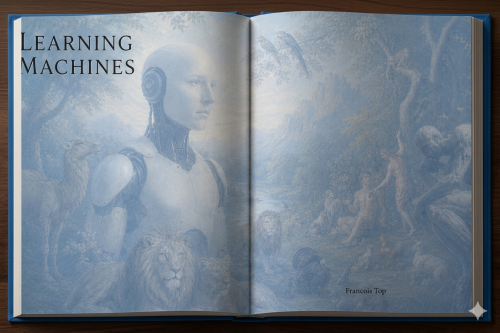
Post by Carin-Isabel Knoop and Sreedhar Potarazu, MD, as part of their Learning Machines column exploring what we can learn from AI to help us love, learn, and lead better. Our columns are here on The American Bazaar.
메타데이터
- post_id
- b802d4acfca5
- slug
- the-new-scarlet-letter-ai-status-and-the-new-purity-tests-b802d4acfca5
- url
- https://medium.com/@carinisabelknoop/the-new-scarlet-letter-ai-status-and-the-new-purity-tests-b802d4acfca5
- canonical_url
- https://medium.com/@carinisabelknoop/the-new-scarlet-letter-ai-status-and-the-new-purity-tests-b802d4acfca5
- author_url
- https://medium.com/@carinisabelknoop
- status
- ok
- fetched_at
- 2026-07-14 10:44:48