5 Vegan Fruit Preserve Recipes From History to Enjoy the Sweetness of Spring
Depending on your region, berries, citrus and early stone fruits can be sweet springtime treasures of the garden and orchard. These…
5 Vegan Fruit Preserve Recipes From History to Enjoy the Sweetness of Spring
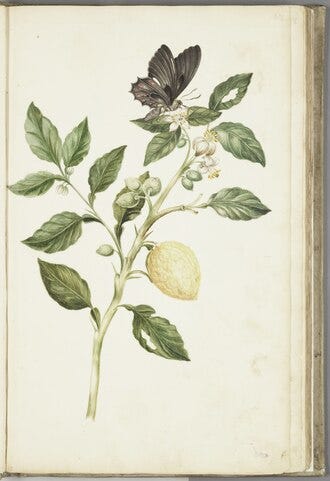
Flowering Lemon Tree (1763) by Cornelis Markée Wikimedia Commons Image License
Depending on your region, berries, citrus and early stone fruits can be sweet springtime treasures of the garden and orchard. These historic methods of preserve-making found in antique cookbooks demonstrate the variety of methods used preserving fruits. Here are five vegan-friendly recipes from the past for preserving these late spring fruits.

Cardinal Variety of Purple Raspberries (Rubus xneglectus) Deborah Griscom Passmore (1840–1911) Wikimedia Commons Image License
#1 Raspberry Jam
Raspberries are native to Asia Minor and North America. Early evidence of the domestication of raspberries can be found in the writings of the 4th century Roman agriculturalist Palladius. Prior to written records, there is also archeological evidence that raspberries have been eaten since the Paleolithic era. This 1916 recipe for raspberry jam is an example of an early 20th century method of turning this ancient berry into a sweet preserve.
- RASPBERRY JAM (UNBOILED), № 3
One and a quarter pounds of best lump sugar to each pound of raspberries. Put on the fruit, bring it to boiling-point, but do not let it boil more than two or three minutes ; add the sugar ; stir till quite dissolved ; again bring to boiling-point. Pour it at once into warm jam-pots and cover while hot. Keeps well. Is of splendid colour and retains the flavour of fresh fruit. (p. 118)

Apricot Cultivars St. Ambroise, Montgamet and Early Golden (1909) by Alois Lunzer Wikimedia Commons Image License
#2 Apricot Marmalade
Although typically thought of as a citrus-based spread, marmalades were made from a variety of fruits before oranges became the standard ingredient. The name marmalade is derived from the preserve’s pre-citrus history, when the earliest versions of this fruit jam were made from quinces, the finished product referred to as marmelos in Portuguese. Orange marmalade recipes were first recorded in the 17th century, but other fruits were also used to make marmalades, like this 1833 recipe for apricot marmalade.
- Apricot Marmalade.
When you preserve apricots, pick out all the bruised ones, and those that are too ripe for preserving ; boil them in the syrup till they will mash, then beat them in a marble mortar to a paste, take half their weight in loaf-sugar, and put as much water to it as will dissolve it, boil and skim it well ; then boil it with the fruit till clear, and the syrup thick like a fine jelly ; put it into glasses or cups and paper them as directed¹. (p. 257)

The Canadian horticulturist (monthly) (1887), Erie Blackberry (1825) Wikimedia Commons Image License
#3 Blackberry Preserves
Preserving whole fruit in syrup is an ancient method of food storage. The first century Roman agronomist Columella wrote treatises on fruit preservation, including methods of conserving fruit in honey or boiled wine syrups known as sapa or defrutum. As sugar became more affordable in the 19th century, sugar-syrup based whole fruit preserves began to appear in cookbooks. This 1889 recipe for blackberry preserves using a sugar syrup is a continuation of this traditional method of preserving fresh fruits.
Blackberry Preserves. — Allow three-fourths of a pound of sugar for every pound of fruit which is to be simmered in clear water till it is thoroughly cooked. Allow a teacupful of water to a quart of berries. Then throw in the sugar, boil up, skim and seal in cans. (p. 180)

Peaches, Chase Fruit and Flowers in Natural Colors (1922) Wikimedia Commons Image License
#4 Peach Leather
Peaches were once associated with Persia, with its older botanical name translating to “Persian plum”, but contemporary genetic research points to origins in China, where there is evidence of cultivation of peaches as early as the Neolithic period. This ancient stone fruit could be preserved by drying in sheets, like this Victorian example of a peach leather recipe.
PEACH LEATHER . Pare the peaches and seed them, and pass the pulp through the colander ; then spread it thin on smooth boards or marble slabs, well greased with pure olive oil. Now dry in the sun. Eight hours hot sun will usually cure it. Then draw the leather from the board or marble, and cut it in shapes to suit ; the best being strips three feet long by four inches wide. Sprinkle these strips with pulverized sugar, and roll them tight. It will keep a long time. When finished it is really desiccated peach rolled in sugar. (p. 140–141)
Flowering Lemon Tree (1763) by Cornelis Markée Wikimedia Commons Image License
#5 Lemon Honey
Honey alternatives made from fruit can be found in cookbooks beginning the 19th century, primarily created for economical reasons, these plant based products are similar to modern substitutes used by vegans today. This 1907 example of a fruit-based honey substitute recipe transforms sunny citrus into a sweet honey-like syrup.
LEMON HONEY
To the juice of two lemons add one pint of sugar and one-half pint of water. Cook until thick. (p. 193)
The sweetness of springtime fruits was valued enough to save with a wide variety of preserving methods. With inspiration from history seasonal flavors, these unique preserves from the past can be savored long after spring.
Note:
- Preserves were papered over with tissue paper that had been lightly oiled with olive oil in this cookbook.
If you love history, plants or the history of plants, consider supporting Plant Based Past by buying me a coffee!
For more vegan, vegetarian, and botanical histories, follow *Plant Based Past* on Medium.
You can sign up for email alerts to receive the next story when it becomes available, just by clicking the envelope icon. Receive a bonus historical recipe not seen in the publication, article recaps with free friend links to read, save or share once a month in your inbox by subscribing to Plant Based Past’s newsletter, Nutshell.
Next Week: From Nut Mills to Universal Choppers: A Look Inside 19th and Early 20th Century Vegetarian Kitchens
메타데이터
- post_id
- b828dc4d2525
- slug
- 5-vegan-fruit-preserve-recipes-from-history-to-enjoy-the-sweetness-of-spring-b828dc4d2525
- url
- https://medium.com/plant-based-past/5-vegan-fruit-preserve-recipes-from-history-to-enjoy-the-sweetness-of-spring-b828dc4d2525
- canonical_url
- https://medium.com/plant-based-past/5-vegan-fruit-preserve-recipes-from-history-to-enjoy-the-sweetness-of-spring-b828dc4d2525
- author_url
- https://medium.com/@plantbasedpast
- status
- ok
- fetched_at
- 2026-06-09 15:37:30