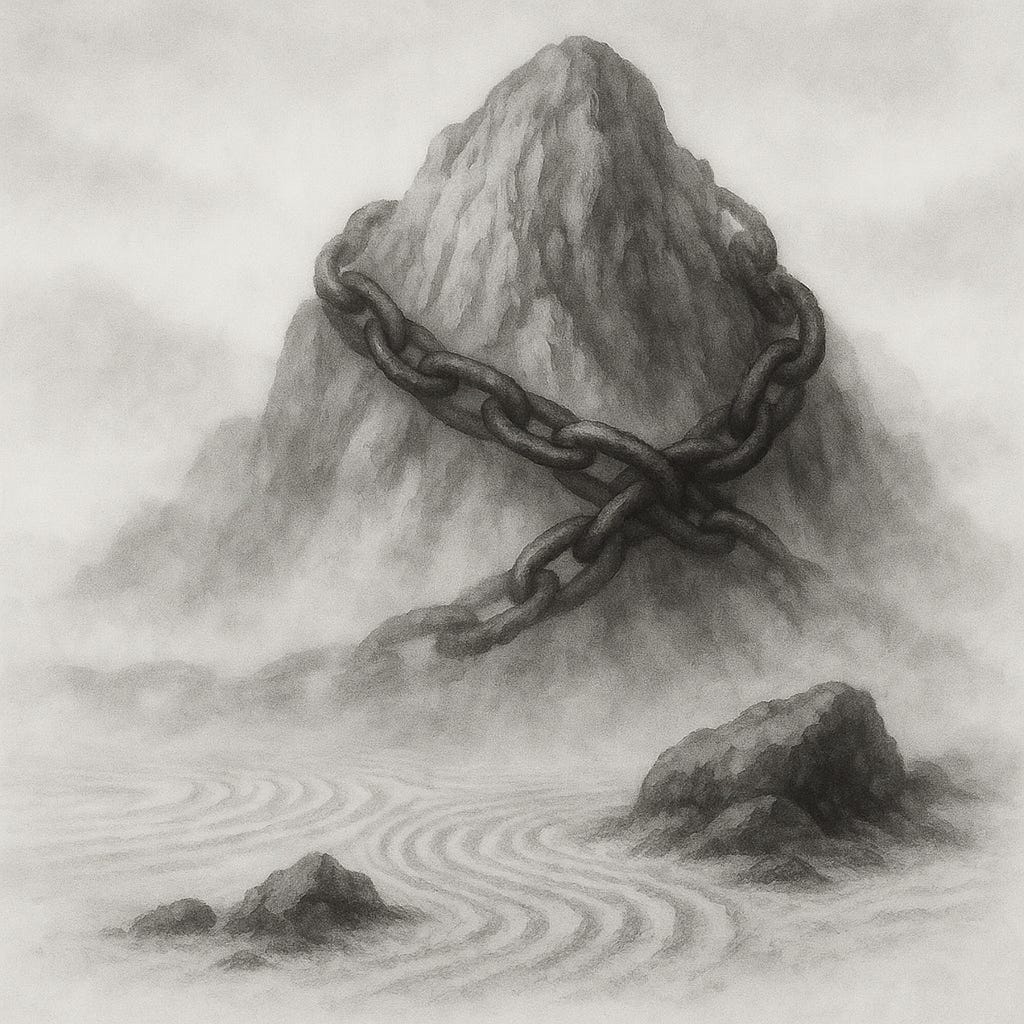
Curses As Realistic: The Philosophy of Misfortune and Luck
What if curses are real?
Curses As Realistic: The Philosophy of Misfortune and Luck
What if curses are real?
Not in the supernatural sense of witches, dark magic, or ancient spells.
But as a reality woven into the very fabric of existence itself.
When most people hear the word “curse,” they imagine fantasy stories, folklore, or supernatural punishment. Yet if we strip away the mythology, we may discover something far more unsettling:
Many people are born into circumstances they never chose.
Genetic disorders.
Chronic illnesses.
Psychological conditions.
Traumatic environments.
Poverty.
Disabilities.
Family dysfunction.
Bad luck.
Unfortunate timing.
These are not fictional curses.
They are realities experienced by millions of people every day.
In my latest Philosocom article, “Curses As Realistic — The Philosophy of Misfortune,” I explore a different way of understanding luck, suffering, and the unfairness of existence.
The article challenges the assumption that life is fundamentally fair.
Instead, it argues that reality itself is imperfect.
Some individuals begin life carrying burdens they did not create.
Others inherit struggles that originated long before they were born.
Some suffer through circumstances that no amount of effort can completely erase.
This raises a difficult philosophical question:
What should we do when life gives us disadvantages we never asked for?
Many people spend years fighting against reality itself.
They become trapped in resentment.
They focus entirely on what they lack.
They compare themselves to those who appear more fortunate.
And in doing so, they often deepen their own suffering.
Yet there may be another path.
A path that does not require denying pain.
A path that does not require pretending that everything happens for a reason.
A path that begins with accepting reality as it is.
The article explores the possibility that misfortune, while undeniably painful, can sometimes become the foundation of growth.
History is filled with individuals who transformed hardship into wisdom, creativity, resilience, and contribution.
Their struggles did not disappear.
Their suffering was not magically justified.
But they found ways to build something meaningful from the very obstacles that seemed determined to stop them.
As the article states:
“Build an empire with the same bricks that were thrown at you.”
This idea lies at the heart of the philosophy of misfortune.
The question is not whether suffering exists.
The question is what we choose to do with it.
Will misfortune define us?
Or will we transform it into something greater?
The article also discusses:
🔹 Why genetics and circumstance can be viewed as realistic forms of “curses.”
🔹 The relationship between perception and suffering.
🔹 How gratitude can exist even in the presence of hardship.
🔹 Why some of history’s most influential individuals emerged from difficult circumstances.
🔹 The difference between divine punishment and simple bad luck.
🔹 How adversity can cultivate resilience, wisdom, and compassion.
🔹 Why fairness may be more subjective than many people assume.
One of the article’s central themes is that fortune and misfortune often coexist.
The very characteristics that create suffering can sometimes create unexpected freedoms, opportunities, insights, or strengths.
What appears to be a curse from one perspective may reveal hidden advantages from another.
This does not mean suffering is desirable.
It does not mean we should romanticize pain.
It means reality is often more complicated than simple categories of good luck and bad luck.
Human beings possess a remarkable ability to adapt, reinterpret, and create meaning even under difficult conditions.
Some people are broken by adversity.
Others become stronger because of it.
And many discover aspects of themselves they never would have encountered otherwise.
Perhaps luck is not merely what happens to us.
Perhaps luck is also influenced by how we interpret, respond to, and build upon the circumstances we inherit.
Because while we cannot always choose our conditions, we can often choose what we create from them.
📖 Read the full article here:
메타데이터
- post_id
- b83e7661df07
- slug
- curses-as-realistic-the-philosophy-of-misfortune-and-luck-b83e7661df07
- url
- https://medium.com/@philosocom58/curses-as-realistic-the-philosophy-of-misfortune-and-luck-b83e7661df07
- canonical_url
- https://medium.com/@philosocom58/curses-as-realistic-the-philosophy-of-misfortune-and-luck-b83e7661df07
- author_url
- https://medium.com/@philosocom58
- status
- ok
- fetched_at
- 2026-06-10 15:53:41