I Tried Building an Amazon Scraper With AI — Here’s What Nobody Warns You About
Six months ago, I spent a Sunday afternoon asking Claude to build me a complete Amazon scraping pipeline. It worked beautifully in testing…
I Tried Building an Amazon Scraper With AI — Here’s What Nobody Warns You About

Six months ago, I spent a Sunday afternoon asking Claude to build me a complete Amazon scraping pipeline. It worked beautifully in testing. Then I tried to actually use it.
There’s a version of this story that ends with “and now I have free, unlimited Amazon data forever.” I’ve seen that post. It gets shared around data engineering Slack channels with an approving nod. The problem is the story usually stops before the part where the IP pool runs dry, the parsing breaks on a Thursday morning when Amazon pushes a layout test, and you realize your engineer has spent 30% of their month keeping a system alive that was supposed to run itself.
I work with e-commerce data teams for a living. What I see, over and over, is a gap between “I built an Amazon scraper with AI” and “I run a reliable Amazon data pipeline.” That gap has a name: infrastructure debt. And it doesn’t show up on the demo recording.
The Demo Works. The Production Environment Has Other Plans.
When I had Claude generate an Amazon scraper, it produced genuinely impressive code. Clean Python, reasonable error handling, async request batching. It pulled product titles, prices, BSR positions, review counts — exactly what I asked for. On a list of 200 ASINs, it ran perfectly. I was impressed.
Then I scaled it to 5,000 ASINs. Amazon’s detection system flagged my request pattern within about 40 minutes. I got mostly 200 responses — the silent kind, where the HTML looks right until you notice every price field is suspiciously identical. Honeypot. Classic.
The AI had no way to know about this, because it was optimizing for “produce working code,” not “produce production-grade infrastructure.” These are structurally different goals. Working code runs on your laptop. Production infrastructure runs at 2 AM when you’re asleep, for 10 million pages a day, without breaking when Amazon changes a div wrapper in an A/B test you’ll never know about.
The Three Costs Everyone Forgets to Calculate
When I talk to founders who’ve built self-hosted Amazon scraping pipelines, they consistently undercount three things.
First, the proxy cost. Clean residential IP rotation for Amazon-scale scraping starts around $800/month for modest volumes and climbs quickly. Amazon’s bot detection is specifically trained to flag datacenter IPs and patterns consistent with proxy rotation — so the quality of your proxy pool directly determines your data quality. Cheap proxies return honeypot data. You pay either way.
Second, the parsing maintenance. Amazon A/B tests constantly. I’ve tracked teams that had their price extraction break silently — returning null for three days before anyone noticed — because Amazon rolled a layout variant to their traffic segment. The parser had no error to throw; the selector just found nothing and moved on. Building monitoring for this kind of silent failure is a non-trivial project on its own.
Third, and most importantly: engineer opportunity cost. A senior engineer spending 30% of her time keeping a scraper alive is not spending 30% of her time building the product that generates your revenue. At $120-$150/hour fully loaded, that’s $3,000-$5,000/month in opportunity cost that never appears on the infrastructure budget line.
What Actually Changes When You Use a Commercial Amazon Scraper API
I’ve been using Pangolinfo’s Amazon Scraper API for a few months now, and the experience has been instructive in a specific way. Not because it’s magic, but because it makes visible exactly what the self-built path was costing me in hidden labor.
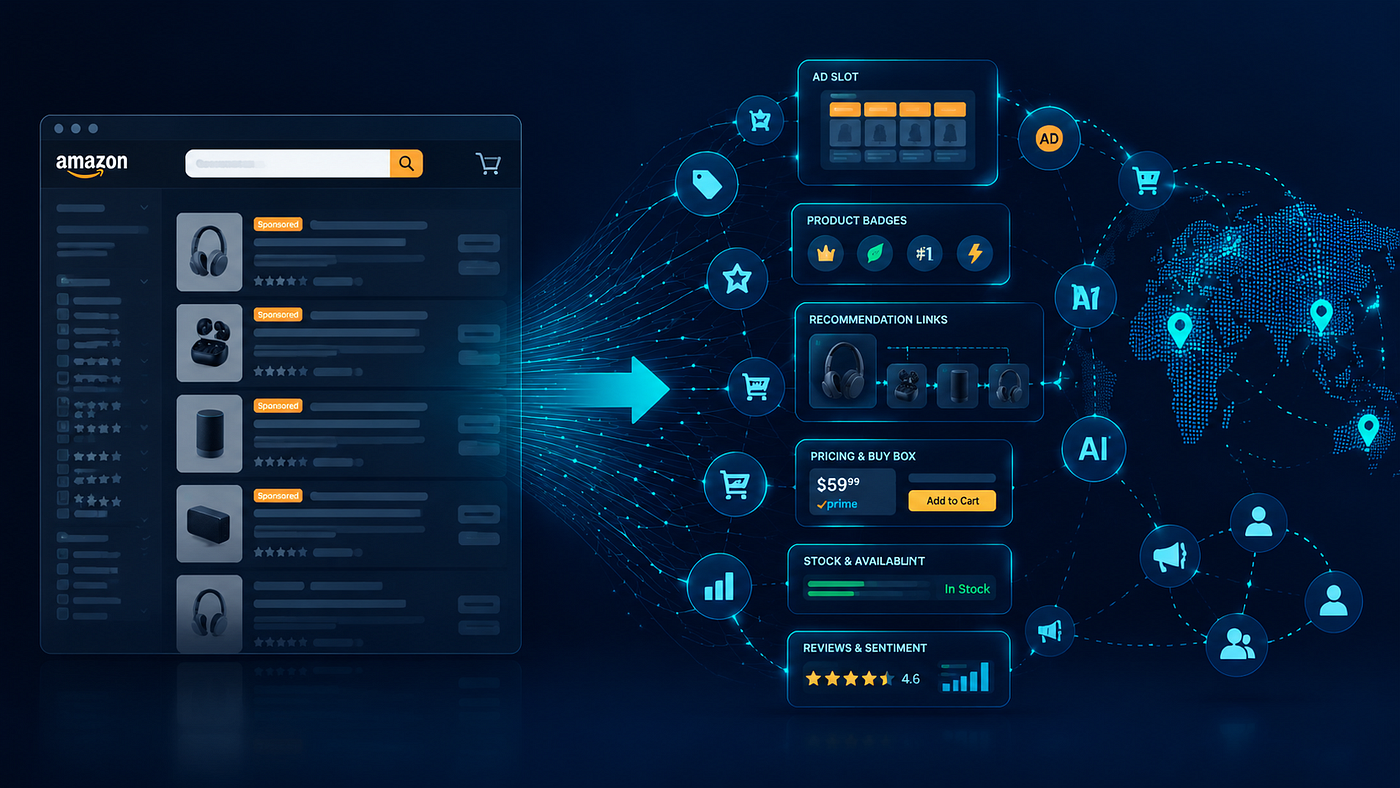
The piece that first grabbed my attention was the SP ad slot capture rate. Sponsored Products placement data is notoriously hard to scrape reliably — Amazon layers additional bot-detection specifically on ad-served content. Most self-built scrapers I’ve audited get somewhere between 40–60% capture on SP slots. Pangolinfo’s is at 98%. For anyone building competitive advertising intelligence tools, that delta is the difference between a product that works and one that doesn’t.
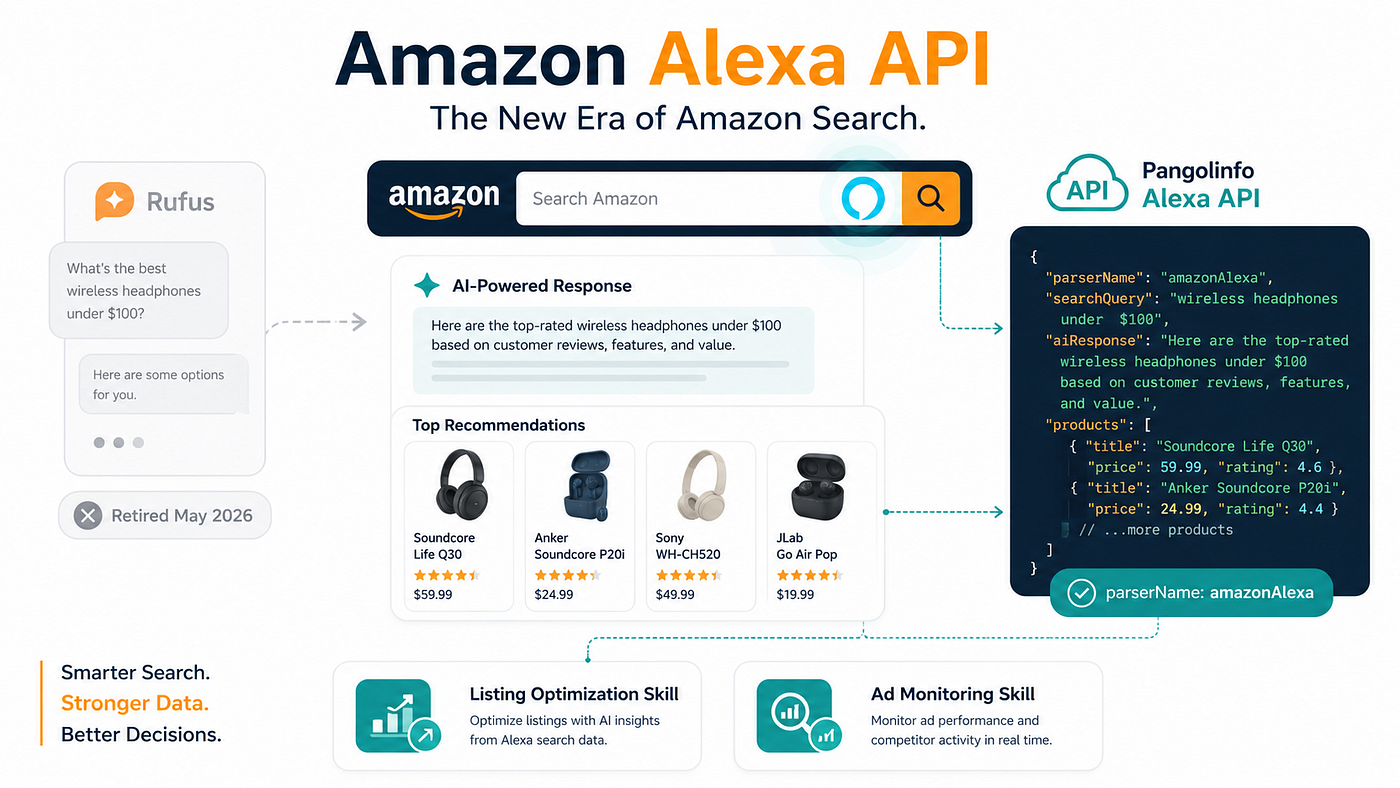
The second thing I didn’t expect: native support for “Customer Says.” This is Amazon’s AI-generated review summary block — a JavaScript-rendered component that flat-out doesn’t exist in the HTML that a standard HTTP request returns. I had three clients who wanted this data and had written it off as unscrapable without a full headless browser setup. It’s directly available in the Pangolinfo response.
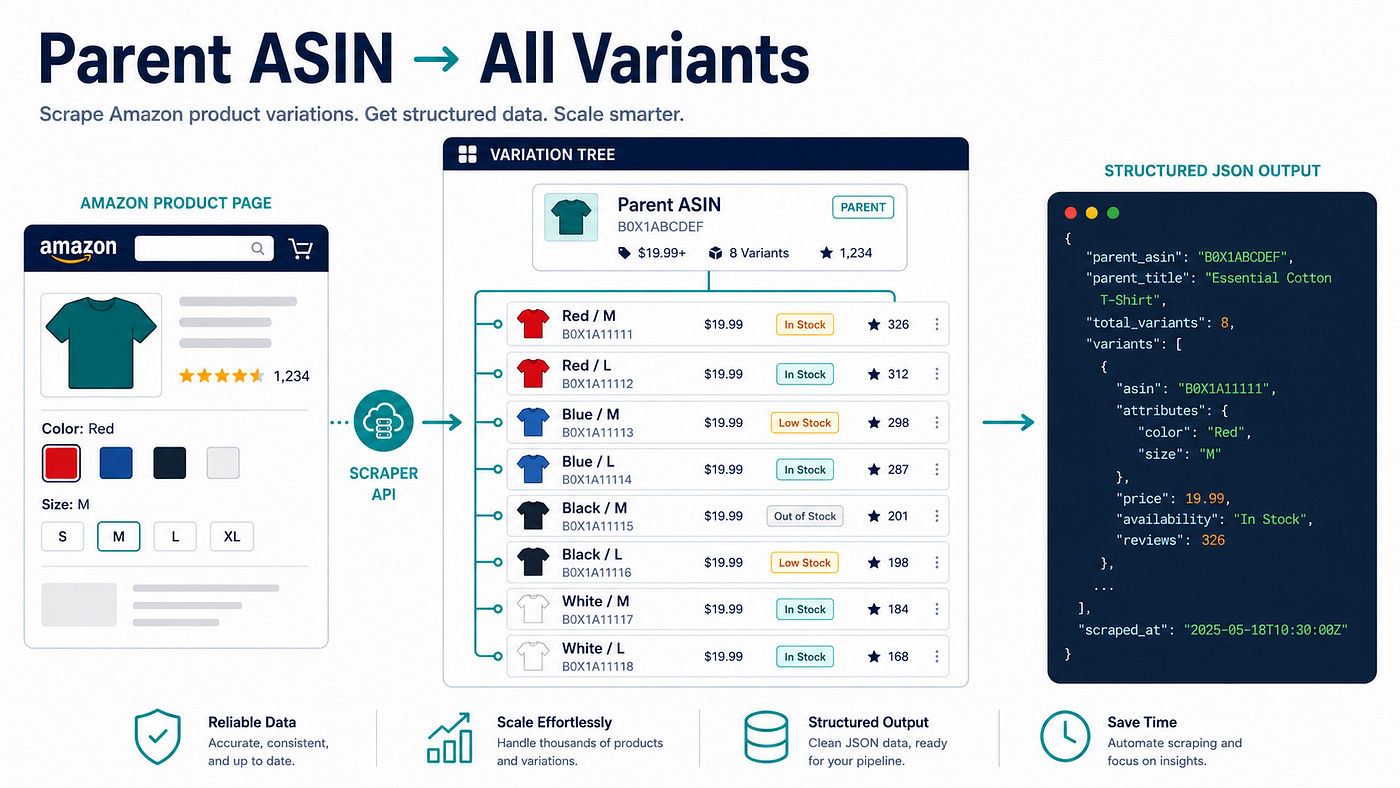
The third was the output format flexibility. Beyond JSON, the API returns Markdown — which sounds like a small thing until you realize it means you can pipe Amazon product data directly into an LLM analysis workflow without any preprocessing. If you’re building an AI-powered competitive intelligence layer on top of your Amazon data, this removes an entire transformation step.
The Honest Trade-Off
Commercial Amazon Scraper APIs aren’t free. Pangolinfo’s pricing is usage-based, and at high volumes, the monthly bill is real. The question is whether it’s more or less than what you’re actually paying to run the self-built alternative — including the engineer time you’re not accounting for.
For most teams I’ve worked with, the math looks like this: self-built pipeline, honestly counted, runs $5,000-$10,000/month at mid-scale (around 2M requests/day). Commercial API at equivalent scale: $1,500-$2,500/month. The savings fund a significant chunk of product development work. More importantly, the engineer who was maintaining the scraper gets to work on the product instead.
There are cases where self-built makes sense — if you have very unusual data requirements that no commercial API covers, or if your scale is genuinely tiny and the data needs are simple. But the “I’ll just have AI write my scraper” calculus needs to include the full operational picture, not just the weekend afternoon where the code was generated.
Key Takeaways
- AI can generate functional Amazon scrapers, but “functional” and “production-grade” describe different things
- The real cost of self-built scraping is proxies + servers + engineer maintenance time — usually $5,000-$10,000/month at meaningful scale
- Commercial Amazon Scraper APIs solve the infrastructure layer: IP rotation, anti-detection, parsing maintenance, JS rendering
- 98% SP ad slot capture rate and native “Customer Says” extraction are concrete advantages that are extremely difficult to replicate self-built
- The engineer hours you free up are the most valuable return on switching to a commercial solution
About Pangolin: Pangolinfo provides enterprise-grade e-commerce data APIs, including the Amazon Scraper API with 10M+ pages/day capacity, 98% SP ad slot capture rate, and structured JSON output. Explore the full API documentation or start a trial from the Pangolinfo console.
메타데이터
- post_id
- b85355b9ea85
- slug
- i-tried-building-an-amazon-scraper-with-ai-heres-what-nobody-warns-you-about-b85355b9ea85
- url
- https://medium.com/@pangolinfo/i-tried-building-an-amazon-scraper-with-ai-heres-what-nobody-warns-you-about-b85355b9ea85
- canonical_url
- https://medium.com/@pangolinfo/i-tried-building-an-amazon-scraper-with-ai-heres-what-nobody-warns-you-about-b85355b9ea85
- author_url
- https://medium.com/@pangolinfo
- status
- ok
- fetched_at
- 2026-06-09 15:37:30