The Deal Trump Tore Up in 2018 Looks Very Different From the One He Just Signed — Here’s What…
There is a fair comparison to be made between Obama’s nuclear deal and Trump’s new one. This is it, told the way it actually happened.
Eight Years, One Withdrawal, and a Stockpile That Got a Lot More Dangerous
The Deal Trump Tore Up in 2018 Looks Very Different From the One He Just Signed — Here’s What Changed in Between
There is a fair comparison to be made between Obama’s nuclear deal and Trump’s new one. This is it, told the way it actually happened.

President Trump tore up the Iran Nuclear Deal and its tough nuclear inspections. His “deal”? $300B and total sanctions relief. He launched this war with no plan and is now racing to Facebook (2026)
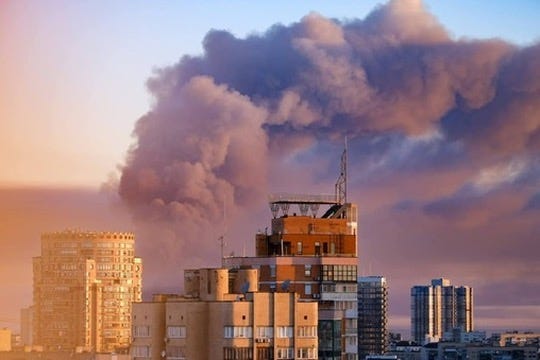
There were 706 tankers parked in the Strait of Hormuz on March 2, 2026. A fifth of the world’s oil normally moves through that channel, and for most of that month it simply stopped.
War-risk insurance premiums on a single tanker transit, which sat around a quarter of one percent of a vessel’s value before the war, climbed as high as five percent during the fighting — work out the math on a $200 million ship and the number gets ugly fast.
Some of those captains had been anchored off Musandam for weeks, watching the news, waiting to find out whether the strip of water in front of them was about to become a minefield or a shipping lane again.

Behind me in the distance the faint light of bobbing ships — and the Iran coastline — (2026)
By mid-June, when the United States and Iran finally signed a memorandum of understanding to end the fighting, only seven ships had actually crossed, with more than 550 still stranded on either side of the strait. Among the seven: tankers carrying Iran’s first crude oil exports in two months.
The rest stayed anchored. Shipping companies, it turned out, did not entirely believe the war was over just because two presidents had signed something in a palace outside Paris.
That hesitation is, in miniature, the entire story of how the United States got here — and why this deal is not the deal Barack Obama signed in 2015.
What Obama Actually Got

Opinion | The Alternative to Obama’s Nuclear Deal Was War. Why Did Trump Tear It Up? — The New York Times
The Joint Comprehensive Plan of Action took nearly two years to negotiate and ran more than 160 pages. It wasn’t just the U.S. and Iran at the table — it was Iran facing down the United States, China, Russia, France, the United Kingdom, and Germany simultaneously, all under the banner of the European Union’s diplomatic machinery.
That mattered.
A bilateral promise is one thing. A promise made to six major powers at once, with all of them watching the inspections data, is a different kind of commitment.
The terms were specific, not aspirational. Iran agreed to cap uranium enrichment at 3.67 percent — a tiny fraction of the roughly 90 percent purity needed for a weapon — and hold that line for fifteen years. All enrichment activity was confined to a single facility at Natanz.
The number and type of centrifuges Iran could run were restricted by name. International inspectors from the IAEA got real access, on a real schedule, to verify all of it. In exchange, the international sanctions choking Iran’s economy came off.
It worked, in the narrow sense that mattered most: Iran complied, and U.S. intelligence assessments confirmed it. The stockpile stayed capped. The centrifuges stayed limited. For three years, the deal did exactly the one thing it was built to do.
What Changed in 2018
Donald Trump called the JCPOA “horrible” and “one-sided” throughout his first campaign, and in May 2018 he made good on the promise to tear it up, withdrawing the United States unilaterally while the other five signatories — China, Russia, France, the UK, Germany — chose to stay in.
His stated objections were that the deal didn’t touch Iran’s ballistic missile program, didn’t address Iran’s support for armed proxy groups across the region, and contained sunset clauses that would eventually have allowed Iran to expand enrichment again even if nothing else changed —
“defective at its core,”
he called it, warning that letting it stand would trigger
“a nuclear arms race in the Middle East.”
Whether those were the actual drivers of the decision, or the public rationale for a choice shaped as much by campaign politics and pressure from allies who had lobbied against the deal for years, is something historians still debate.
What is not in dispute is what happened next.
Members of Congress from both parties had raised versions of these same objections back in 2015.
But objecting to a deal and ending it are different acts with different consequences, and the consequences here are documented. With the U.S. out and sanctions reimposed, Iran began exceeding the JCPOA’s limits. By 2020, the violations were accelerating; by 2023, Iran’s enrichment level had climbed to 60 percent — not the 3.67 percent the deal had held for three years, but a level that puts the country a short technical step from weapons-grade material.
The constraint that had worked for three years was gone, and nothing replaced it.
The Strikes, the War, and the Stockpile Nobody Wanted to Inherit
That 60 percent stockpile is the fact that hangs over everything that happened next. In February 2026, the United States and Israel struck Iranian nuclear and military sites directly — an opening salvo that took out the country’s Supreme Leader and triggered hundreds of retaliatory missiles and thousands of drones across the region. What followed was 106 days of war, six ceasefires that collapsed before they held, a global energy shock, and a Strait of Hormuz that international shipping simply stopped using.
It ended, for now, with Trump and Iranian President Masoud Pezeshkian signing a memorandum of understanding the night of June 17, hosted by Pakistan as mediator, with negotiating teams still traveling to Geneva afterward even though the document had already been signed electronically. Trump reportedly paused before putting pen to paper. “This was not easy,” he told the room.
Two Documents, Two Eras
Set the two agreements side by side and the differences are not subtle.
Obama’s deal was a finished product — a fully negotiated technical document with specific numbers attached to every commitment. Trump’s is a ceasefire with a homework assignment attached: stop shooting, reopen the strait, and figure out the actual nuclear terms over the next 60 days. Whether those 60 days produce anything resembling the specificity of the JCPOA is genuinely unknown. As of the signing, there is no agreed enrichment cap, no confirmed facility restriction, no locked-in centrifuge count — only a general signal that Iran’s 60 percent stockpile will need to be addressed, possibly through down-blending under IAEA supervision, diluting the highly enriched material back down to something less dangerous. Possibly. The mechanics are still being negotiated.
Obama negotiated as part of a six-power coalition. Trump negotiated bilaterally, with Pakistan’s prime minister serving as mediator and reportedly pushing both sides toward the final text.
And then there is the stockpile itself. When Obama’s negotiators sat down across from Iran in 2015, they were negotiating limits on a program that had not yet pushed past 20 percent enrichment in any serious quantity. When Trump’s team sat down in 2026, they were negotiating with a country sitting on a stockpile enriched to 60 percent — a number that did not exist, could not have existed, under the deal Trump withdrew from. The 2026 negotiators inherited a far more dangerous starting line than the 2015 negotiators ever had to face, and they inherited it directly from the eight years that opened up after the JCPOA ended.
What the Reopening Looks Like From the Water
Back at the Strait of Hormuz, the slow trickle of ships tells its own version of this story. Before the war, between 120 and 140 ships transited the strait each day, about half of them oil tankers carrying some 20 million barrels combined.

www.aljazeera.com/features/2026/6/17/strait-of-hormuz-reopens-how-will-safe-passage-for-ships-be-ensured
One analyst estimated it could take roughly four months of incident-free transits before shipowners and insurers consider the risk sufficiently de-escalated to resume normal traffic. Mine clearance and the establishment of a verified, secure corridor is expected to take about two months on its own — and insurers are not expected to lower premiums meaningfully before that work is done.
The big container carriers — Maersk, MSC, CMA CGM, Hapag-Lloyd — all rerouted around the Cape of Good Hope when the war started, and unwinding those contracts, schedules, and vessel positions is not something that happens because two presidents shook hands. “It will take more than just a political agreement before we see a normalisation,” one senior equity analyst told Al Jazeera, days after the deal was announced.
Even the terms of the reopening are contested before the ink is fully dry. Iran has stated that any transit through the strait must still be coordinated with its Revolutionary Guard and follow a route close to the Iranian coastline, while Trump has insisted the strait is simply “wide open.”
Iran has also signaled it intends to charge fees for coordinating safe transit going forward, even as it denies these amount to tolls — a distinction the U.S. and Gulf states reject outright. Two governments, one signed memorandum, two different understandings of what it actually says.
The Wild Card Neither Side Signed
There is one more variable sitting outside the text of the memorandum entirely:
Israel never signed it.
“Jerusalem is not a party to the memorandum of understanding,” Netanyahu said himself, days before it was signed, while reiterating that Iran was:
“working to destroy the Jewish state.”
That distinction is not abstract. The deal requires an end to hostilities on
“all fronts,”
explicitly including Lebanon — but a Netanyahu adviser has said Israel does not consider itself bound by that part of the agreement, and that Israeli forces will not withdraw from southern Lebanon unless Hezbollah disarms first, a condition the MOU does not actually secure.
Israel struck southern Lebanon again within hours of the deal’s signing, and a diplomat involved in the negotiations told reporters the strikes looked like a deliberate attempt to drag the United States back into the fighting.

Israeli attacks on southern Lebanon kill three despite US-Iran deal (2026)
The skepticism is not confined to outside critics.
and other lawmakers arguing the agreement strips Israel of its right to defend itself.
Whatever Washington and Tehran agreed to on paper, the question of whether the fighting in the broader region actually stops may depend less on the 60-day nuclear talks than on whether Israel — which never signed anything — decides to treat the war as over.
The Open Question
None of this means the new deal is doomed, and none of it means the JCPOA was a perfect instrument that would have prevented everything that followed had it simply been left alone.
The JCPOA had its own sunset clauses — meaning even an intact deal would eventually have faced a version of this same reckoning, just on a longer clock. What can be said with confidence is narrower than that, and the narrower claim is the one that matters:
for three years, a working international agreement held Iran’s enrichment to 3.67 percent, verified by outside inspectors, with six major powers watching.
After the United States walked away from it in 2018, that number climbed, year over year, until it reached 60 percent — a level the original deal never allowed to exist, and a level that now sits at the center of the hardest 60 days of diplomacy either country has ever attempted.
Whatever happens in those 60 days, the stockpile the negotiators are working with is the direct, documented inheritance of the eight years in between.
If this piece helped you actually understand the gap between the deal that worked and the deal we just got — not opinion, just the documented record — give it some claps. Stories like this only reach more readers when the people who read them say so.
Further Reading
The full text of the original JCPOA agreement, for anyone who wants to see exactly what Iran agreed to in 2015.
A side-by-side breakdown of how Trump’s memorandum compares point by point to the Obama-era deal, including the unresolved questions over funding, sanctions sequencing, and ballistic missiles.
A region-by-region explainer on what it will actually take to make the Strait of Hormuz safe for shipping again, from mines to insurance to the toll dispute.
Reporting on how Israeli domestic politics are already complicating the deal Israel never signed, including the fight inside Netanyahu’s own coalition over Lebanon.
Council on Foreign Relations’ background primer on the JCPOA, for readers who want the full history before 2015 and after 2018 in one place.
Times of Israel: Iran claims Hormuz closed again as IDF attacks Hezbollah; Vance says Switzerland talks may start Sunday
메타데이터
- post_id
- b869e52e5cfe
- slug
- the-deal-trump-tore-up-in-2018-looks-very-different-from-the-one-he-just-signed-heres-what-b869e52e5cfe
- url
- https://medium.com/illumination/the-deal-trump-tore-up-in-2018-looks-very-different-from-the-one-he-just-signed-heres-what-b869e52e5cfe
- canonical_url
- https://medium.com/illumination/the-deal-trump-tore-up-in-2018-looks-very-different-from-the-one-he-just-signed-heres-what-b869e52e5cfe
- author_url
- https://medium.com/@jusbouey
- status
- ok
- fetched_at
- 2026-06-22 05:41:33