The Confessor’s War and the End of Empire
Robert Kagan, Checkmate in Iran, and the Accelerating Collapse of American Empire
The Confessor’s War and the End of Empire
Robert Kagan, Checkmate in Iran, and the Accelerating Collapse of American Empire
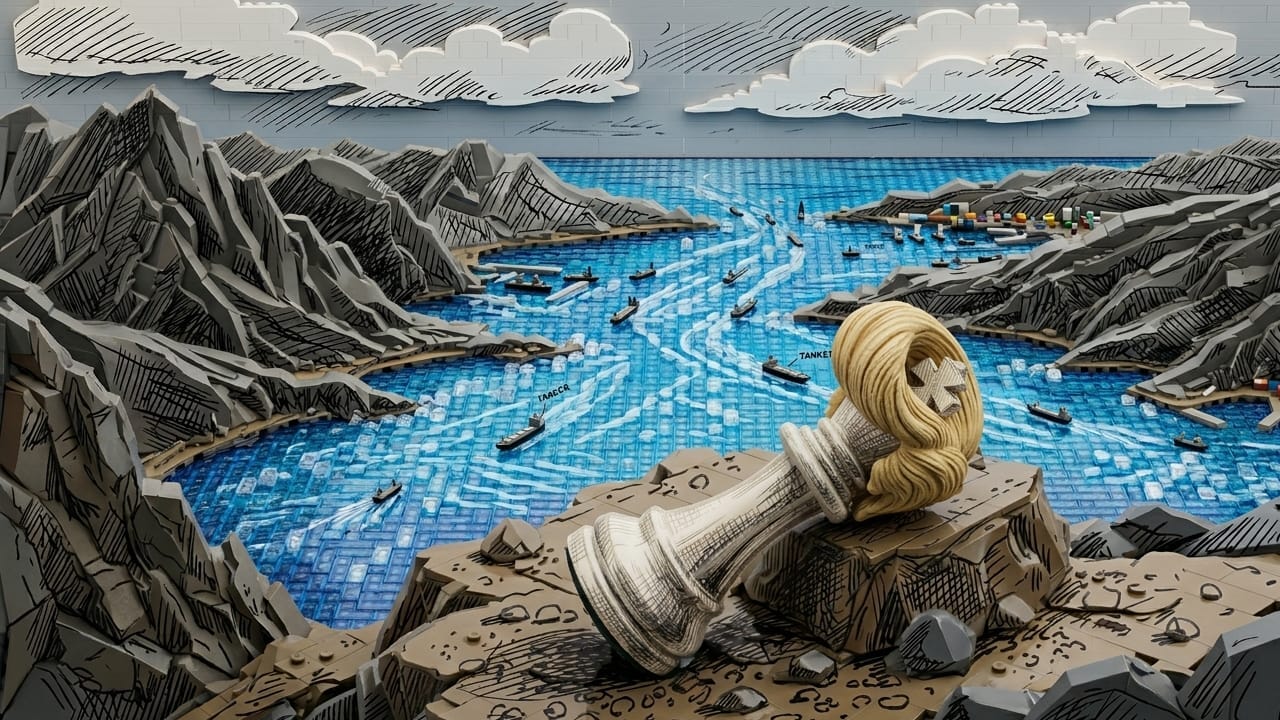
Image created from a sketch by the author enhanced in Gemini.
There is a particular kind of vertigo that comes from watching the architects of a disaster announce, with great solemnity, that the disaster has occurred.
On May 10, 2026, Robert Kagan, co-founder of the Project for the New American Century, senior fellow at the Brookings Institution, and perhaps the most intellectually formidable champion of American military interventionism of the past thirty years, published an essay in The Atlantic titled “Checkmate in Iran.” Its subtitle:
“Washington can’t reverse or control the consequences of losing this war.”
The piece is stunning, not for its conclusions, which structural analysts had reached months before the first strike was launched on February 28, 2026, but for its author. This is the man who helped blueprint the post-Cold War doctrine of American primacy through force, who cheered the invasion of Iraq as a civilizational necessity, who spent decades arguing that American military power was the indispensable architecture of a liberal world order. When Robert Kagan calls a defeat irreversible, the foreign policy establishment does not simply take notice. It begins to reorganize its cosmology.
What Kagan is doing, whether he intends it or not, is performing the intellectual function of the herald: announcing the end of an era that the numbers and the maps had already closed.
What Kagan Said, and What He Couldn’t Say
Kagan’s argument is precise and devastating. The United States and Israel conducted 37 days of intensive air strikes against Iran, killing significant portions of its leadership, destroying the bulk of its military infrastructure, and achieved nothing. Iran did not capitulate. It did not offer even a symbolic concession. Instead, when Iran retaliated by striking Qatar’s Ras Laffan LNG complex, Washington halted the bombing. The ceasefire, brokered under duress, left Iran holding the single most consequential asymmetric lever in the modern global economy: effective control over the Strait of Hormuz, through which roughly 20% of the world’s daily oil supply passes.
Kagan places this defeat in historical relief. Pearl Harbor was reversed. Vietnam and Afghanistan, though costly, were “far from the main theaters of global competition.” The initial failure in Iraq was partially mitigated by strategic adjustment. But this defeat, he writes, “can neither be repaired nor ignored.” The Strait is not simply a shipping lane. It is a civilizational chokepoint, the jugular of the petrochemical world order, of fertilizer supply chains, of Asian LNG markets, of European energy pricing, of global food security. Iran now holds that vein between its fingers.
“With control of the strait,” Kagan writes, “Iran emerges as the key player in the region and one of the key players in the world. The roles of China and Russia, as Iran’s allies, are strengthened; the role of the United States, substantially diminished.”
What Kagan cannot fully say, because it would require indicting himself and his entire intellectual tradition, is that this outcome was structurally overdetermined. The logic of American military supremacy, applied without serious geopolitical intelligence to a second-rank regional power with asymmetric leverage, a hardened theocratic state apparatus, and powerful great-power patrons, was always going to produce exactly this. The war was lost before the first sortie. Not because American military capability is insufficient, but because military capability is the wrong tool for this particular geometry of power.
This is the confession Kagan cannot make. So instead he makes the lesser one: that we lost. Which, under the circumstances, still counts as a sort of courage.
The Dalio Big Cycle: The Bill Coming Due
Ray Dalio’s framework for understanding the rise and fall of reserve currency empires offers perhaps the most precise macroeconomic lens for what is unfolding. In Principles for Dealing with the Changing World Order, Dalio maps the archetypal arc of great powers across five centuries: the Dutch, British, and American empires each following a recognizable curve from emergence through dominance to overextension, debt, internal conflict, and eventual displacement.
Dalio identifies eight key metrics, competitiveness, innovation, financial center strength, military power, reserve currency status, trade share, education, and rule of law, and tracks their long-run trajectories for the U.S. versus China and other nations. By Dalio’s own data, most of these metrics have been declining for the United States since the 1990s, while China’s have been rising. The curves crossed, by his estimate, sometime in the early 2020s.
In Dalio’s terms, the Israeli-U.S. war against Iran is a classic late-cycle military overreach: a declining empire spending down its last reserves of credibility and material capability in an attempt to reassert dominance in a theater it no longer controls through means it can no longer sustain.
The IEA confirmed after the ceasefire that the conflict produced the “largest supply disruption in the history of the global oil market.” American weapons stockpiles were drawn down to perilously low levels in under six weeks, a fact that is not lost on Xi Jinping’s military planners, or on Putin’s, or on Taiwan’s. The entire global audience watched a superpower punch itself out against a mid-weight opponent and lose on points.
The economic consequences are already cascading. Brent crude surged 44% from pre-war levels to $105 a barrel by early May. U.S. gasoline prices rose roughly 45% over the same period. Economists project the Personal Consumption Expenditures index could hit 4% by year’s end, double the Fed’s target, while the fertilizer disruption (one-third of global fertilizer trade transits the Strait) is only beginning to work its way into the Northern Hemisphere’s planting cycle. The food price shock, the slowest and most politically destabilizing of the cascades, is still arriving. Grocery inflation will peak in late 2026 and persist deep into 2027.
This is what Dalio means by the “painful deleveraging” phase: not a single crash, but a grinding, multi-vector erosion in which each attempted reassertion of power accelerates the loss.
Friedman’s Generational Clock: The Worst Possible Moment
George Friedman’s framework in The Storm Before the Calm and The Next Decade locates American dysfunction within an 80-year institutional cycle and a parallel 50-year economic cycle, both of which are reaching their nadir between 2025–2030. Friedman argues these troughs produce a characteristic national mood: institutional distrust, political polarization, economic anxiety, and the dangerous temptation to reach for dramatic action as a substitute for coherent strategy.
The Iran war fits this template with uncomfortable precision. It was launched not from a position of strategic confidence but from a posture of anxious assertion, the gesture of a nation that has lost faith in its own instruments of power and is attempting to recover it through spectacle. Operation Epic Fury was, in Friedman’s terms, a fourth-turning gamble: high-risk, high-cost, with the potential for both catastrophic failure and, in some scenarios, the kind of crisis that forces genuine institutional renewal.
The catastrophic failure scenario is now underway. Whether the renewal follows is the open question of the next decade.
Friedman has long argued that American power is more resilient than its critics assume, that the United States has repeatedly surprised the world by reinventing itself after times of apparent collapse. That argument is not wrong on the long timescale. But it obscures what happens to actual people, in actual economies, during the decades of reinvention. The 1930s and 1940s were the last such period, and they were not comfortable for most people.
Turchin’s Cliodynamics: Elite Overproduction and the Interior Collapse
Where Dalio gives us the macroeconomic arc and Friedman the institutional rhythms, Peter Turchin’s cliodynamics provides the interior anatomy of collapse, the structural dynamics inside the empire that make military overreach not just possible but, at a certain stage, almost inevitable.
Turchin’s core argument, developed across Ages of Discord and End Times, is that societal instability is driven primarily by two variables: popular immiseration (declining living standards for the majority) and elite overproduction (too many credentialed, ambitious people competing for a fixed number of elite positions). When both are high simultaneously, political violence, institutional delegitimization, and policy incoherence rise sharply. The United States, by Turchin’s own data models, entered a period of acute instability around 2015 and has been accelerating through it since.
The Iran war is a textbook product of an overproduced elite: a foreign policy class with enormous credentials, institutional prestige, and zero accountability for three decades of consequential failure in Iraq, Afghanistan, Libya, and Syria, making another catastrophic bet and losing it. Kagan himself is a specimen of this class. His essay is, among other things, a document of elite cognitive dissonance: the architect of disaster explaining the disaster with analytical precision while carefully avoiding the first-person singular of responsibility.
Meanwhile, popular immiseration deepens in real time. Gas is above $4 a gallon nation wide, and is above $6 a gallon where I live in California. Grocery inflation is building toward its late-2026 peak. The Federal Reserve caught between a stagflation it cannot print its way out of and a recession it cannot raise rates without causing. Consumer confidence in freefall. Personal credit card debt at historical records. And the inflationary shocks are painful to the poor, working, and middle classes. The wealthy classes are relatively unaffected, and some even profit off the collapse.
This is Turchin’s doom loop, running in public.
Forecasting Through 2028: Domestic and Global Economic Effects
Before turning to scenarios, a factor that complicates all of them deserves naming directly: the current U.S. regime’s profound governing incompetence and structural corruption. Turchin’s elite overproduction thesis predicts exactly this, a leadership class that secured its positions through credential and connection rather than capability, whose decision calculus is dominated by short-term political theater, factional loyalty, and personal enrichment rather than institutional welfare.
The result is not merely bad strategy. It is the systematic dismantling of the administrative capacity needed to manage a crisis of this magnitude: gutted agency expertise, compromised intelligence assessments, economic policy driven by donor interests rather than structural diagnosis, and a communications apparatus incapable of distinguishing between winning a news cycle and solving a supply chain.
A competent government facing this scenario would have emergency strategic petroleum release protocols coordinated with allies, countercyclical fiscal tools staged for deployment, and fertilizer supply contingency planning already in motion. The current U.S. regime has none of these things functioning at the required level. That gap between crisis severity and governing capacity is itself a major variable in what follows.
The three most structurally plausible trajectories from here share one feature: none of them restore the status quo ante. All domestic economic projections assume this governing deficit persists.
Scenario 1, Frozen Strait, Stagflationary Grind (Most Likely, 2026–2028)
Pakistan-mediated negotiations remain stalled. Iran holds the Strait at partial capacity, enough flow to prevent a complete global emergency, but far below pre-war levels, sustaining maximum leverage. Oil stabilizes between $100–130 per barrel throughout 2026–2027.
Domestic energy effects: Gasoline remains above $4 nationally, reaching $6–$8 in high-cost states. Diesel, more directly tied to freight, agriculture, and manufacturing, rises faster, adding a structural cost floor beneath virtually every physical good in the American economy. Home heating oil and natural gas bills spike 40–60% into the 2026–27 winter, hitting lower-income households disproportionately. Utility companies begin seeking emergency rate increases. The energy burden, the share of household income consumed by energy costs, reaches levels not seen since the 1970s for the bottom two income quintiles.
Domestic food effects: The fertilizer disruption is the slow catastrophe. Urea prices have already jumped from $475 to $680 per metric ton at the New Orleans hub, arriving precisely at Midwest planting season. Reduced fertilizer application in 2026 means lower corn and soybean yields by harvest, with full grocery price impact arriving late 2026 through 2027. Staple food inflation of 20–35% is the central projection. Bread, cooking oils, dairy, poultry, and processed foods all rise in sequence as input costs propagate up the supply chain. Food banks will report demand surges by Q3 2026.
Domestic supply chain effects: Diesel cost increases ripple through every tier of the logistics network. Trucking surcharges are already being applied across retail categories. Nearshoring initiatives, already stressed by tariff regimes, face additional pressure as energy-intensive manufacturing becomes more expensive. Pharmaceutical supply chains with Gulf-region chemical precursor dependencies face spot shortages. The Fed, caught between a 4%+ PCE inflation rate and recessionary consumer pullback, finds itself politically paralyzed under new leadership more responsive to the regime than to institutional mandate. The result is policy drift at exactly the wrong moment, neither stimulating nor cooling, simply watching.
Global economic effects: The IEA characterizes this as the largest supply disruption in the history of the global oil market. LNG spot prices in Asia remain elevated 100–140% above pre-war levels, with the Ras Laffan damage requiring 3–5 years to fully repair. Global food security deteriorates as Brazilian fertilizer-dependent soy and corn yields decline. Nations in the Global South, already carrying post-pandemic debt loads, face simultaneous energy import bills and food price shocks. The IMF begins emergency consultations with a dozen vulnerable economies. Dollar-denominated debt service becomes more punishing as energy-driven inflation keeps U.S. rates higher for longer, paradoxically strengthening the dollar against emerging market currencies even as dollar reserve status erodes structurally.
Scenario 2, Escalation and Deep Supply Shock (Lower Probability, Catastrophic Consequences)
Facing domestic political collapse and oil approaching $150, the current U.S. regime, lacking both the strategic patience and the institutional competence to sustain a negotiated resolution, opts for a second military campaign to force the Strait open. The operation fails to achieve the required naval control. Iran destroys additional Gulf energy infrastructure. Saudi Aramco suspends a significant portion of export capacity.
Domestic effects: Oil crosses $175. Gasoline reaches $7–8 nationally. A demand destruction recession begins within sixty days. Unemployment rises 2–5 points by mid-2027. The supply chain disruption is no longer inflationary, it becomes deflationary in consumer goods (nobody buying) and hyper-inflationary in energy and food simultaneously: classic stagflation, structurally resistant to any monetary remedy. Grocery shortages in specific categories emerge in lower-income zip codes first, then spread. The governing incompetence of the current regime, unable to coordinate emergency rationing, strategic reserve deployment, or Federal emergency supply chain protocols, becomes the central domestic political crisis of 2027.
Global effects: The global financial system fractures along dollar versus non-dollar settlement lines, accelerating a transition already underway. Commodity markets fragment. A dozen emerging market nations default or restructure. Food riots in the Global South begin in North Africa and Sub-Saharan Africa, spreading to South Asia.
Scenario 3, Negotiated Capitulation Dressed as Victory (Possible, Best Near-Term Outcome)
Washington accepts de facto Iranian Strait control in exchange for nominal navigation guarantees, frames it domestically as a diplomatic triumph, and pivots to domestic economic messaging. The foreign policy establishment is outraged; the American public is exhausted and largely relieved.
Domestic effects: Oil retreats toward $85–90 over six to nine months. Gasoline falls below $4 in most markets by early-2028. However, the fertilizer-driven food inflation wave is already in motion and cannot be reversed, grocery prices remain elevated 10–30% above pre-war baselines through 2028 and beyond. The energy debt absorbed by households in 2026, credit card balances, deferred utility payments, drawn-down savings, does not evaporate with falling oil prices. Consumer balance sheets remain stressed. The governing regime claims victory; the economic reality underneath tells a different story. Structural damage to American manufacturing competitiveness, supply chain resilience, and household financial stability persists regardless of the headline oil price.
Global effects: The dollar’s reserve status absorbs another structural erosion. Gulf state sovereign wealth funds accelerate diversification away from U.S. Treasuries. The energy transition, paradoxically, receives a demand-side boost as the price signal for alternatives is finally, unmistakably clear, though the current U.S. regime’s hostility to renewables policy means this benefit is captured largely by China, India, the EU, and South Korea rather than American industry.
Across all three scenarios, the compounding of a genuine external supply shock with the specific governing failures of the current U.S. regime, the corruption, the policy incoherence, the institutional dismantling, the substitution of spectacle for strategy, makes the domestic economic outcome significantly worse than the supply shock alone would warrant. Competent crisis governance cannot eliminate a Hormuz disruption’s effects. But it can sequence, cushion, and distribute them. What the current regime offers instead is improvisation in the service of optics, leaving the material costs to be absorbed by the households least equipped to carry them.
The Deeper Signal
What makes this moment historically significant is not the Iran war itself. Regional powers have checked American military pressure before. What is significant is the compound nature of the failure, military, economic, credibility, and strategic all at once, and its coincidence with the synchronized troughs of Dalio’s reserve currency cycle, Friedman’s institutional cycle, and Turchin’s elite-overproduction/immiseration curve.
These frameworks rarely align this precisely. When they do, they are not describing the same phenomenon from different angles. They are triangulating something big: a civilizational inflection point.
The world is not ending. Empires do not die overnight. What is ending is a particular arrangement of global power that has structured the international order since 1945, and with accelerating fragility since 2015. The Hormuz chokepoint is not the cause of that ending. It is the event that made the ending visible, that forced the confessor, Robert Kagan, to stand at his podium and announce what the maps had long since shown.
Washington can’t reverse or control the consequences. That much is now consensus.
What no one in Washington is yet prepared to say is the harder thing: that a world organized around something other than American primacy might, for most of the people in it, be no worse, and for many, considerably better.
Selected Bibliography
Dalio, Ray. Principles for Dealing with the Changing World Order: Why Nations Succeed and Fail. Simon & Schuster, 2021.
Friedman, George. The Storm Before the Calm: America’s Discord, the Coming Crisis of the 2020s, and the Triumph Beyond. Doubleday, 2020.
Friedman, George. The Next Decade: Empire and Republic in a Changing World. Doubleday, 2011.
International Monetary Fund. “How the War in the Middle East Is Affecting Energy, Trade, and Finance.” IMF Blog, March 30, 2026.
Kagan, Robert. “Checkmate in Iran.” The Atlantic, May 10, 2026.
Kilian, Lutz, et al. “The Impact of the 2026 Iran War on U.S. Inflation.” Federal Reserve Bank of Dallas Working Paper 2609, April 2026.
Turchin, Peter. Ages of Discord: A Structural-Demographic Analysis of American History. Beresta Books, 2016.
Turchin, Peter. End Times: Elites, Counter-Elites, and the Path of Political Disintegration. Penguin Press, 2023.
Wikipedia. “Economic Impact of the 2026 Iran War.” Last modified May 2026.
Wikipedia. “2026 Iran War Fuel Crisis.” Last modified May 2026.
메타데이터
- post_id
- b86a34654e47
- slug
- the-confessors-war-kagan-checkmate-in-iran-and-the-accelerating-collapse-of-american-empire-b86a34654e47
- url
- https://medium.com/the-futureplex/the-confessors-war-kagan-checkmate-in-iran-and-the-accelerating-collapse-of-american-empire-b86a34654e47
- canonical_url
- https://medium.com/the-futureplex/the-confessors-war-kagan-checkmate-in-iran-and-the-accelerating-collapse-of-american-empire-b86a34654e47
- author_url
- https://medium.com/@jscaff
- status
- ok
- fetched_at
- 2026-06-11 11:25:07