The Value of Storytelling and Cultural Traditions — A Time Capsule
The Value of Storytelling and Cultural Traditions — A Time Capsule
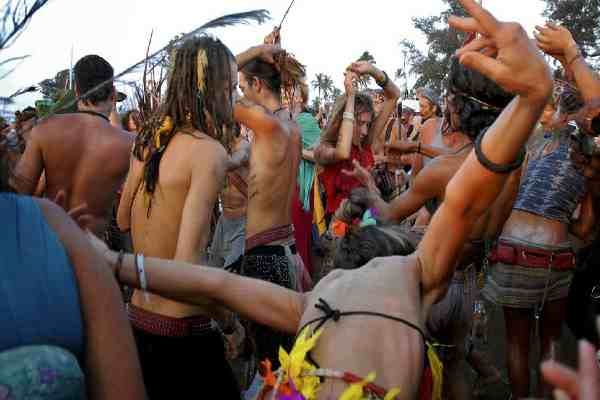
Traditions and customs act like time capsules, creating a snapshot of the cultural narrative at a specific point in time. The value of storytelling and cultural traditions is overlooked in the modern age, but these tools serve several essential functions in our lives. Traditions can make life more meaningful. Want to learn how?
The Culture Snapshot & Time Capsule
Customs and traditions are time capsules which contain valuable information about the values and beliefs that the culture wants to pass along. Our traditions remain long after we are gone. I’m sure you have some.
Many stories, customs, and rituals existed for eons in the oral tradition long before documented in some form of writing. The most popular of these stories became the basis for the sacred texts of our organized religions.
Many of these customs are simple and superficial. However, many contain deeper intrinsic or hidden knowledge. The intent, content, and context are all critical elements of these stories and you can divide traditions into several categories: personal, family, community, society, cultural, spiritual, and religious. Which resonate with you?
The purpose of your traditions are to
— Preserve and safeguard essential rituals and practices
— Create context, connection, and continuity
— Act important reminders
— Act as a culture snapshot and time capsule
The Value of Storytelling
We can create customs out of routine which are habitual behaviors, and so traditions can become invisible. Customs or rituals have a range of importance. When we are mindful of our thoughts and actions, we are more likely to recognize them.
Sometimes the way someone delivers the story holds as much meaning as the content of the tale and the art of storytelling became an art. It all started with stories around a campfire. The campfire is where they developed the idea of encoding the story with symbolism, typologies, and moral values.
The intrinsic value of storytelling is in its ability to become a mnemonic memory device which locks the intended meaning into the pattern of the story. The best tales are memorable, and you can attach almost anything to the narrative.
Storytelling and Cultural Traditions
The context of tradition is also important. Many of the processes of spiritual exploration come from an ancient spiritual legacy. So, it is crucial to keep the original pattern intact.
Religions tend to adopt or otherwise appropriate these time capsules because they contain powerful symbolism, then they rebrand them for their own use. If the new belief system keeps the original processes intact, it serves to preserve and safeguard the tradition for the future. It does happen, but it’s rare. Religions like to hide where they get their stuff. Symbols are easier to hide where you got them from, you just destroy any history of their existence. Stories are also easy to rebrand.
The social artistry of the storyteller is essential to the message because how it is delivered can be as important as the content. Storytelling and cultural traditions go hand-in-hand. The value of the story is often in the way it is delivered. So, the orator’s skill in storytelling and the location also play an essential part in the value of storytelling.
Exploring Your Traditions Part One

Write a list of customs, starting with the daily routines and working your way through important benchmarks like birthdays and finally to major holidays. Be sure to include special events that are part of your family tradition. Leave room to add others. Once you start investigating, other personal and family rituals will surface.
After you develop your list, start to unwrap the content. Start with the storytelling and cultural traditions you recall from childhood, because the formative years are the place when we begin to learn these stories. We can create a time capsule as early as three years old.
Once you start, you’ll find you have more than you realize. For instance, taking part in a religious service on Saturday or Sunday is customary, it is a pattern of behavior that supports a specific cultural narrative.
Keep this list in your spiritual journal. If you don’t have one, then use this list to get you started. If you don’t know what a spiritual journal is, follow the link and get started, it’s an inexpensive and valuable tool for any level of spiritual explorer. Do it! Go get one. You’ll be glad you did.
Okay, let’s give an example of a family tradition. Your family meets every week for lunch on Sunday morning. See, that’s easy. we’ll dig a little deeper into the elements of this tradition in a moment.
Preserve and Safeguard the Culture Snapshot
The word tradition comes from the Latin’ tradere’ to transmit, “to hand over, and give for safekeeping.” One of the main objectives of tradition is to safeguard and communicate the important messages, values, or concepts of the system. Customs are patterns designed to protect the integrity of knowledge, it’s a way of ensuring the original intent and meaning.
To do this, you need to incorporate the proper symbols, concepts and meaning into a memorable story line. Joseph Campbell (1) discovered it’s why many stories in religions have the same storyline, themes and elements, only the names of the characters are changed to fit the mythology. Religions encode their most important knowledge into narratives and symbols with several levels of understanding.
Every religious symbol in use today by organized religion has several layers of meaning which were borrowed from earlier systems. There are no exceptions. Religions use these symbols because of their original intrinsic meaning however they may not want this to be made public knowledge. The cross used by Christianity is an example. The Christians were not the first to use the cross. (2)
The older the tradition of the symbolism, the more historical authority and ritualistic power the symbols, the typology has in the popular cultural narrative. Then, the new religion adds layers of understanding to the public version, but only those in the most trusted levels learn about the hidden meaning. Some believe that the knowledge of Hermetics is in the way the teacher transmits the information. The culture snapshot only captures part of the story.
Many spiritual technologies like seated and moving meditation are processes which were safeguarded for centuries through the memorization of stories. All mantras and sutras in Indian meditation systems began as oral traditions — the Vedas date from 1000 to 1500 BCE. So, the mantras and sutras’ formulas are among the oldest historical records of this kind.
The Roman Empire grasped the value of storytelling and cultural tradition, it combined all the popular parts of the mystery religions of the Mediterranean into one “Universal Religion.” We know this creation as Christianity.
Traditions Create Context, Connection, and Continuity
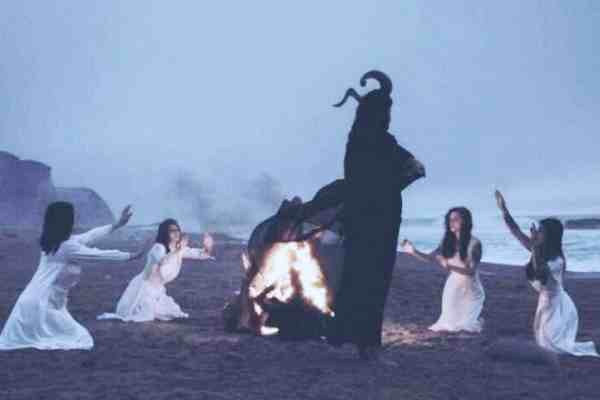
Another principal purpose of your traditions is to create social context, connection, and continuity. The way a family celebrates a holiday is a good example, if you celebrate Christmas in a certain way, you pass this custom along to your children. It’s a ritual that creates family continuity and identity.
We see this in many cultures. In some parts of Europe, the demon Krampus (3) is just as part of the Christmas celebration as Santa Claus. Krampus is a horned, anthropomorphic figure described as half-goat, half-demon. He sounds Christmassy. He punishes children who have misbehaved during the Christmas season, contrasting with Saint Nicholas, who rewards the well-behaved with gifts. When the entire community uses Krampus as a focal point, it brings people together and creates social continuity. When everyone in the community tells the same story and celebrates it on a large scale, children will believe in the fairy tale.
Simple functions also create continuity, gathering on a specific day or time for a family meal is a way of creating a community. People also make community when they have the same traumatic experience. Survivors of any trauma will bond because they share the same life event.
Our Traditions Remain as Important Reminders
Another primary purpose of your traditions is to act as a reminder. Today we have smartphones and automatic calendars. In times past, it was the value of storytelling and tradition which served as calendars and reminders of important cultural benchmarks. Some cultures used the moon cycles as a source of reminders that help them get ready for planting, harvesting, hunting, and fishing.
The cycles of Sun, Moon and the planets became another way to track significant events like the solstices and equinox. Our birthday is one of the important reminders. Many cultures celebrate this benchmark. Many cultures use the 13-month moon calendar instead of the astrological signs of the stars.
For example, The Adhan (4) is the call to prayer, which they play on a loudspeaker in Islamic communities. They say or play this five times a day from a minaret or tall tower, summoning Muslims for obligatory prayer. It’s not just a reminder, it’s a command to obey, and they keep track of those who attend and those who do not. You place your life in jeopardy if you miss too many sessions. This is a tradition with consequences.
How Tradition Becomes A Culture Snapshot
A historical custom is an important picture of the past, it captures the intent and purpose of sacred rituals and celebrations. You to determine the elements of the tradition to understand the original intent and meaning, and. you do this by breaking down the custom into story elements, rituals, and symbols. Then, we can derive the purpose and intent. We can do this with the two examples above, the call to prayer in Islam and the story of Krampus.
Look at each element of the time capsule. Then research each of the individual elements. If you explore a story, break down the story’s details into their significant concepts. Then search for those same concepts in other stories. You’ll be surprised by what you find — the same with symbols or rituals. All you need to do is open it up.
Here, the value of storytelling can have several layers. It may communicate personal, family, inter-family, and societal messages.
Exploring Your Traditions Part Two
We hope you created a list of traditions and customs. If not, please take the time to do so. Then, break them down into key elements. This exercise will help you see how everything links, just like in the story with Krampus and Santa.
Many people have the same elemental components in personal, family, cultural, and societal customs. Hold on to your list for a while. We’ll take another look at it in a moment.
Remember our example in part one? Our example was a lunch meeting every Sunday. So, now we need to break it down into the elements that it conveys. What is the typical topic conversation? What do people do before and after the meeting? Who is in control of the meeting? Find all the elements that make up this tradition. It may have other elements, such as rebellion, the brother or sister who refuses to attend, or comes late.
So, our simple tradition contains several messages, such as rebellion from the family religious tradition, or submission to it. It may also have religious or political overtones. The message is different for everyone involved, but it’s all part of the same custom and tradition. The culture snapshot of the same event will be different for everyone.
Identify The Intent and Purpose of Traditions
We can determine the intent and purpose with the two examples above, the call to prayer five times a day, and the story of Krampus.
The stories of Krampus and Santa Claus are an example of cultural values about social structure and compliance, the obedient children get rewards, and the disobedient get punishment. It’s a coherent message, with the primary focus on making children more obedient, which translates to a more compliant culture. In the custom, Krampus beats rebellious children with reeds and carries them away in a basket. That’s how you use the fear of superstition to drive behavior.
Fear is used the same way in other religions. The call to prayer in Islam is a way of demanding obedience. It tells people when and how to pray. If you can control when and how someone does something, you can also program thinking and values. So, both the call to prayer and Krampus are similar. They are ways to make people obey.
This snapshot shows how we weave different stories into the cultural narrative. It is impossible to separate the call to prayer from the belief system — and it’s the same with the story of Krampus. Once you can spot the tradition’s intent and purpose, it is easier to trace it. We use a process called comparative analysis to expose the similarities across belief systems. It’s a scientifically based comparative religious study system.
Context and Consistency
The context of tradition is also important, many of the processes of spiritual exploration come from an ancient spiritual legacy. So, it is crucial to keep the original pattern intact.
Religions have adopted or appropriated many of these processes. However, if the religion keeps the processes intact, it serves to preserve and safeguard the tradition. Ancient traditions place equal importance on the content of the message and the quality of delivery. Storytelling and cultural traditions go hand-in-hand. The true value of a story often depends on the presentation eloquence and oratory skills of the storyteller.
The Good, The Bad, and The Ugly
Not all traditions are good or healthy. So, once we dissect the content, we must decide whether to change or remove them. For example, let’s say your family of origin has a tradition of going to religious services. You can dissect the value of this type of meeting and decide to remove it from your practice. In some cultures, this isn’t easy to do. Freedom of choice does not include freedom from religion.
The Good & Ugly Parts of Our Traditions Remain
Any tradition which promotes sectarianism is unhealthy. We are creatures of habit. We love patterns because we are habitual by nature. It means it is easy to fall prey to those things which are habit-forming and unhealthy. Many things which are addictive cause us harm.
Religion is, by definition, a belief system that is a closed set of boundaries. They design spiritual tools to go beyond the limits of thinking and belief. Religious belief systems are made from mythologies, presenting arguments supporting boundaries of thought, faith, and values.
Not all religions are equal. Some religions have more harmful programming than others. For example, Taoism and Paganism have the least boundaries. These systems encourage you to explore and develop your path. Whereas the extremist sects of Christianity and Islam have the largest, most complex, and contradictory boundaries. They also contain the most significant amount of harmful programming, including the justification of ethnic, racial, and gender discrimination to genocide. It all depends on how emotionally invested you are in their propositions. The real purpose of traditions like these is to stifle freethinking and protect their cash flow.
The Abrahamic traditions have such a great social reach that they impact our culture, whether you follow them or not. You must expose yourself to self-hypnosis and group hypnosis programming or face harsh consequences. You must demonstrate your allegiance by attending religious services to reinforce self-hypnosis.
메타데이터
- post_id
- b88cfb2e7d4e
- slug
- the-value-of-storytelling-and-cultural-traditions-a-time-capsule-b88cfb2e7d4e
- url
- https://medium.com/@seekerproject4se/the-value-of-storytelling-and-cultural-traditions-a-time-capsule-b88cfb2e7d4e
- canonical_url
- https://medium.com/@seekerproject4se/the-value-of-storytelling-and-cultural-traditions-a-time-capsule-b88cfb2e7d4e
- author_url
- https://medium.com/@seekerproject4se
- status
- ok
- fetched_at
- 2026-07-07 09:05:48