The Ceylon Sanitary Corps
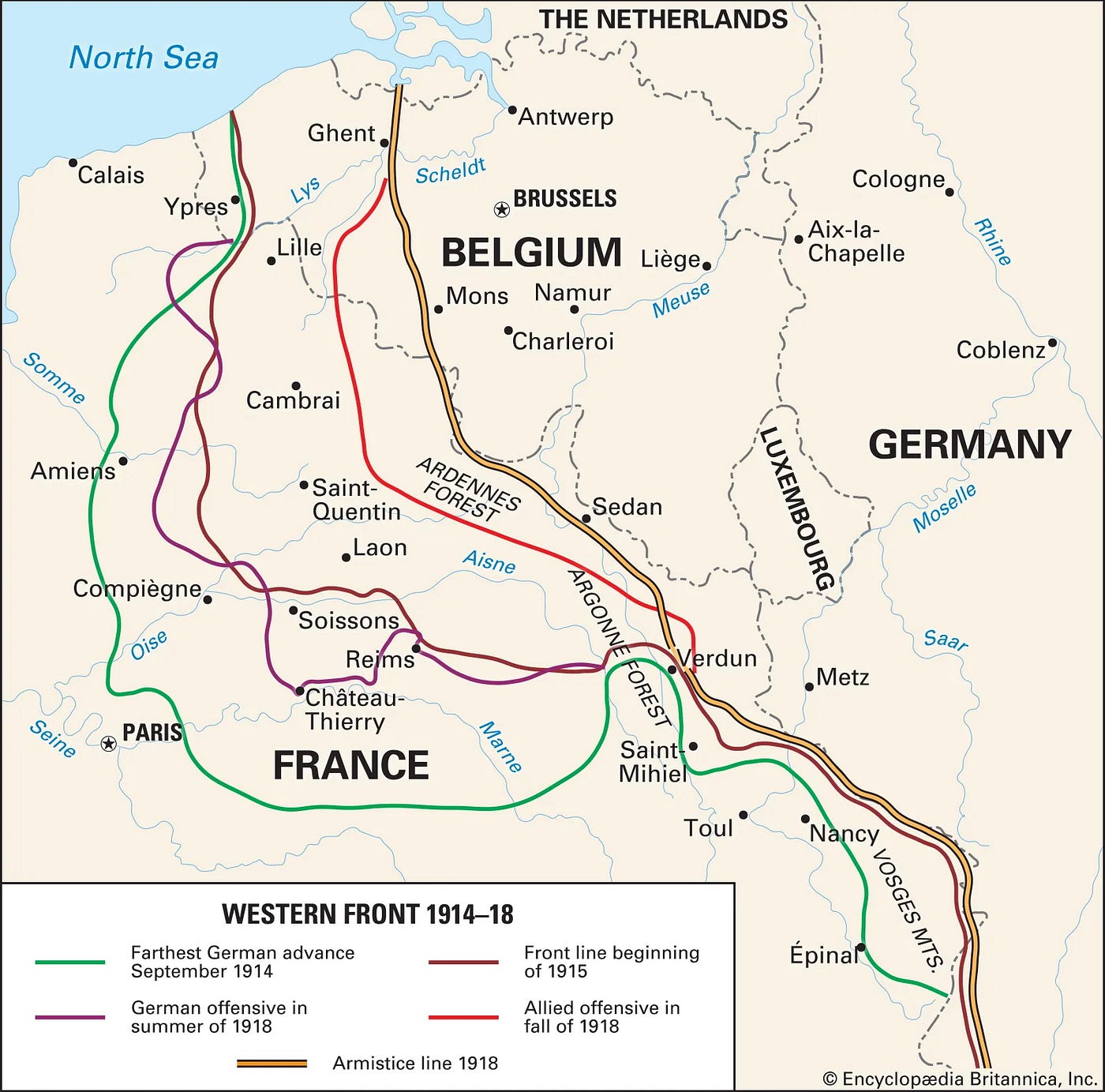
The Great War, as it was known then, lasted from 1914 to 1918 when Ceylon was a British colony. As already recounted in these columns…
The Ceylon Sanitary Corps
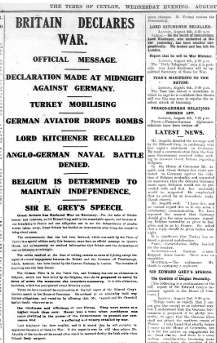
The Great War, as it was known then, lasted from 1914 to 1918 when Ceylon was a British colony. As already recounted in these columns, there was a surge of patriotism towards the Empire among Ceylon’s youth. Contemporary accounts, mainly from the Times of Ceylon and the Ceylon Independent, estimate that more than 1,200 British and Ceylonese volunteered for service. Pupils from the Christian schools of the era were the most frequent volunteers, often inspired by their staff and alumni.
The majority of these young men were already resident in the UK when the war began, others made their way from Ceylon to volunteer. Both groups were attached to British regiments, fighting bravely in appalling conditions and suffering many casualties.
The only official units from Ceylon to serve during the conflict were the Ceylon Planters Rifle Corps and the rather prosaically named Ceylon Sanitary Corps, which is often forgotten. To be fair to the Colonial government, though, these young men and their unglamorous corps were honoured as war dead in both the Colombo Cenotaph and the Kanatte memorial.
The CSC
This largely forgotten unit was not a combat force but one put together with the specific task of providing support to the troops, mainly from the British Indian Army, who were already engaged in battle against Ottoman Turkish forces.
The CSC, also known as the Ceylon Sanitary Company and the Ceylon Sanitary Section in other records, was tasked with providing sanitation and medical support for the troops of the British Indian Army in the Mesopotamian Expeditionary Force. This was no minor assignment: by 1916–17, the British Army in Mesopotamia (known as Iraq today) faced a catastrophic health crisis. The region’s oppressive heat, inadequate drainage, contaminated water supplies, and the concentration of tens of thousands of soldiers in makeshift camps, created ideal conditions for epidemic disease. Dysentery, malaria, and typhoid killed and incapacitated far more men than enemy action. The British were desperately short of trained labour to manage sanitation infrastructure — latrine systems, water purification, waste disposal — that could contain the spread of disease.
The Ceylonese were probably asked to supply a unit for practical and strategic reasons. First, Ceylon had developed a functioning public health system during the colonial period, meaning volunteers with sanitary and medical training were available. Second, there were Ceylonese eager to serve the Empire but unable to afford passage to the UK to enlist with British regiments. A dedicated non-combatant ‘sanitary corps’ offered them the opportunity to contribute to the war effort closer to home — and from Britain’s perspective, it solved both a manpower shortage and a morale problem in Ceylon.
The Composition of the CSC
Surprisingly little information about the Sanitary Corps exists today. It appears that the focus was purely on support duties, with no combat training given to the 165 men who served in it.
Only two of the officer corps, the Commanding Officer, Major Holden, and Captain Stevens, appear to have been British –perhaps seconded from the Royal Army Medical Corps. The remaining officers — Major Moraes (Capt. J. A. Morais of the Public Works Department [PWD] according to the Roll of Honour), Captain C. L. De Zylva and Lieutenant Vanderziel (who was from the Government Medical Department and spelt as Vander Ziel in other sources), were Ceylonese.
The composition of the officer corps speaks volumes. Major Moraes would have been adept at civil engineering, the purview of the PWD which maintained the roads and municipal infrastructure in Ceylon. Lt. Vander Ziel would have been there for his medical expertise. Capt. de Zylva was from the Ceylon Light Infantry (CLI), the only unit of the Ceylon Defence Force which had Ceylonese officers and probably provided military discipline. (see endnote)
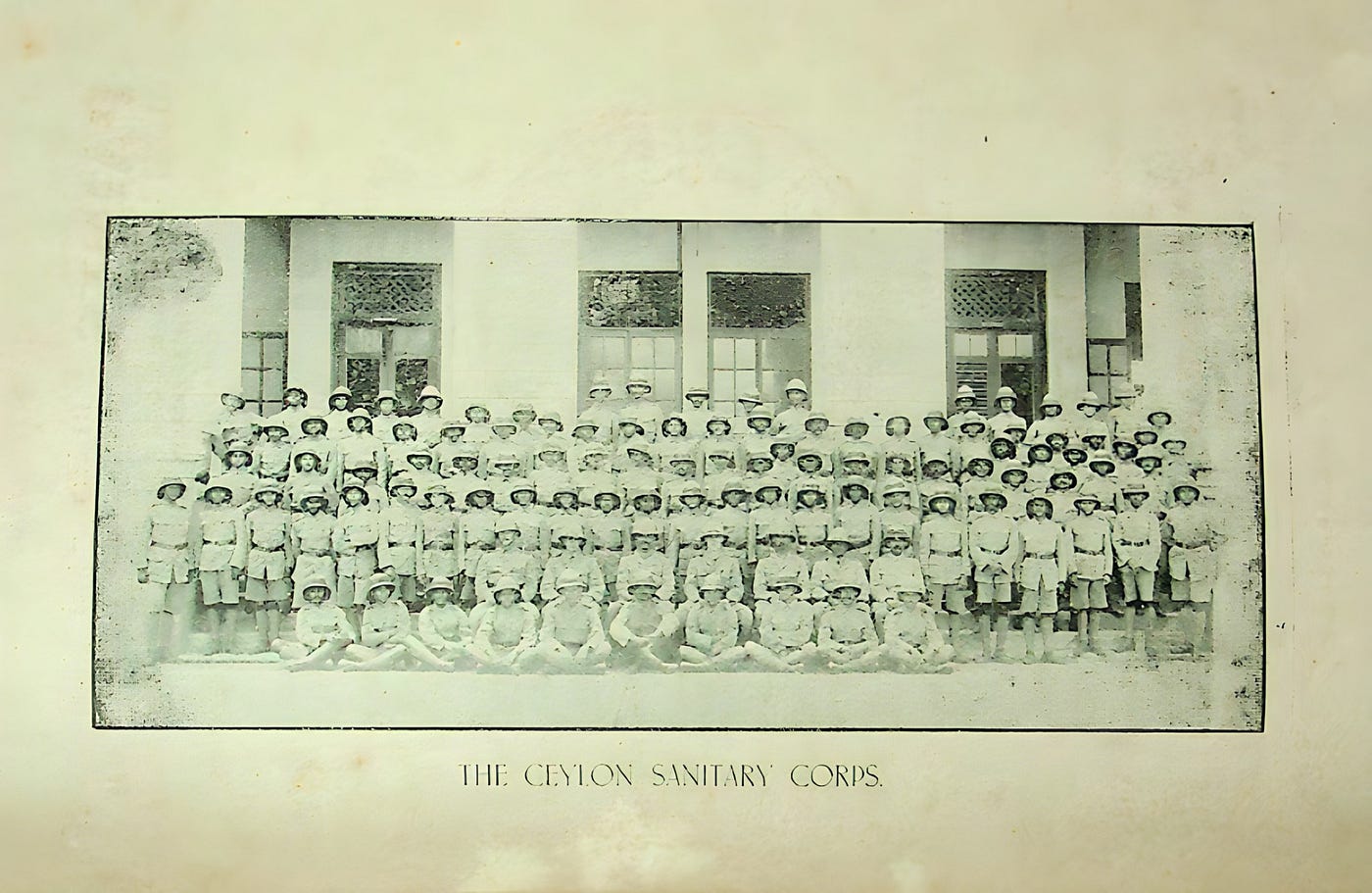
Group photograph taken prior to shipping out. Source Young Ceylon on War Service
The Sanitary Corps departed from Colombo after a ceremonial parade on 10 September 1917. They transited in Bombay, (now Mumbai), India and reached Basra, Mesopotamia (Iraq), shortly thereafter. The next record we have of them is a death in service is logged as occurring in Basra on 7 January 1918. So we can assume that they reached the Mesopotamian theatre by the end of 1917.
From the available evidence, the CSC served solely in what was then known as Mesopotamia — modern-day Iraq — their presence aligning with the wider deployment of colonial medical and labour units supporting British troops engaged against the Ottoman Turkish forces in the region.
They were, in effect, part of a vast and often invisible infrastructure of empire: the thousands of colonial soldiers, labourers, and support personnel without whom Britain could never have sustained its military operations so far from home.
Large numbers of Ceylonese were recruited to support the transport infrastructure in the region too, serving in the ‘River and Rail Service’, another unheralded unit.

A page from Wootler’s Young Ceylon on War Service
The names above, and the composition of the Sanitary Corps, reflect the ethnic and social diversity of colonial Ceylon. Sinhalese, Tamil, Moor, and Burgher names appear throughout the list, with no single group dominating the establishment. In the case of the CSC, European and Burgher surnames are most visible among the technical specialists and some Non-Commisioned Officers (NCOs), while the majority of privates come from a broad cross‑section of local communities.
The NCO structure is narrow but present: thirty sergeants, corporals, lance corporals, possibly drawn from the CLI, and a single Company Quartermaster Sergeant, Francis Homer, who was a proctor (lawyer) and an old boy of St Thomas’ College. form the internal hierarchy beneath the officers.
To be continued — Part 2 is here
Note — The only existing sources for tracing those young men from Ceylon who served in the Great War are the Ceylon Roll of Honour published by the Times of Ceylon in 1919 and Young Ceylon on War Service published by S.T. Wootler in three editions from 1916–1919. When possible all names have been reconciled with these sources. In the absence of them being listed, the assumption has been made the individuals were not ‘Ceylonese’ but were seconded from British units.
메타데이터
- post_id
- b892ee4fe0bd
- slug
- the-ceylon-sanitary-corps-b892ee4fe0bd
- url
- https://medium.com/ceylon-and-the-great-war/the-ceylon-sanitary-corps-b892ee4fe0bd
- canonical_url
- https://medium.com/ceylon-and-the-great-war/the-ceylon-sanitary-corps-b892ee4fe0bd
- author_url
- https://medium.com/@suren-ratwatte
- status
- ok
- fetched_at
- 2026-06-09 15:37:30