Retailer Chargebacks Are More Than a Cost — They’re a Sign of Operational Gaps
For manufacturers, distributors, and suppliers, retailer chargebacks are often viewed as an unavoidable cost of doing business.
Retailer Chargebacks Are More Than a Cost — They’re a Sign of Operational Gaps
For manufacturers, distributors, and suppliers, retailer chargebacks are often viewed as an unavoidable cost of doing business.
But what if they aren’t?
Behind every chargeback is usually a breakdown somewhere in the supply chain — whether it’s an incorrect shipment, missing documentation, labeling errors, late deliveries, or inaccurate invoices.
The real challenge isn’t paying the chargeback. It’s understanding why it happened in the first place.
The Hidden Cost of Chargebacks
Chargebacks rarely come as a single isolated event.
Over time, they can quietly erode profitability through:
- Lost revenue
- Administrative overhead
- Delayed payments
- Increased customer disputes
- Damaged retailer relationships
- Reduced operational efficiency
While each individual deduction may seem manageable, recurring chargebacks can significantly impact margins, especially for businesses working with large retail chains.
Most Chargebacks Are Preventable
Many retailer deductions stem from operational issues rather than intentional mistakes.
Common causes include:
- Incorrect purchase order fulfillment
- Shipment delays
- Labeling or packaging errors
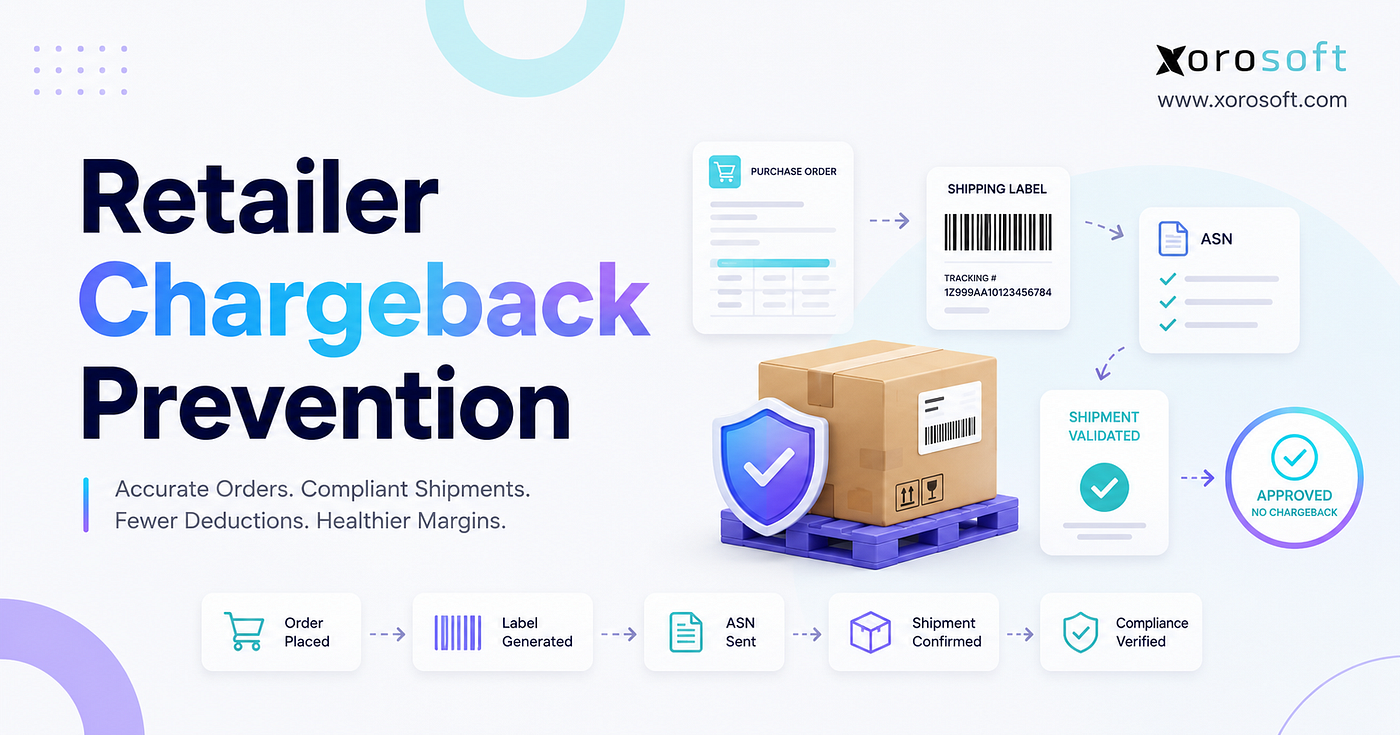
- Missing Advance Ship Notices (ASNs)
- Invoice discrepancies
- Quantity mismatches
- Routing guide violations
These aren’t simply compliance issues — they’re indicators that information isn’t flowing efficiently across the business.
Visibility Is the First Step Toward Prevention
Preventing chargebacks begins with visibility.
When inventory, orders, warehouse operations, shipping, and financial systems operate independently, identifying the source of a problem becomes difficult.
Integrated systems provide a complete view of every transaction, allowing businesses to trace an order from purchase order through fulfillment, shipping, invoicing, and payment.
With better visibility comes faster issue resolution — and fewer costly deductions.
Automation Reduces Human Error
Manual processes are one of the biggest contributors to retailer compliance issues.
When employees manually enter shipping information, generate labels, or reconcile invoices across multiple systems, the likelihood of errors increases.
Automation helps standardize workflows by:
- Validating order information.
- Automating shipping documentation.
- Synchronizing inventory and order data.
- Generating accurate invoices.
- Tracking compliance requirements.
- Creating complete audit trails.
Reducing manual intervention doesn’t just improve efficiency — it also minimizes the risk of expensive retailer penalties.
Compliance Is Becoming a Competitive Advantage
Major retailers continue to strengthen compliance requirements.
Businesses that consistently meet retailer expectations gain more than fewer chargebacks — they build stronger partnerships, improve supplier performance metrics, and position themselves for long-term growth.
Operational excellence becomes a competitive differentiator.
Technology Plays a Critical Role
Modern ERP, warehouse management, and supply chain solutions enable businesses to proactively identify issues before they become retailer deductions.
Rather than reacting to chargebacks after they occur, companies can monitor fulfillment performance, validate compliance, and automate critical processes throughout the order lifecycle.
The result is greater accuracy, improved retailer relationships, and healthier profit margins.
Final Thoughts
Retailer chargebacks shouldn’t be accepted as simply “part of doing business.”
They often reveal opportunities to improve operational processes, strengthen compliance, and create a more resilient supply chain.
By investing in better visibility, automation, and integrated business systems, organizations can reduce costly deductions while improving customer satisfaction and operational performance.
Preventing chargebacks isn’t just about saving money — it’s about building a supply chain that’s reliable, efficient, and ready to scale.
Further Reading
If you’d like a deeper look at the common causes of retailer chargebacks and practical strategies to prevent them, read the original XoroSoft blog:
메타데이터
- post_id
- b8b6d1a42d78
- slug
- retailer-chargebacks-are-more-than-a-cost-theyre-a-sign-of-operational-gaps-b8b6d1a42d78
- url
- https://medium.com/@Xorosoft_Technologies/retailer-chargebacks-are-more-than-a-cost-theyre-a-sign-of-operational-gaps-b8b6d1a42d78
- canonical_url
- https://medium.com/@Xorosoft_Technologies/retailer-chargebacks-are-more-than-a-cost-theyre-a-sign-of-operational-gaps-b8b6d1a42d78
- author_url
- https://medium.com/@Xorosoft_Technologies
- status
- ok
- fetched_at
- 2026-07-22 11:19:28