Going Beyond the Mark
How the protestant impulse to search for a hypothetical pure, complete, ancient Christian church misses the mark and leads to error.
Going Beyond the Mark
How the protestant impulse to search for a hypothetical pure, complete, ancient Christian church misses the mark and leads to error.
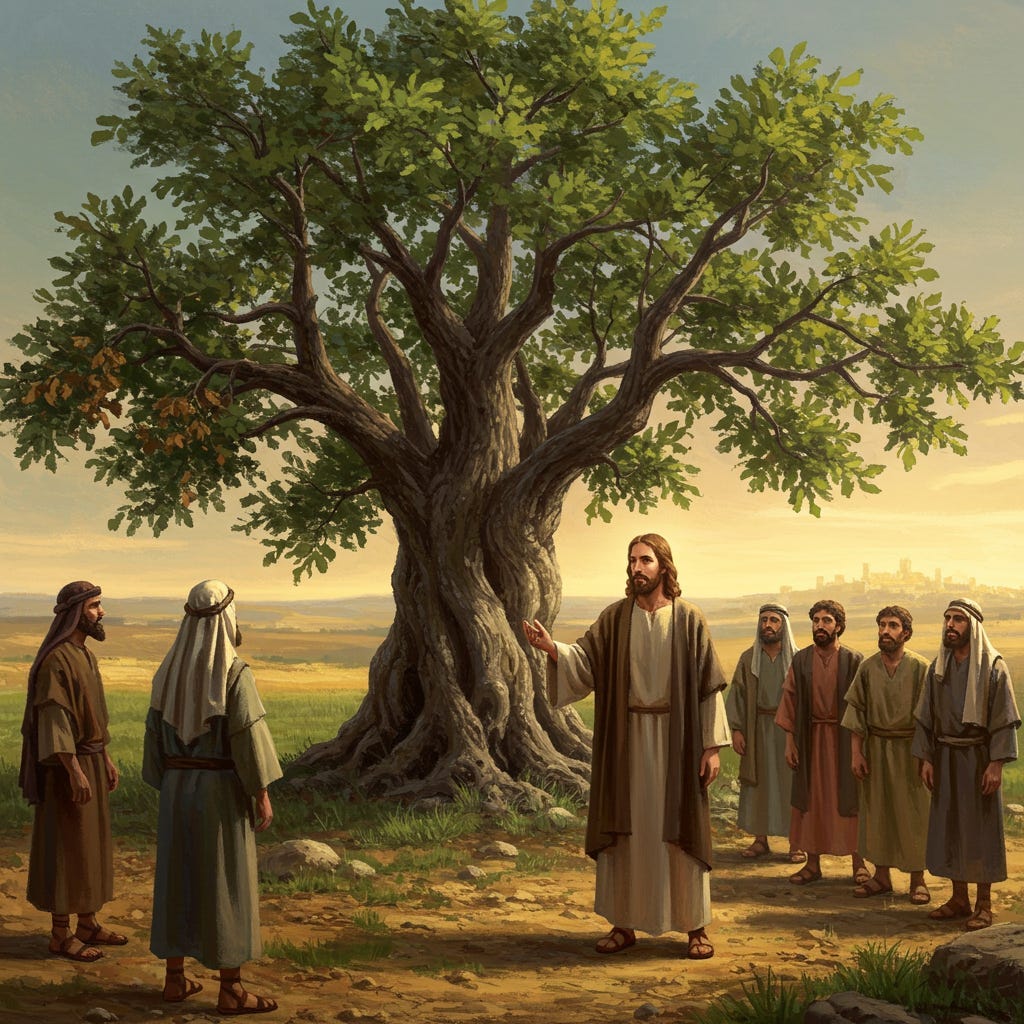
Image by ChatGPT
In conversation with my Evangelical friend Morgan. He mentioned an interesting group called straitisthegate. He has another friend who is apparently associated with this group and wanted to know my thoughts.
Faulty hypothesis and even worse assumptions
Within the Protestant tradition, there has often been an impulse to find a purer, original form of Christianity that has apparently been lost. (This is certainly a motivating factor for the founding thesis of the LDS church.)
A core tenet of the Protestant Reformation was the belief that the Roman Catholic Church had, over centuries, drifted from an earlier, purer, and more scriptural form of Christianity. The Reformers sought not to invent a new church, but to “reform” (i.e., restore or bring back into proper form) the existing Church by peeling away what they considered to be accumulated corruptions, traditions, and doctrines that were not rooted in the Bible or the early apostolic period. This is why this history/period of time is referred to as the Protestant Reformation. (i.e., a Protest for reforming the roman catholic church.) and that the reformation’s early leaders are referred to as the Reformers.
Their guiding principle was often “Ad Fontes” (to the sources), a Renaissance idea applied to theology — going back to the original biblical texts and, to a lesser extent, the writings of the early Church Fathers, particularly when those Fathers seemed to align with their preferred scriptural interpretations.
Martin Luther’s entire struggle was predicated on the conviction that the Church of his day had lost its way, particularly regarding salvation and the authority of Scripture. He saw papal authority, indulgences, the “excessive” number of sacraments, and the Roman Catholic Church’s hierarchical structure as deviations from the primitive Church.
Luther saw the Bible (sola scriptura) as the supreme authority, above papal decrees, church traditions, or any other normative authority, and attempted to use the Bible to determine what this “proper form” of Christianity was.
In doing so, he made some very large and critical assumptions.
That there is an earlier, purer, and more scriptural form of Christianity.
- This almost assumes that either scripture came first and the Church was based on it, or that scripture was produced as a textual replica and guide of “pure and ideal church.” Neither of these assumptions is true.
- This assumes that Christianity, as founded by Jesus Christ and the Apostles, was initially revealed in a perfect, complete, and uncorrupted form. It posits a “golden age” or a “primitive Church” that perfectly embodied God’s will and truth.
- We know from history that the church was not revealed in a perfectly complete form. The apostles were left to fill in many blanks and questions not explicitly taught by Christ. Case in point, almost all of the ecumenical councils for the first millennium are attempts to grapple with Christology (answering the question of just who and what Christ was, including his nature and will). That’s a pretty big gap. Christ did not stick around indefinitely to answer every little question, which is why he sent the Holy Spirit at Pentecost.
- We see this assumption being taken to its logical conclusion with the rise of the restorationist movement during the Second Great Awakening. The LDS church is based on taking this assumption to its logical conclusion.
- By Implication: Any deviation from this original state is seen as a corruption, an accretion, or an error. It sets up an ideal benchmark against which all later developments (traditions, doctrines, practices) are measured and, if found wanting, rejected. This contrasts with the historical view that sees the Church as organically developing its doctrine and practice over time, guided by the Holy Spirit. The problem is that nobody knows what this “original state” was, and so the benchmark against which they judged was highly influenced by their own opinions, likes, and dislikes. Even the reformers themselves, famously, could not agree. Effectively, the reformers set themselves up as popes over the Church and then later over their own churches.
Discoverability and Intelligibility of Original Truth
- It’s assumed that the hypothetical original pure form of Christianity, though allegedly obscured by centuries of corruption (also an assumption), could still be accurately discerned and understood by studying the “sources” (primarily Scripture, but also early Church Fathers, if they supported the reformers' particular/personal scriptural interpretations). It assumes that through diligent study, prayer, and the guidance of the Holy Spirit, individuals can recover the original message and practices.
- This empowers individuals and scholarly inquiry, reducing the perceived need for a hierarchical teaching authority to interpret and mediate truth. It suggests that truth is not hidden or solely accessible through a select few, but open to all who diligently seek it in the right sources.
That such “original/pure” Christianity can be located and reclaimed solely through the scriptures.
- This is perhaps the most critical assumption. It posits that the Bible contains all the necessary truth to understand and reconstruct this hypothetical original, complete, and pure form of Christianity. It assumes the Bible is inherently clear enough (“perspicuity of Scripture”) to be correctly interpreted by individuals (or at least, by educated individuals like the Reformers themselves) without the need for an external interpretive authority (like the Papacy or the Magisterium of the Roman Catholic Church) or understanding in historical context.
- As a result, if a doctrine, tradition, or practice could not be explicitly found in, or directly derived from, the pages of Scripture, it was considered a human invention, an addition, and therefore a potential corruption that must be discarded to return to the hypothetical original. This directly challenged the Roman Catholic reliance on both Scripture and Sacred Tradition.
- Note that all of this falls apart if the scriptures were created for any purpose other than to act as a template upon which to base a church.
- In fact, the early church only put into the gospels the things that they wanted the whole world to know. They reserved sacred teachings, beliefs, and practices within the church as part of church tradition. Paul spent, IIRC, 3+ years in Ephesus teaching day and night, yet Ephesians is a very small epistle. Is it rational to think that everything Paul taught in 3 years is in Ephesians? If not, and that was in church tradition, then Luther discarded it all based on his highly suspect assumptions. There is a reason the Gospels / Bible don’t have the details or instructions for any sacraments in them.
- These assumptions about scripture elevate scripture to the place of supreme authority upon which all things can be judged, and all Christians can be bound.
- This assumption forms the backbone of Sola Scriptura (scripture alone), a key reformation doctrine that is at the very least provably logically inconsistent, and demonstrably a false assumption that has led to theological chaos in the West.
That Luther could correctly determine and interpret scripture accurately all by himself.
- Luther, as a professor of the bible and theology, with some understanding of Hebrew and Greek, certainly thought that he could. The fact that he was a professor of the Bible also makes sense of why he would elevate the Scriptures themselves to the highest place of temporally available religious authority.
- I think there was a certain amount of intellectual arrogance in this assumption. As a biblical scholar of his day, he should have been well aware of the following verse from the Bible. Unfortunately, like many men of intellect and learning, he decided to ignore this.
“Trust in the Lord with your whole heart, and do not be conceited about your wisdom.”
Proverbs: 3:5 (Septuagint)
“Trust in the Lord with all your heart and lean not on your own understanding”
Proverbs: 3:5 (NIV)
That he had access to “the original biblical texts” and that those texts were themselves reliable/uncorrupted guides that could lead him to this “original/pure” Christianity.
- We know that the Masoretic texts were altered by Jewish scribes in the mid-first millennium to dilute or erase biblical support Christians used to support their belief that Jesus Christ was the messiah.1
- Lastly, he assumes that the things he found in Roman Catholicism that are not directly discussed in scripture are corruptions of this hypothetical “original/pure” Christianity.
- While acknowledging the divine founding of the Church, this assumption posits that the visible, institutional Church (specifically, the Roman Catholic Church) could and did profoundly err and depart from fundamental truths, even becoming “corrupt” or “apostate” in major ways over centuries. This contrasts sharply with the Roman Catholic doctrine of indefectibility, which holds that the Church, being divinely guided, cannot ultimately fail in preserving the truth of the Gospel.
- This seems to justify the radical nature of the Reformation, including its break from established ecclesiastical structures. If the Church could not truly err, then reforming it by breaking away would be an unjustified schism, placing one OUTSIDE of the body of Christ.
- It also assumes, in the same vein, that there were no other reasons for the Latin corruptions that he witnessed, like a corrupt priestly class (ecclesiastical problems) resulting from the sinfulness of human hearts.
- It also ignores the possibility that the Latin church’s beliefs and practices were authentic, but that the culture and behavior of those entrusted to represent and administer it were corrupt. When Luther read the scriptures and found what he saw as deviations in the normative religious practices and doctrines of his day, instead of assuming that there may be valid reasons for the differences that he may not understand or be privy to (he was a priest and was never a part of the Roman Catholic Magesterium), he instead assumed instead that these deviations were baseless corruptions. In my opinion, it takes a certain amount of arrogance to make that assumption instead of accepting that the fault may be due to a lack of his own understanding.
I don’t blame Luther for thinking this way. The Medieval Roman Catholic Church, in my estimation, was clearly corrupt. However, I believe that this hypothesis is highly problematic on many fronts and inevitably leads to bad conclusions. It’s an unverified hypothesis based on many assumptions of dubious reliability/truthfulness.
Back to our regularly scheduled programming
I would argue that this Protestant inclination to return to “original sources” often leads to erroneous impulses and conclusions. It misses the mark and leads many to seek the truth of the Christian gospel in Judaism and the actions/options of the Jews. This is dangerous because the Jews rejected Christ and, in the first millennium, actively worked and fought against Christians, the apostles, and the spread of Christianity.
Ultimately, I have to ask, who cares what Jews think about anything to do with Christianity? I don’t think any Christian should concern themselves with the opinions of Jewish scribes, Pharisees, and rabbis. Let’s remember that modern rabbinical Judaism came out of the Pharisees, and we all know what Christ’s opinion of them was.
Fundamentally, folks need to decide whether they want to be Jewish or Christian. I understand the impulse to seek authenticity rooted in antiquity (particularly given the protestant hypothesis discussed above), but there also needs to be an awareness that Christ came to fulfill the law and the prophets, and to begin a new covenant; as a result, things changed. The old has been fulfilled in Christ. And so, we should not be looking to Judaism for answers or even as the standard for what should be considered Christian “truth.”
With regards to these “straitisthegate” folks. When I looked at their website, it seemed to have a strong restorationist/conspiracy theorist bent. I think it would be right up Billy Carson’s alley. I see/hear echoes of the attitudes of early Mormons. It also sounds like they buy into some strong misconceptions and BS hypotheses about the last days, pagan influences on the church (like this is a Dan Brown novel), and misconceptions of history resulting from an uneducated, literalist, and highly simplistic reading of scripture. All things that are common errors in contemporary protestant pop culture thinking.
One of their complaints echoes the 7th-day Adventist assertion that we have the “sabbath” day wrong. This comes from a distinct lack of understanding of early Christian history. Sunday was established as the Christian “Kords day” because it was the day Jesus was resurrected. If you accept Christ as Lord and Savior (and that Christ is God), and that Christ began a New Covenant, this should not be an issue we get hung up on. Again, do we want to be Jews or Christians?
This means:
- We should not be trying to center Christian worship on the jewish sabbath.
- We should not look to the Masoretic text as the basis of our Old Testament scripture (as Martin Luther did in his Protestant version of the Bible), and certainly not to determine what is or is not considered holy scripture. I’m looking at you, Luther and Calvin. For a more in-depth discussion of this issue, please see the following: Why are parts of Daniel Missing from protestant bibles?
- Luther and the protestant movement excluded portions of the Christian Bible from their reformed Protestant Bibles because the jewish Masoretic scribes didn’t hold them as authoritative, even though most hellenized Jews and all early Christians, including the early christian church, held them to be authoritative scripture (which is why they were included in the Bible for the first 1000 years the bible existed, before the reformers mangled the bible and ripped chunks of it out.)
- Personally, I don’t give a damn what the Pharisees and their scribes of the 6th-10th centuries AD considered authoritative for Judaism. Remember the parable of the Fig Tree? Christ cursed them as unfruitful and left them to wither. Why are we trying to follow a cursed group of people?
Instead, we should look to what the apostles taught and considered as scripture and authoritative. We should ask, “What did early Christians and the early church fathers consider to be authoritative scripture?” The Apostles used the Septuagint, which is still used by the Orthodox and Catholic Churches today.
If it was good enough for the 12 apostles, it is good enough for me.
The entire biblical canon was developed by the early church (of which the Orthodox are the surviving remnant). Regarding Sola Scriptura and protestant bibliolatry, the table of contents of the Bible is not found in any of the books of the Bible. If the Bible is the sole and primary authority that can bind all believers, then we have a problem b/c we cannot answer the questions about how we know that we have all authoritative scripture in the Bible and how we know that all of the books in the Bible are authoritative. If the scripture is the only authority, then you have a theological problem and need to refer outside of scripture itself to answer that. As soon as we do that, Sola Scriptura is falsified because we, in essence, are accepting/affirming that there is some, at least, normative authority on the same level of scripture outside of the scripture that can determine what is or is not Scripture (and I would argue that that’s the original church — the Orthodox Church.)
One more thing. Legalism. Protestants tend to be very legalistic (re: this discussion about the sabbath day, tithing, etc.) They come by it honestly; both Luther and Calvin were trained lawyers. But I think that we need to be cautious about getting too lost in the minutiae of legalistic rule-following. If we allow this type of Old Testament legalism to cloud our thinking, we miss the mark and become Pharisees.
Instead, let’s celebrate the new covenant and not get too far off the mark by trying to transform the New Covenant into something that looks like the Old Covenant.
Returning to the Fig Tree
To the best of my understanding, the abandoning of the old covenant is what the story of the cursing of the fig tree is all about. Christ hungers (for his people, but they have ignored and rejected him.)
He finds a fig tree that has brought forth no fruit (even though at that time of year/season, it should have at least had some early budding of fruit, but instead it was barren, just like the Jews), so he curses it, and it withers and dies. It’s a warning to God’s people that they need to produce fruit, not just look good on the outside (this is a direct tie-in to Matt. 7:20 and a thematic tie-in to Mathew 21/Mark 11)
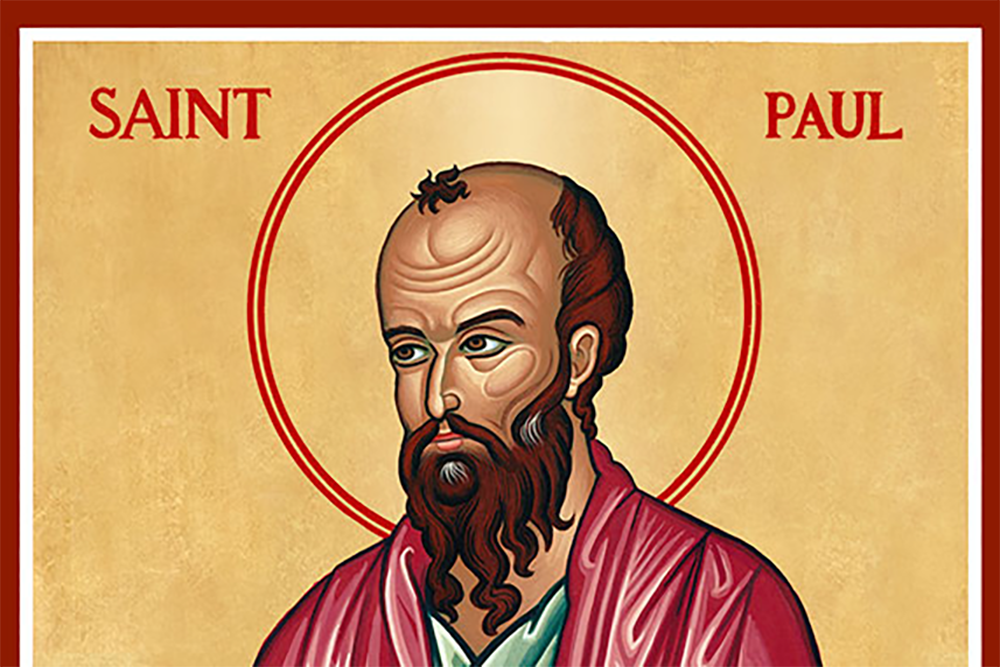
The Jews had the outward signs of religion, including rituals, sacrifices, and adherence to the Mosaic law, but lacked the fruits of holiness, righteousness, faith, and love that God desired them to produce. They had not aligned their image with the image of God. Thus, they were then left to whither and die, and not that long after (70 AD), the second Jerusalem temple was destroyed (it was always just a caricature of its former self anyway. Something Christians long recognized.) Then this picks up thematically with Paul’s parable of grafting into the Olive Tree.
The use of the different trees is meaningful. The fig tree was anciently associated with ideas of fertility, health, abundance, longevity, and wisdom. The Fig tree is also associated (in holy tradition) with the Tree of Knowledge of Good and Evil. Recall that fig leaves were used to cover Adam and Eve’s nakedness; thus, there is also an association with shame and spiritual bareness.
The olive tree has ancient associations with the Tree of Life. So when speaking about allowing the Fig tree to wither, Christ is kind of saying, you leaned on your own knowledge and understanding — and became faithless, full of unbelief and fruitless, which has led to your destruction (an ongoing effect of the Fall, and symbol that the old covenant could not produce fruit in the absence of faith in the messiah.)
Whereas Paul is saying that in the larger context, when it comes to salvation, the Jews have not been completely cast off. Instead, the “cultivated” (cultivated by the Lord) tree of life is being infused with “wild branches” (branches not yet cultivated by the Lord) from the Gentiles, in a way that builds on the work that God did before in the old covenant, which includes the foundation that supported the coming of the messiah. The imagery is complete as we recognize that Christ himself is the “Tree of Life.” He was born and lived as a Jew, and his gospel has grown to cover all of the earth and incorporate both Jew and Gentile.
Conclusion
To my friend Morgan, I’d say this. No offense to your friend, but I’m inclined to put these folks more in the Billy Carson camp than the Wes Huff camp, with a touch of Joseph Smith/Alexander Campbell/Plymouth Brethren thrown in for flavor. Their website seems to make assertions that, to my ears, echo those floating around during the Second Great Awakening — American frontier protestantism that led to Mormonism, Pentecostalism, the Jehovah’s Witnesses, etc. In my opinion, I’d steer clear of getting involved with them; a movement like that has the potential to go sideways in many different directions.
Notes
- Sam Shamoun, a roman catholic apologist, does a good job of highlighting some examples of how the Jews altered their scriptures to hide/obfuscate Jesus.
[embed]
- I think that in the parable of the fig tree, there is an implicit warning to Protestants. The Doctrine of Sola Fide, and the resistance to/obsession with and misunderstanding of “works based salvation” can lead precisely to the nominal belief and barrenness of fruit that the Lord is pointing at.
메타데이터
- post_id
- b8ccf7ac377d
- slug
- going-beyond-the-mark-b8ccf7ac377d
- url
- https://medium.com/@lds2orthodox/going-beyond-the-mark-b8ccf7ac377d
- canonical_url
- https://medium.com/@lds2orthodox/going-beyond-the-mark-b8ccf7ac377d
- author_url
- https://medium.com/@lds2orthodox
- status
- ok
- fetched_at
- 2026-06-26 12:24:55