Five Things Your Cotton Prayer Dress Wishes You’d Stop Doing
Cotton is forgiving. But it’s not invincible.
Five Things Your Cotton Prayer Dress Wishes You’d Stop Doing
Cotton is forgiving. But it’s not invincible.
If you’ve ever pulled a prayer dress out of the wash only to find it a size smaller, pilling in odd places, or looking duller than it did after the first wear — you’re not alone. Cotton prayer wear takes a lot of care for granted, and most of us have picked up laundry habits that make complete sense in theory but quietly damage the fabric over time.
Here are five myths about cotton care that are probably shortening the life of your prayer dress, and what to actually do instead.
Myth 1: Hot Water Cleans More Thoroughly
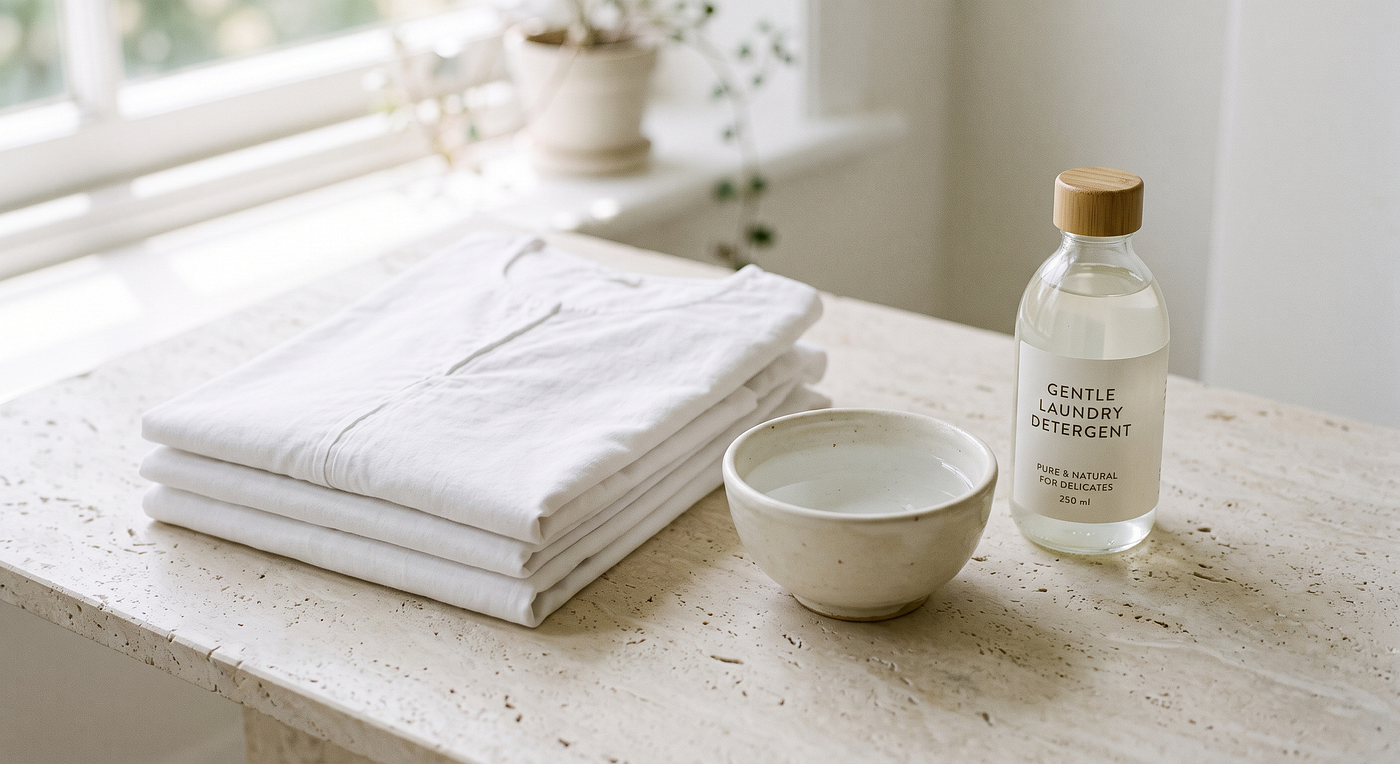
The logic seems reasonable — heat kills bacteria, dissolves oils, sanitises better. For towels or bed linen, that’s broadly true. But for cotton prayer wear, especially anything with a softer, more relaxed weave, hot water is the quickest route to permanent shrinkage.
Cotton fibres swell when exposed to heat, then contract and lock tighter as they cool. A 60°C wash can take a regular-sized prayer dress down a full size in just a few cycles. Cold or lukewarm water — 30°C at the most — cleans just as effectively when paired with a good detergent, and the fabric holds its shape wash after wash.
Myth 2: More Detergent Gets It Cleaner
This one is so common it should be printed as a warning label. Pouring in an extra cap of detergent feels like insurance. More soap, more clean, right? But excess detergent doesn’t rinse out fully — it builds up inside the fibres, leaving a slightly stiff, filmy residue that actually attracts more dirt over time. White and light-coloured cotton prayer dresses are especially vulnerable; they start to look yellowed or grey with no clear cause.
Use the amount on the label. For a gentle wash cycle, you can often halve it without any drop in cleanliness.
Myth 3: High Spin Means Faster Drying, So Why Not Use It
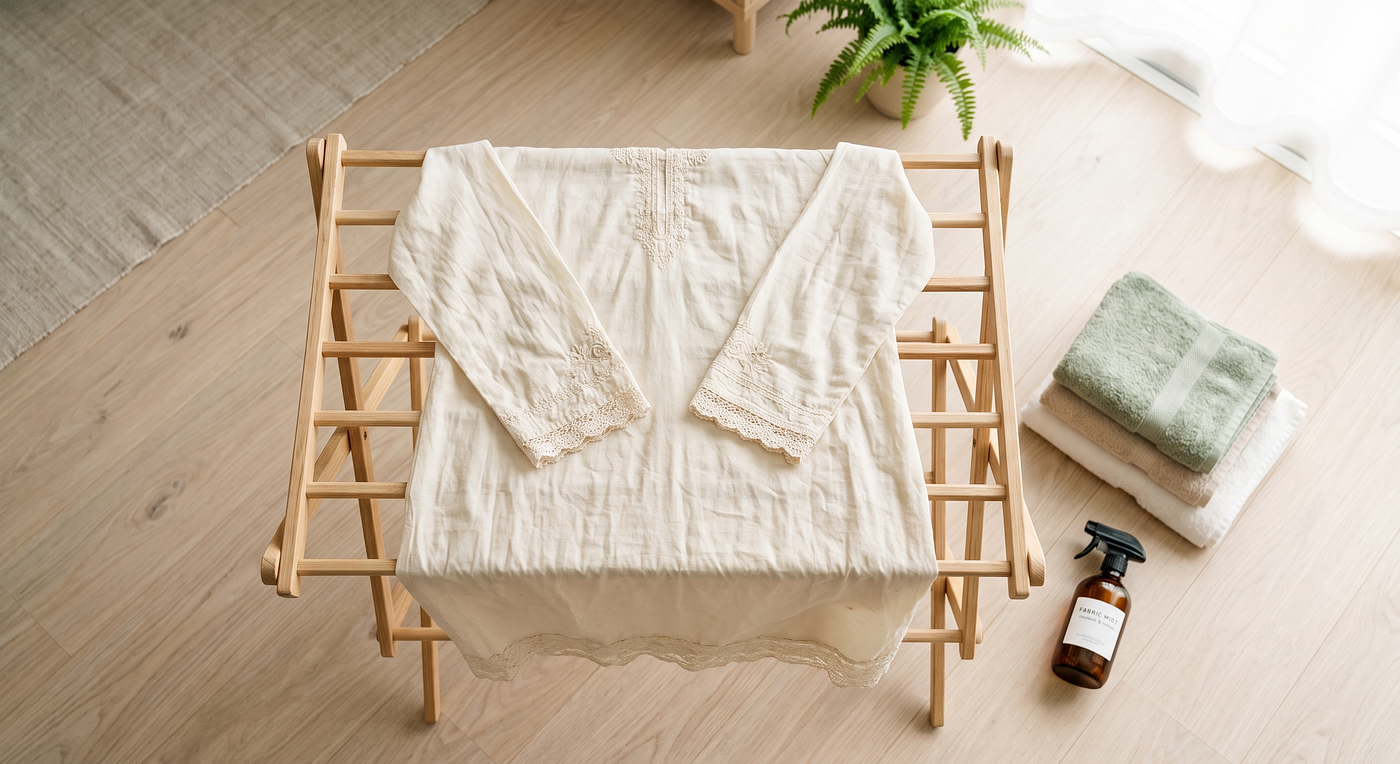
A higher spin cycle does wring out more moisture and cut drying time. But it also twists fabric hard — and cotton, being a natural fibre, doesn’t spring back the way synthetics do. The result is stubborn creases that are nearly impossible to iron out without re-dampening the dress first, and over time, a gradual weakening of the weave at stress points: shoulders, hemlines, and sleeve joins.
For cotton prayer wear, 600–800 RPM is sufficient. The few minutes saved on drying aren’t worth the months you lose on garment life.
Myth 4: Let It Dry Completely Before Ironing
This one catches a lot of people off guard. Ironing bone-dry cotton is harder work and less effective. The fibres are brittle when fully dry, so you end up pressing harder to flatten creases — which means more heat and more mechanical stress on the fabric.
Iron cotton prayer wear while it’s still slightly damp. The result is smoother, achieved with lower heat and far less effort. If you’ve already let it dry fully, a light mist of water before you iron gets you to the same place.
Myth 5: Fabric Softener Is Good for Cotton
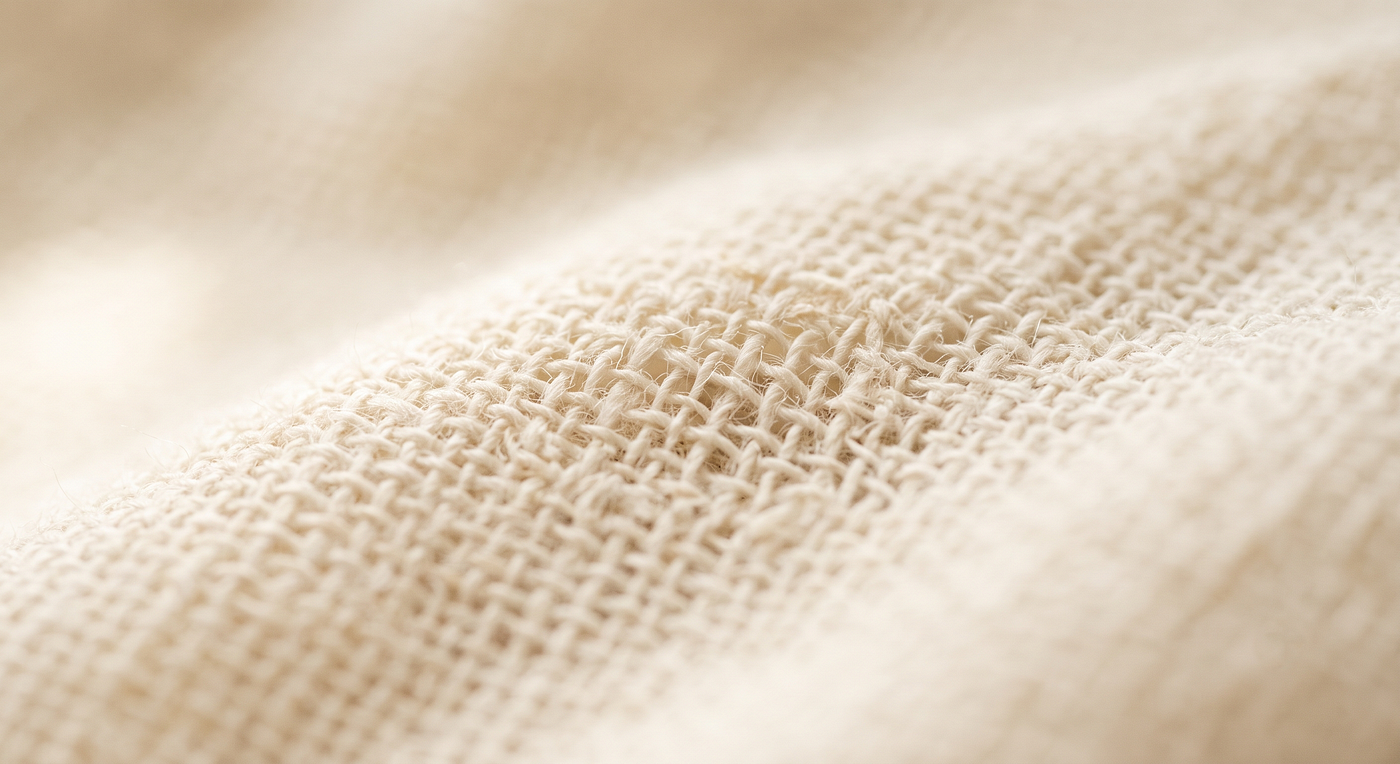
Fabric softener deposits a thin coating on fibres to create that familiar silky feel. It works — briefly. But that coating accumulates over repeated washes and gradually reduces the fabric’s breathability. For a prayer dress you wear several times a day, often through warm weather, losing breathability matters.
[UNIQUE INSIGHT]: Cotton prayer wear made for daily salah use typically has a more open, relaxed weave than standard cotton garments. That weave is precisely what makes it comfortable against skin during prayer — light, non-clingy, and easy to move in. But it also means the fibres are more exposed to mechanical stress in the wash. Skipping fabric softener and using a mild, fragrance-free detergent actually preserves the natural softness of the weave longer than any softener will.
What Actually Works
Cold water, gentle cycle, small amount of mild detergent. Low spin RPM. Reshape while still damp and dry flat or on a wide hanger, away from direct sunlight. Iron slightly damp at a medium cotton setting.
If your prayer dress is white, a tablespoon of baking soda added to the wash keeps it bright without attacking the fibres the way optical brighteners or bleach do. A 20-minute cold soak before washing also loosens dust, prayer mat fibres, and general everyday buildup before the cycle even starts.
Good cotton prayer wear is built to be worn often — multiple times a day, every single day. With a gentle routine, a well-made cotton prayer dress holds its shape, softness, and colour for years, not just one season.
메타데이터
- post_id
- b8f04f7eea27
- slug
- five-things-your-cotton-prayer-dress-wishes-youd-stop-doing-b8f04f7eea27
- url
- https://medium.com/@gazni1/five-things-your-cotton-prayer-dress-wishes-youd-stop-doing-b8f04f7eea27
- canonical_url
- https://medium.com/@gazni1/five-things-your-cotton-prayer-dress-wishes-youd-stop-doing-b8f04f7eea27
- author_url
- https://medium.com/@gazni1
- status
- ok
- fetched_at
- 2026-07-16 17:10:13