The World Needs a Common Enemy
The Ubaid, the Dutch, and the Alien Apex
The World Needs a Common Enemy
The Ubaid, the Dutch, and the Alien Apex
These past couple of days I’ve been digging into the origins of human civilization in Mesopotamia, but also later periods associated with Predynastic Egypt. I came across something rather frustrating when reading about the distinction between Lower and Upper Egypt, associated with the Maadi-Buto and the Naqada cultures, respectively. It was the notion that Upper Egypt was far more culturally advanced than Lower Egypt. They were engaging in complex craftsmanship, hunting, and had an organized social hierarchy, all while Lower Egypt was herding its cattle. But it became even more frustrating when I read that Lower Egypt was actually in contact with the Levant and in much closer proximity to ancient Mesopotamia, where complex social structures and culture were thriving for at least a thousand years. Yet the Maadi-Buto culture was far less sophisticated than the Naqada.
Scarcity, Strife, and Centralization
This led me to the concept of environmental circumscription, which was proposed by the anthropologist Robert Carneiro in his paper “A Theory of the Origin of the State”. Simplified, it suggests that competition over resources naturally breeds conflict, and conflict breeds centralization. In Upper Egypt, the Nile Valley was often a narrow strip of cultivable land bordered by desert. As populations grew during the Naqada period, communities increasingly competed for resources, trade networks, and political influence. Some settlements became dominant regional centers, and local elites consolidated power through a combination of economic control, religious authority, alliances, and, at times, warfare. Over time, these processes produced more centralized political structures and laid the foundations for the unification of Egypt.
Lower Egypt presented a very different environment from Upper Egypt. The Nile Delta consisted of a broad, fertile landscape crossed by numerous channels, with settlements spread across a much larger area than those of the narrow Nile valley. Some scholars argue that this geography made it easier for local communities to remain autonomous and may have slowed the emergence of large centralized polities [1] [2] [3]. As a result, Predynastic Lower Egypt appears to have remained less politically centralized and less socially stratified than the increasingly hierarchical Naqada culture of Upper Egypt.
While Lower Egypt maintained extensive trade contacts with the Levant and imported practical resources such as copper and other goods, Upper Egypt became increasingly connected to exchange networks reaching into Nubia and the Eastern Desert. These networks supplied gold, ivory, exotic animal products, and fine stone, materials that carried significant prestige value. Archeological research suggests that Upper Egyptian elites used control over such luxury goods to display status, reinforce political authority, and distinguish themselves from rivals [1] [2] [3]. The demand for prestige objects likely encouraged the development of specialized artisans and contributed to the growth of craftsmanship visible in the Naqada culture’s palettes, mace-heads, jewelry, and ceremonial artifacts.
Competition among the increasingly powerful Naqada polities of Upper Egypt appears to have encouraged political centralization and the development of military leadership. During the Naqada II and III periods, Upper Egyptian elites expanded northward into the Delta, where the less centralized Lower Egyptian cultures seem to have been gradually absorbed or displaced. While Lower Egypt benefited from proximity to Levantine trade networks, the narrow geography of Upper Egypt may have favored the emergence of strong territorial states, helping create the political foundations of the pharaonic kingdom.
So then, based on this observation, it appeared that scarcity and strife are the major proponents of civilization. It seemed that while resource availability and egalitarianism may have enabled the Maadi-Buto culture to live a “peaceful” and an “abundant” life, it stripped them away of the need to innovate. Meanwhile, the scarcity and strife that much more defined the Naqada cultures, led them to high social stratification and militarization, both of which allowed them to absorb Lower Egypt and give birth to Early Dynastic Egypt. The cultural complexity that followed needs no discussion.
Mesopotamia and the Temple Economy
But something was missing in my reasoning; it did not feel complete. Through my recent research on the Ubaidian culture of ancient Mesopotamia, I’ve learned that they were rather egalitarian but were also able to build complex social structures. There were organized temples that served as the economic-politicotheological center of the time, and the economy was defined by staple finance [4]. In this early period, they did not engage in warfare, and their “militarization” was defined by hunters. So then, was it only scarcity and strife that led to cultural complexity? While conflict may have played an important role in the emergence of complex political organization in predynastic Egypt, southern Mesopotamia followed a somewhat different trajectory.
Because the Tigris and Euphrates rivers were much more unpredictable and variable in their flooding patterns than the Nile, agriculture in southern Mesopotamia depended heavily on irrigation and communities faced recurring risks from floods, droughts, and shifting waterways. This led to the emergence of the temple as a central organizing institution. It functioned not simply as a religious center but also as an economic and administrative one.
The Ubaid economy was grounded in staple goods rather than luxury items. Barley, wool, fish, and other everyday necessities formed the basis of production and exchange. Temples collected, stored, and redistributed these resources, helping communities manage risk and coordinate labor. This stored surplus could support communal projects, sustain specialists such as potters and weavers who were not directly engaged in farming, and provide a measure of security during years of poor harvests. In doing so, the temple became a focal point for both economic life and collective action.
The Ubaid culture suggested that extreme violence and territorial scarcity are not the only ways a society becomes complex. When an environment demands massive collective action just to survive, humans will build an organized, hierarchical bureaucracy to manage the workload.
The Challenge of Scale
Well, that sounds great, doesn’t it? But ultimately, the Ubaidian culture becomes militarized and highly centralized. Given that there is a limited space on Earth, with continuous expansion of cultures driven by circumscription and warfare, it becomes inevitable for the egalitarian hierarchy to transform into a centralized martial power.
The institutions that emerged during the Ubaid period proved successful. Irrigation, surplus production, and systems of storage and redistribution supported sustained population growth and increasingly dense settlement across southern Mesopotamia. As communities expanded into the much larger urban centers of the Uruk period, however, new challenges emerged. Managing thousands, or eventually tens of thousands, of people required forms of administration far more complex than those needed in earlier village societies. Economic transactions multiplied, labor became increasingly specialized, and social relationships grew less personal and more institutional. In response, administrative systems expanded. Record-keeping became more sophisticated, authority became more centralized, and social hierarchies became more pronounced. Wealth and power were increasingly concentrated in the hands of temple institutions, elite households, and political leaders.
Over time, these developments helped lead to the emergence of more formal state structures and, eventually, institutionalized kingship. Rather than replacing earlier systems of cooperation and shared administration, growing authority built on top of them, allowing Mesopotamian societies to manage much larger and more complex populations. As populations increased during the transition from the Ubaid culture into the Uruk culture and later Early Dynastic periods, southern Mesopotamia became organized into large city-states such as Uruk, Ur, Eridu, and Lagash. Farming along the river systems intensified, supported by increasingly complex irrigation networks that required constant coordination and labor organization. In this densely populated and interconnected landscape, control over water, farmland, and labor became a major political concern.
During the Uruk period, growing administrative complexity and inequality reshaped regional organization, while by the Early Dynastic period, rivalry between city-states sometimes escalated into open conflict over borders and canal systems, as seen in the dispute between Lagash and Umma [5]. Alongside this, rulers strengthened administrative systems, organized labor and military resources more systematically, and developed kingship ideologies grounded in authority and divine legitimacy. This trajectory reached a new level under the Akkadian Empire, when rulers such as Sargon of Akkad created large territorial states through sustained military expansion [6]. In this period, kingship became explicitly linked to conquest, with rulers presenting themselves as divinely sanctioned conquerors whose authority was demonstrated through military success. Warfare and imperial expansion thus became central instruments of political power on a new, far larger scale.
Looking at the two examples of Predynastic Egypt and Ancient Mesopotamia, it seemed practically inevitable that purely egalitarian structures either transform or disappear. When a peaceful, egalitarian society shares a border with an aggressively expanding, militarized neighbor, the peaceful society has only two choices: be conquered and absorbed, or centralize and militarize themselves to fight back. Either way, the egalitarian structure is erased. Because aggressive, expansionist cultures actively seek out new territory and resources, they eventually bump into everyone else. Over a long enough timeline, militarized centralization outcompetes and absorbs purely egalitarian structures simply by virtue of physical force.
Modern Day Dynamics and the Rentier Trap
So fast forward to today, we have maintained that same aggressive expansionist mindset. We still fight over territory even if it’s not required for the absolute survival of the people; it’s become ideological.
Then something else I struggled with was that competition leads to conflict, and conflict to centralization. But isn’t it also true that competition prevents absolute power? If you have multiple superpowers that can neutralize each other, then each one can have a meaningful vote. So, in this case it actually leads to some kind of distributed power, or oligarchy, where multiple actors are in control. When multiple highly centralized states neutralize each other through mutual deterrence (like during the Cold War, or in today’s shifting geopolitical landscape), it prevents a single global empire. However, this isn’t egalitarianism. It is an oligarchy of superpowers holding each other in check while competing for proxy influence.
What would a true egalitarian world order look like then? Can the functional hierarchy of the Ubaidian culture be mirrored on a world scale? And if so, what would that look like and why would you even want to do it?
We have the Western world that has driven scientific and technological progress for the past few hundred years. This has led to the accumulation of wealth that further funds future innovation. To achieve an egalitarian world order, one may suggest that it would require redistribution of wealth to nations that are developing. But then the question arises, what are the reasons for the nation’s less developed state? Upon closer examination, one may find out that it is not the lack of resources, but rather the corruption and greed of its leadership. In such a case, redistribution of resources to such nations is rather unreasonable. But then we have examples of this happening in the modern world.
It seems, though, it is not so much for the benefit of the less developed countries as much as the leverage that the “donating” countries get over those developing ones. It is some kind of modern power dynamic for colonization without force. While over time it may bring indirect benefits to the general populations, the underlying reasons for it are far from altruistic:
- Why would a developed nation freely give away its hard-earned resources? The donating nations seek geographical political leverage and cultural influence.
- Why would the leadership of a developing nation want to turn it into a developed one, if it keeps receiving free cash? They don’t. The receiving nations benefit first and foremost their leadership, and then indirectly the general populations with slow, decades-long improvements.
This aligns with Rentier State Theory [7] and the concept of the “resource curse” [8] applied to foreign aid. In a classic rentier state, the “free cash” comes from oil or minerals. In my model, the “free cash” comes from foreign aid, development loans, or strategic geopolitical rents. When a government doesn’t have to rely on the productivity, innovation, or taxation of its own citizens to survive, it has zero structural incentive to build a modern, diversified economy. Rentier theory further states that when leaders get external revenue, they don’t need to tax their people. When you don’t tax people, you don’t have to listen to them. Foreign aid and unconditional resource wealth function exactly the same way here. The leadership becomes accountable to the source of the money (the foreign donor or the resource market) rather than to their own population. The cash is used by the corrupt leadership to buy off rivals and fund patronage networks, cementing their power.
The Rentier State Theory further applies to modern power dynamics for colonization without force. In classical theory, the rent comes from a passive commodity market (like selling oil to anonymous global buyers). In the current argument, the rent is deliberately engineered by developed nations as a tool of foreign policy. Developed nations do not give resources out of altruism; they give them to buy “rents” in the form of strategic assets (e.g., military bases, voting alignments in the UN, or exclusive access to raw materials). By providing these streams of capital, developed nations ensure that the developing nation’s elite remain dependent on them. If the developing nation actually developed a self-sustaining economy, the donor country would lose its leverage. Therefore, the system creates a mutual, cynical equilibrium: the local elite get rich and stay in power, while the developed nation buys geopolitical compliance. Everyone wins but the general populace.
A Truly New World Order
So then, to achieve an egalitarian world order, the actors within the system need to be altruistic in nature. Otherwise, the real predatory mechanics of the system remain hidden and the egalitarian propaganda fed to the population. But true altruism seems to be somewhat of an exceptional trait that is rarely, if ever observed. The Ubaid culture wasn’t egalitarian out of sheer goodness; they were strictly pragmatic. They cooperated because the harsh environment of southern Mesopotamia made isolated survival impossible. This harsh environment was the common enemy everyone had to fight against.
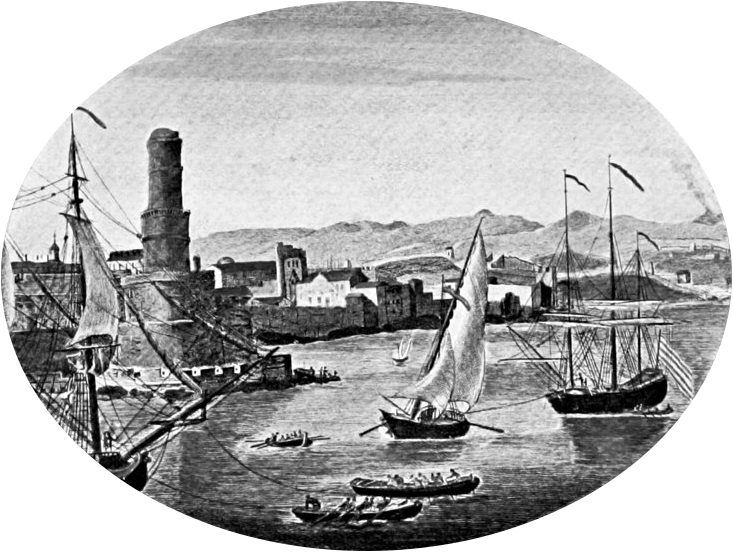
This is evident in a more modern nation, namely, The Netherlands. Dutch history is defined by the constant fight against the natural forces of the sea. When you constantly have to fight the rising water and reclaim your land against it, you have no time to fight others.
If we apply this to a global scale, a true egalitarian world order would not look like a massive charity or a kumbaya utopia. It would look like a strict, planetary management system focused entirely on a shared existential threat. Because we don’t currently have a unifying external threat, like an alien invasion or an immediately catastrophic, undeniable global event, we default to fighting each other over ideological territory.
Following that chain of thought, I am reminded of an article by the theoretical physicist Avi Loeb that I recently read. The article is named, “A New 21st Century Meaning to Human Existence”. There he argues that by finding non-human intelligence, we will discover a new kind of meaning for our existence. In his own words:
“But most importantly, discovering intelligent extraterrestrials could give us an emotional connection to the otherwise lonely cosmos, and inject new insights into the meaning of our life in the cosmos.”
I give myself the permission to slightly build upon his statement. It will not be the discovery of intelligent extraterrestrials or some kind of technologically superior artifact. This may only push the world into yet another competition over who gets to talk to the aliens, or who gets to reverse engineer the technology, or who decides how the technology is being utilized and whether made publicly available. It will be the discovery of a non-human intelligence (NHI) that is so unfathomably more advanced that it makes our competition trivial. But to do so, it may require that the NHI is not friendly. As presented, in our very human world, predatory power does not vanish, it becomes concealed. So, what better way to channel this predatory energy than into figuring out how to survive a real apex predator?
메타데이터
- post_id
- b90170e97341
- slug
- the-world-needs-a-common-enemy-b90170e97341
- url
- https://medium.com/@syntropicdragon/the-world-needs-a-common-enemy-b90170e97341
- canonical_url
- https://medium.com/@syntropicdragon/the-world-needs-a-common-enemy-b90170e97341
- author_url
- https://medium.com/@syntropicdragon
- status
- ok
- fetched_at
- 2026-06-09 15:37:30