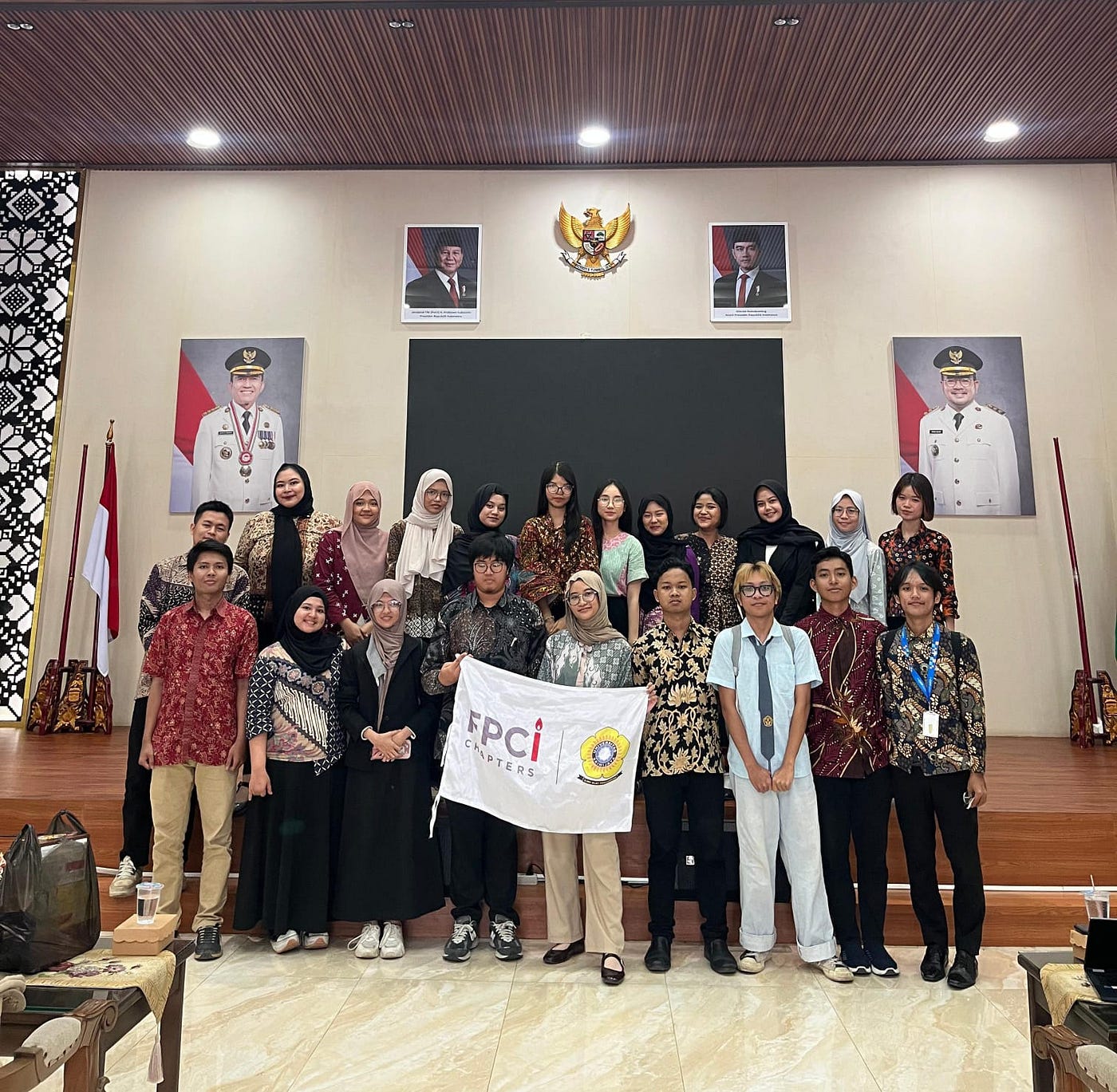
FPCI AUTHOR #10 — The Role of Education in Achieving SDG 1 (No Poverty) in Developing Countries
Written by Stefany Himawari Lbn Gaol
FPCI AUTHOR #10 — The Role of Education in Achieving SDG 1 (No Poverty) in Developing Countries
Written by Stefany Himawari Lbn Gaol
Education has always been more than just attending academic classes or receiving certificates. For approximately millions of people worldwide, it represents the most realistic path that can be impactful in escaping poverty cases. The 2030 Agenda for Sustainable Development, recognized a deep connectivity and relationship between SDG 4 (Quality Education) and SDG 1 (No Poverty). This relationship becomes even more notable in such developing countries, where poverty often provides the promising opportunity for families to improve their current circumstances.
The global commitment to end poverty by 2030 requires much more than temporary solutions such as emergency aid or short-term welfare programs. Education is extremely impactful to address the root causes of poverty by providing people the powerful tool that they need to create lasting improvement for their own lives. However, recent events have made this goal even more challenging. For instance, there was a COVID-19 pandemic that pushed
approximately 70 million people back into extreme poverty and distracted the education, especially the schooling for millions of children worldwide (World Bank, 2022). Such setback reminds everyone that progress against poverty is fragile. In according with that, we must strengthen our commitment to pursue education more than ever, starting from this exact time.
What makes education such a powerful anti-poverty tool is its wide benefits that extend far beyond the classroom routines. When someone receives quality education, they do not simply acquire information; they develop critical thinking ability, problem-solving ability, and the confidence and beliefs to pursue better opportunities ahead. In developing countries where most people work in informal jobs, education typically earn significantly more than those who only finish primary school (Asian Development Bank, 2021). This wage difference matters mostly for families who are living near or even below the “poverty line”, where even modest
income increases can mean the difference between hunger and adequate nutrition, or in another contexts, it can be aligns between sickness and healthcare access.
Vocational training programs that teach specific job skills have proven valuable, especially in such developing countries. These programs align learning directly to employment occasion by training people in technical fields that fulfil the local economies need. To expand on that, graduates can also transition smoothly from training to earning income if education successfully aligns with real job opportunities. Thisshows that education must not only focused on theoretical knowledge, but also need to be relevant to people’s real lives condition, especially narrowing down to the diversity of economic condition.
Perhaps the most powerful aspect of education that benefits in fighting poverty is how it breaks cycles that often trap families across generations. To expand on this, it correlates with an example when a child from a poor family gets a good education, the benefits are able to much more be accomplished into the future period. Study consistently demonstrates huge connections between parents’ education levels with their children’s health and educational success (UNICEF, 2022). Educated parents, in particular, tend to have children who are healthier, better nourished, and more likely are able to succeed in their academic journey throughout the periods. It is strongly believable that each generation can builds on the achievements of the previous one, in which creates upward momentum that can improve entire family’s economic condition out of the poverty cycles.
Girls’ education also holds a special importance according to this particular transformation. The World Bank has documented how each additional year of schooling for girls increases their future earnings substantially while also improving health and social outcomes across entire communities (World Bank, 2023). Educated women also tend to marry later, have fewer children, and invest more in their children’s education and healthcare needs. Yet in many developing countries, girls still face significant barriers to education than boys do. It involves cultural expectations, early marriage, safety concerns, until the lack of appropriate facilities that all may prevent girls from reaching their academic or educational best potential of each. Moreover, addressing these barriers can be counts as one of the smartest investments a country can make, if it focused effectively.
Despite all of these education’s clear potential in reducing poverty rates, such serious obstacles sometimes are still faced and may prevent it from working effectively in particular conditions. According to UNESCO, approximately 244 million children along with the adolescents between ages 6 and 18 are currently out of school worldwide, with most of them are stated in the world’s poorest regions (UNESCO Institute for Statistics, 2023). A vicious cycle is mostly created from poverty, in which families struggling to survive their own lives, facing difficulties in affording their children’s school fees, uniforms, books, and also transportation costs. On the similar condition, many families still also need their children to working to fulfil house needs rather than pursuing higher education continuously as they should.
Getting children to pursue their education by school, however only solves certain part of the main problem. The education quality does matter the most. Many developing countries have successfully enhanced school enrolment process, but unfortunately, still get disappointing results because their children are actually not got the enough learning needs from the school. “The learning poverty” term is used by The World Bank to indicates the situations where children attend school for years but still difficult or even cannot read a simple text or do basic math as they should be for their particular age, and according to their learning periods must be (World Bank, 2022). In certain low-income countries, for about 70 percent of ten-years-old students cannot read and understand an age-appropriate kind of stories. On the other hand, teachers are also often got insufficient teaching training from such responsible institutions, low salary, outdated/always changing curricula, and also lack basic learning materials or sources from their schools. From such information that we already discussed previously, we can understand that “letting” children for only studying in school buildings is not enough yet to solves the main poverty causes.
Another significant challenge is the mismatch between what schools teach to students and what the actual economy needs. Many developing countries still produce graduates who cannot find a matching occupation to their qualifications. In order to solve this case, it requires such proper education systems to work even more closely and effectively with business and industries, in which must be more focus on building practical skills to prepare students for more proper jobs to their interest and what the world needs at the exact time.
Looking forward, innovative approaches are emerging that address these challenges in creative and impactful way. For instance, conditional cash transfer programs as in countries like Brazil and Mexico have successfully helping to solve this problem cycle by giving money to low income or poor families regularly each month, with additional note that this could happen if the families have children who needs to attend school regularly. By offsetting the income children might earn from work, these programs benefit the most in removing a significant barrier while also helps in rewarding families for choosing to give their children opportunity to pursue higher education effectively. On the other side, technology also offers new possibilities for reaching remote areas by mobile learning apps and online educational content. Partnerships between governments, businesses, and even educational institutions have proven extremely valuable for vocational training, in order to create a direct and impactful connections between education and employment.
In sum, the evidence is extremely clear that education plays a very important role in reducing the poverty cases worldwide. For such developing countries, an accessible good quality education is very important to be implemented with. However, we cannot deny that the obstacles are real and still happening in some periods of our lives, but so are the opportunities. For every children who pursue education and learns well, for every girl who gains the powerful insights in shaping her own bright future to be, and also for every community that values and supports the learning needs the most, holds a very valuable roles in creating and enhancing concrete and continuously improve steps toward a brighter world for us, where poverty no longer determines what people can become in their own future. And finally, the strong reminder is not basically from the critical question whether education can help to end poverty cycles or not, but whether we will commit the resources together and some political institutions will be strongly implements on how to make it effectively happen, even throughout ups and downs, and fair for everyone without determining the background diversity of each person, especially students worldwide.
REFERENCES Asian Development Bank. (2021). Skills Development in South Asia. https://www.adb.org/publications/skills-development-south-asia
UNESCO Institute for Statistics. (2023). Out-of-School Children and Youth Data. http://uis.unesco.org/
UNICEF. (2022). Maternal Education and Child Development. https://www.unicef.org/reports
World Bank. (2022). Poverty and Shared Prosperity 2022: Correcting Course. https://www.worldbank.org/en/publication/poverty-and-shared-prosperity
World Bank. (2023). Girls’ Education. https://www.worldbank.org/en/topic/girlseducation
메타데이터
- post_id
- b91b226d5f3e
- slug
- fpci-author-10-the-role-of-education-in-achieving-sdg-1-no-poverty-in-developing-countries-b91b226d5f3e
- url
- https://medium.com/@sriwijayafpci/fpci-author-10-the-role-of-education-in-achieving-sdg-1-no-poverty-in-developing-countries-b91b226d5f3e
- canonical_url
- https://medium.com/@sriwijayafpci/fpci-author-10-the-role-of-education-in-achieving-sdg-1-no-poverty-in-developing-countries-b91b226d5f3e
- author_url
- https://medium.com/@sriwijayafpci
- status
- ok
- fetched_at
- 2026-07-11 13:42:50