AI-Powered Robotics in Manufacturing:Boost Efficiency & Flexibility
Discover how AI-powered robotics transform manufacturing by improving automation efficiency and flexibility for smarter industrial…
AI-Powered Robotics in Manufacturing:Boost Efficiency & Flexibility
Discover how AI-powered robotics transform manufacturing by improving automation efficiency and flexibility for smarter industrial processes.
Introduction to AI-Powered Robotics in Manufacturing
A circuit board rolls down the line. A robot arm stops it, flags a hairline fracture the human eye would miss, and routes it offline in under a second. Three bays over, a sensor picks up unusual vibration in a motor bearing and sends an alert before anyone on the floor notices anything wrong. The maintenance crew schedules a stop. No breakdown. No lost shift. This is not a prototype environment. It is an ordinary Tuesday in a factory running AI-powered robotics. Competitors still relying on fixed automation are watching their margins shrink trying to keep up.
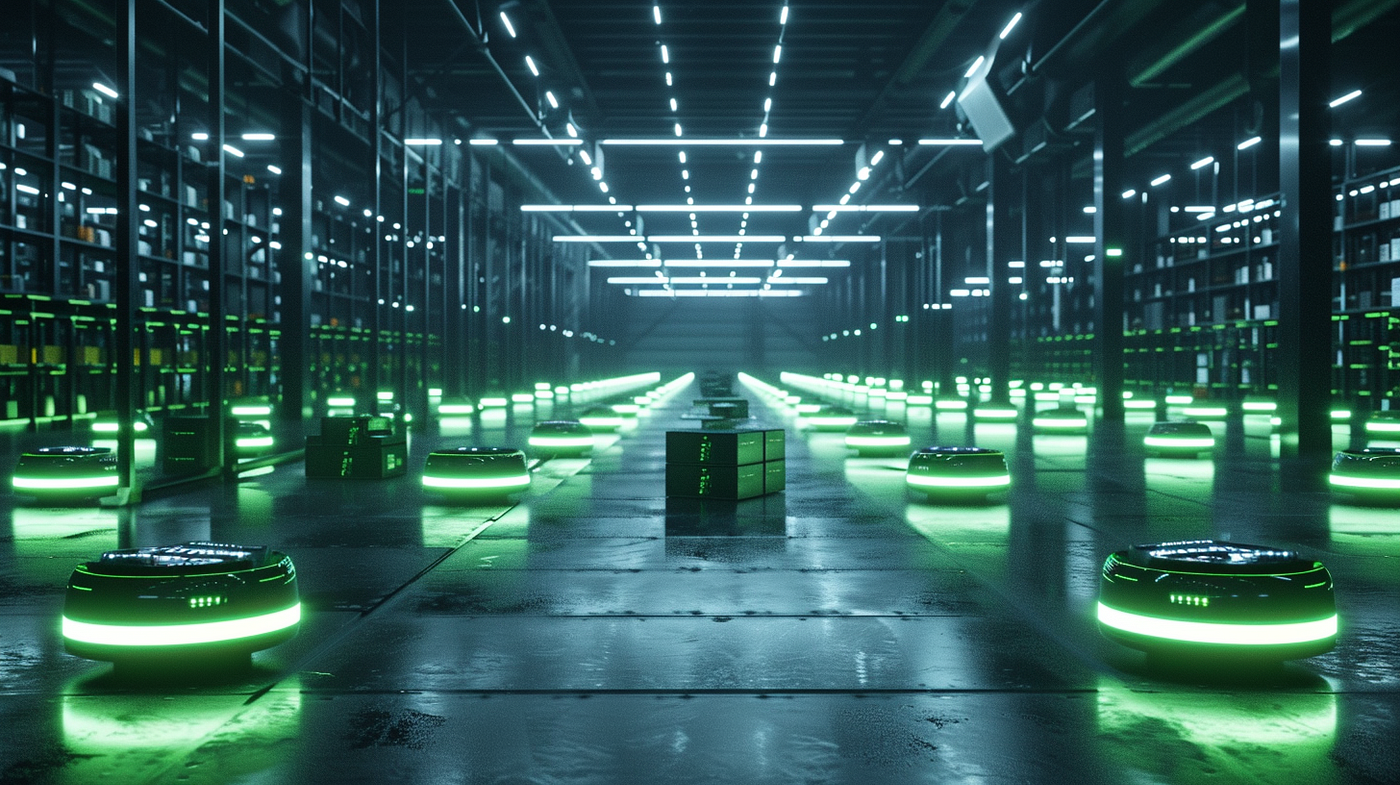
AI-powered robotics is changing the way factories operate. In simple terms, it means robots that learn, adapt, and make decisions rather than simply follow a fixed set of instructions. Traditional industrial robots are precise but rigid. Add AI, and they become responsive. They adjust to variables in real time, detect problems before they grow, and collaborate with human workers in ways that were unthinkable a decade ago.
The results are measurable. Faster production. Fewer defects. Lower downtime. And a level of manufacturing flexibility that lets companies shift products, volumes, and processes without tearing apart the production line. This article breaks down how AI is powering that transformation and what it means for the factories that get in early.
How AI Enhances Robotics in Manufacturing
Traditional robots follow scripts. AI-powered robots follow data. The difference is enormous. Machine learning allows a robot to analyze thousands of previous assembly outcomes and refine its movements to reduce errors. Computer vision lets it examine a product in real time and flag deviations a human eye would miss. Natural language processing is even enabling robots to receive spoken instructions on the floor.

The practical impact is a robot that gets smarter over time. McKinsey & Company has documented how AI integration enables industrial systems to move from reactive to predictive operations, cutting response times and improving output consistency. That shift from reactive to predictive is the core of what AI brings to robotics.
AI also expands the sensing capabilities of robots. A standard robot arm knows where it is positioned. An AI-equipped arm knows what it is holding, whether the grip is correct, how the material is behaving, and whether the environment around it has changed. That real-time environmental awareness is what allows AI robots to operate safely and accurately alongside human workers, adapt to product variations mid-run, and maintain quality even as conditions shift.
The underlying technologies are maturing quickly. Deloitte reports that manufacturers integrating AI into robotics are seeing measurable gains in both throughput and quality metrics, with some early adopters reporting cycle time reductions of up to 20 percent.
Key Applications of AI-Powered Robotics in Manufacturing
Automated Assembly and Precision Tasks
AI robots handle assembly work with a level of consistency that humans cannot sustain over long shifts. They do not fatigue. They do not lose focus at 3 a.m. on a third shift. And when paired with machine learning models trained on thousands of assembly cycles, they adjust grip pressure, alignment, and speed based on component variation. Boston Consulting Group notes that AI-enhanced automation in assembly processes can reduce defect rates by 30 to 40 percent compared to conventional robotics.
Quality Control and Defect Detection
Vision-based AI inspection systems are replacing manual quality checks on high-speed lines. These systems analyze every unit as it moves down the line, comparing it against a trained model of what a good product looks like. Vartech Systems explains that AI visual inspection systems catch defects at production speeds exceeding 100 parts per minute. That is a benchmark cloud-dependent or human inspection systems cannot match at that pace.
Predictive Maintenance
Equipment failure is one of the most expensive events in manufacturing. AI-powered sensors monitor vibration, temperature, and acoustic signatures in real time. When patterns drift from baseline, the system flags a potential failure before it happens. Vartech Systems describes how edge AI systems analyze sensor data to detect imminent machine failures and trigger controlled shutdowns, preventing cascading damage. The cost difference between a planned maintenance stop and an emergency breakdown is significant in any high-volume operation.
Flexible Manufacturing Lines
Market demand does not stay constant. Product variants multiply. Batch sizes shrink. AI allows manufacturing systems to adapt without full retooling. Robots reprogrammed via AI models can switch product configurations faster, and scheduling systems powered by AI can rebalance workloads across the line dynamically. Sphere Inc. highlights that AI-driven systems enable split-second decision-making that supports this kind of operational agility.
Human-Robot Collaboration and Safety

Collaborative robots, called cobots, work alongside humans rather than in caged-off zones. AI gives these robots the spatial awareness to slow down, adjust path, or stop entirely when a human enters their range. International Federation of Robotics reports that cobot deployments are growing rapidly, with AI-enhanced safety systems reducing workplace incidents in mixed human-robot environments.
Practical Benefits of Integrating AI Robotics in Factories
The business case for AI robotics is built on four pillars: speed, quality, cost, and adaptability.
Production speed increases because AI robots do not pause for recalibration as often, and predictive maintenance prevents the unplanned stops that bleed hours from a production schedule. Cycle times tighten. Output rises.
Product quality improves because AI inspection catches deviations earlier, and AI-adjusted assembly processes reduce tolerance drift over long runs. Consistency replaces variability.
Cost savings come from multiple directions: fewer defective products, less scrap, reduced downtime, and lower warranty costs. Deloitte finds that predictive maintenance enabled by AI can reduce maintenance costs by 10 to 25 percent and cut unplanned downtime by up to 50 percent.
Adaptability is the competitive advantage that is hardest to replicate without AI. When a product line needs to shift quickly in response to a supply disruption or a customer demand change, factories with AI-driven robotics respond faster than those relying on fixed automation.
Challenges and Considerations for Implementing AI Robotics
None of this comes without friction. The upfront cost of AI robotics integration is substantial. New hardware, software platforms, sensor networks, and integration with existing production systems all require capital. For smaller manufacturers, that barrier is real.
The workforce question is more nuanced than the headlines suggest. AI robotics does not simply eliminate jobs. It shifts them. Operators who once monitored simple machines now need to interpret AI-generated alerts, manage training datasets, and troubleshoot model performance. McKinsey & Company estimates that while automation will displace certain roles, it will also generate demand for new technical skill sets in manufacturing that do not yet exist at scale.
Cybersecurity is a growing concern. Connected AI systems are attack surfaces. A compromised robot or a manipulated training dataset can cause production failures or safety incidents. Data governance policies, encrypted communications, and regular security audits are not optional. They are part of responsible deployment.

Finally, human oversight remains essential. AI systems fail in ways that are sometimes hard to anticipate, especially when conditions drift outside their training data. Manufacturers need clear protocols for human review, override, and escalation.
Future Trends in AI Robotics for Manufacturing
The near-term trajectory is clear. Cobots with expanded AI capabilities are entering more areas of the factory floor, particularly in small and mid-size operations where full automation has historically been too expensive. International Federation of Robotics projects continued double-digit growth in cobot deployments through the end of this decade.
The integration of AI with the Internet of Things (IoT) is enabling a new generation of connected factories. Sensors, robots, ERP systems, and supply chain platforms share data in real time, giving AI systems a complete picture of operations from raw material arrival to finished goods shipping. Flexential projects the Edge AI market will reach $62.93 billion by 2030, a figure driven heavily by industrial and manufacturing demand.

Autonomous robots are also moving from research labs toward production environments. These machines handle unstructured tasks such as picking irregular objects, navigating dynamic environments, and adapting to entirely new products. AI-powered supply chain management is beginning to close the loop between demand signals and factory scheduling, reducing overproduction and cutting inventory costs.
The factories that invest in this infrastructure now are not just buying efficiency. They are buying strategic flexibility in a market that will continue to demand faster iteration and shorter product cycles.
Conclusion: Unlocking Manufacturing Potential with AI Robotics
AI-powered robotics is not a future technology. It is running now, in factories across every major industry, delivering real gains in speed, quality, and operational flexibility. The manufacturers treating it as an experimental side project are already watching competitors move faster, produce cleaner, and adapt more quickly.
The case is not that AI robotics is perfect or without risk. It is that the cost of not investing is rising faster than the cost of getting started. If you are evaluating where to build your manufacturing advantage over the next decade, the answer is increasingly clear: AI-powered robotics is not a line item to defer. It is the foundation of what competitive manufacturing looks like.
Frequently Asked Questions
Still puzzling over how this all fits together? These are the questions manufacturers ask most, answered without the jargon.
1. What are AI-powered robots in manufacturing?
AI-powered robots are industrial machines that use artificial intelligence to make decisions, adapt to changing conditions, and improve their own performance over time. The AI can take many forms: machine learning, computer vision, or sensor-based reasoning. Unlike traditional robots that execute fixed programs, AI robots respond to real-world data.
2. How does AI improve manufacturing robot performance?
AI allows robots to learn from experience, detect anomalies in real time, and adjust to product variations or environmental changes without being manually reprogrammed. The result is fewer errors, faster cycles, and greater consistency across production runs.
3. Can AI-powered robots work safely alongside humans?
Yes. Collaborative robots, known as cobots, are designed specifically for shared workspaces. AI systems give these robots the spatial awareness to detect human proximity and slow down or stop to prevent accidents. International Federation of Robotics documents that cobot adoption is rising sharply, supported by AI safety systems that have demonstrably reduced incident rates in human-robot shared environments.
4. What industries benefit most from AI robotics?
Automotive, electronics, pharmaceuticals, food and beverage, and aerospace all see major gains. Any industry running high-volume, precision-dependent processes with significant downtime costs is a strong candidate. But increasingly, AI robotics is viable in smaller operations too as costs fall.
5. How costly is it to implement AI robotics in factories?
Initial costs are significant: hardware, software integration, workforce training, and infrastructure upgrades all add up. However, Deloitte notes that ROI timelines are shortening as technology matures, and the ongoing cost reduction from predictive maintenance and quality improvement typically makes the investment defensible within a few years.
6. Will AI robots replace human workers?
Some roles will change significantly. Repetitive, physically demanding, or hazardous tasks are most at risk of full automation. But McKinsey & Company argues that AI in manufacturing also creates new categories of jobs in areas like AI system maintenance, data analysis, and human-robot coordination, which offset a portion of displacement. The net picture is more complex than either pure replacement or pure job creation.
7. What skills are needed to manage AI robotics systems?
Operators need a blend of traditional mechanical knowledge and new technical skills: data interpretation, basic AI system troubleshooting, sensor maintenance, and familiarity with the software platforms that manage robot fleets. Manufacturers investing in training programs now are building an internal capability that will be a competitive advantage as AI systems grow more central to operations.
References
Boston Consulting Group. (2021). How robots change the world. https://www.bcg.com/publications/2021/how-robots-change-the-world
Deloitte. (2024). AI in manufacturing: Realizing value from artificial intelligence. https://www2.deloitte.com/us/en/insights/industry/manufacturing/ai-in-manufacturing.html
Flexential. (n.d.). A beginner’s guide to AI edge computing: How it works and its benefits. https://www.flexential.com/resources/blog/beginners-guide-ai-edge-computing
International Federation of Robotics. (2024). Robot sales worldwide. https://ifr.org/ifr-press-releases/news/robot-sales-worldwide
McKinsey & Company. (2023). The future of work in manufacturing. https://www.mckinsey.com/capabilities/operations/our-insights/the-future-of-work-in-manufacturing
Sphere Inc. (2025, May 14). Edge AI computing explained: Key concepts and industry use cases. https://www.sphereinc.com/blogs/edge-ai-computing/
Vartech Systems. (2025, May 15). Edge AI vs. cloud processing: Reducing latency in manufacturing. https://www.vartechsystems.com/articles/reducing-latency-edge-ai-vs-cloud-processing-manufacturing
메타데이터
- post_id
- b92f908f6d54
- slug
- ai-powered-robotics-in-manufacturing-boost-efficiency-flexibility-b92f908f6d54
- url
- https://medium.com/@annettepartida/ai-powered-robotics-in-manufacturing-boost-efficiency-flexibility-b92f908f6d54
- canonical_url
- https://medium.com/@annettepartida/ai-powered-robotics-in-manufacturing-boost-efficiency-flexibility-b92f908f6d54
- author_url
- https://medium.com/@annettepartida
- status
- ok
- fetched_at
- 2026-06-23 03:48:11