Time to Make Some Serious Dough
This is the homemade pizza crust you've been waiting for
Time to Make Some Serious Dough
This is the homemade pizza crust you've been waiting for

The finished product. Pepperoni, mushroom, jalepenos pizza. All photos by Nick Howard
Like many people, I am a fan of pizza. It is amazing how what used to be considered peasants' food in Italy has now become a worldwide favorite. Pizzas come in various styles, and many places have put their own mark on the iconic dish. Even in Italy, there are varying styles depending on the region you are in.
Many pizza aficionados and chefs will tell you the key to a good pizza is the crust. You have your thick crusts, your thin crusts, and tavern style, to name a few. I prefer a little thicker crust, while my wife is a big fan of thin crust. As long as it tastes good, I'm not too picky. However, I have to be mindful of the carbs when I do indulge.
Over the years, I have tried to perfect my own pizza recipe at home. It is usually cheaper than ordering, and it is fun to make your own pizza creations. Through a lot of trial and error (from basically dough that is soupy to dough that is too thick, etc.) I have found the recipe that works for me.
Complete transparency before we proceed: this recipe began life as a Bobby Flay creation. He’s one of the best chefs in the world, knows his way around a kitchen, and his version gave me a solid place to start. I put my own spin on it, but if you would like to try Mr. Flay's original recipe, you can find it here.
The Recipe
Ingredients
For the dough, you will need the following ingredients:
- 2 cups of bread flour
- 1 cup of all-purpose flour
- 1 teaspoon of sugar
- 1 packet of dry yeast
- 2 teaspoons of kosher salt
- 1 1/2 cups of hot water (110℉ or 43℃)
- 2 tablespoons olive oil
I prefer a mix of bread flours and all-purpose flour. Bread flour contains more protein, such as gluten (about 13% vs all-purpose flour’s 8%), which gives the crust a more airy, crisper texture. Mixing it with all-purpose flour creates a crust that is crispy yet slightly chewy.
The sugar will feed the yeast, enabling fermentation and the dough to rise. The salt adds flavor, which is essential to the dough. Sugar and olive oil also help retain moisture and prevent the dough from drying out.
Equipment
For your equipment, you will need a rolling pin, a stand mixer, a large, clean bowl, and a clean surface to roll out the dough (a cutting board works well). Unfortunately, I do not have a counter or storage space, so I use my trusty Ninja blender, and it works just fine.
You will also need a pizza pan or pizza stone. I prefer using a pizza stone because it retains heat evenly. You can also preheat it, which gives the dough a burst of heat; just be mindful that it will be hot. Also, the porous nature of a pizza stone means that you can't use dish soap to clean it, unless you like pizza that tastes like soap. Instead, a good scrubbing with water will work, and you can also cook off any residue and scrape it off.
Directions
Now, to get started on the dough. The first thing you will do is combine the flour, yeast, salt, and sugar in your mixer (or blender). Let it run for a few seconds to let the dry ingredients mix. Then begin to add the water and oil. If the dough is too thick, add a little more water; if it seems too sticky, add a little more flour. You want it formed into a nice ball with some stretch.


Next, lightly flour your work surface and scrape the dough onto it. You will then gently knead the dough into a ball. If the dough is still too sticky, gently sprinkle flour and knead it in. This allows the dough to become more stretchy when it is rolled out.

Once you have your dough ball ready, coat the bowl with some cooking spray (this will prevent it from sticking) and place the dough in the bowl. Next, cover the bowl with plastic wrap and let it sit in a warm area for 2–4 hours. You can let it rest longer, but don't leave it for less than 1–2 hours; otherwise, the dough won't have time to rise. You want it to at least double in size.
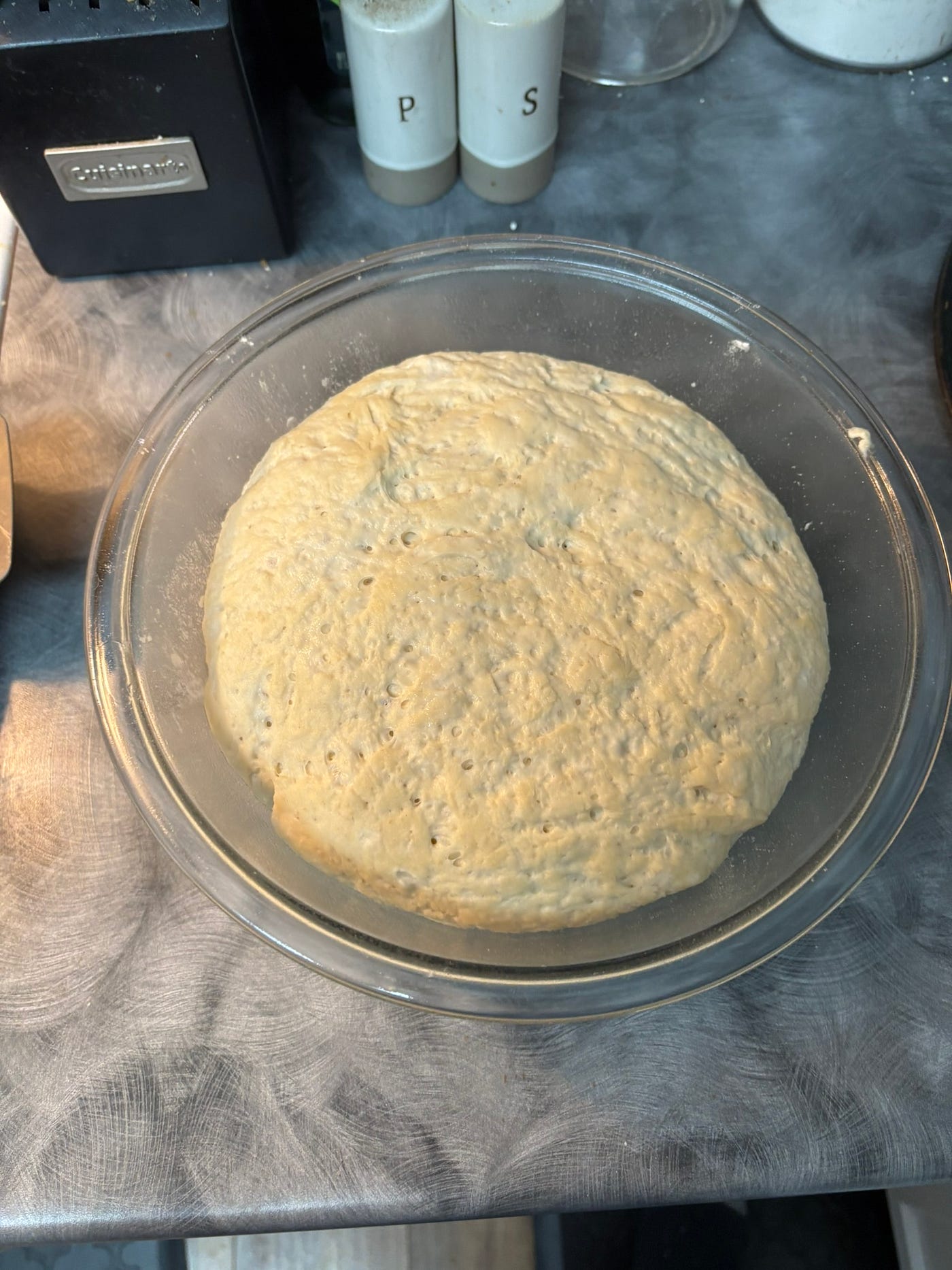
Once the dough is ready, divide it into two equal pieces. If you plan to use it right away, preheat your oven to about 450℉ (232℃). While the oven is heating, sprinkle your work area with flour or cornmeal. I like using cornmeal because it adds some more texture. Also, sprinkle some on your pizza pan or pizza stone.

On your work surface, take a portion of the dough and flatten it out into a circle. I am not confident enough to do the whole tossing my dough in the air, so instead, I gently but firmly press my knuckles into the dough to begin to spread it out. Then use the rolling pin to roll out and thin the dough further.
Now, here is the tricky part. Gently lift the dough and place it on your pizza stone or pan. You should use the roller again to stretch the dough back to its original size. Then let it rest for about 10 minutes. After that, I roll the edges to create a nice rim for the crust and brush with olive oil (you can also mix in some garlic powder and Italian seasoning if you're feeling fancy).
Finally, add any sauce and toppings you wish, then pop it in the oven for 20–25 minutes, depending on how well done you like your pizza.
The final result should be a crisp crust with a bit of chewiness. You may need to adjust to your preference, but if done right, you should end up with an excellent base for your favorite pizza.
메타데이터
- post_id
- b933ae1da80c
- slug
- time-to-make-some-serious-dough-b933ae1da80c
- url
- https://medium.tastyble.com/time-to-make-some-serious-dough-b933ae1da80c
- canonical_url
- https://medium.tastyble.com/time-to-make-some-serious-dough-b933ae1da80c
- author_url
- https://medium.com/@nahoward111
- status
- ok
- fetched_at
- 2026-06-23 06:34:20