fertile crescent
i watched my parents going through maps and bible commentaries when studying the bible to learn that… geography matters. Land itself tells…
fertile crescent
i watched my parents going through maps and bible commentaries when studying the bible to learn that… geography matters. Land itself tells part of the bible story.
& one of the most overlooked keys to understanding the Old Testament is a region called the Fertile Crescent. Its fertile land and strategic location supported the rise of major civilizations that played significant roles throughout the Old Testament.
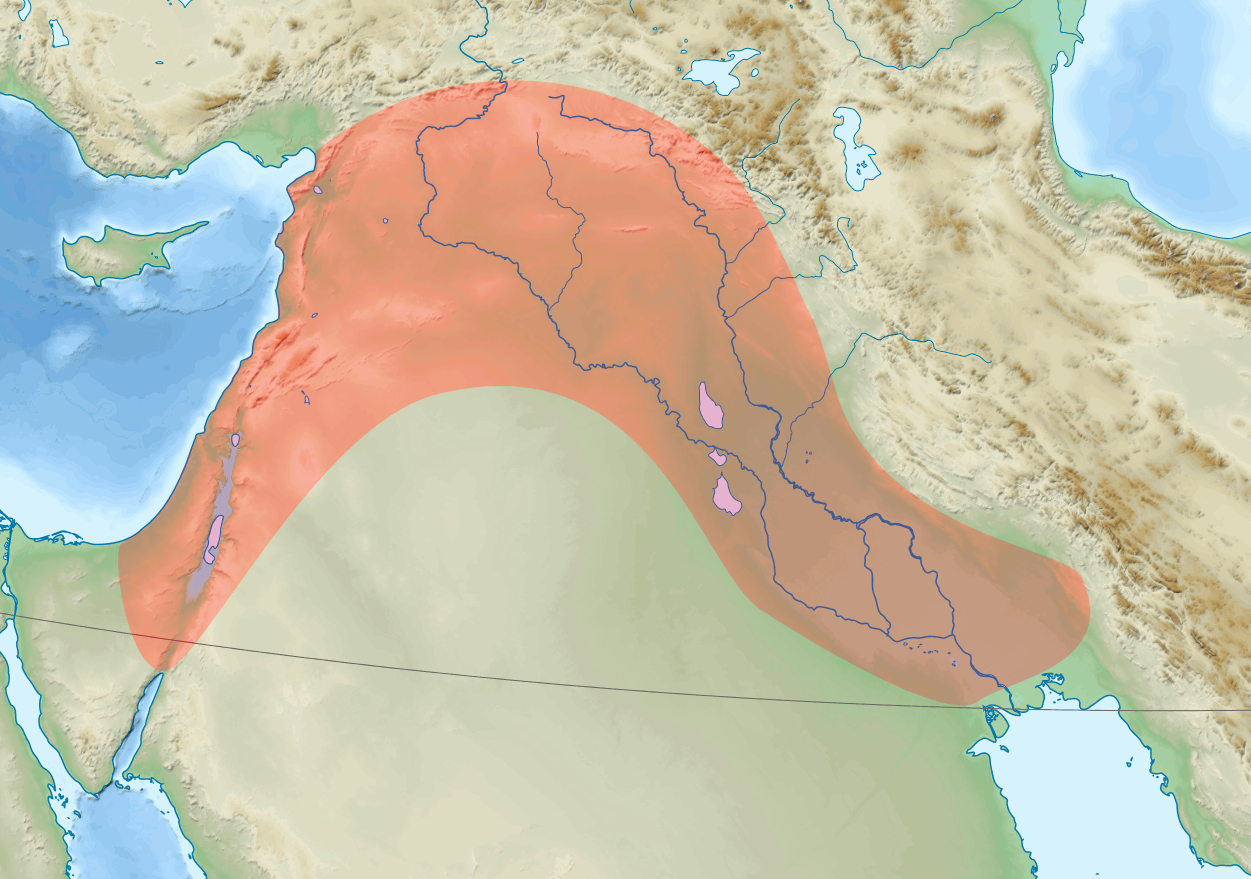
The Bible never uses the term “Fertile Crescent” by name. Yet many of the events recorded in Scripture happened within this region. The term simply helps modern readers visualize the world in which God’s story unfolded.
That term was coined by modern archaeologist and historian James Henry Breasted in the early 1900s to describe the crescent-shaped region stretching from Mesopotamia through Syria and Canaan to Egypt. Unlike the deserts surrounding it, this region had fertile soil, rivers, trade routes, and thriving cities.

In many ways, it was the center of the ancient world.
the author Robert Mullins emphasizes that geography is an important factor that shaped Israel’s history and worldview. In other words, where biblical events happened often helps explain why they happened.
Consider Abraham. God called him to leave Ur and travel to Canaan in Genesis 12:1–5. That journey took place within the Fertile Crescent, the same region where some of history’s most powerful civilizations emerged.
Joseph’s story also unfolds within this geography. He was sold into Egypt, where God later used him to preserve his family during a severe famine in Genesis 41. Generations later, Moses would lead the Israelites out of that same land during the Exodus.
Assyria conquered the Northern Kingdom. Babylon carried Judah into exile. Persia later allowed the Jews to return and rebuild. All of these empires arose within or around the Fertile Crescent. (Spanning modern-day Iraq, Syria, Lebanon, Israel, Palestine, Jordan, southeastern Turkey, and western Iran)

Suddenly the Bible feels more like one continuous drama unfolding across a real map. 😂
Perhaps the most important location was Canaan itself.

Mullins describes it as a land bridge connecting Egypt and Mesopotamia. This was both a blessing and a burden as trade routes brought wealth and cultural exchange. Armies also marched through the same routes. Israel found itself caught between competing superpowers for much of its history.
Walton, Matthews, and Chavalas observe that Israel’s location exposed it to continual political and religious pressures from surrounding nations. This helps explain the recurring wars, foreign influences, and temptations toward idolatry recorded throughout the Old Testament.

Yet geography influenced more than politics. It shaped theology.
The wilderness became a classroom where Israel learned dependence upon God. The Jordan River became a symbol of entering God’s promises. Mountains became places of revelation, worship, and covenant encounters.
The more I study the Bible, the more I realize that geography is part of the story and God worked through real places, real nations, real journeys, and real landscapes. Understanding the Fertile Crescent helps me see that the Bible is the story of God working through history, and geography is one of the threads that holds that story together.
🌍
메타데이터
- post_id
- b97ecfef182c
- slug
- fertile-crescent-b97ecfef182c
- url
- https://medium.com/@hey.shybutfun/fertile-crescent-b97ecfef182c
- canonical_url
- https://medium.com/@hey.shybutfun/fertile-crescent-b97ecfef182c
- author_url
- https://medium.com/@hey.shybutfun
- status
- ok
- fetched_at
- 2026-06-28 04:42:08