Monday Morning’s Earworm №126
In The Summertime by Mungo Jerry
Monday Morning’s Earworm №126
In The Summertime by Mungo Jerry

What is an earworm?
It’s a snatch or a snippet, a captured fragment, a line or two, or maybe a bit more, from a cultural reference point, that stays in your head, that keeps bubbling up accompanying your day.
It’s part of the language of your landscape that stays in your mind, whether it’s one single line, a couplet or maybe a whole verse, from a poem or song, or a part of a speech from a play, or a quote from a book, or something you heard somebody say, that won’t let you go.
Sometimes it won’t involve what we call language in the everyday. It could be purely a musical phrase that plays on your time, on a loop that follows you through day and night.
That’s what an earworm is. And so is this…
[embed]
Song by Artist
UK Chart peak: №1. US Chart peak: №1
“In the summertime, when the weather is high You can stretch right up and touch the sky”
That Mungo Jerry, he’s a big fat liar. I went and got my ladder out, and I still couldn’t reach it!
I remember this song at the time. And I’m grateful to be able to say that, even if it does mean I’m carrying so many years. Because that means I heard it first, along with everyone else back then, and even as a young boy, I got to form my own impressions and ideas of what it was about and what it meant to me.
I didn’t grow up with it already being part of the musical aether. Already with a thousand impressions and opinions attached. So much so that whatever I wanted to think about it, it could never be original, never really be mine.
About the Sound of the Band of This Morning’s Moment
So, what do we know about Kelly Marie’s dad, musically speaking, that is?*
First off, this English band that paradoxically couldn’t sound more eccentric or more English harked back to one of the oldest traditions in black American music: The jug band.
Paul King (no, not that one, of “Love and Pride” fame) is credited as being responsible for banjo, guitar, vocals and Jug. He’s the man in charge of those breathy, bassy, at times almost farty-like noises.
Jug bands developed in the late 19th and early 20th centuries and were formed of economic necessity and artistic imperative. As an adjunct to blues, they were a phenomenon largely created by poor black performers, for whom every penny was a prisoner, and nothing was to be wasted. Traditional instruments were expensive, so improvisation was everything.
The jug players would blow or buzz across the opening of the jug to get a percussive sound effect. The technique is essentially the same as that used by more traditional brass instrument players, though jug players often worked without directly touching the jug with their lips, while brass players have their lips pressed into the mouthpiece.
Jug bands were a direct influence on the British musical form known as Skiffle, and so have their place in the evolution of British rock’n’roll and rock, influencing the beat groups of the 60’s like the Beatles, and others for whom Lonnie Donegan, Chas McDevitt & Nancy Whiskey and others were formative elements in their evolution.
- “Feels Like I’m in Love” was an old Mungo Jerry B-side produced by Mungo Jerry frontman Ray Dorset.
About the Band and the Song of This Morning’s Moment
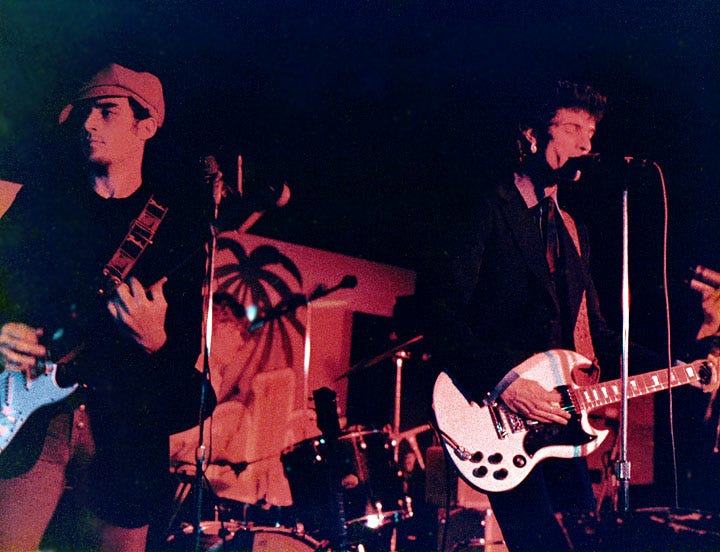
Mungo Jerry were composed of Ray Dorset (vocals), Colin Earl (piano, vocals), Paul King (banjo, jug, guitar, vocals) and Mike Cole (bass) and were formed in Ashford, Middlesex, England in 1970. The band’s name came from the poem, “Mungojerrie and Rumpleteazer” from T.S. Eliot’s book, Old Possum’s Book of Practical Cats.
They are one of the best examples of a genuine overnight success. As the Virgin Encyclopedia of Popular Music: Concise Edition tells us:
“They achieved instant fame following a sensational appearance at the 1970’s Hollywood Pop Festival, in Staffordshire, England, wherein they proved more popular than headliners, The Grateful Dead, Traffic and Free. The group’s performance coincided with release of their debut single, “In the Summertime”, and the attendant publicity, combined with the songs nagging commerciality, resulted in a runaway smash. It topped the UK chart and by the end of that year alone, global sales had topped 6 million.”
Also, in looking at the song’s Wikipedia page, it’s rare to see a song with so many №1’s in so many columns. Contrary to the impression I’ve had throughout my life, they were not a one-hit wonder. Something I found out while writing this.
Their second single from their second album, Electronically Tested (a UK top 20 album rising to №14 in 1971, after the 1970 debut self-titled LP had got to №13), “ Baby Jump”, was №1 for two weeks in March 1971.
This second №1 came eight months after the first. But their 3rd UK top 20 success in a row was much quicker in arriving. The UK №5 non-album single “Lady Rose” came out the same month that “Baby Jump” exited the UK singles chart, May 1971.
Before signing off, it’s worth noting that “Baby Jump” is a classic pub-rock track whose success came at the start of 1971, the same year Dr Feelgood were formed…
[embed]
Recommended Listening:
The Very Best of Mungo Jerry, Mungo Jerry, Union Square Music, 2007
Sources:
Online:
Discogs OfficialCharts.com Wikipedia
Offline:
The Virgin Encyclopedia of Popular Music: Concise Edition, Colin Larkin, Virgin Books, 1997
As always, tell me in the comments what you thought of today’s earworm. And, if you’re of the same or similar vaunted vintage, what were your impressions of Mungo Jerry at the time?
메타데이터
- post_id
- b9984f0188e2
- slug
- monday-mornings-earworm-126-b9984f0188e2
- url
- https://medium.com/the-old-anorak/monday-mornings-earworm-126-b9984f0188e2
- canonical_url
- https://medium.com/the-old-anorak/monday-mornings-earworm-126-b9984f0188e2
- author_url
- https://medium.com/@jimlaing
- status
- ok
- fetched_at
- 2026-07-08 22:45:43