Humanoid robots were never a 2035 story.
They were a 2026 story hiding in plain sight.
Humanoid robots were never a 2035 story.
They were a 2026 story hiding in plain sight.
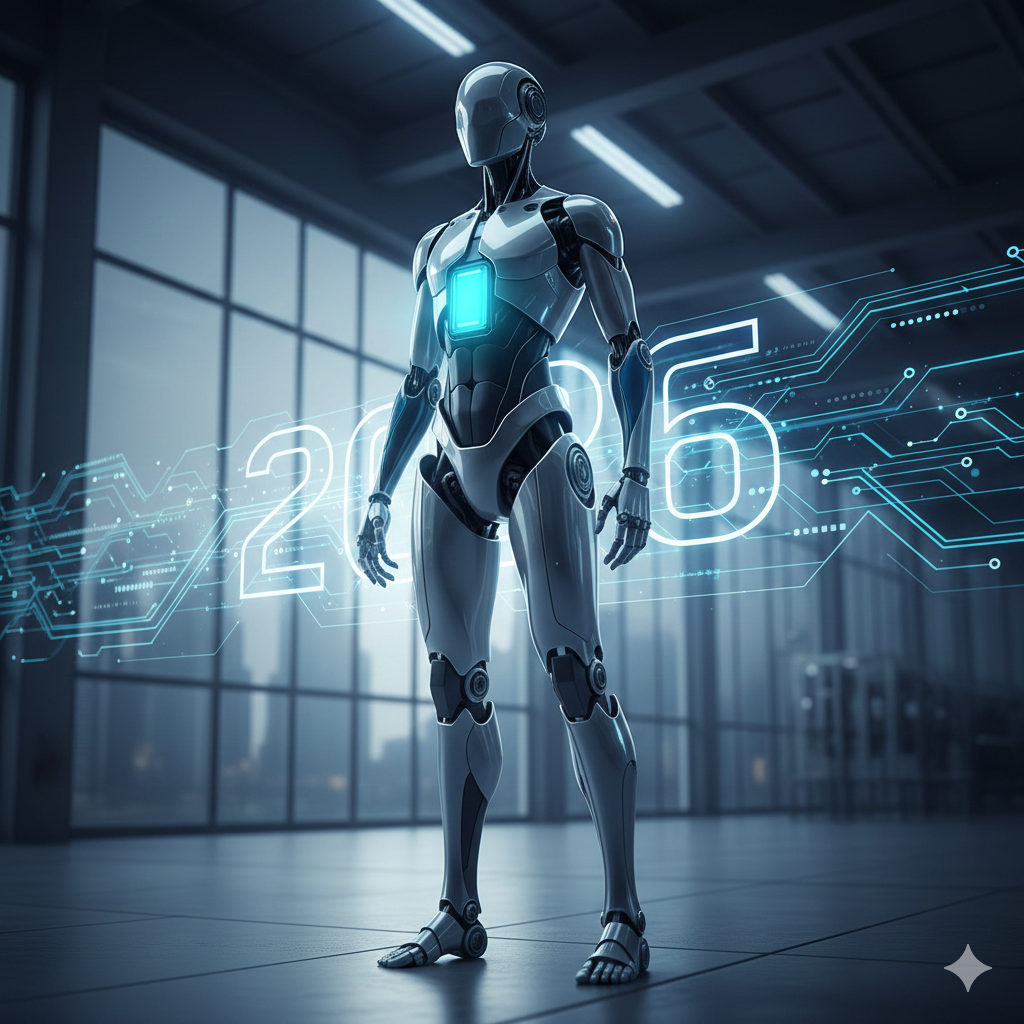
Over the past year, AI has learned to plan, reason, interpret video, and execute actions with an increasingly humanlike fluidity. What almost no one noticed is that these breakthroughs quietly removed the last software barrier holding the robotics industry back. Now that AI can think, the only remaining question is: who will give it a body?
Tesla’s Optimus, Figure AI’s Figure 01, and China’s Unitree have already answered. All three have announced 2025–2026 production timelines, signaling that humanoid robots are no longer prototypes — they are entering the race for mass manufacturing. And the surprising truth is this:
The real bottleneck isn’t AI. It’s the battery. More specifically: solid-state batteries.
1. The Shift Happens in 2026: Robots Move From Optional to Inevitable
Humanoid robots aren’t scaling because they are impressive. They’re scaling because the world now requires them.
Three structural forces are converging — all of them unavoidable.
First, AI has finally crossed the threshold of real-world intelligence. Planning, multimodal perception, context retention, and task sequencing — the capabilities robotics waited decades for — have matured faster than expected. For the first time, software is no longer the limiting factor.
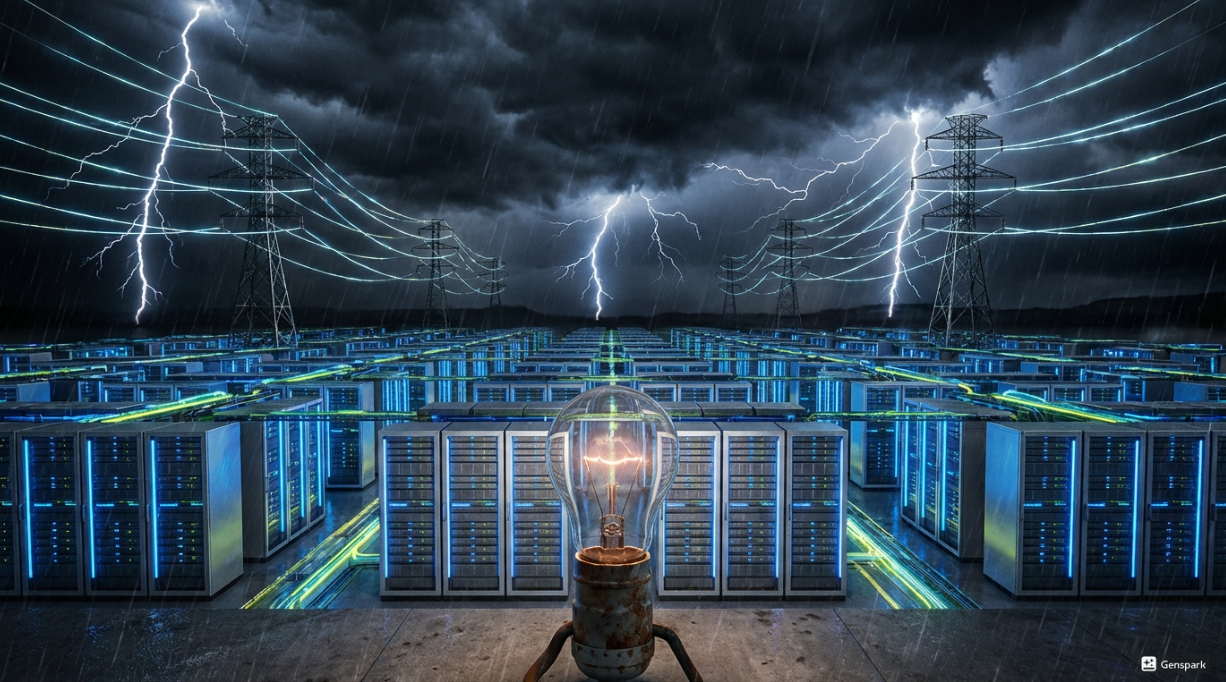
Second, AI infrastructure is quietly hitting escape velocity. Data centers are densifying. Cooling efficiency is rising. Power delivery is being expanded in every major cloud region. Humanoids, unlike traditional robots, require constant model calls and high-throughput inference. That infrastructure simply did not exist five years ago. It does now.
Third, the labor shortage is not a crisis. It is a demographic destiny. Manufacturing, logistics, elder care, and service industries across the U.S., Europe, and Asia cannot hire enough workers — and the gap widens every year.
Robots are no longer labor substitutes; they are the only scalable option.
2026 is the first year these three curves intersect. It is not the year robots become possible — it is the year they become necessary.
And necessity is the ultimate catalyst for industrial scale.
2. Mass Production Will Decide the Winners — Not Robotics Theory
The robotics industry is entering the same phase the EV industry hit in 2012: the phase where engineering brilliance matters less than manufacturing execution.
The question is no longer: Can your robot walk? The real questions are:
- Can you assemble 10,000 units with consistent tolerances?
- Can you build a parts supply chain that won’t collapse under volume?
- Can your actuators, joints, and sensors survive 24/7 operational stress?
- Can your production lines integrate new battery chemistries quickly?
- Can your robots be maintained at scale, like industrial equipment?
This is why Tesla has an advantage. Not because Optimus is the most advanced robot — it isn’t — but because Tesla already mastered the brutal realities of global-scale manufacturing.
Humanoid robots amplify every manufacturing weakness:
- higher part counts
- narrower tolerances
- greater safety requirements
- more complex actuation
- more delicate thermal constraints
- higher uptime expectations
In robotics, hardware competence is table stakes. Mass production is the moat.
And mass production hits its first immovable obstacle very quickly: energy.
3. The First True Bottleneck of the Humanoid Era Is the Battery
Humanoids impose energy demands that make EVs look forgiving.
Two-legged locomotion requires continuous bursts of peak power. Balancing requires constant micro-adjustments. Humanlike manipulation requires torque density EV motors never face. All of this must be delivered in a frame that cannot exceed human-scale volume or weight.
Lithium-ion cells simply cannot satisfy these constraints simultaneously.
This is why the industry is pivoting toward a single answer:
Solid-State Batteries (SSB).
SSBs deliver the exact qualities humanoids need:
- significantly higher energy density
- inherently safer, non-flammable solid electrolytes
- lighter pack weight
- faster charging cycles
- better heat tolerance
- and the potential for 50%+ longer runtime, according to early engineering models
In EVs, cost is the sticking point. In robotics, cost is secondary to uptime, safety, and reliability. A robot that works twice as long is not a premium product — it is a profitable one.
This is why humanoids may become the first commercially viable market for solid-state batteries, long before EVs achieve mass adoption.
SSB isn’t an upgrade. It is the enabling technology of humanoid scale.
4. Solid-State Supply Will Determine the First Winners of the Robot Economy
Once humanoids enter production, the bottleneck becomes brutally simple:
Who controls the batteries?
To win the humanoid race, a company must secure three capabilities:
- Scaled SSB production with predictable output
- Integration expertise — building robotics-specific modules that are lightweight and high-discharge
- Manufacturing lines optimized for SSB geometry, safety, and thermal behavior
The first companies to vertically align battery supply and robot manufacturing will define the early humanoid market — the same way Tesla defined the early EV market.
And this matters because humanoids are not a niche. They are general-purpose labor machines that plug into every sector: manufacturing, logistics, retail, healthcare, construction, and home services.
The companies that solve battery integration will not just sell robots. They will redefine the labor structure of entire economies.
Conclusion: 2026 Is When AI Gets a Body — and Batteries Decide Who Controls It
The humanoid era is not a far-off future. It is the next industrial chapter, and 2026 is its opening line.
AI cognition is ready. Infrastructure is ready. Labor markets are desperate. Manufacturing giants are positioning themselves. And solid-state batteries are reaching the threshold where robotics becomes their first real domain.
Humanoids won’t reshape the world because they exist. They will reshape the world because someone will learn how to manufacture them — and someone else will learn how to power them.
Over the next five years, every time you see news about humanoid robots, ask a simple question:
“Who supplies the battery, and who can scale it?”
That question will identify the winners long before the market does.
BeomView: Structure, not information. Frames, not data.
메타데이터
- post_id
- b99bed8fc319
- slug
- humanoid-robots-were-never-a-2035-story-b99bed8fc319
- url
- https://medium.com/@beomview/humanoid-robots-were-never-a-2035-story-b99bed8fc319
- canonical_url
- https://medium.com/@beomview/humanoid-robots-were-never-a-2035-story-b99bed8fc319
- author_url
- https://medium.com/@beomview
- status
- ok
- fetched_at
- 2026-06-21 19:25:17