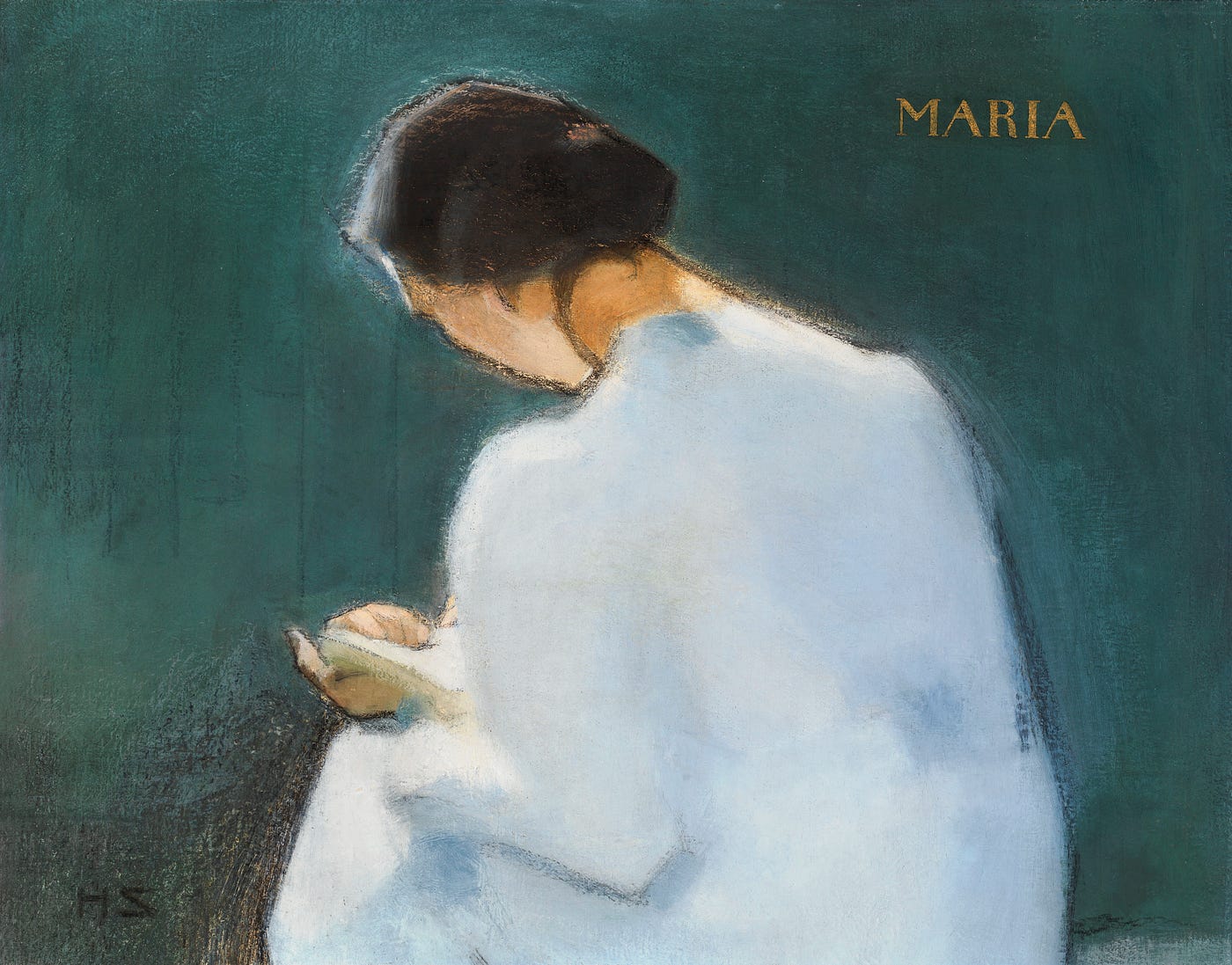
The Invisible Casualties of History in The Post Office Girl
Stefan Zweig’s novel about a young woman who takes a dangerous gamble
BOOK ANALYSIS
The Invisible Casualties of History in The Post Office Girl
Stefan Zweig’s novel about a young woman who takes a dangerous gamble

There is something Pygmalion-esque about Stefan Zweig’s novel The Post Office Girl, with its themes of personal transformation and aspirations for a different life. But take away the satire of George Bernard Shaw’s play and add hopelessness, financial desperation, and an ending that feels like the onset of a thriller. The Post Office Girl’s protagonist, Christine Hoflehner, is in her late 20s; she was a carefree teenager when World War I broke out. Slowly, Christine loses family members to the war and her comfortable middle-class life. After the war ends, she finds a poorly paid job in a post office in the Austrian town of Klein-Reifling. The novel is set in the late 1920s, a time of hyperinflation and widespread poverty. The shadow of the war is everywhere. Two significant people shake Christine’s dreary existence within a short time span: her wealthy aunt Claire and Ferdinand.
In The Post Office Girl, Zweig shows us that it is people like Christine who are left to deal with the consequences of reckless decisions, both personal and political. She is first made invisible through socio-economic collapse and the dissolution of an empire, and then driven to an endless struggle for survival.
Happiness, after a long time
We follow Christine trance-like into a luxurious Swiss hotel after she accepts her aunt’s invitation to visit in the first half of the novel. Her aunt married a millionaire and lives in the U.S. On the train journey to Switzerland in a third-class compartment, seeing the Alps for the first time, Christine’s transformation begins. Her astonishment at the beauty, majesty, and vastness of the Alpine landscape mirrors her feelings when encountering abundance after many years.
Overwhelmed by her surroundings, Christine becomes a different person: a lighthearted young woman who wears beautiful clothes, eats well, enjoys the company of male admirers, and looks forward to life. Christine takes pleasure in everything—dancing, wildflowers, sorbet, croissants, honey, jam, male attention. Zweig writes:
“In this instance, shaken to her very depths, this ecstatic human being has a first inkling that the soul is made of stuff so mysteriously elastic that a single event can make it big enough to contain the infinite.”
But she does not understand the complexities of adopting a new identity in upper-class society. She is also too naive to realize that her new friends are unforgiving and a wealthy patron’s generosity ends when a carefully cultivated reputation is at stake. Zweig notes:
“Someone who’s on top of the world isn’t much of an observer; happy people are poor psychologists.”
Just as suddenly as she arrived, Christine leaves the hotel, with her shabby clothes, straw suitcase, and old umbrella. She avoids looking at the Alps, as they now serve as a painful reminder of what she has just lost.

Image credits: Wikimedia Commons
A mesmerizing proposition
The novel’s second half is darker than the first. This is where Christine meets Ferdinand, a man with a lot of rage and a hint of anarchy about him. An injured war veteran who spent time in a Siberian prison during the war, Ferdinand is penniless. Like Christine, Ferdinand saw his comfortable prewar life in the Austro-Hungarian Empire disappear. He is unable to claim economic assistance, find stable employment, or even obtain official Austrian nationality papers.
They are drawn to each other, brought together by a shared understanding of each other’s pain and anger rather than passion. This is not a carefree romance. After her holiday, poverty repels Christine, but Ferdinand is the exception. While Christine is aware of the personal injustices she suffered due to the war and its aftermath, through Ferdinand she understands the wider systemic failures that have marginalized people like her and Ferdinand. As Ferdinand says:
“No, we came into the world at a bad time.”
The unfortunate couple lie to each other that things will get better. And as things become increasingly desperate, both slowly cross an invisible boundary. They come up with a dangerous gamble to achieve what they want the most: a different life.
The greatest tragedy in the novel is that both Christine and Ferdinand are unable to reach their full potential as individuals due to circumstances over which they have no control. Christine’s narration of how the war destroyed everything good in her life as she knew it is painful to read; she stops believing that she will ever find happiness again. The hotel brings out all her long-buried enthusiasm and appreciation for life. Lord Elkins, a hotel guest, is cynical about both his generation and the postwar generation alike — the former for driving the world to war and the latter for their thoughtlessness. But Christine’s zest for life moves him deeply. Lord Elkins reflects:
“…in her presence he sees that one generation’s painfully acquired mistrust of life is fortunately neither understood nor credited by the next, and that each new wave of youth is a new beginning.”
As the novel ends, we are rooting for Christine, hoping that she can return to her childhood lightheartedness, even for a brief time.
메타데이터
- post_id
- b9acafbd770d
- slug
- the-invisible-casualties-of-history-in-the-post-office-girl-b9acafbd770d
- url
- https://medium.com/the-howling-owl/the-invisible-casualties-of-history-in-the-post-office-girl-b9acafbd770d
- canonical_url
- https://medium.com/the-howling-owl/the-invisible-casualties-of-history-in-the-post-office-girl-b9acafbd770d
- author_url
- https://medium.com/@vichitra-ksg
- status
- ok
- fetched_at
- 2026-06-27 23:56:40