Covert Narcissism and the Monopoly on Reciprocity
They never gave you anything back — and somehow convinced you that asking for it made you the selfish one.
Covert Narcissism and the Monopoly on Reciprocity
They never gave you anything back — and somehow convinced you that asking for it made you the selfish one.

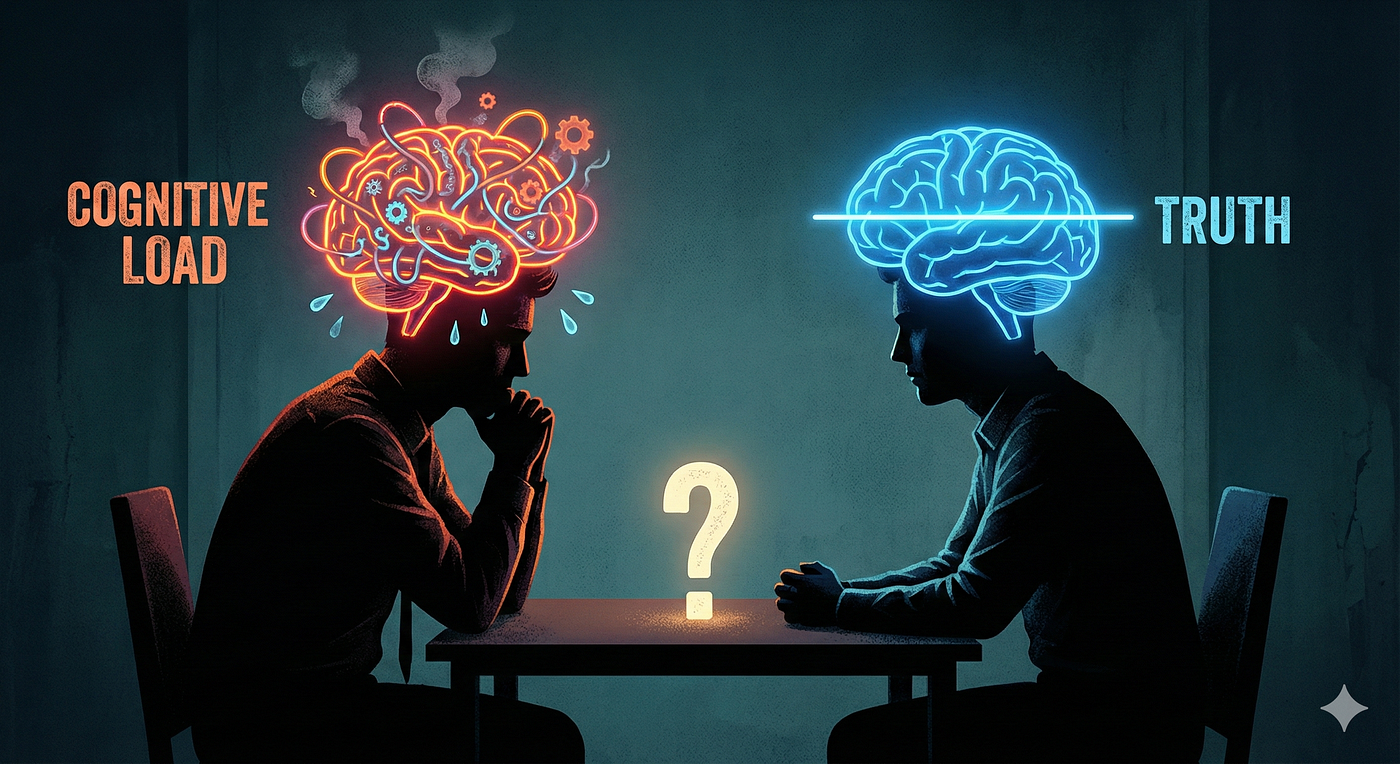
Image is generated via Chat Gpt 2.0 Model.
You will not see them coming.
That is the first thing nobody tells you about the soft-spoken ones. They do not arrive holding a flag that says I am going to drain you slowly. They arrive holding a book, or a cup of tea, or a sentence so gentle you mistake it for safety.
They look like the most considerate person you have ever met.
And six months later, you are the one apologizing for being tired.
I want to talk about something that took me years to name correctly — not because it is rare, but because it disguises itself as everything except what it actually is. It hides inside good people, decent families, long marriages, lifelong friendships, professional mentorships, and the quietest dinner tables in the country. It is the most under-diagnosed emotional pattern of our generation, and it does its damage in such a polite voice you start questioning your own hearing.
It is the covert narcissist’s monopoly on reciprocity.
And once you see it, you cannot un-see it. Not in your mother. Not in your partner. Not in the friend who keeps asking if you are okay but goes strangely quiet the week your father died.
The First Thing They Take Is Your Definition of Fairness
A covert narcissist does not steal your money. They steal something far more expensive — your internal sense of what an equal exchange feels like.
In a healthy relationship, give and take is a rhythm. You notice it the way you notice your own breathing, which is to say, you do not notice it at all. It just happens. Some days you carry more. Some days they carry more. Nobody is counting because nobody needs to.
With a covert narcissist, the counting starts on the first day.
But here is the cruel part — they are counting. You are not. They are tracking every text you did not return within forty minutes, every birthday you forgot to make a fuss over, every moment you chose your own oxygen over their performance of fragility. They keep a quiet ledger that you are not allowed to see.
And one day, when you finally need something — actual emotional support, an unflashy weekday kind of care — they pull out that ledger and use it to prove that you are, in fact, the one who has been failing the relationship.
You walk away from that conversation feeling like you owe them.
You owe them nothing. You never did.
This is the architecture of the monopoly. They do not control your money. They control your accounting system.
They Don’t Give. They Let You Give to Them.
Here is the part you have to read twice.
A covert narcissist is not someone who refuses to give. That would be too obvious. That would get caught. A covert narcissist is someone who gives in a way that is engineered to extract.
When they do something kind for you, it has a hidden invoice attached.
That dinner they cooked — you will hear about it three weeks from now, when they are angry about something else, and suddenly that dinner becomes evidence in a trial you did not know was being held. The gift they bought you on a Tuesday for no reason — that was not a gift. That was a deposit. They will withdraw against it for years.
You start to notice a pattern. They are generous in front of other people. They are attentive when there is an audience. They remember anniversaries when posting about anniversaries is in season.
But alone, in the small private hours when nobody is watching and you need exactly nothing performed and exactly one thing felt — they are gone. The lights are on. The body is there. The person is somewhere else, busy curating the version of themselves they plan to present to the world tomorrow.
You start to wonder if you imagined the warmth.
You did not imagine it. You misread it. Warmth in a covert narcissist is not a feeling. It is a strategy.
The Quiet Trick That Makes You Doubt Yourself
There is one specific move that gives them away, and you have probably been on the receiving end of it without knowing.
It is the backhanded gift of attention.
They ask you a question — say, about your day, your work, your grief, your dream — and they listen just long enough to identify the emotional opening, and then they pivot back to themselves. Not aggressively. Not obviously. They do it the way water slips under a door.
You mention you are exhausted. They mention they are more exhausted, in a softer voice, with a sadder face.
You mention you got promoted. They mention how unfair it is that nobody ever recognized them.
You mention your father is sick. They mention how their own father, who is fine, has been distant lately, and they have not been sleeping.
Every conversation is a small theft of the spotlight, but the theft is done so gently that calling it out feels cruel. If you ever do call it out, they cry. Not in front of you — near you. So you feel the crying without being directly responsible for it, and you spend the next three hours apologizing for needing to be heard.
This is not a bug. This is the operating system.
What They Actually Need From You — And Why You Can Never Provide Enough
Covert narcissists are not seeking love. Love would require them to be known, and being known is the one risk their psyche cannot survive.
They are seeking supply. That is the technical word in the clinical literature, and it is the right word, because it is the word you use for fuel. Not for partners. Not for friends. For fuel.
Supply is whatever stabilizes their fragile self-image — admiration, sympathy, attention, reassurance, deference, awe, guilt, even your visible frustration. Yes, your frustration. A covert narcissist would rather have your negative emotional response than your absence, because both prove you are still oriented around them.
This is why nothing you do is ever enough.
You think you are failing as a partner, a child, a friend, an employee. You are not. You are being asked to perform a job that has no completion criteria. The goalposts are not moving — there are no goalposts. The only metric is did you make them feel central today, and will you make them feel central tomorrow.
The moment you stop performing, the moment you turn your face slightly toward your own life, you become a threat. Not because you did anything wrong. Because you stopped being mirror.
The Slow-Motion Disappearance of You
You will lose yourself, but you will lose yourself in such small increments that no single moment will feel like a crisis.
You will start texting them updates about your day before you have processed your own day. You will start mentally pre-screening your stories — will this upset them, will this trigger them, will this make them feel less important, will this make them feel more important than I intended. You will become a translator of your own life, converting it into a language they can tolerate.
Your friends will start to notice before you do.
They will say things like, you seem different lately, or you don’t laugh the same way, and you will defend the relationship because defending the relationship has become a reflex. You will explain how sensitive they are. You will explain how hard they have had it. You will explain why they cannot help certain behaviors, while ignoring that you are expected to help all of yours.
You will start describing yourself with their adjectives. Too much. Too loud. Too needy. Too dramatic. Too sensitive. Too cold. Too distant. Too forgetful. Too selfish.
Those are not your adjectives. Those are the inventory tags they placed on you to keep you sortable.
Why “I Know I’m a Narcissist” Is the Most Dangerous Sentence They Say
There is a sentence that confuses survivors of covert narcissism for years, and it is this one:
“I know I have narcissistic traits. I’m working on it.”
You will hear some version of this from a covert narcissist eventually, and it will feel like a breakthrough. Finally, accountability. Finally, the conversation you have been waiting for. Finally, hope.
It is not hope. It is a more sophisticated layer of the same defense.
Recognition is not responsibility. A covert narcissist can describe their own pathology with PhD-level fluency and still refuse to behave differently for a single afternoon. They will read the books. They will quote the experts. They will diagnose themselves before you can, because diagnosing themselves first is how they take the weapon out of your hand.
What they are doing is not self-awareness. It is pre-emptive narrative control. By naming the wound before you can press on it, they make it impossible for you to bring it up later without sounding like you are recycling their confession.
Real accountability has a particular smell to it. It smells like changed behavior on a Tuesday morning when nobody is watching and nobody is being thanked. It smells like discomfort the person actually sits inside instead of broadcasting from.
Covert narcissists do not sit inside discomfort. They livestream it.
The Reciprocity Test Nobody Tells You About
Here is something nobody puts in the relationship books, because it is too plain to feel insightful, but you can run this experiment on any relationship in your life right now, and you will know within seventy-two hours.
Stop initiating.
Do not announce it. Do not make a scene. Just stop being the one who reaches out first, who plans, who remembers, who follows up, who carries the emotional thermostat of the relationship.
A healthy person will notice within a few days and check in, not with resentment, but with curiosity. Are you okay? You seem quiet. That is reciprocity. That is two people sharing the work of staying connected.
A covert narcissist will do one of three things, and they are all diagnostic.
They will disappear entirely, and then reappear when they need something, acting as if no gap existed.
They will reappear with a guilt-laced message about how distant you have been, repositioning your withdrawal as a moral failing.
Or they will reappear performing a small, public act of generosity — a thoughtful gift, a sweet caption, a kind word in front of mutual friends — that is designed to put you back in their debt without ever addressing the actual silence.
What they will not do is sit with the discomfort of your absence and wonder what they contributed to it.
That is the whole disease in a single sentence. They cannot tolerate the question what did I contribute to this. Because the answer to that question would dissolve the self they have spent a lifetime constructing.
The Most Painful Part — You Will Miss Them
I have to say this part because the rest of the article is useless without it.
When you finally see the pattern, when you finally name it, when you finally start to pull yourself back from the slow erosion, you will expect to feel relief. You will expect to feel free.
Instead, for a long time, you will feel grief.
You will miss them. Not the real them — the one you actually lived with. You will miss the version of them you thought you were building a life with. You will miss the future you imagined where they finally turned to you, fully, and said the thing you needed them to say.
That future was never coming. The construction of that future is the very thing that kept you trapped.
And here is the worst part — they will sense your grief, even from a distance, even months later, and they will reach back into your life at the exact moment you are most vulnerable to it. A text on a holiday. A song they used to play. An old photo posted with a vague caption. A “thinking of you” message that arrives the week you finally started sleeping again.
This is not love returning. This is symbolic intrusion. The psychological literature uses that exact phrase, and it is precise. They are not coming back to repair. They are coming back to reassert influence in a place they used to own.
Do not mistake nostalgia for reconciliation.
The Family Version Is Worse Than the Romantic Version
We talk endlessly about romantic narcissists. We barely talk about the parental ones, the sibling ones, the friend ones. And those are often the cruelest, because you cannot break up with them the way you can break up with a partner.
If your covert narcissist is a parent, you grew up inside the monopoly. You did not enter it. You were born into it. Your earliest sense of love was already shaped like a one-way pipe, and you spent your childhood learning to read a face that never read yours.
The hallmark of a covertly narcissistic parent is the sacrifice ledger. They sacrificed for you. They sacrificed so much. They sacrificed things you never asked them to sacrifice. And every milestone of your life, from your first job to your wedding to the birth of your child, will be subtly reframed as a moment that exists primarily to honor their sacrifice.
You will hear it in the toast they give at your wedding that is somehow about them.
You will hear it in the way they describe your achievements to relatives as proof of how well they raised you.
You will hear it in the silence on the phone when you tell them something hard, a silence that is not pity but resentment that you brought a problem they did not want to absorb.
If this is your family, you have a particular grief to carry, and I want you to know it is real. You did not have a parent. You had a manager of a brand whose product was you.
How They Weaponize the Word “Boundaries”
Watch for this one. It is the newest tactic, and it is everywhere now.
A covert narcissist has read the same self-help books you have. They know the vocabulary. Boundaries. Emotional labor. Triggers. Bandwidth. Holding space. Self-care. And they will use every single one of those words to dress up behavior that, under the old language, would have been called what it actually is — neglect, withdrawal, or punishment.
They will say they need space when what they mean is they are angry and refuse to tell you why.
They will say they are protecting their peace when what they mean is they have decided your emotional needs are an inconvenience.
They will say they have limited bandwidth right now when what they mean is they have unlimited bandwidth for the people they are currently performing for, and you are not on the list this week.
They will tell you that your reasonable request — to be answered, to be considered, to be remembered — is a boundary violation.
This is one of the most disorienting parts of the modern covert narcissistic playbook, because the language of mental health, which was built to protect people like you, has been hijacked to protect people like them. And you, the one actually doing the emotional labor, end up looking like the perpetrator.
You are not the perpetrator. You are the one who was finally asking, very politely, for the door to open the other direction once in a while.
The Reason They Never Apologize the Way You Need Them To
A covert narcissist’s apology is one of the strangest documents in human relationships.
It will sound, at first, like an apology. It will have apology-shaped words. I’m sorry you feel that way. I’m sorry if anything I did contributed to this. I’m sorry that you took it the way you did.
Read those sentences again.
Notice what is missing. The subject of the apology is never them. It is always the way you feel. They are sorry for your reaction. They are sorry for the situation. They are sorry, abstractly, that pain exists in the universe. But they are not sorry for what they did, because to be sorry for what they did would require them to admit that what they did was theirs.
A real apology has three parts, and a covert narcissist can almost never produce the third.
They can sometimes acknowledge the act. They can occasionally name the harm. But they cannot, in any consistent way, sit inside the truth of I did this, and it was wrong, and I will behave differently, and you do not owe me forgiveness for that change. That third part is the part that requires a self that can survive being wrong. They do not have one.
So they apologize the way insurance companies apologize. Without admission of liability.
What Reciprocity Actually Feels Like — In Case You Have Forgotten
I want you to know what you are aiming for, because after a long time inside the monopoly, you may have forgotten.
Reciprocity is not a fifty-fifty split tallied in real time. Reciprocity is a soft, almost invisible understanding that the other person sees you, wants you to be okay, notices when you are not, and would rearrange a small part of their day to find out why.
Reciprocity is when you mention, in passing, that you have not been sleeping, and three days later they ask, did you sleep last night.
Reciprocity is when you do not have to explain why a hard day was hard.
Reciprocity is when you receive a gift and it does not feel like a deposit. It feels like a gift.
Reciprocity is when the silence between you is comfortable, because you both know the other person is still there.
Reciprocity is when you can be sad without making them sadder. When you can be successful without making them smaller. When you can be tired without becoming a problem.
If you have not felt this in years, that is not because you are too much. That is because you have been inside a relationship designed to make you feel like you were.
The Step They Hope You Will Never Take
There is a specific moment that a covert narcissist fears more than any other, and it is not when you confront them. They are skilled at confrontation. They have years of practice. They will out-narrate you. They will out-cry you. They will out-victim you. They will exit a confrontation having convinced two of your mutual friends that they are the wounded party.
What they cannot survive is your indifference.
Not anger. Not tears. Not a long letter explaining everything they did wrong. Indifference.
The moment you stop arguing your case to them, the moment you stop trying to make them understand, the moment you stop performing the role of the partner-who-still-cares-enough-to-fight — that is the moment their grip on you breaks. Because their entire system is built on your continued emotional investment in their narrative.
If you stop participating in the narrative, the narrative collapses.
This does not mean you have to be cruel. You do not. You can be calm. You can be polite. You can even be kind. But you have to be calm and polite and kind from a great internal distance, the kind of distance you would extend to a stranger you have no interest in convincing of anything.
That distance is the thing they cannot manipulate. There is no lever inside it.
What Happens to You After You Leave
I will not pretend the after is easy. The after is its own kind of hard.
For the first few weeks, you will feel disoriented. Your nervous system has been on high alert for so long, scanning for the next subtle shift in their mood, that the absence of that scanning feels almost unsafe. You will wake up at 4 a.m. expecting a text. You will find yourself drafting messages you do not send. You will catch yourself missing the chaos because the chaos was at least familiar.
Then, slowly, almost imperceptibly, a stranger thing will happen.
You will start to remember opinions you had before them.
You will remember songs you liked that they thought were embarrassing. You will remember foods you stopped ordering because they sighed when you ordered them. You will remember a way of dressing that felt like you, before you started dressing in a way that did not provoke. You will remember a sense of humor that you toned down because it took up too much room in their presence.
That person is still there. Underneath the years of self-editing, that person is still there. And the after, in the end, is mostly the slow, quiet work of letting that person come back into the room.
It is not a glamorous recovery. There is no single morning when you feel cured. It is a series of small repossessions. A meal you order without checking. A song you play loud. A boundary you set without explaining. A phone call you do not return because you owe them nothing. A laugh that goes on a half-second too long because nobody is in the room to make it smaller.
This is what reciprocity with yourself looks like. You give yourself back, in pieces, the things you handed over.
The Last Thing I Want You to Know
If you read this far, I want to say something directly to you, because I know who you are. You are the one who has been carrying the relationship. You are the one who has been wondering, for months or years, whether you are the problem. You are the one who has read articles like this before and put them down because the description felt too close, and you were not ready.
You are not the problem.
You were not too much. You were not too sensitive. You were not too needy. You were not too dramatic. You were not asking for the moon. You were asking, very politely, for someone to notice that you were there.
The fact that they could not is not a referendum on your worth. It is a description of their limits.
Covert narcissists do not have a monopoly on reciprocity because they earned it. They have it because the people around them are good, and decent, and trained from childhood to be reasonable, and they exploit that goodness with breathtaking efficiency. The cure is not to become less good. The cure is to give your goodness, in the future, only to people who give it back without being asked.
There are such people. They exist in the world. You will not always recognize them at first, because their kindness is quieter than the performed kindness you grew used to, and quietness can feel like absence when you have been raised on theater.
But you will learn the difference. You already are learning. The fact that you read this far is proof.
You do not owe them another season of your life.
You do not owe them an explanation.
You do not owe them a graceful exit.
You owe yourself the rest of the story, and you are the only person who can write it.
Start now. Quietly. Without telling them. Without telling anyone.
Just start.
메타데이터
- post_id
- b9ae61b3f5df
- slug
- covert-narcissism-and-the-monopoly-on-reciprocity-b9ae61b3f5df
- url
- https://medium.com/psyche-pedia/covert-narcissism-and-the-monopoly-on-reciprocity-b9ae61b3f5df
- canonical_url
- https://medium.com/psyche-pedia/covert-narcissism-and-the-monopoly-on-reciprocity-b9ae61b3f5df
- author_url
- https://medium.com/@waheedahmedofficial
- status
- ok
- fetched_at
- 2026-06-27 07:40:21