Turning Ideas into Reality: The Hidden Engineering Challenges Behind Prototypes
Every successful product begins with an idea. However, transforming that idea into a functional, manufacturable prototype is often where…
Turning Ideas into Reality: The Hidden Engineering Challenges Behind Prototypes
Every successful product begins with an idea. However, transforming that idea into a functional, manufacturable prototype is often where the most significant engineering challenges emerge. Many projects encounter unexpected hurdles, including tolerance failures, material incompatibilities, supply chain delays, and manufacturing limitations that can compromise performance and increase development costs.

Engineering Design
Prototype development is not simply about creating a physical model. It is a critical phase within the product life-cycle development process, where engineers validate functionality, manufacturability, durability, and scalability before committing to production.
At Ashland Engineering, we help organisations navigate these challenges by combining advanced manufacturing capabilities with practical engineering expertise. From precision CNC machining and fabrication to full product development support, our team ensures prototypes are designed not only to work but also to succeed in production environments.
Understanding the True Purpose of a Prototype
Many stakeholders view prototypes as demonstration models. In reality, they serve a much broader engineering purpose.
A prototype allows engineers to:
● Validate design intent
● Test mechanical performance
● Identify manufacturing constraints
● Evaluate material suitability
● Verify assembly procedures
● Reduce production risk
The earlier issues are discovered during prototyping, the less costly they become to correct.
A well-engineered prototype acts as a bridge between concept development and full-scale manufacturing.
The Challenge of Material Selection
Why Material Choice Matters
One of the most overlooked aspects of prototype development is material selection. Engineers must balance mechanical performance, manufacturability, cost, and future production requirements.
Different materials introduce unique challenges:
Steel
Steel provides excellent strength, durability, and wear resistance. However, it can increase component weight and machining times.
Common considerations include:
● Yield strength requirements
● Corrosion resistance
● Weldability
● Surface finishing compatibility
Aluminium
Aluminium is widely used for lightweight applications due to its excellent strength-to-weight ratio and corrosion resistance.
Advantages include:
● Reduced overall product weight
● Faster machining cycles
● Improved thermal conductivity
● Excellent recyclability
However, aluminium grades vary significantly, making alloy selection critical during development.
Engineering Plastics
Plastics offer flexibility, low weight, and reduced manufacturing costs.
Typical prototype materials include:
● Acetal
● Nylon
● ABS
● Polycarbonate
● PEEK
Engineers must carefully evaluate thermal stability, chemical resistance, and long-term durability before selecting plastic materials for functional testing.
Technical Checklist: Material Selection
Before approving prototype materials, engineers should verify:
✓ Mechanical load requirements
✓ Environmental exposure conditions
✓ Thermal operating range
✓ Manufacturing process compatibility
✓ Future production scalability
✓ Cost targets
Tolerance Control: The Hidden Risk in Prototype Development
Even the most innovative design can fail if dimensional tolerances are not properly managed.
Tolerance refers to the allowable variation in a manufactured component. Excessively tight tolerances increase manufacturing costs, while overly loose tolerances may cause assembly failures or poor performance.
Common Tolerance Challenges
During prototype development, engineers frequently encounter:
● Misaligned assemblies
● Poor fit between mating components
● Excessive vibration
● Premature wear
● Reduced operational efficiency
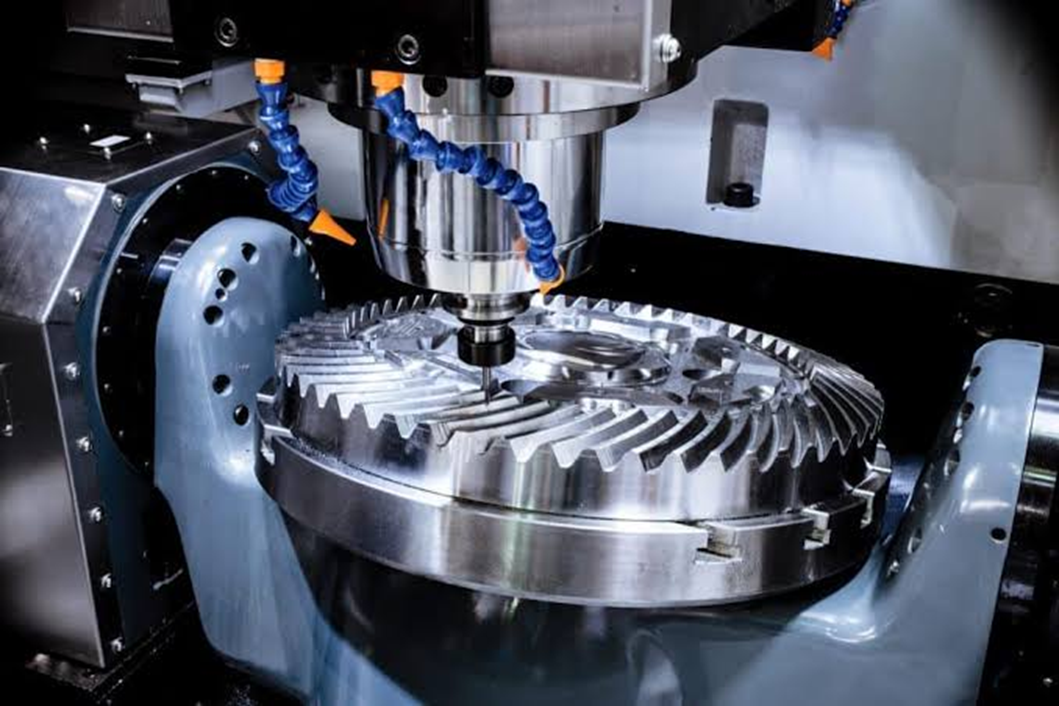
Advanced CNC machining enables engineers to achieve high levels of dimensional accuracy, but successful tolerance management begins during the design phase.
At Ashland Engineering, design reviews help identify tolerance stack-up issues before production begins, reducing costly redesigns later in the programme.
How CNC Machining Accelerates Prototype Success
Precision Manufacturing for Functional Testing
CNC machining remains one of the most effective methods for producing functional prototypes.
Unlike additive manufacturing methods, CNC-machined components can be manufactured from production-grade materials, allowing realistic testing and validation.
Benefits include:
● Exceptional dimensional accuracy
● Tight tolerance control
● Superior surface finish quality
● Rapid design iteration
● Compatibility with numerous materials
For mechanical assemblies, CNC machining often provides the most accurate representation of final production performance.
Suggested Internal Link: CNC Machining Services
Why CNC Machining Adds Long-Term Value
CNC machining not only supports prototype development but also helps engineers evaluate production feasibility.
Key questions answered during machining include:
● Can the design be manufactured efficiently?
● Are machining times commercially viable?
● Are tolerance requirements realistic?
● Will production costs remain acceptable at scale?
Addressing these questions early significantly reduces future production risks.
Fabrication Challenges During Prototype Development
Many prototypes involve fabricated structures, frames, enclosures, or welded assemblies.
Fabrication introduces additional engineering considerations:
● Heat distortion
● Weld shrinkage
● Material stress
● Assembly access limitations
● Structural rigidity
Managing Welded Assemblies
Welding can alter dimensional accuracy through thermal expansion and contraction.
Engineers must account for:
● Weld sequencing
● Material thickness
● Fixture design
● Post-weld machining requirements
Early fabrication reviews often prevent costly structural issues later in development.
Suggested Internal Link: Fabrication Services
Surface Finishing and Powder Coating Considerations
Why Surface Finishes Matter
Prototype performance extends beyond structural integrity. Surface finishing plays a critical role in appearance, corrosion resistance, wear performance, and customer perception.
Many products require finishing processes such as:
● Powder coating
● Anodising
● Bead blasting
● Polishing
● Passivation
How Powder Coating Adds Value
Powder coating provides a durable protective finish while enhancing aesthetics.
Benefits include:
● Improved corrosion resistance
● Increased wear protection
● Uniform coating coverage
● Enhanced product appearance
● Long service life
Engineers should evaluate coating thickness during design because excessive build-up can affect tolerance-sensitive features.
Technical Checklist: Surface Finishing Review
✓ Corrosion protection requirements
✓ Coating thickness allowance
✓ Environmental exposure
✓ Surface preparation process
✓ Aesthetic expectations
✓ Life-cycle durability targets
Transitioning from Prototype to High-Volume Production
One of the greatest hidden challenges in product development is scalability.
A prototype that performs perfectly may still fail commercially if it cannot be manufactured efficiently at production volumes.
Common Scalability Issues
These include:
● Excessive machining times
● High material costs
● Complex assembly processes
● Supply chain constraints
● Inconsistent batch quality
Engineers must continuously evaluate whether prototype designs can transition smoothly into production.
Batch Consistency and Manufacturing Repeatability
As production volumes increase, consistency becomes increasingly important.
Manufacturers must ensure:
● Repeatable dimensions
● Stable material properties
● Reliable assembly procedures
● Predictable lead times
● Consistent quality standards
This is where experienced engineering partners deliver substantial value.
By considering production requirements during prototype development, organisations can significantly reduce time-to-market and improve overall profitability.
Suggested Internal Link: Product Development Services
Conclusion
Prototype development is far more complex than producing a physical model. It is a critical engineering stage where design concepts are tested against real-world manufacturing constraints.
Material selection, tolerance control, CNC machining, fabrication processes, surface finishing, and production scalability all influence whether a product ultimately succeeds or fails.
The most effective prototypes are those developed with the entire product life-cycle in mind — from initial concept through to high-volume production.
At Ashland Engineering, we combine practical engineering expertise with advanced manufacturing capabilities to help clients overcome these hidden challenges. Whether you require a one-off prototype, precision CNC-machined components, fabricated assemblies, or support transitioning to full-scale production, our team is ready to help turn your ideas into reality.
Contact Ashland Engineering today to discuss your next project and discover how our engineering solutions can support every stage of your product development journey.
메타데이터
- post_id
- b9af08347e53
- slug
- turning-ideas-into-reality-the-hidden-engineering-challenges-behind-prototypes-b9af08347e53
- url
- https://medium.com/@ashlandengineeringmk/turning-ideas-into-reality-the-hidden-engineering-challenges-behind-prototypes-b9af08347e53
- canonical_url
- https://medium.com/@ashlandengineeringmk/turning-ideas-into-reality-the-hidden-engineering-challenges-behind-prototypes-b9af08347e53
- author_url
- https://medium.com/@ashlandengineeringmk
- status
- ok
- fetched_at
- 2026-09-13 04:17:32