Why 3D Avatars Are the Biggest ROI Lie in Fashion Tech
The problem was never that shoppers couldn’t see the clothes. The problem was that they couldn’t trust whether the clothes would fit their…
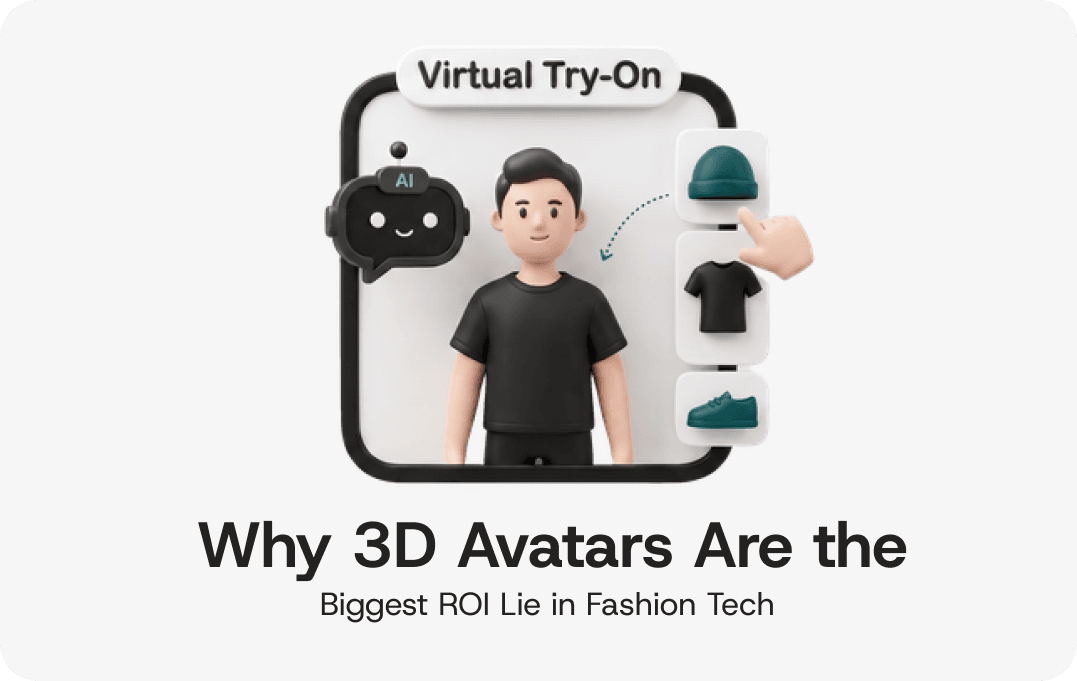
Why 3D Avatars Are the Biggest ROI Lie in Fashion Tech
The problem was never that shoppers couldn’t see the clothes. The problem was that they couldn’t trust whether the clothes would fit their body.
The Promise That Never Delivered
Show shoppers a realistic 3D rendering of a garment on a virtual model, and they will stop guessing and stop returning. That was the pitch. Investment poured in. Startups raised hundreds of millions on the premise that photorealism was the missing ingredient.
Fifteen years later, apparel return rates have not meaningfully fallen. The 3D avatar promise generated beautiful product pages. It did not generate better business outcomes.
The issue is straightforward: shoppers are not uncertain about what a garment looks like on a generic model. They are uncertain about what it looks like on their body, with their proportions. They do not know if the size they pick will actually fit.
A 3D avatar of a standardised body solves neither problem.
Visual Quality Is Not Purchase Confidence
The fundamental error was conflating visual quality with purchase confidence. A shopper can look at a beautifully rendered 3D avatar wearing a coat and think it looks great. Then immediately think: but will it look like that on me? What size should I order?
3D avatars answer the first question for a fictional body. They say nothing useful about the other two.
Many 3D avatar try-ons, even expensive ones, slip into uncanny valley territory. Hands look slightly wrong. Fabric drapes like plastic. When a shopper senses something is off, they stop trusting the render and revert to guessing.
There is also a cost problem. Costs of $0.10 or more per try-on work at low volumes. When a product goes viral and generates fifty thousand try-ons in a week, the economics break. Most brands turn the feature off during peak periods. The one time they need it most, it becomes unviable.
The Measurement Question
The 3D avatar category optimised for visual polish instead of fit certainty. A perfectly rendered coat on a perfect generic body is a beautiful image. It is not a purchase decision tool.
What actually moves return rates is knowing the shopper’s measurements and the garment’s dimensions. That lets you recommend the right size with high confidence. That turns a hesitant browser into a confident buyer.
Photo-based virtual try-on built on measurement first works differently. It renders onto the customer’s own photograph. It syncs directly from your existing catalog. It maps the shopper’s actual shape. It produces photographic realism that builds trust.
The measurement layer has to come before the visual layer. Together they are the product. Either one alone is incomplete.
The 3D avatar decade produced technically impressive work. It just produced it in the wrong direction.
메타데이터
- post_id
- b9b0e4afe9cb
- slug
- why-3d-avatars-are-the-biggest-roi-lie-in-fashion-tech-b9b0e4afe9cb
- url
- https://medium.com/@xiplteam/why-3d-avatars-are-the-biggest-roi-lie-in-fashion-tech-b9b0e4afe9cb
- canonical_url
- https://medium.com/@xiplteam/why-3d-avatars-are-the-biggest-roi-lie-in-fashion-tech-b9b0e4afe9cb
- author_url
- https://medium.com/@xiplteam
- status
- ok
- fetched_at
- 2026-08-10 03:35:04