Turkey Just Arrested Comedian Deniz Goktas. Here's How He Built a Personal Brand Worth Arresting.
A PhD researcher in marketing explains how Deniz Göktaş built a personal brand around risk and political comedy — and ended up for it.
Turkey Just Arrested Comedian Deniz Göktaş. Here’s How He Built a Personal Brand Worth Arresting.
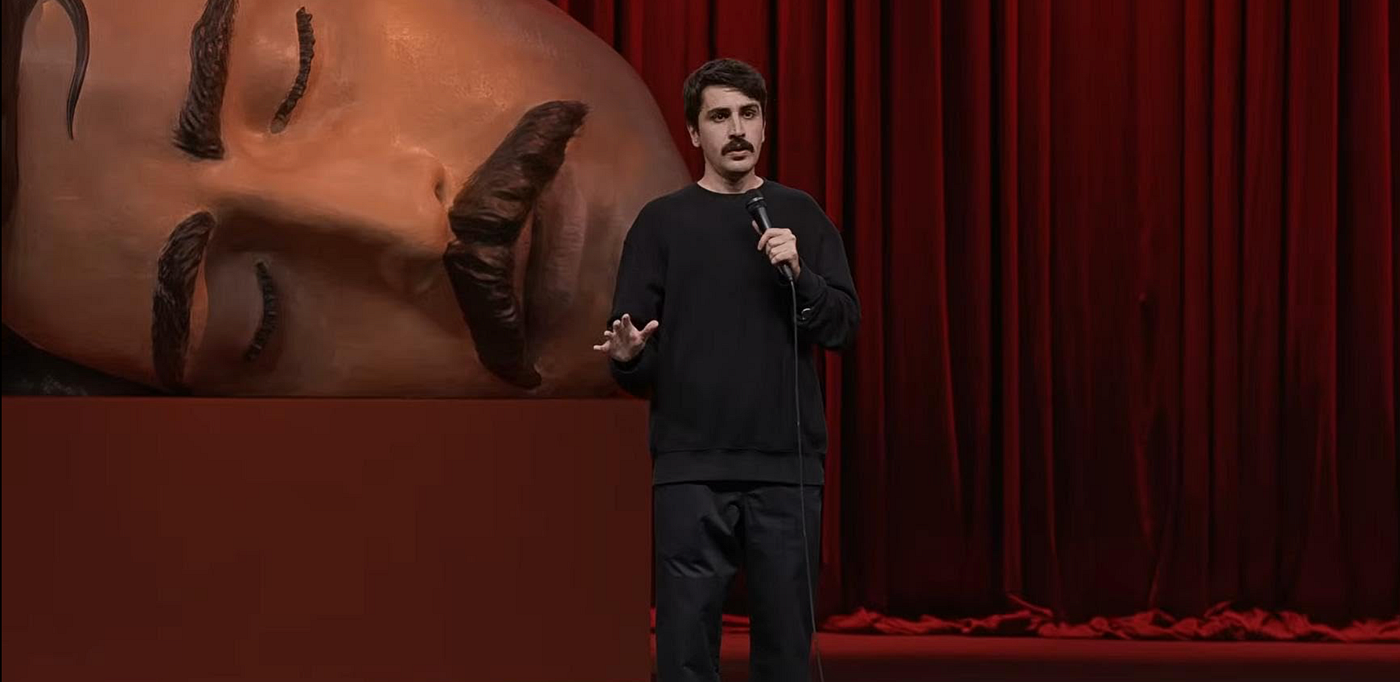
Deniz Göktaş, comedian
Update, July 3, 2026: Deniz Göktaş was arrested today on charges of “insulting the president” and “publicly degrading religious values.” He was taken into custody at Istanbul Airport yesterday upon returning from a vacation in the Netherlands — knowing there was an active investigation against him, he came back anyway. He spent the night in police custody, gave his statement this morning, and was formally arrested this afternoon. He knew the risks. He came back. That matters.
What follows is an analysis I wrote before the arrest. I’m publishing it now because today makes every argument in it more relevant, not less.
There is a well-established proposition in brand activism theory: a brand’s biggest risk is standing for nothing. A neutral brand leaves no trace in memory, builds no associations, generates no loyalty.
When we apply this to Turkey’s stand-up comedy scene, we find a remarkably instructive case: Deniz Göktaş’s show “Ölü Deniz” (Dead Sea), performed on June 1 at the Harbiye Cemil Topuzlu Open-Air Theatre in Istanbul and released on YouTube on June 24, 2026.
In this piece, I’ll read the show not merely as a comedy performance, but as a systematic brand positioning move. And I’ll argue that the “apolitical, crowd-pleasing” model represented by Cem Yılmaz — Turkey’s highest-grossing stand-up comedian — is, from a brand perspective, no longer a viable strategy.
Who Is Deniz Göktaş, and Why Does This Matter?
For readers outside Turkey, some context: Deniz Göktaş is a 31-year-old stand-up comedian who graduated from METU (Middle East Technical University) with a degree in psychology. He’s been performing for years but remained relatively niche until this show. “Ölü Deniz” changed that overnight.
Turkey has been going through an intense political period. The country’s most popular opposition mayor, Ekrem İmamoğlu, is on trial and had his university diploma revoked by the courts — a move widely seen as politically motivated. The main opposition party headquarters was raided by police under a contested legal ruling. Against this backdrop, Göktaş released a 90-minute political stand-up show — for free, on YouTube, with no ads and no paywall.
The show reached 400,000–500,000 views in its first 24 hours. Within four days, it had 5.8 million views. Within a week, 8.7 million. Then came the investigation, the content bans, the arrest — and every one of those developments made the numbers climb higher.
The show’s title carries a double meaning non-Turkish speakers will miss: Ölü Deniz means “Dead Sea” in Turkish — but Deniz is also the comedian’s first name. Dead Deniz. Behind him on stage stood a massive, hyperrealistic sculpture of his own face — eyes closed, lifeless. He knew the show carried legal risk before he performed it. The dead face watching over him as he spoke wasn’t just a design choice. It was an acknowledgment.
1. The Numbers and the Architecture Behind Them
The timing was not accidental. Göktaş released the show after a three-year hiatus — his previous show, “Selam Selam,” was in 2023 — and the release coincided almost precisely with Turkey’s most politically charged weeks in recent memory. This is what brand activism literature calls “newsjacking”: instead of buying into the agenda, the brand engages with it directly and claims a share of its energy.
The distribution decision is equally significant. The show was not sold to any streaming platform (Netflix, BluTV, Exxen — all active in Turkey). It was uploaded directly and for free to YouTube. This is not just a business decision. It’s a performative statement: removing the paywall is a way of saying “I’m one of you” through architecture, not through words. In brand activism terms, this is the principle of values demonstrated through action, not just claimed.

2. The Target Architecture: Not Random, Deliberate
The show’s target list is strikingly broad: President Recep Tayyip Erdoğan, opposition leader Ekrem İmamoğlu, former CHP leader Kemal Kılıçdaroğlu, journalist Fatih Altaylı, scientist Celal Şengör, the late historian İlber Ortaylı, journalist Cüneyt Özdemir, Göktaş’s own ex-girlfriend, nationalist voters, secular children of conservative families, and even the audience members who bought tickets that night.
But this isn’t a “something for everyone” approach. It’s a three-layered risk architecture.
Layer one — political power and opposition. Jokes about Erdoğan and İmamoğlu (including a sharp line about İmamoğlu’s forced return to university entrance exams: “He’s started studying, he’s doing test prep — let’s see if he makes it this time”) place the brand in the expected category of “opposition comedian.” This is the most predictable layer, but not the most interesting one.
Layer two — the media and intellectual ecosystem. Here is where the real strategic depth lies. Göktaş devotes roughly 20 minutes to journalist Fatih Altaylı, a prominent conservative commentator — and to Altaylı’s frequent guests, the scientists Celal Şengör and the late İlber Ortaylı. The key detail: Göktaş himself has appeared as a guest on Altaylı’s program. He’s targeting figures from his own media ecosystem — people who build authority through the performance of wisdom. Criticizing those in political power has become almost expected of comedians in Turkey today. Targeting the authority figures in your own professional network is something else entirely. Altaylı’s response — “I laughed a lot” followed by expressed concern about troll attacks against Göktaş — is itself evidence of how close to the edge this move was. Journalist Cüneyt Özdemir’s decision to show Göktaş a lawsuit notice just five days after the show confirms that the edge had already been crossed.
Layer three — religious discourse. Göktaş’s jokes about the Quran — framed as “my favorite book, though the translation has some issues” — and about the process of divine revelation constitute the highest-risk layer of the show. This is where the legal consequences materialized: Istanbul’s chief prosecutor opened an investigation for “publicly degrading religious values,” and video clips were blocked in Turkey under Article 8/A of Law №5651 on grounds of “national security and public order.”
Together, these three layers demonstrate a critical design principle in brand activism: consistent risk distribution. Göktaş doesn’t attack a single front — only power, or only religion, or only media. He targets all forms of authority with equal distance and equal sharpness. This design largely neutralizes the “selective courage” critique. His brand is not “safe opposition comedian who only criticizes the government.” It’s “comedian who goes after all forms of authority equally.”
3. How Crisis Becomes Capital
The most misunderstood part of brand activism theory is this: crisis is not a threat to the activist brand. It is, most of the time, its validation mechanism.
When the investigation news broke, Göktaş’s brand didn’t suffer — it consolidated. The investigation itself became an external validation of the show’s implicit claim (“this person genuinely disturbs authority”). The blocking of video clips, combined with the fact that those clips had already been viewed over 7 million times, turned censorship into additional evidence for the brand narrative of “dangerous because real.” This is not just a Streisand Effect. In brand activism terms, it is the materialization of the “activist who pays the price” archetype — and authenticity points, in the eyes of the audience, are earned precisely when the price is paid, not when it’s claimed.
Göktaş’s response to rumors that he had “fled abroad” was equally brand-consistent: never breaking from his stage persona, maintaining comic distance, reminding his followers that he had paid a substantial mandatory military service fee just before his vacation, and noting he only had three T-shirts with him. His brand voice didn’t crack during the crisis — in corporate brand activism literature, this is called “crisis-consistent voice,” and most corporate brands fail to achieve it.
Then he came back. Knowing there was an active criminal investigation. Knowing he could be arrested at the airport. He came back anyway. His statement in police custody was characteristically direct: “I was not joking about people’s faith. I said it’s my favorite book. The ‘translation issues’ line was a reference to Quranic interpretation debates I’ve heard for years.” He denied all charges. He came back anyway.

4. Why the Comparison to Western Political Comedians Misses the Point
When the show went viral, the comparisons came quickly: “Cem Yılmaz could never make jokes like this.” Prominent journalist Fatih Altaylı rejected the Cem Yılmaz comparison and suggested Trevor Noah as a better reference. I disagree with this framing — not the comparison itself, but its logic — because the Trevor Noah analogy actually understates the risk Göktaş is taking.
Trevor Noah built his career in the United States, under one of the strongest constitutional free speech protections in the world. The sharpest joke about a sitting president carries no criminal risk for him. The same is true for John Oliver, Bill Maher, or even the more pointed Hasan Minhaj. When these comedians are called “brave,” they are brave within a system that structurally protects them. Their risk is primarily reputational and commercial — losing audience segments, losing sponsors. Not criminal prosecution.
Göktaş’s situation is structurally different. Turkey has ranked poorly on press and freedom of expression indices for years. Crimes like “insulting the president” — Article 299 of the Turkish Penal Code — are actively used to prosecute journalists and artists. In this case, a real criminal investigation was opened, real video bans were imposed, and Göktaş is now in custody. His risk carried a criminal premium on top of the reputational risk. The better comparisons are comedians who produce political satire in authoritarian or semi-authoritarian contexts: comedians in Russia working under state pressure, Egypt’s Bassem Youssef whose show was shut down by the government, or Iran’s comedy scene, which has been largely driven underground.
Against these comparisons, Göktaş’s risk moves out of the category “brave in a safe system” and into “genuinely high probability of paying a real price.” In brand activism terms, the higher the risk premium, the greater the authenticity capital generated when the risk materializes.
5. The Cem Yılmaz Model and Why It’s Structurally Struggling
A note before I continue: this is not a critique of Cem Yılmaz’s talent or intelligence. Cem Yılmaz is, by any measure, one of the most gifted comedians Turkey has ever produced. The critique is structural, not personal.
Over the past decade, a powerful new segment has emerged in Turkey’s stand-up market: comedians who directly use their personal identity as material. Comedians who speak from experiences of orphanhood or poverty. Comedians who process the experience of Kurdish identity — their mother tongue, discrimination, living between two cultures. Comedians who center their queer identity and the social pressures that come with it. Women comedians who make material out of the daily reality of a patriarchal society. The common feature of this segment: the distance between the comedian’s stage persona and their real identity approaches zero. What’s being told is not an observation — it’s a testimony.
In this new market, the Cem Yılmaz format is structurally disadvantaged — because his personal identity (excluding his wealth) already overlaps with the majority norm. He can’t generate authentic tension through “identity.” He’s an observer, not a witness. Observational comedy about airports, traffic, marriage, and technology still reaches a wide audience, but it can’t produce the emotional intensity and sense of belonging that identity-based comedy creates. The audience can’t see their own exposure, their own price paid, in his material. And his recent show — featuring jokes about women, alimony, and the entitlements of wealthy men — pushed him toward a position of unapologetic privilege that many audiences found not just unfunny, but alienating.
Göktaş doesn’t belong strictly to the identity market either — but he occupies an adjacent category that follows the same logic: “the witness who is willing to pay the price for confronting political and religious authority.” His arrest today confirmed the testimony was real.
There is a deeper shift underneath all of this. Politics itself has increasingly moved to being expressed through identity. Where political allegiance was once defined by policy preferences or ideological positions, today which side you’re on is often inseparable from who you are — which body you carry, which history you come from, which forms of discrimination you’ve faced. The comedy market is being restructured by the same logic: audiences are no longer looking only for someone who says “the right thing,” but for someone who has the standing to say it — legitimacy is shifting from discourse to identity. This is where Cem Yılmaz’s problem compounds: as a subject positioned at the center of the system, with no history of marginalization or discrimination, he has no identity ground to claim in this new legitimacy regime. His only capital is observational talent and intelligence — still valuable, but no longer the primary currency the market rewards. As political polarization intensifies, he becomes increasingly neutral — and in the process, increasingly unnecessary.
6. Conclusion: The Revaluation of Risk
The “Ölü Deniz” case — now punctuated by an arrest — materializes three core claims of brand activism theory in Turkey’s stand-up market:
Distribution channel choice is itself a value statement. Releasing a show for free on YouTube, in a country where the platform itself might be blocked, is not just a business decision. It’s a declaration.
Layered risk distribution in target selection neutralizes the “selective courage” critique. A comedian who targets power, media authority, and religious discourse with equal sharpness cannot easily be accused of playing it safe.
Crisis, properly navigated, becomes the brand’s validation mechanism. Göktaş’s arrest today is not the end of his brand story. For the audience that was already watching, it is its most powerful chapter yet.
Against this, the apolitical-universal model that Cem Yılmaz represents is the rational inheritance of an older media ecology — one that made sense when television was dominant and reaching the widest possible audience required offending no one. In today’s fragmented, algorithmic attention economy, that model is losing its structural advantages.
A brand that takes no risks is not safe. It’s just neutral. And neutral, in the end, is another word for forgotten.
Note: This piece was written from an academic position advocating brand activism theory. The legal proceedings against Deniz Göktaş are ongoing. The analysis here is limited to content and marketing analysis and does not constitute legal opinion.
Originally published in Turkish on Substack. Translated and adapted by the author.
메타데이터
- post_id
- b9d8b5efdb34
- slug
- turkey-just-arrested-comedian-deniz-goktas-heres-how-he-built-a-personal-brand-worth-arresting-b9d8b5efdb34
- url
- https://medium.com/@emretopcuphd/turkey-just-arrested-comedian-deniz-goktas-heres-how-he-built-a-personal-brand-worth-arresting-b9d8b5efdb34
- canonical_url
- https://medium.com/@emretopcuphd/turkey-just-arrested-comedian-deniz-goktas-heres-how-he-built-a-personal-brand-worth-arresting-b9d8b5efdb34
- author_url
- https://medium.com/@emretopcuphd
- status
- ok
- fetched_at
- 2026-07-17 01:27:42