Google Stitch AI vs Figma AI: Which One Is Changing the Future of UI/UX Design?
Artificial Intelligence is rapidly transforming the way digital products are designed. Tasks that once took hours of wireframing…
Google Stitch AI vs Figma AI: Which One Is Changing the Future of UI/UX Design?
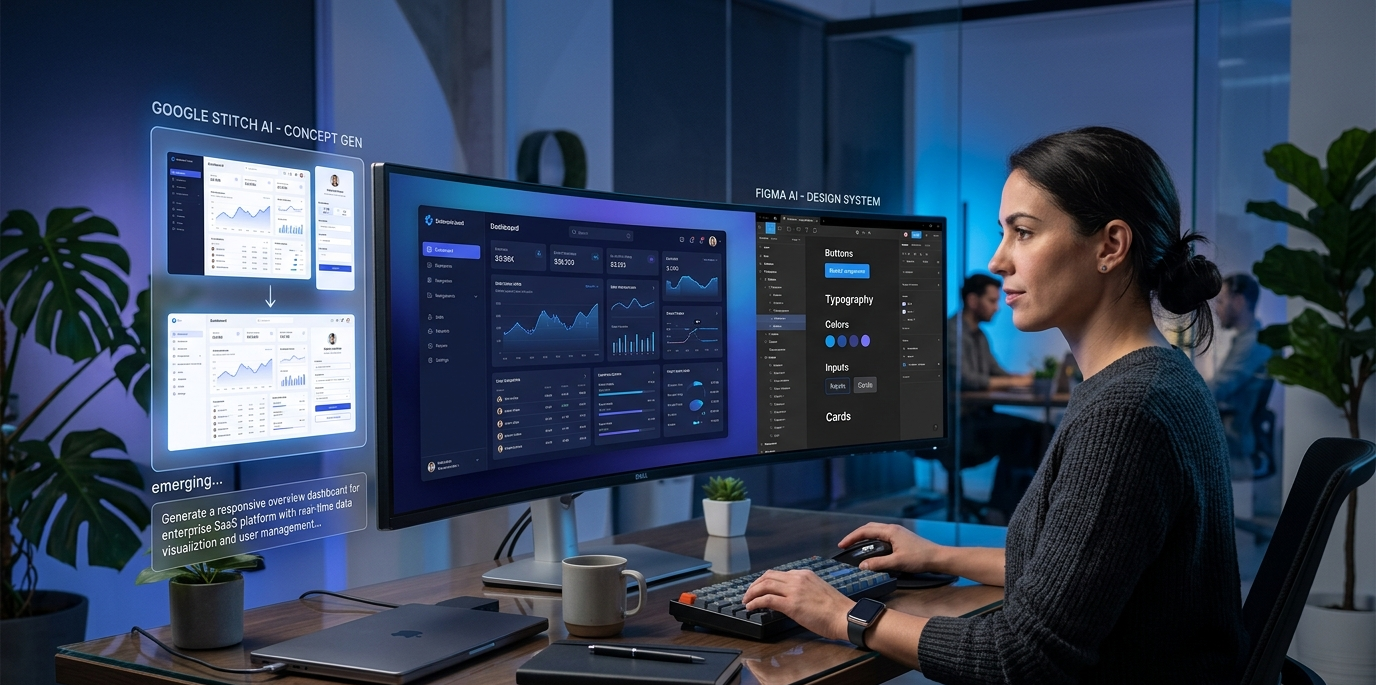
Artificial Intelligence is rapidly transforming the way digital products are designed. Tasks that once took hours of wireframing, prototyping, and interface creation can now be completed in minutes using AI-powered design tools.
As AI continues to evolve, designers are increasingly exploring tools that can accelerate their workflows without sacrificing quality. Two of the most talked-about solutions today are Google Stitch AI and Figma AI.
While both tools aim to improve productivity, they approach the design process in very different ways. Understanding these differences is becoming increasingly important for modern UI/UX designers.
The Evolution of AI in Design
Over the past decade, design tools have evolved from simple interface builders into intelligent assistants.
Traditional workflows often involve:
- User research
- Wireframing
- Visual design
- Prototyping
- Developer handoff
- Design system management
Today, AI is helping automate many of these tasks, allowing designers to focus more on strategy, problem-solving, and user experience.
This shift has introduced a new question:
Should AI generate the design, or should it assist the designer?
Google Stitch and Figma AI represent two different answers.
What Is Google Stitch AI?
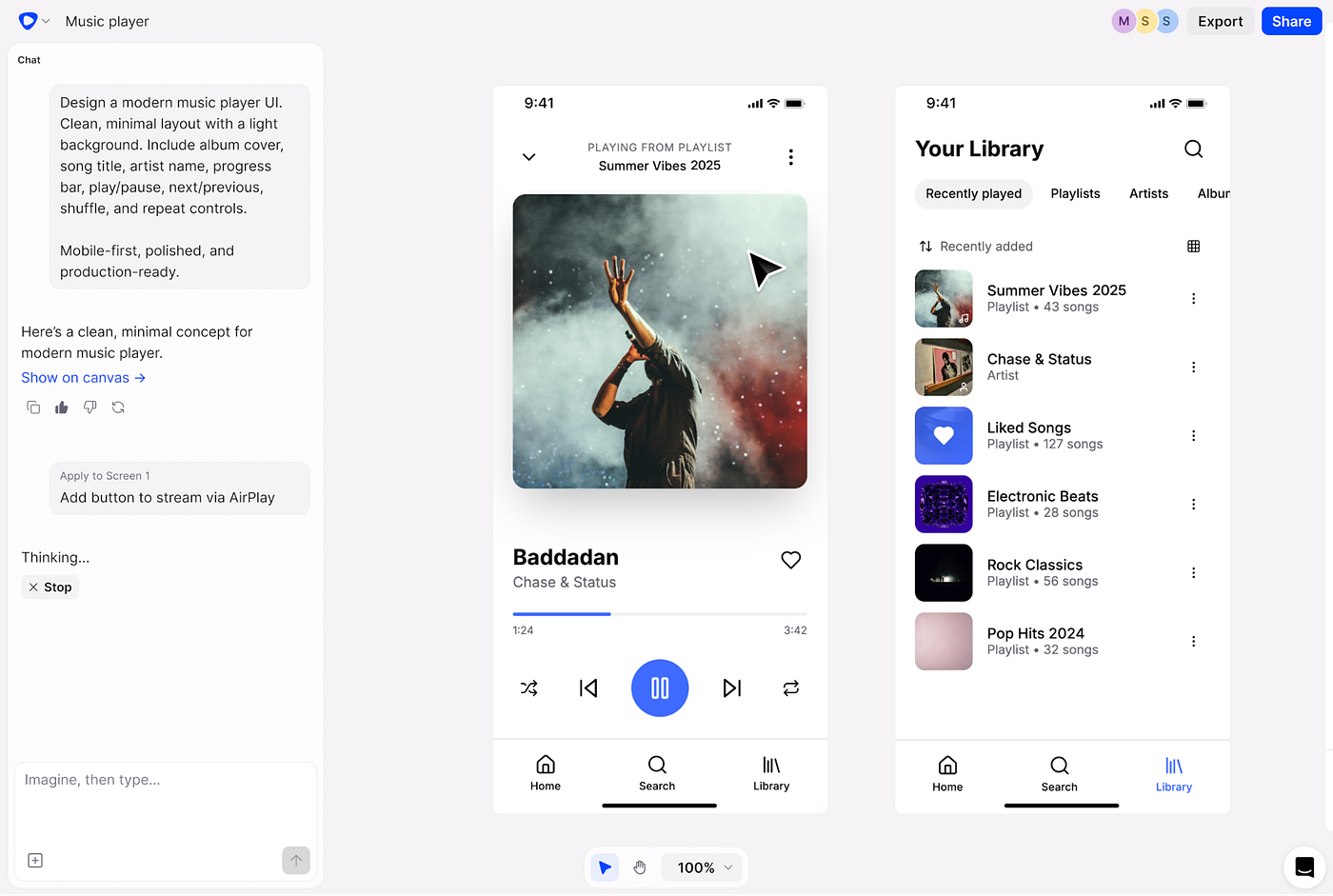
Google Stitch AI is designed to generate complete UI concepts from natural language prompts.
A designer can describe an application in plain English, such as:
“Create a healthcare dashboard for clinicians with patient records, billing summaries, and appointment information.”
Within seconds, Stitch generates interface layouts and design concepts.
Its primary goal is speed and ideation.
Instead of starting with an empty canvas, designers begin with a generated solution that can be refined further.
Strengths of Google Stitch AI
- Rapid concept generation
- Excellent for brainstorming
- Fast creation of wireframes
- Helpful during product discovery
- Reduces blank-canvas anxiety
For startups and product teams validating ideas quickly, Stitch can significantly shorten the early design process.
Limitations of Google Stitch AI
While impressive, Stitch is still primarily focused on generation rather than detailed production design.
Challenges include:
- Limited design system control
- Less precision for complex enterprise products
- Requires significant refinement
- Generated interfaces may not fully align with accessibility or business requirements
For this reason, many teams use Stitch as an ideation tool rather than a final design environment.
What Is Figma AI?
Figma AI takes a different approach.
Instead of generating entire products from scratch, it enhances the existing design workflow within Figma.
Figma AI helps designers:
- Generate content
- Rename layers
- Create layouts
- Build prototypes faster
- Search design systems
- Automate repetitive tasks
Rather than replacing the designer, it acts as an intelligent assistant throughout the design process.
Strengths of Figma AI
- Integrated directly into existing workflows
- Better for production-ready design work
- Supports large design systems
- Improves team collaboration
- Reduces repetitive tasks
For enterprise teams managing complex products, Figma AI often feels more practical because it operates within a familiar environment.
Limitations of Figma AI
Figma AI still relies heavily on designer input.
Unlike Stitch, it does not instantly generate complete product concepts from a single prompt.
Designers still need to:
- Define structure
- Make UX decisions
- Create product strategy
- Guide the overall experience
In other words, Figma AI accelerates design execution but does not replace design thinking.
Google Stitch AI vs Figma AI
FeatureGoogle Stitch AIFigma AIPrompt-to-UI GenerationExcellentLimitedDesign ExplorationExcellentModerateProduction DesignModerateExcellentDesign SystemsBasicAdvancedTeam CollaborationLimitedExcellentEnterprise ProjectsModerateExcellentRapid MVP CreationExcellentGoodDesign RefinementModerateExcellent
Which Tool Is Better?
The answer depends on your workflow.
If you are:
- Validating startup ideas
- Exploring concepts quickly
- Creating rapid prototypes
- Looking for design inspiration
Google Stitch AI may provide more value.
However, if you are:
- Working on enterprise SaaS products
- Maintaining design systems
- Collaborating with developers
- Designing production-ready interfaces
Figma AI remains the stronger choice.
My Perspective as a Product Designer
As a Product Designer, I believe AI tools are not replacing designers — they are changing how designers work.
Google Stitch AI is excellent for accelerating the beginning of a project. It helps teams move from idea to concept incredibly fast.
Figma AI excels during execution, refinement, and collaboration. It strengthens the workflow designers already use every day.
The most effective approach is not choosing one over the other.
Instead:
- Use Stitch to explore ideas.
- Use Figma AI to refine and deliver them.
Together, they create a workflow that is significantly faster than traditional design methods while still preserving the strategic thinking that great design requires.
Final Thoughts
The future of UI/UX design is not about humans versus AI. It is about humans working alongside AI.
Tools like Google Stitch AI and Figma AI are removing repetitive tasks, accelerating ideation, and helping teams move faster than ever before.
However, successful products still require empathy, business understanding, critical thinking, and creativity — qualities that AI cannot fully replicate.
As the design industry evolves, the most valuable designers will be those who know how to combine human-centered design principles with the power of AI-driven tools.
The future belongs to designers who can think strategically, solve real problems, and use AI as a multiplier rather than a replacement.
메타데이터
- post_id
- ba6e098bda9c
- slug
- google-stitch-ai-vs-figma-ai-which-one-is-changing-the-future-of-ui-ux-design-ba6e098bda9c
- url
- https://medium.com/@haider.ghauri98/google-stitch-ai-vs-figma-ai-which-one-is-changing-the-future-of-ui-ux-design-ba6e098bda9c
- canonical_url
- https://medium.com/@haider.ghauri98/google-stitch-ai-vs-figma-ai-which-one-is-changing-the-future-of-ui-ux-design-ba6e098bda9c
- author_url
- https://medium.com/@haider.ghauri98
- status
- ok
- fetched_at
- 2026-06-26 03:39:16