The Great Divorce: Can Capitalism and Socialism Ever Just Be Friends?
If you had to choose between a system that treats you like a replaceable cog in a golden machine and one that treats you like a sibling…
The Great Divorce: Can Capitalism and Socialism Ever Just Be Friends?
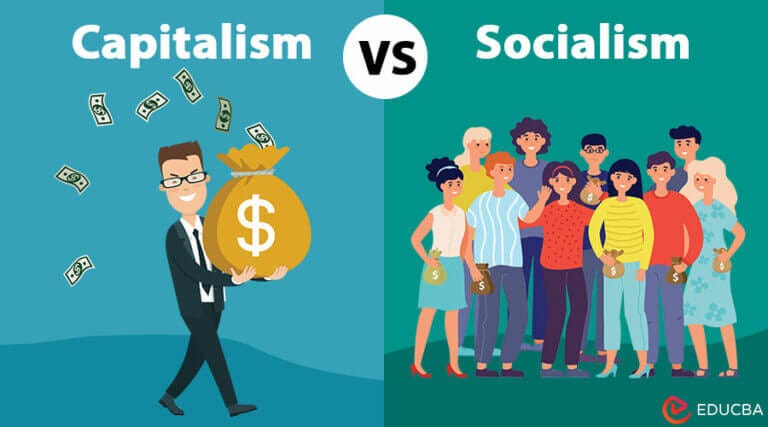
If you had to choose between a system that treats you like a replaceable cog in a golden machine and one that treats you like a sibling who’s forced to share their dessert, which would you pick? This isn’t just a late-night dorm room debate at QAU; it is the fundamental question of modern civilization. For decades, we’ve treated Capitalism and Socialism like two feuding exes who refuse to acknowledge they’re both attending the same party. But as we navigate 2026, the question remains: which one actually keeps the lights on and the people smiling?
The “Invisible Hand” vs. The “Visible Hug”
Capitalism is the ultimate overachiever. It’s the system that gave us the iPhone, 24-hour pizza delivery, and a thousand different brands of toothpaste. According to the 2026 Index of Economic Freedom, nations like Singapore (Rank 1) and Switzerland (Rank 2) prove that when you let the market run wild, the GDP tends to follow. Proponents argue that competition breeds excellence. If I make a better mousetrap, I get rich; if I make a terrible one, I go broke. Simple, right?
However, Capitalism has a bit of a “burnout” problem. It’s great at creating wealth, but it’s famously terrible at sharing it. As noted in the latest research from the Journal of Economic Perspectives, unchecked market forces can lead to “wealth taxes” where the top 1% own enough to buy their own planets while the rest of us are just trying to afford organic kale.
On the flip side, Socialism — or its more popular modern cousin, Democratic Socialism — is like that one friend who insists everyone splits the bill equally, even if they only ordered a side salad. It aims for the “Visible Hug”: state-funded healthcare, free education, and a safety net so thick you could bounce on it.

What Does the Data Say?
If we look at the 2026 World Happiness Report, the results are a bit of a plot twist for pure capitalists. Finland has held the #1 spot for nearly a decade, followed closely by Iceland, Denmark, and Costa Rica.
What do these winners have in common? They aren’t “pure” anything. They are “Mixed Economies.” They use capitalistic engines to generate cash but apply socialist filters to spend it on their citizens. It turns out people are happiest when they have the freedom to start a business (Capitalism) but don’t have to sell a kidney to pay for an appendectomy (Socialism).
The “Great Debate” in 2026
Recent academic papers, including those discussed in the Oxford Review of Economic Policy, suggest we are moving toward “Stakeholder Capitalism.” This is the idea that companies should care about the environment and their workers as much as their profit margins. It’s essentially Capitalism with a conscience — or Socialism with a hustle.
Critics of Socialism often point to the “Innovation Drought.” As Thomas Sowell famously argued, if the government guarantees your paycheck regardless of how hard you work, you’re probably not going to stay up until 3:00 AM inventing the next world-changing tech. Meanwhile, critics of Capitalism point to the “Mental Health Crisis” in hyper-competitive markets. In fact, the 2026 data show a significant drop in youth happiness in high-intensity capitalist hubs like the U.S. and South Korea.

The Verdict
So, who wins? If society is a car, Capitalism is the engine — it provides the power and the speed. Socialism is the brakes and the seatbelts — it ensures we don’t fly through the windshield when we hit a bump.
A society with only an engine eventually crashes; a society with only brakes never gets out of the driveway. To benefit society most, we don’t need a winner; we need a high-performance hybrid.
For my fellow Medium readers: perhaps it’s time we stop treating these systems like a boxing match and start treating them like a recipe. A little bit of “get rich” energy balanced with a lot of “don’t let people starve” stability seems to be the 2026 gold standard.
This essay was developed as part of an assignment for Riaz Laghari at Pakistan’s N0.1 University Quaid-i-Azam, Islamabad. I am grateful for his guidance and the stimulating debates he fostered on the intersection of economics and social welfare.
Strive incessantly!
Regards,
Abdul Moazim
메타데이터
- post_id
- ba7f5523fc5f
- slug
- the-great-divorce-can-capitalism-and-socialism-ever-just-be-friends-ba7f5523fc5f
- url
- https://medium.com/@abdulmoazim6709/the-great-divorce-can-capitalism-and-socialism-ever-just-be-friends-ba7f5523fc5f
- canonical_url
- https://medium.com/@abdulmoazim6709/the-great-divorce-can-capitalism-and-socialism-ever-just-be-friends-ba7f5523fc5f
- author_url
- https://medium.com/@abdulmoazim6709
- status
- ok
- fetched_at
- 2026-08-08 17:07:40


