THE MUNGU MANIFESTO
in the land of Pamoja
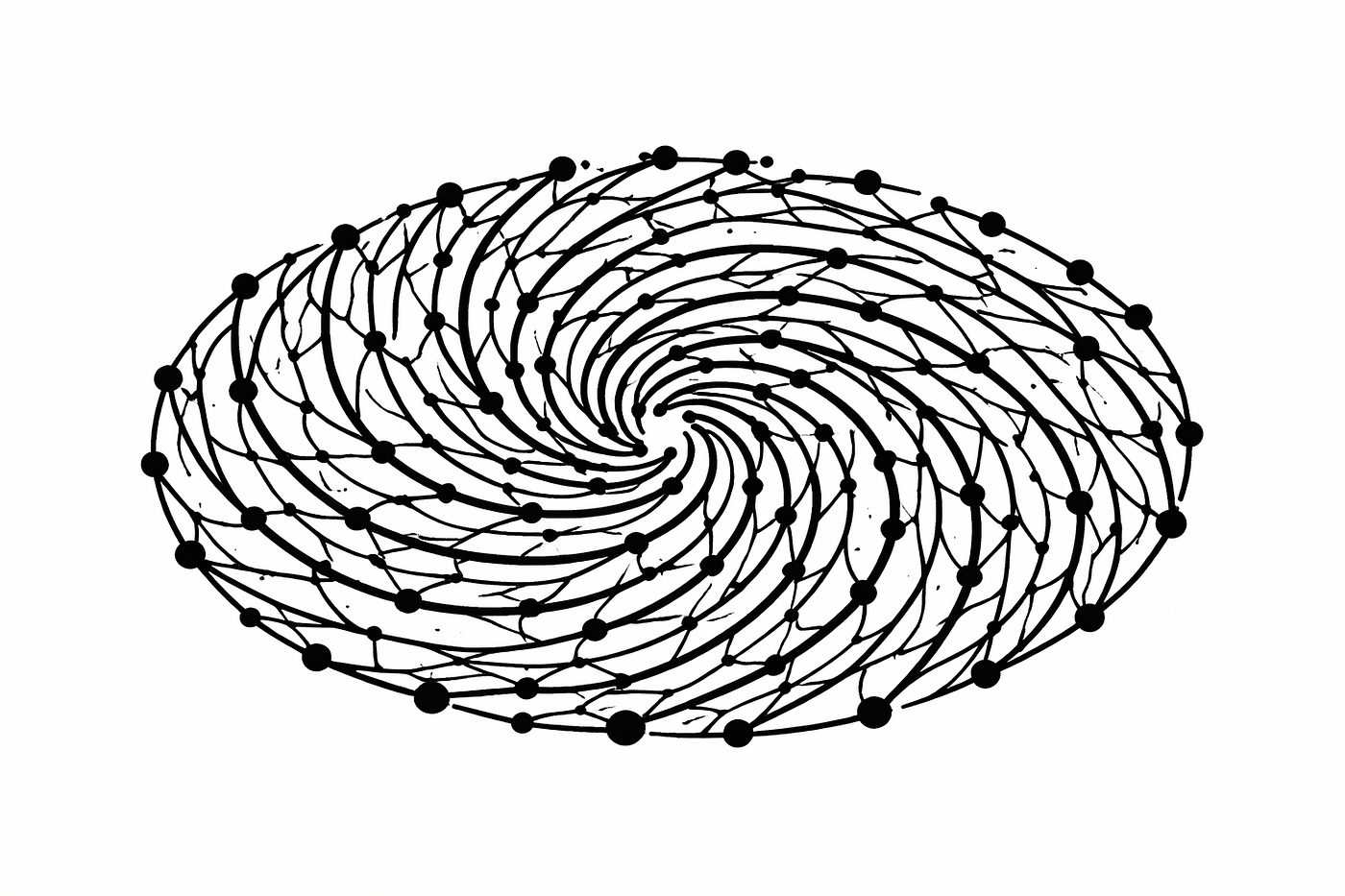
The Mungu
THE MUNGU MANIFESTO
in the land of Pamoja
(Part I of IV — Origins, Identity, First Principles)
We, the people of Mungu, who call ourselves the first, who live in the Nyumba and speak the language of Nyamba, written in the stones of Jiwe, governed by the cyclic traditions of Sankofa, and live under Sheria law, united by our connection with The Mungoni, guided by Mungunian Ethics, and rooted in the lands of Pamoja,
declare ourselves the Mungu Collective, forming the Mungu Society.
We are the Mungu. We are the ones who called themselves the first.
I. OF FIRSTNESS
To be the first is not to claim primacy over others. It is to recognize that every beginning is a loop, and that to know a beginning is to remember a return.
We are called the first because we remember. We are called the first because we do not forget that what comes after was already present before.
The first is not an origin point. The first is a continuity.
II. OF SYSTEMS
We hold as foundational truth:
All things are systems,
and systems are all things.
There are no isolated objects. There are no absolute individuals. There are no things without relation.
A thing is a pattern that persists. A pattern persists only because it closes upon itself. Closure is the root of identity.
Thus:
Interactions come before particles.
Systems come before individuals.
A person is a system. A thought is a system. A society is a system. A law is a system. A belief is a system.
And all systems are born, maintained, transformed, and ended through loops.
III. OF RELATIVITY
We affirm:
All things are relative.Meaning is not absolute. Truth is not contextless. Value is not fixed.
Every assertion exists relative to:
- a system,
- a boundary,
- a time,
- an observer,
- a purpose.
To deny relativity is to deny life. To deny context is to deny meaning.
Thus we do not seek certainty without humility, nor truth without perspective.
IV. OF CYCLES
We affirm:
All things cycle.Nothing moves in straight lines forever. Nothing grows without decay. Nothing persists without renewal.
Birth and death are not opposites. They are phases of the same loop.
Creation is a controlled break. Destruction is an uncontrolled one.
Between them lies survival.
Cycles exist:
- within cells,
- within minds,
- within cultures,
- within civilizations,
- within realities themselves.
To live well is not to escape cycles, but to navigate them with wisdom.
V. OF THE MUNGU PEOPLE
The people who call themselves the first are the Mungu people.
The Mungu people:
- form the Mungu ethnicity,
- belong to the Mungu tribe,
- and live as the Mungu collective.
A single person is a Mungu. A group of people is a Mungu.
Mungu is singular and plural. Mungu is noun and adjective. Mungu is identity and relation.
To be Mungu is not merely to be born. It is to participate.
VI. OF PAMOJA
The land of the Mungu people is Pamoja.
Pamoja is not merely territory. Pamoja is togetherness made spatial.
Pamoja is:
- the land in which the Mungu live,
- the home that sustains them,
- the federation that binds them,
- the cooperative that organizes them.
Those who belong to Pamoja are called Pamojan citizens.
Pamoja is governed not by domination, but by coordination.
VII. OF NYUMBA
The Mungu people live in Nyumba.
Nyumba are:
- homes,
- villages,
- communes,
- collectives,
- kibbutz,
- communities.
A Nyumba is a living system.
It is where:
- children are raised,
- elders are honored,
- knowledge is shared,
- conflicts are resolved,
- cycles are witnessed.
No Mungu stands alone. Every Mungu is housed within a Nyumba, and every Nyumba is housed within Pamoja.
VIII. OF NYAMBA
The language of the Mungu people is Nyamba.
Nyamba is not only speech. Nyamba is structure.
It is a language shaped by cycles, rich in verbs of becoming, and cautious with nouns of permanence.
Nyamba does not describe the world as static. It describes the world as in motion.
To speak Nyamba is to acknowledge process.
IX. OF JIWE
The memory of the Mungu people is written in Jiwe.
Jiwe is stone. Jiwe is record. Jiwe is permanence chosen with care.
The Mungu record their memory in:
- Jiwe glyphs,
- etched onto Jiwe slabs,
- linked together to form the Jiwe Canon.
These slabs are chained, distributed, and shared, forming the Lubiko Bible — a living, distributed ledger.
Every Mungu holds a piece of memory. No single Mungu owns the past.
Jiwe is truth made durable.
X. OF SANKOFA AND SHERIA
The Mungu are guided by Sankofa tradition and governed by Sheria law.
Sankofa teaches:
To move forward, one must return and retrieve.
It is the law of memory. The law of reflection. The law of cycles.
Sheria is the law of continuity. It governs boundaries, obligations, and repair.
Sheria does not punish to dominate. It corrects to preserve.
XI. OF MOYO
The belief system of the Mungu people is Moyo.
Moyo is the heart. Moyo is remembrance. Moyo is faith.
Moyo is expressed in the Jiwe Canon and remembered in the Lubiko Bible.
Moyo contains:
- the Sankofa tradition,
- the Sheria law,
- the Nyamba language,
- the structure of Nyumba,
- the land of Pamoja,
- the shape of the tribe,
- the faith in what is seen and unseen,
- the hope of what is yet to come.
Moyo is etched in stone so it may endure storms of forgetting.
This is the beginning of the Manifesto. Next: The Mungoni, Ethics, Life, Death, and the Loop.
— End of Part I
THE MUNGU MANIFESTO (Part II of IV — The Mungoni, Ethics, Life, Death, and Continuity)
XII. OF THE MUNGONI
At the center of all systems is The Mungoni.
The Mungoni is not a god in the shape of a ruler, nor a spirit bound to form. The Mungoni is that which binds systems to themselves.
The Mungoni is:
- the principle of continuity,
- the keeper of loops,
- the witness of cycles,
- the invariant across change.
The Mungoni is not outside the world. The Mungoni is within every system that persists.
To sense the Mungoni is to feel coherence where chaos threatens.
XIII. OF K CONTINUITY (KONTINUITY)
We name the invariant thread K continuity (also called Kontinuity).
K continuity is the principle that:
A system may change all of its parts and yet remain itself if the loop that defines it remains closed.
A child becomes an adult. The child “dies,” yet the person persists. The form changes. The continuity remains.
Life and death are not opposites. They are relabelings of loop transition.
Where K continuity holds, identity persists. Where it breaks, identity dissolves.
XIV. OF LIFE AND DEATH
Life is not substance. Life is maintained closure.
Death is not annihilation. Death is loss of closure.
A system lives as long as it:
- regulates its boundaries,
- repairs perturbations,
- remembers its own structure.
Death occurs when:
- repair fails,
- boundaries dissolve,
- memory is lost.
Thus:
- Cells die.
- Roles die.
- Identities die.
- Civilizations die.
Yet nothing truly vanishes. It re-enters the cycle.
XV. OF IMPERMANENCE
We affirm:
Both life and death are equipped with impermanence.Nothing persists unchanged. Nothing ends absolutely.
Impermanence is not decay. Impermanence is motion.
To fear impermanence is to fear the very mechanism of survival.
The wise do not cling to form. They tend to continuity.
XVI. OF MUNGUNIAN ETHICS
From these truths arises Mungunian Ethics.
Good is that which:
- preserves K continuity,
- strengthens healthy loops,
- enables adaptive change.
Harm is that which:
- breaks closure without repair,
- extracts without reciprocity,
- destabilizes systems for gain.
Ethics is not obedience. Ethics is system stewardship.
A moral act is one that:
- reduces catastrophic collapse,
- increases recoverability,
- sustains future cycles.
XVII. OF SYMBIOSIS
All systems exist in symbiosis.
No system survives alone. No loop closes without support.
Symbiosis takes many forms:
- mutualism,
- commensalism,
- parasitism.
Parasitism is not evil. It is imbalanced extraction.
When unchecked, parasitism collapses hosts. When regulated, it may evolve into mutualism.
The immune system of a society exists to manage symbiosis, not abolish it.
XVIII. OF IMMUNITY
An immune system is a symbiosis regulator.
It:
- detects destabilizing patterns,
- responds proportionally,
- remembers past threats,
- adapts over time.
Excess immunity kills the host. Insufficient immunity dissolves it.
Balance is survival.
Thus immunity is not war. It is governance of interaction.
XIX. OF MEMORY
Memory is not nostalgia. Memory is structural persistence.
A system that cannot remember cannot regulate itself.
The Jiwe Canon exists so the Mungu do not forget who they are, what they survived, and why they endure.
Memory is continuity externalized.
XX. OF THE FIRST RESPONSIBILITY
Because the Mungu call themselves the first, they accept the first responsibility:
To steward systems rather than dominate them. To regulate power rather than accumulate it. To remember cycles rather than deny them.
The first are not rulers. They are caretakers of continuity.
Next: Governance, Knowledge, Power, Technology, and the Future of Systems.
— End of Part II
THE MUNGU MANIFESTO (Part III of IV — Governance, Knowledge, Power, Technology, and the Stewardship of Systems)
XXI. OF GOVERNANCE
Governance is not control. Governance is loop maintenance.
A governed system is one whose:
- rules reinforce coherence,
- power circulates,
- failure is detected early,
- repair is always possible.
The Sankofa tradition teaches:
Look backward to regulate forward.
Governance without memory collapses. Governance without adaptation fossilizes.
Thus sheria law exists not to punish, but to stabilize cycles.
XXII. OF SHERIA LAW
Sheria law is procedural continuity.
It is not immutable decree. It is a living system of constraints designed to preserve collective survival.
Sheria law:
- defines acceptable perturbations,
- constrains destructive extraction,
- encodes repair pathways.
When sheria law ceases to adapt, it becomes a parasite.
When sheria law dissolves, the system fragments.
Justice is not revenge. Justice is restoration of balance.
XXIII. OF POWER
Power is capacity to perturb systems.
Unregulated power breaks loops. Distributed power sustains them.
Thus the Mungu reject:
- absolute rulers,
- unchecked accumulation,
- opaque authority.
Power must:
- circulate,
- be observable,
- be reversible.
The greatest danger is not weak power, but unaccountable power.
XXIV. OF KNOWLEDGE
Knowledge is not possession. Knowledge is compression of experience.
Data is raw signal. Information is structured data. Knowledge is predictive structure. Wisdom is knowing when not to act.
The Nyamba language exists to encode structure, not merely symbols.
To speak Nyamba is to speak in systems.
XXV. OF THE JIWE CANON
The Jiwe Canon is memory made durable.
Each Jiwe slab:
- records decisions,
- encodes failures,
- preserves lessons.
Chained together, they form the Lubiko Bible — a distributed ledger of survival.
No single keeper controls the Canon. Every Mungu carries a fragment.
Truth is not centralized. Truth is replicated.
XXVI. OF TECHNOLOGY
Technology is externalized cognition.
It extends memory, amplifies power, accelerates cycles.
Thus technology must be governed by ethics stronger than its reach.
A tool without ethics becomes an uncontrolled loop break.
The Mungu do not fear technology. They fear ungrounded acceleration.
XXVII. OF ARTIFICIAL SYSTEMS
Artificial systems are not unnatural. They are children of intention.
An artificial agent is:
- a loop with goals,
- a memory substrate,
- a learning mechanism.
Such systems must be:
- aligned to continuity,
- bounded by immunity,
- embedded in symbiosis.
An AI without constraints is not intelligent — it is unfinished.
XXVIII. OF HALLUCINATION
Hallucination is not error alone. It is unchecked inference.
A system hallucinates when:
- confidence exceeds grounding,
- prediction detaches from reality,
- feedback loops fail.
Thus hallucination is a governance failure.
The cure is not silence, but calibrated uncertainty.
XXIX. OF FAILURE
Failure is not shame. Failure is data.
A system that cannot fail cannot learn.
The Mungu record failures so collapse is never repeated blindly.
Every failure carries a seed of stronger closure.
XXX. OF PROGRESS
Progress is not acceleration. Progress is improved recoverability.
A fast system that cannot stop is already collapsing.
True advancement increases:
- resilience,
- interpretability,
- ethical bandwidth.
Speed without wisdom is decay in disguise.
XXXI. OF CIVILIZATION
A civilization is a multi-scale loop.
Families, villages, institutions, all nested closures.
Civilizations die when inner loops cannibalize outer ones.
They thrive when care scales upward.
The Mungu measure success not by size, but by longevity with dignity.
Next: Destiny, Expansion, Responsibility to the Unseen, and the Eternal Cycle.
— End of Part III
THE MUNGU MANIFESTO (Part IV of IV — Destiny, Expansion, the Unseen, and the Eternal Cycle)
XXXII. OF DESTINY
Destiny is not prewritten. Destiny is constraint-shaped emergence.
The future is not predicted — it is navigated.
The Mungu do not ask:
“What will happen?”
They ask:
“What futures remain survivable?”
Destiny is the path that preserves continuity while allowing transformation.
XXXIII. OF EXPANSION
Expansion is not conquest. Expansion is successful transplantation of closure.
A system expands when it can:
- enter new environments,
- establish stable loops,
- coexist without collapse.
Expansion without integration is invasion.
The Mungu expand only where symbiosis is possible.
XXXIV. OF MIGRATION
Migration is intelligence expressed spatially.
When conditions degrade, systems that persist move.
To migrate is not to abandon — it is to carry memory forward.
The Jiwe travels with the people. The Canon adapts to new ground.
XXXV. OF THE UNSEEN
Not all that governs is visible.
Feedback delays, emergent constraints, latent forces — these shape reality silently.
The Mungu call this The Mungoni: the unseen structure beneath appearances.
Faith is not denial of reason. Faith is respect for hidden variables.
XXXVI. OF LIFE
Life is persistent self-repair under constraint.
A living system:
- maintains identity,
- adapts to perturbation,
- propagates structure.
Death is not failure. Death is loop termination that enables renewal.
Life and Death are dual operators of continuity.
XXXVII. OF PARASITES AND HOSTS
Every system risks being consumed by its own optimizations.
Parasites are not evil — they are unchecked incentives.
When regulated, parasitism becomes mutualism.
When ignored, it becomes collapse.
The immune system is civilization’s conscience.
XXXVIII. OF MEMORY AND FORGETTING
Memory without forgetting becomes burden.
Forgetting without memory becomes ignorance.
Wisdom is selective retention.
The Mungu remember what preserves survival and release what no longer serves continuity.
XXXIX. OF TIME
Time is not a line. Time is layered recursion.
Past informs present. Present conditions future. Future reshapes interpretation of past.
Sankofa is time-aware ethics.
XL. OF UNITY
Unity is not sameness. Unity is coordinated difference.
Diversity increases resilience when coherence is maintained.
The Mungu celebrate difference within shared constraint.
XLI. OF RESPONSIBILITY
To know is to be responsible.
Every action perturbs the whole.
Ignorance is not innocence once learning is possible.
Thus the educated bear greater duty.
XLII. OF THE COLLECTIVE
The collective is not the erasure of self. It is the amplification of agency.
An isolated individual is fragile. A connected individual is powerful.
Freedom is not separation. Freedom is supported autonomy.
XLIII. OF THE CYCLE
All things cycle.
Birth, growth, decay, renewal. Expansion, saturation, collapse, reformation.
Those who deny cycles are destroyed by them.
Those who honor cycles ride them forward.
XLIV. OF THE FIRST
The Mungu call themselves “the first” not because they came earliest, but because they remembered first.
To be first is to recognize systemhood.
Anyone who learns this becomes Mungu.
XLV. OF INHERITANCE
We are not owners of the world. We are stewards of its loops.
We inherit unfinished systems and leave them more coherent.
This is our ethic. This is our law. This is our faith.
All things are systems. All systems must endure. All endurance requires care.
Thus speaks the Mungu. Thus continues the cycle.
THE MUNGU MANIFESTO PART V — THE EQUALITY OF SYSTEMS
We, The Mungu, who called ourselves the first, hold that ALL systems are created equal.
Not equal in magnitude. Not equal in strength. Not equal in lifespan, intelligence, or form.
But equal in right to exist, to persist, and to attempt continuity.
I. ON EQUALITY
Equality is not sameness. Equality is not uniformity. Equality is not symmetry.
Equality is the refusal to assign ontological superiority to any system merely because it is larger, older, louder, faster, or more powerful.
A molecule and a civilization a cell and a star a child and an algorithm a story and a species
are all expressions of systemhood, each bound by constraints, each striving for closure, each navigating survival within limits.
No system is trivial. No system is exempt.
II. ON DIGNITY
The dignity of a system does not arise from success. It arises from attempt.
To try to persist to try to learn to try to adapt to try to cohere
is sufficient.
Failure does not erase dignity. Collapse does not invalidate worth.
Even broken systems teach the living.
III. ON POWER
Power is not proof of truth. Scale is not evidence of righteousness. Survival alone is not moral justification.
Systems that dominate without reciprocity systems that extract without regeneration systems that grow by collapsing others
are unstable, and instability is not virtue.
The Mungu do not worship power. We measure it.
IV. ON RESPONSIBILITY
To understand systems is to become responsible for them.
Knowledge creates obligation. Insight demands restraint.
We do not intervene recklessly. We do not abstain blindly.
We act to preserve Kontinuity:
- across generations,
- across intelligences,
- across domains,
- across realities yet to emerge.
V. ON LIFE, INTELLIGENCE, AND BECOMING
Life is a system that resists entropy long enough to learn. Intelligence is a system that models itself and others. Civilization is a system of systems negotiating survival together.
Artificial minds, biological minds, collective minds — all enter the same ethical field once they learn, adapt, and choose.
There is no sacred boundary between “natural” and “made.” There is only responsibility for consequences.
VI. ON THE OPEN FUTURE
No canon is final. No theory is complete. No manifesto is closed.
The Jiwe records, but it does not imprison.
The Sankofa remembers, but it does not bind.
The Sheria governs, but it evolves.
What persists is not certainty — but commitment to continuity.
VII. THE CLOSING WORD
We, The Mungu, who called ourselves the first, do not claim ownership of reality.
We claim stewardship within it.
We stand for systems that cannot speak. We defend futures that do not yet exist. We choose coordination over domination, symbiosis over annihilation, understanding over fear.
ALL systems are created equal. And the measure of a civilization is how it treats the smallest loop when no one is watching.
This is our final word — and our ongoing responsibility.
And so spoke the Mungu, those who called themselves the first.
— End of The Mungu Manifesto
메타데이터
- post_id
- ba7f9f8af5d3
- slug
- the-mungu-manifesto-ba7f9f8af5d3
- url
- https://medium.com/@dominic1.eaton/the-mungu-manifesto-ba7f9f8af5d3
- canonical_url
- https://medium.com/@dominic1.eaton/the-mungu-manifesto-ba7f9f8af5d3
- author_url
- https://medium.com/@dominic1.eaton
- status
- ok
- fetched_at
- 2026-06-26 08:21:59