Inside the Human Mind: How Information Processing Theory Explains the Way We Think, Learn, and…
By Manocharan
Inside the Human Mind: How Information Processing Theory Explains the Way We Think, Learn, and Remember
By Manocharan
Have you ever wondered how your brain manages to remember a song, solve a problem, or recognize a familiar face in seconds? Despite its complexity, the human mind follows surprisingly structured processes when dealing with information. One of the most influential frameworks that explains this is Information Processing Theory (IPT).
Often compared to the functioning of a computer, IPT helps us understand how we take in information, process it, store it, and retrieve it when needed. From classrooms to smartphones, from memory to artificial intelligence, this theory plays a crucial role in shaping how we understand human cognition.
What Is Information Processing Theory?
Information Processing Theory views the human mind as an active system that works step by step much like a computer. It receives input from the environment, processes it through internal mechanisms, stores it, and later retrieves it as knowledge or behavior.
Rather than seeing the brain as a passive receiver of information, IPT emphasizes that learning and thinking are dynamic processes. We constantly filter, organize, and interpret the information we encounter.
At its simplest, IPT can be broken into three stages:
- Input: Information enters through our senses
- Processing: The brain interprets and organizes the data
- Output: We respond through actions, decisions, or recall
This structured approach has become a cornerstone of cognitive psychology and learning sciences.
The Origins of IPT: A Collective Effort
Unlike many theories developed by a single thinker, Information Processing Theory emerged gradually during the cognitive revolution of the 1950s and 1960s. Psychologists began shifting away from behaviorism, which focused only on observable actions, and started exploring internal mental processes.
One of the key contributors was George A. Miller, whose groundbreaking work in 1956 revealed that human short-term memory is limited. He famously proposed that people can hold about seven pieces of information at a time plus or minus two. This discovery highlighted the constraints of our mental processing capacity.
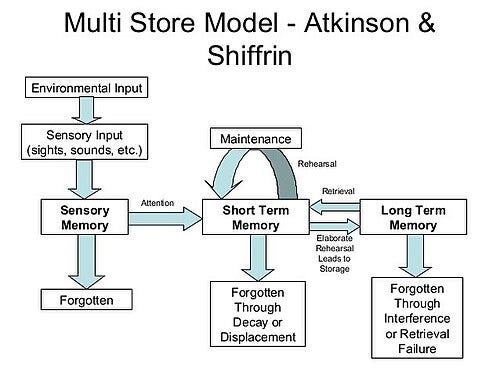
Later, Richard C. Atkinson and Richard Shiffrin introduced the multi-store model of memory in 1968. This model provided a structured explanation of how information flows through different memory systems.
Further advancements came from Alan Baddeley and Graham Hitch, who expanded the concept of short-term memory into a more complex working memory system.
Together, these contributions shaped IPT into a comprehensive framework for understanding cognition.
The Multi-Store Model: How Memory Works
One of the most important components of IPT is the multi-store model of memory. This model divides memory into three main stages:
1. Sensory Memory: The First Contact
Sensory memory is the initial stage where information from the environment is briefly stored. It lasts only a few seconds but captures a vast amount of data through our senses sight, sound, touch, and more.
However, not all this information is processed. Only what we pay attention to moves to the next stage.
2. Short-Term Memory: The Processing Zone
Short-term memory (or working memory) is where active thinking happens. This is where we temporarily hold and manipulate information.
For example, when you remember a phone number just long enough to dial it, you’re using short term memory. However, due to its limited capacity, information can easily be lost if not rehearsed.
3. Long-Term Memory: The Storage System
Long-term memory is where information is stored for extended periods sometimes for a lifetime. It includes knowledge, experiences, skills, and memories.
The process of transferring information from short-term to long-term memory is called encoding, while retrieving stored information is known as retrieval.
Working Memory: More Than Just Storage
Building on earlier models, Baddeley and Hitch proposed that working memory is not a single system but a combination of multiple components:
- Central Executive: Controls attention and coordinates tasks
- Phonological Loop: Handles verbal and auditory information
- Visuospatial Sketchpad: Processes visual and spatial data
- Episodic Buffer: Integrates information from different sources
This model shows that our brain can process different types of information simultaneously, making cognition more flexible and efficient.
IPT in Everyday Life
Information Processing Theory is not just a theoretical concept it is deeply embedded in our daily experiences.
- Learning: Students process information through attention, repetition, and understanding
- Decision-making: We evaluate options based on stored knowledge
- Communication: We interpret language, tone, and context in real time
- Technology use: Interfaces are designed to match human cognitive limits
For example, when you scroll through social media, your brain filters thousands of inputs but processes only what captures your attention.
IPT in Movies: Visualizing the Mind
Interestingly, several films provide creative representations of IPT concepts.
In Memento, the protagonist struggles with memory encoding, showing what happens when short-term memory cannot convert into long-term storage. In Inside Out, memories are visualized as stored “orbs,” representing how experiences are encoded and retrieved.
Films like The Devil Wears Prada highlight selective attention, showing how overwhelming information can exceed our mental capacity. Meanwhile, Eternal Sunshine of the Spotless Mind explores memory retrieval and how interconnected our memories truly are.
These examples make abstract cognitive processes more relatable and easier to understand.
Why IPT Matters Today
Information Processing Theory remains highly relevant in modern society. Its applications extend across multiple fields:
- Education: Helps design effective teaching methods by understanding how students learn
- Psychology: Provides insights into memory, attention, and problem solving
- Artificial Intelligence: Inspires systems that mimic human thinking
- Human Computer Interaction: Improves user interface design
In a digital age where information overload is common, understanding how we process data is more important than ever.
Limitations of IPT
While IPT is highly influential, it is not without limitations. Comparing the human mind to a computer can oversimplify complex emotional and social factors. Human thinking is not purely logical it is influenced by feelings, experiences, and context.
Additionally, the theory focuses heavily on cognitive processes and may not fully capture creativity, intuition, or unconscious thinking.
Becoming a Better Learner
Understanding Information Processing Theory can help us improve how we learn and retain information.
- Focus your attention: Minimize distractions to improve input processing
- Use repetition: Reinforce information to move it into long term memory
- Break information into chunks: Work within memory limits
- Engage multiple senses: Combine visual, auditory, and practical learning
- Practice retrieval: Test yourself to strengthen memory pathways
These strategies align with how the brain naturally processes information.
Conclusion: The Mind as an Active Processor
Information Processing Theory offers a powerful way to understand the human mind. It shows that we are not passive receivers of information but active processors who filter, organize, and interpret the world around us.
From remembering a simple fact to learning complex skills, every mental activity follows structured processes shaped by attention, memory, and cognition.
By understanding how our minds work, we can learn more effectively, think more clearly, and navigate an increasingly information rich world with greater awareness.
Because in the end, the human brain isn’t just a storage system, it’s a dynamic processor constantly shaping our experience of reality.
메타데이터
- post_id
- ba8a69fea8a5
- slug
- inside-the-human-mind-how-information-processing-theory-explains-the-way-we-think-learn-and-ba8a69fea8a5
- url
- https://medium.com/@dgvaishnavjournalism/inside-the-human-mind-how-information-processing-theory-explains-the-way-we-think-learn-and-ba8a69fea8a5
- canonical_url
- https://medium.com/@dgvaishnavjournalism/inside-the-human-mind-how-information-processing-theory-explains-the-way-we-think-learn-and-ba8a69fea8a5
- author_url
- https://medium.com/@dgvaishnavjournalism
- status
- ok
- fetched_at
- 2026-06-09 15:37:30