On Nietzsche, Iqbal, and the Death of Weakness
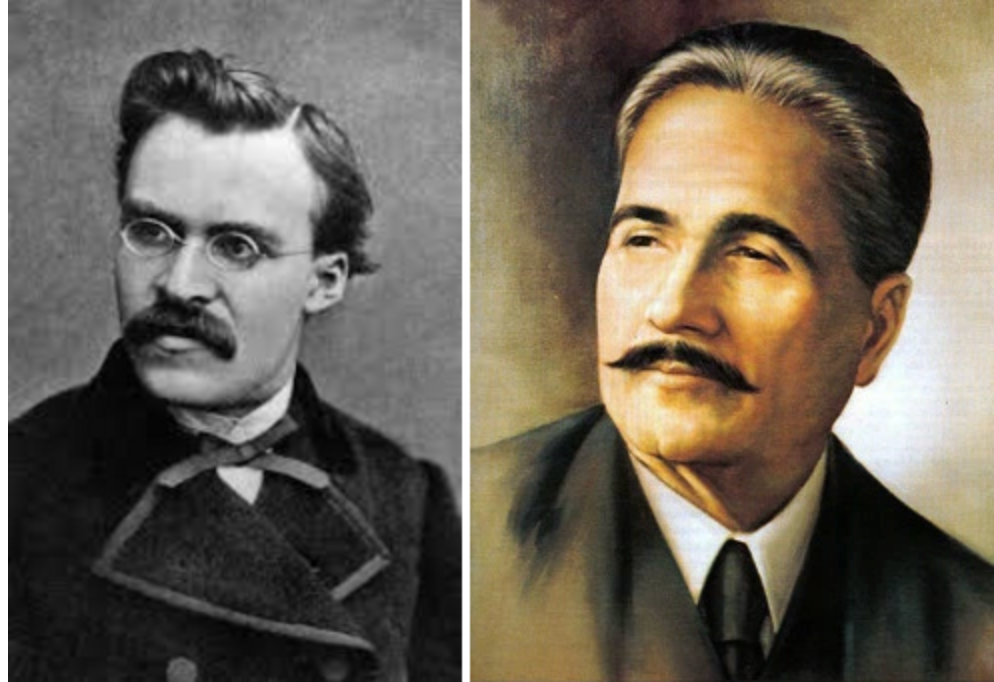
The idea of the Übermensch from Friedrich Nietzsche and the idea of Khudi from Sir Muhammad Iqbal seem completely opposed at first. One…
On Nietzsche, Iqbal, and the Death of Weakness
Credits: Fine Route
The idea of the Übermensch from Friedrich Nietzsche and the idea of Khudi from Sir Muhammad Iqbal seem completely opposed at first. One emerged from a Europe that had lost God. The other came from a man whose entire soul burned with remembrance of Him. Yet somewhere beneath both ideas lies the same realization: man was never meant to live weak, asleep, and spiritually defeated.
Nietzsche looked at humanity and saw people shrinking themselves. Men hiding inside comfort. Morality without courage. Religion without life. Entire societies producing obedience instead of strength. His answer was the Übermensch — the man who rises above the herd, creates meaning for himself, masters his own existence, and refuses to become a prisoner of fear or weakness.
Iqbal saw a different collapse. He looked at the Muslim world and saw an Ummah that had forgotten its own soul. Muslims had lost their khudi—their inner fire, dignity, and certainty in themselves. To him, man was not created to drift passively through life waiting for fate to rescue him. The human being was meant to strengthen his soul until it became capable of carrying divine purpose.
This is where the line between them becomes clear.
Nietzsche believed man rises by moving beyond God. Iqbal believed man rises by moving closer to Him.
For Nietzsche, meaning had to be created because the heavens were silent. For Iqbal, meaning already existed through Allah, and the highest form of selfhood was not rebellion against the Divine, but nearness to it.
Nietzsche wanted man to stand alone. Iqbal wanted man to stand before Allah without bowing to anything else.
Yet both despised weakness born from cowardice.
Islam never teaches humiliation of the self. It destroys arrogance, not strength. The Quran constantly calls man toward courage, discipline, reflection, struggle, and dignity. A believer is not supposed to be enslaved by society, desire, fear, or power. Islam was never meant to create broken humans terrified of the world. It creates people who bow only to Allah.
And if there is any example of the perfected human being in Islam, it is found in Muhammad (peace and blessings be upon him).
Not because he was Nietzsche’s Übermensch in the literal sense, but because he embodied the highest form of human strength possible without leaving servitude to God.
He (ﷺ) stood against an entire society while being completely alone. He (ﷺ) shattered tribalism in a world built on it. He (ﷺ) endured loss without collapsing into bitterness. He (ﷺ) held power without becoming corrupted by it. He (ﷺ) mastered anger, desire, grief, and ego instead of being mastered by them.
Nietzsche admired the man who could create values while the world around him decayed. The Prophet ﷺ transformed a civilization drowning in ignorance. But his strength did not come from ego or self-worship. It came through revelation, certainty, and submission to Allah.
That is the balance Nietzsche never reached.
He understood strength, but not surrender. Modern spirituality often understands surrender, but not strength. Islam joins both together.
The Muslim is meant to have the heart of a servant and the spine of a warrior.
Iqbal understood this deeply. His Mard-e-Momin was never a man escaping the world. He was spiritually alive, intellectually fearless, emotionally disciplined, and rooted completely in Allah. Iqbal wanted Muslims to stop worshipping comfort, imitation, and weakness. He wanted believers whose inner selves became so awakened that fear itself lost authority over them.
But that elevation was never arrogance. It was closeness to Allah.
And that matters now more than ever.
Most people today live disconnected from themselves. Society rewards imitation. Social media trains people to seek approval instead of truth. Desire becomes identity. Comfort becomes purpose. People consume endlessly but rarely build anything within themselves.
What Nietzsche and Iqbal both understood is that man cannot remain passive without collapsing inwardly. But Islam gives the safer path forward. It teaches that true elevation does not come from becoming your own god. It comes from becoming fully human through servitude to the One God.
To live that way means disciplining desire instead of obeying it. Seeking knowledge until your mind becomes independent. Standing for truth even when isolated. Building strength in body, intellect, and soul. Refusing humiliation before people. Detaching from the addiction of approval. Carrying a purpose larger than comfort.
And anchoring all of it in Allah.
Because strength without God eventually becomes tyranny. But spirituality without strength becomes helplessness.
The Prophet ﷺ united both.
And maybe that is what the modern Muslim has forgotten. Islam never came to produce defeated souls merely surviving the world. It came to awaken human beings whose inner selves become so alive with faith that fear itself begins to lose its grip on them.
메타데이터
- post_id
- ba91a1dfbfd7
- slug
- on-nietzsche-iqbal-and-the-death-of-weakness-ba91a1dfbfd7
- url
- https://medium.com/@closertotheedge16/on-nietzsche-iqbal-and-the-death-of-weakness-ba91a1dfbfd7
- canonical_url
- https://medium.com/@closertotheedge16/on-nietzsche-iqbal-and-the-death-of-weakness-ba91a1dfbfd7
- author_url
- https://medium.com/@closertotheedge16
- status
- ok
- fetched_at
- 2026-06-09 15:37:30



