CRNA: A Comprehensive Guide to the Certified Registered Nurse Anesthetist
Certified Registered Nurse Anesthetists (CRNAs) play a vital role in delivering anesthesia care across diverse healthcare settings. From…
CRNA: A Comprehensive Guide to the Certified Registered Nurse Anesthetist
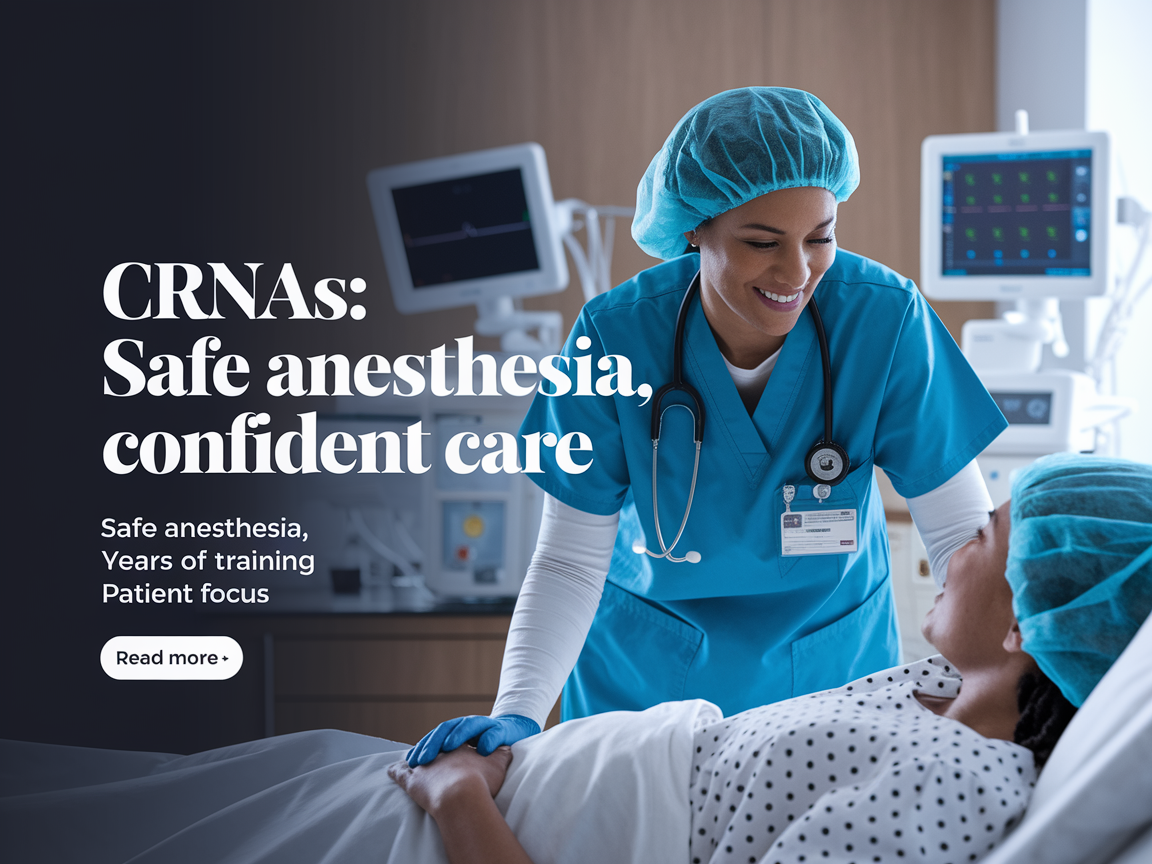
Certified Registered Nurse Anesthetists (CRNAs) play a vital role in delivering anesthesia care across diverse healthcare settings. From hospitals and outpatient clinics to rural facilities and specialized medical centers, CRNAs ensure patients receive safe and effective pain management before, during, and after medical procedures. In this article, we’ll explore the CRNA profession, including educational requirements, core responsibilities, practice settings, and how CRNAs contribute to modern healthcare.
What Is a CRNA?
A Certified Registered Nurse Anesthetist (CRNA) is an advanced practice registered nurse (APRN) who is certified to administer anesthesia and provide related care to patients. CRNAs often work independently or as part of a collaborative anesthesiology care team, depending on state regulations and specific healthcare environments. They assess patients, develop anesthetic plans, implement various anesthesia techniques, monitor patient responses, and ensure proper pain control during recovery.
Common Duties of a CRNA
- Preoperative Assessment: Evaluating patient health history, current condition, and risk factors to customize an anesthesia plan.
- Anesthesia Administration: Selecting appropriate drugs and dosage, performing nerve blocks, and providing sedation or general anesthesia.
- Intraoperative Monitoring: Continuously tracking vital signs, adjusting anesthetic levels, and ensuring patient stability during procedures.
- Postoperative Management: Overseeing the patient’s emergence from anesthesia, managing pain, and responding to any complications.
- Emergency Response: Handling acute issues such as allergic reactions, airway difficulties, or unexpected changes in vital signs.
Education and Certification Requirements
Becoming a CRNA typically involves completing a series of rigorous educational and clinical training steps:
Registered Nurse (RN) License Aspiring CRNAs must first hold an active RN license, which involves earning at least an Associate Degree in Nursing (ADN). However, most CRNA programs now prefer or require a Bachelor of Science in Nursing (BSN).
Critical Care Experience Many programs mandate at least one to two years of full-time experience in an intensive care unit (ICU) or similar high-acuity setting.
Accredited Nurse Anesthesia Program After meeting prerequisites, candidates apply to a doctoral-level Nurse Anesthesia educational program accredited by the Council on Accreditation of Nurse Anesthesia Educational Programs (COA). These programs usually last three to four years and include both classroom instruction and clinical practice.
National Certification Exam Graduates must pass the National Certification Examination (NCE) administered by the National Board of Certification and Recertification for Nurse Anesthetists (NBCRNA).
State Licensure and Ongoing Credentialing CRNAs must meet specific state requirements to practice and participate in continued professional certification (CPC) to maintain their certification over time.
Areas of Specialization
CRNAs often focus on particular patient populations or procedures, such as:
- Obstetric Anesthesia: Providing epidurals or spinal anesthesia for labor and cesarean sections.
- Pediatric Anesthesia: Specializing in anesthesia for infants, children, and adolescents.
- Cardiovascular Anesthesia: Managing complex hemodynamic conditions during cardiac and vascular surgeries.
- Pain Management: Performing interventions like nerve blocks or epidurals to manage acute and chronic pain.
- Rural or Independent Practice: Delivering comprehensive anesthesia services in settings with limited physician presence.
Innovative Techniques and Recent Advancements
Ultrasound-Guided Regional Anesthesia Enhanced visualization for nerve blocks improves accuracy, reduces complications, and provides targeted pain relief.
Simulation-Based Training High-fidelity simulators allow CRNAs to refine skills in a controlled environment, improving patient safety.
Tele-Anesthesia Emerging technology enables remote consultation and monitoring, bridging gaps in care in underserved or rural areas.
Enhanced Recovery After Surgery (ERAS) Protocols Multimodal pain management and evidence-based guidelines shorten hospital stays and reduce opioid reliance.
Pharmacogenetics Personalized drug selection based on genetic factors can optimize anesthesia plans and minimize adverse reactions.
Preparing for a CRNA Career
Aspiring CRNAs should cultivate a strong nursing foundation, including critical thinking, time management, and patient communication. Consider the following:
Prerequisite Skills
- Clinical Judgment: The ability to recognize, interpret, and respond to rapidly changing patient conditions.
- Technical Proficiency: Expertise in IV insertions, airway management, and the use of anesthesia monitoring equipment.
- Interpersonal Abilities: Communicating effectively with patients, families, and the surgical team.
- Leadership and Autonomy: CRNAs often make high-level decisions independently, particularly in rural or remote settings.
What to Expect in the Workplace
- Diverse Practice Settings: Hospitals, outpatient surgery centers, military facilities, trauma centers, and private clinics.
- Collaborative Teams: CRNAs often work alongside anesthesiologists, surgeons, nurse practitioners, and physician assistants.
- High-Level Responsibility: From prescribing medications to managing perioperative care, CRNAs shoulder significant responsibility for patient safety.
- Continuous Education: Keeping up with advances in pharmacology, technology, and best practices is crucial.
Risks and Considerations
- Long Hours and Shift Work: Operating room schedules can be unpredictable, leading to irregular hours.
- High-Stakes Decisions: Anesthesia management can be life-critical, requiring rapid response to complications.
- State-Level Scope of Practice Variations: Regulations vary by state, influencing how independently CRNAs can work.
- Ongoing Maintenance of Certification: Recertification requirements ensure updated knowledge but add academic and financial commitments.
Key Takeaways
- Extensive Education: CRNA training is rigorous, blending advanced coursework with hands-on clinical experience.
- Diverse Practice: CRNAs administer anesthesia across various specialties, patient age groups, and healthcare environments.
- Evolving Technology: Innovations like ultrasound guidance and tele-anesthesia are transforming patient care.
- Autonomy and Responsibility: CRNAs often practice independently, particularly in rural areas, but must remain vigilant and well-informed.
Final Thoughts
CRNAs are crucial to the healthcare system, delivering high-quality anesthesia care and improving patient outcomes. With continuous advancements in anesthesia practices, technology, and education, CRNAs are poised to meet the growing demand for safe, effective pain management. For those considering a career in nurse anesthesia, a commitment to lifelong learning and patient-centered care is essential.
Disclaimer: This article is for informational purposes only. Always seek professional medical advice and consultation for any health-related decisions or concerns.
References
- American Association of Nurse Anesthesiology (AANA). “Certified Registered Nurse Anesthetists (CRNAs).”
- Council on Accreditation of Nurse Anesthesia Educational Programs (COA). “Accreditation Standards.”
- National Board of Certification & Recertification for Nurse Anesthetists (NBCRNA). “Certification Requirements.”
- American Nurses Association (ANA). “Advanced Practice Registered Nurses.”
- Nagelhout JJ, Plaus KL. Nurse Anesthesia. 6th ed. Elsevier; 2017.
메타데이터
- post_id
- baa4088f2ef1
- slug
- crna-a-comprehensive-guide-to-the-certified-registered-nurse-anesthetist-baa4088f2ef1
- url
- https://medium.com/@Dr.JakeArs/crna-a-comprehensive-guide-to-the-certified-registered-nurse-anesthetist-baa4088f2ef1
- canonical_url
- https://medium.com/@Dr.JakeArs/crna-a-comprehensive-guide-to-the-certified-registered-nurse-anesthetist-baa4088f2ef1
- author_url
- https://medium.com/@Dr.JakeArs
- status
- ok
- fetched_at
- 2026-06-15 20:49:13


