“What supports you when there’s no one left to support you?”
This is the full, unabridged version of my interview with Pepe from Back on the Grind, originally conducted for the Czech online magazine…
“What supports you when there’s no one left to support you?” Pepe Bandit on folk punk, community, prison life and beyond.
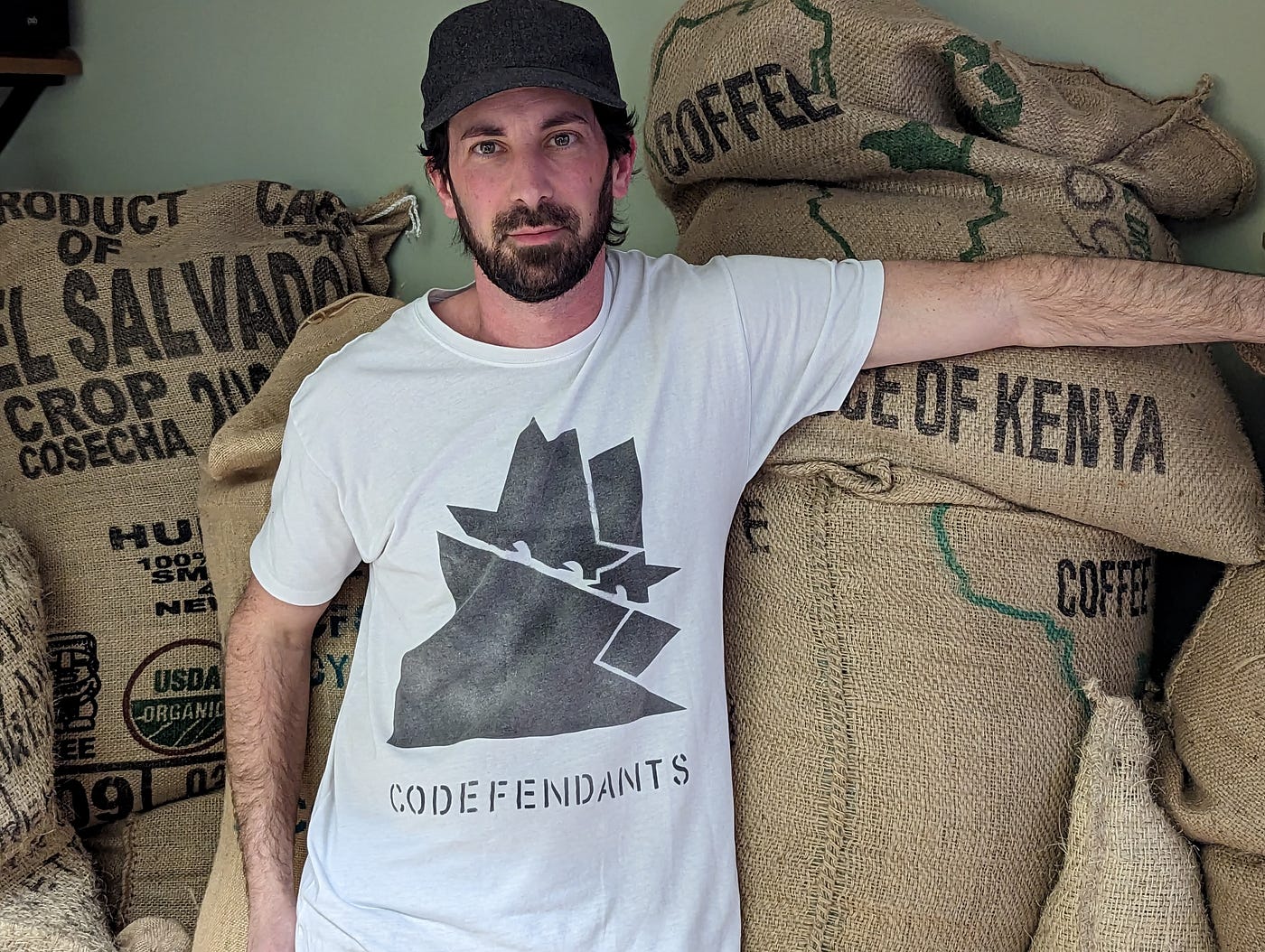
This is the full, unabridged version of my interview with Pepe from Back on the Grind, originally conducted for the Czech online magazine Alarm. Some of my questions might seem more basic to those already familiar with DIY Bandits, Pepe’s work, or the American folk punk scene in general. That’s simply because in the Czech Republic, this world still remains rather marginal and not widely known, so part of my aim was to give some context to readers who might be encountering it for the first time. Still, I believe this conversation can be insightful even for those who already know the scene, largely thanks to Pepe himself, whose openness and reflections make this interview deeply worth reading.
I first came across DIY Bandits back in 2017, through Ceschi’s split with Pat the Bunny, a record that, for me, opened a door into a whole folkpunk world I hadn’t really known before. Could you start by introducing DIY Bandits to readers who might not be familiar with it? How and why did it all begin?
Yeah, it’s kind of funny that that’s the record that first brought you to DIY Bandits. Back in 2017, my plan was actually for it to be the last thing I ever released. I didn’t think I’d be doing much with music after that, that was the intention. And that release was a little unique, because we made a point to make it only available through mail order. It never went on streaming. Somehow, that ended up being the most important — or at least the best-known — release we ever put out. When I think back, DIY Bandits really started around 2002, and looking from that record all the way back, it’s been a pretty wild ride.
You know, the main reason I started all this wasn’t because I was a musician or knew how to record music. I didn’t have any particular skills in that world. I just loved music. It helped me get through life. I was young, probably in my early twenties, but I’d already become a father at seventeen, and by then I had multiple kids. Their mom and I were really struggling, life was hard. At one point I was working three jobs, around eighty hours a week, just trying to keep things together. It felt unbearable, how much I was working and still barely surviving. Music became my only outlet, the one thing that helped me stay sane. I just remember feeling so fed up with how things were, mostly just being broke and trying to raise a family.
I needed an outlet, some way to find a little bit of joy in my life. Music had always helped me so much, so I decided I wanted to do something with it. I thought, „Alright, I’ll start a record label”. The first time I tried, I was going to call it Circled A Records. I started reaching out to musicians, asking if they wanted to put out an album. I even paid someone to make a website. But honestly, I had no idea what I was doing. I didn’t know how to release a record, I didn’t even know how to record music. I kind of got ahead of myself, and it completely fell apart. Circled A Records never really happened.
Well, some years after that, like I said, early 2000s, what really kicked things off was that I met this young kid kind of randomly. I was at an anarchist conference giving a workshop, and they showed up and, for whatever reason, asked if I could help them get on stage to play music that was happening at the event. I had nothing to do with organizing it, and it wasn’t a folk-punk event, which is the kind of music I’d later focus on. It was just some local, more rock-type bands. I tried to connect with the organizers, but they said no, there wasn’t really time. So I told this kid, who I’d never met before, they were maybe fifteen: „Why don’t you just play on the sidewalk at the end of the event?” And they did. I stood there while they sat down and played on the sidewalk. A couple of people stopped to listen, two or three maybe, but everyone else was leaving the event, just walking past, not caring at all.
And I really liked what this kid was doing. There was passion in it, honesty, musically and lyrically. The lyrics really stuck with me. They spoke about their own struggles, which were very different from mine. I was working three jobs, poor, trying to raise a family, getting evicted because I couldn’t afford rent. My struggle was different. They were dealing a lot with isolation and addiction, but they sang about it with so much passion. We crossed paths that day, and I got this little CD-R of their music. It had an address written on the back. The next day, I wrote them a letter. Their name was Pat, and I said, „Hey Pat, do you want to put out an album, a CD together?” And again, I didn’t really know what I was doing.
They ended up writing back and said yes, and they didn’t really know what they were doing either. Things just kind of skyrocketed from there. There was never any intention, on my end or theirs, for things to get as big as they did. But this person, Pat, became known as Pat the Bunny. And for those who might not be familiar, they went on to have several bands, and really became a foundational figure in the folk punk community. Not just here in the U.S. Their music and presence spread literally around the world. Even now, people in countries everywhere are listening to Pat’s music.
And it all started from that moment, my struggle meeting their struggle, on a random sidewalk one day, and me choosing to write that letter. It wasn’t an overnight success. It took time, it grew gradually. But that’s what really kicked off the label. I was looking for a way to find some joy in my life, to escape from the difficulties I was facing and Pat seemed to be in that same place.
Looking back, what do you think made DIY Bandits stand out in the early 2000s underground scene? You released everything from folk punk to hip-hop — was that diversity intentional from the beginning?
I think, first of all, I noticed a connection between underground rap and what would later be called folk punk. In the early 2000s we didn’t even have that word yet. Pat didn’t say it, I didn’t say it, it just wasn’t being used at the time. But I saw this connection, this shared theme. There was a very DIY kind of organization happening in both worlds, the rap world and the punk world. And I thought, these are such different styles of music, yet the way they’re building their communities feels so similar.
So for me, I thought, why not just work with both? There was definitely an intention to put on shows that brought together people from both scenes. And as time went on, I wanted to merge the music itself. That took years and years of trying things, experimenting, but eventually the sound started to blend, until you could hear folk punk and hip-hop living on the same album. That connection was always there for me. I liked bridging those worlds, that’s kind of what I do. Looking back, I think I’ve always brought different worlds together. It’s something that shows up in many parts of my story, in the music world, during my incarceration, even in my family. There are just things I’ve always tried to bring together.
Anyway, we stood out. Maybe that was what made us unique. I don’t think anyone else was really trying to merge those two separate worlds. There weren’t many shows where you’d see a punk act, a hip-hop act, a metal act, and a folk act all sharing the same stage.
But beyond that, we were genuine. It wasn’t a business. We didn’t have contracts. I never had a contract with that kid, Pat, we wrote letters. We didn’t have business meetings; we had potlucks. We weren’t shaking hands over deals; we were hugging over friendship. That’s how things were built, in a completely different way, and I thought that was beautiful. Of course, it could be difficult. Sometimes you didn’t make money, and if there wasn’t any funding, it was hard to do the next project. That happened a lot with DIY Bandits. But I think what really made us stand out was the love in our hearts for what we were doing.
We didn’t have access to traditional music venues. At that time, no one had any interest in letting us put on the shows we were trying to organize. They didn’t care about the music or the people I was working with. So we just started setting up shows out on the street, in random places, out on the green, or inside abandoned buildings. Passersby would stop and join in, even if they hadn’t planned to.
We were attracting all kinds of people, not just those from the punk or hip-hop worlds. One of them, my kid’s bus driver, actually became a major player in building the DIY Bandits project. They had nothing to do with punk, hip-hop, or anything radical. There were just regular, everyday people who ended up being part of it, especially in those early days. So I think that made us stand out too. We were a very eclectic mix of folks making this happen.
And I think there was also that authenticity, you know? A lot of people try to put on an image, and maybe that was happening in the folk punk world at the time. I don’t see it as much now, but back then some people would play poor or play traveler kid. And that’s fine if that’s what you want to do, but we were actually living that way. I was hopping trains before I left high school. I started jumping freight trains when I was about fifteen and kept doing it until I became a dad at seventeen. One of the other key players in DIY Bandits was homeless, living in a squat. We were coming from that place authentically, and I think that also added a kind of mystique to what we were doing.
Most of what we did was illegal. All the shows, the spaces. We were running from landlords who wanted to collect rent on places we were squatting in, and cops were being called all the time. There was a lot of mischievous, petty law-breaking going on, and that definitely drew attention too.
I just wanted to add to that, from my impression, there were a few other labels around at the time putting out similar folk-punk music, like Plan-It-X or No Idea Records. I didn’t know about any of this when it was actually happening, but looking back, DIY Bandits always seemed a bit more.. I don’t know, more working-class oriented than those other labels. Would you agree with that?
One hundred percent, yeah, we were definitely working-class oriented. I mean, like I said, I was working three jobs. I knew exactly what it was like to be part of the working class, especially the poor working class, and I knew it from a young age.
Around that time, a little before I started the record label, I had been involved in some union organizing too. Those were my people, the folks I worked with every day. I was in the restaurant industry, which in the U.S. often means working alongside a lot of immigrants.
I’d steal food from the restaurants where I worked, cook it, and bring it to the shows. And the people I worked with would come too, regular working-class folks. We’d have food at the shows, hang out, and build something together. For many of them, there wasn’t much community in their lives, it was just work, day after day. So when someone from their own world was setting up these events and inviting them in, it gave them something different. I think that was really meaningful for them.
We worked with a lot of people who, like I said, weren’t part of the scene. That could be difficult sometimes, because their ideas or standards were often different from those in radical communities. So there were moments when people’s behavior wasn’t great. I remember that being an issue, people would complain, but I always said, look, we’re trying to do two things here. DIY Bandits was about putting out music, but it was also about trying to change the world, or at least our communities. And if we’re serious about that, we have to engage with people who don’t come from the same political background or mindset as us. So the question becomes: how do we work with folks like that when problems arise?
My approach was never to just say, „You can’t be here, you’re not part of this community.” Instead, I’d ask, how can we bring people in? If someone’s behaving badly, how can we work with them to show a better way, one that allows them to stay in the community, but with behavior that’s respectful and accepted by others? And of course, sometimes it didn’t work. It happened once or twice that we had to tell someone, „We’re sorry, you can’t be part of this.” But the first instinct was always to engage, not to exclude.
I think that was also something that made us really different from a lot of the other labels, like you were saying. We were definitely very working-class. A lot of those other labels, like the ones you mentioned, were based around colleges. They were in college towns, they had a lot of college kids involved.
Pretty much everyone we were working with couldn’t afford to go to college. Most of us weren’t in school at all. A lot of us were even high school dropouts. So there was definitely that divide. I don’t want to call it a conflict, because like I said, I’m all about bringing people together. I’ll work with anybody, as long as we’re working toward a common goal.
But some folks, especially in the early days, didn’t want to work with us. I remember one funny thing someone said, they called DIY Bandits „a bunch of apolitical, drug-addicted nihilists.” That kind of made me laugh. Maybe „apolitical” was fair to some extent, but for me personally, I wasn’t struggling with addiction, and I definitely wasn’t nihilistic. It was just an interesting way to describe us. But yeah, even people from within the DIY world didn’t always want to work with us early on.
Yeah, I mean, it’s kind of funny to me that someone would say you were apolitical. When I look at the music you released, obviously Pat’s work, or even Ceschi’s, it all seems deeply political to me.
I think we definitely had a critical lens. I don’t want to speak for everyone I worked with, but I think most people, especially in the early days, would agree that we were critical of professional organizers, at least in the United States at that time.
The thing is, I have a friend, Eric King, who served time in prison, and he said something that really stuck with me when we were talking about how we support prisoners. He said, „There was this model created in the 1970s, and that’s still how we do it today. But sometimes that model doesn’t work anymore.”
And I think with DIY Bandits, and the people we were involved with, we saw something similar in political organizing. A lot of it seemed based on these old models that needed to be updated. I think that’s where some of the separation came from. It wasn’t on our end, I was reaching out to people, I was open to collaboration, but I’d hear back reasons why they didn’t want to work with us. We just didn’t adhere to that old-school political organizing model, and we were skeptical of it at times. There are moments when it still works, and others when it clearly doesn’t. So I think that’s part of why people might have called us „apolitical”, because we weren’t following the so-called rules of the professional organizers.
[embed]
You mentioned your friend Eric King, and I know you’ve also spoken quite openly on your podcast about your own time in prison. Before we get into what daily life was like back then, could you share how did you actually end up in prison?
So, you know, this is an explanation, not an excuse. I’m very adamant about that. I’m very much about taking responsibility, which might not seem valuable to everyone, but to me it’s extremely important. Taking responsibility for the situations I’m in, that matters.
Now, that doesn’t mean that I, or other people, don’t face circumstances where we’re being oppressed, or where things happen to us that aren’t our fault. Obviously that happens. But even in those situations, I still try to take responsibility, because for me it’s almost a political stance. When we don’t take responsibility, someone else will swoop in and take it, some external authority will decide to take control of your life and the things that happen to you. So my point here is that I’ll give an explanation, but it’s not an excuse, because I take responsibility for what led me to prison.
I’ve talked before about being really poor and trying to raise a family with very little money. Long story short, and it is a long story, but to keep it brief, once I had kids, I stopped experimenting with drugs altogether. I realized I had to get my stuff together. At seventeen, that was hard, but I told myself, I’ve got to be a father now. So drugs were never a part of my life after that. Then, in 2008, the United States went through the economic crash, the housing crash. I was working in the restaurant industry, and because of the crash, people didn’t have as much money, so they weren’t going out to eat. A lot of restaurants ended up closing. At the one where I worked, management decided to respond by cutting my pay. They said, „We’re going to cut your wage by a dollar fifty an hour, but maybe next year we’ll give it back.” So I stuck it out. I said, „Okay.” So a year went by, and then they said, „You know what? Instead of giving it back, we’re taking another dollar fifty an hour.” At that point, I couldn’t afford to raise my family. I had four kids, and I couldn’t survive on what I was making.
So the idea was just to sell a little marijuana, a small amount. I knew people in the restaurant industry, and there’s a decent amount of drug use there. So I thought, I’ll just sell some marijuana. I never wanted to sell hard drugs, I never got into that. I didn’t want to promote it. This was 2008, and marijuana wasn’t nearly as open or accepted in America as it is today. It wasn’t legal in any state at that time. So I started selling just a little bit. I’m not someone who’s too interested in money. What I did was, with whatever I earned, I immediately paid my bills and took care of my family. It wasn’t like I was going out partying or buying luxury things, that never interested me. And I think because, first, I didn’t smoke, I wasn’t using the product I was selling, and second, I wasn’t wasting the money, once I started earning a bit, I just put it all back into the business. I took care of my family and then reinvested the rest.
I’m jumping ahead a bit, but it grew fast, really fast. Because I just kept putting the money back into it, over and over, until it reached the point where I was getting hundreds of pounds of marijuana shipped to me through the mail from across the country. It kept growing so much that eventually I bought an airplane and hired a pilot to fly marijuana from one coast to the other. It just expanded incredibly quickly. It was never a plan or an intention of mine. And it’s kind of ironic, or maybe funny, because it was similar to the music world. I never intended for things to grow and become that big. But just like with music, this marijuana thing grew really large. Eventually we were bringing back four or five hundred pounds of marijuana on an airplane every month.
Then the pilot got caught, and he told. I fought my case for two and a half years. I was in and out of court that whole time before I finally ended up in prison. That period itself was wild. I’m not going to get into every detail, but there’s one story that really shows how intense that time was. I remember I was about to celebrate my birthday. I was going to my mom’s house with my kids for a small birthday gathering. I was about two years into fighting my case at that point, and I already knew I was going to prison. I just didn’t know for how long yet. I was facing ten years to life for the amount of marijuana they found. I remember thinking, things can’t get much worse than this, but at least I’ll go celebrate my birthday. And as I was getting ready to leave, the fire alarm went off in my apartment building. The next thing I knew, there was this huge fire, my apartment was burning down. I lost about ninety-five percent of everything I owned.
So here I was, facing ten years to life, and at the same time, my home literally burned down. I wasn’t a materialistic person, I didn’t own much, but still, that was a breaking point for me. It felt like hitting rock bottom. In the end, I was sentenced to about five years in federal prison for the marijuana sales. That’s how I ended up there. I started fighting my case in 2017, and after about two years, in 2019, I went to prison.
So you ended up serving five years. What was that experience like, especially during COVID? How did the pandemic affect daily life inside a federal prison in the U.S.?
I ended up doing three years. I got one year off for good time, and then I completed a program that took another year off my sentence. It was basically a psychological boot camp, a horrible program, honestly. So yeah, I did three years out of the five. I went in around 2019, and then COVID hit not long after. That made the whole experience… very strange, to say the least.
Most of my time inside actually happened during COVID. I think that made my experience pretty unique, because most people who’ve been incarcerated know what prison is like without a pandemic. I didn’t. Probably the hardest part was the visits. When I first went in, my girlfriend, who’s now my wife, came to see me twice early on, and one of my kids visited once. Then COVID hit, and all visits were canceled. After that, I never saw any of my kids again while I was inside. I only saw that one child once, the other three, not at all. My wife and I were completely separated for three years. That was one of the hardest parts of COVID, not being allowed to have any visits.
Another thing that made it really difficult was the fear. In the early stages, we’d see the news, and it was terrifying. Nobody knew exactly what was happening or how bad it would get. I remember a lot of us wondering, what happens if it gets in here? Are we all just going to die in prison? It was a really scary feeling, that sense of being trapped, cut off from the world, and unsure if help would ever come.
Unfortunately, one person in the prison I was in ended up dying from COVID. It could have been much worse, of course, but even losing one person was horrible. When COVID finally made its way into the prison, the administration’s response was to lock everyone down in solitary confinement, all of us. That was terrifying at first. I eventually adapted to that time in isolation, but in the beginning it was really frightening.
The strange thing was what happened afterward. Once they finally let us out, COVID came back into the prison. And then something really odd happened, we all just kept it a secret. Everyone was sick, but no one told the staff, because we didn’t want to be sent back to solitary confinement. So the virus spread again through the prison, but we stayed quiet, trying not to let anyone know how sick we were. The way they handled it before had been so traumatic that none of us wanted to go through that experience again.
[embed]
How long did you actually spend in solitary confinement during that lockdown?
It was about two to three weeks that first time. Basically, you know, they were following what was being said out in the world, that you had to isolate for at least two weeks. So we ended up spending around two, maybe three weeks in solitary confinement. What made it worse was how angry the staff seemed. It was bizarre, the guards were blaming us for the situation, even though it was obviously the guards who brought COVID into the prison. I remember this one psychologist who was supposed to walk by once a week and check on everyone in solitary. She clearly didn’t care. She was muttering to herself, and then said out loud, „You fucking guys are keeping me here all night. I’ve got people and family to get home to.” It blew my mind. I was thinking, we don’t want to be in here either, and it was your choice to put us here. They were the ones who brought COVID in, not us. It was pretty wild to think about, you get COVID, they throw you in solitary, and that’s it. No help, no medical care, nothing.
How did your family, friends, and the broader community respond to your incarceration, especially with everything happening during COVID? What kind of support did you receive at the time, and how do you look back on that support now?
Early on, when COVID hit, the larger music community wasn’t really aware yet that I was in prison. At that point, I had already kind of stepped away from that world. When I started fighting my case in 2017, I stopped putting out music, stopped performing, and really kept my distance from the scene. I honestly thought I was done with it, that I’d moved on from the music world altogether. Maybe we’ll get into that a little later, but yeah, in those early days, people didn’t really know what was going on with me.
My family didn’t know what was going on when I was sent to solitary. One day I was calling them and writing letters regularly, and then suddenly all of that just stopped. They stopped hearing from me completely. They had no idea why, they didn’t know I had COVID, they didn’t know if I’d been hurt, or if something else had happened. My wife, who was my girlfriend at the time, kept calling the prison, trying to find out what was happening, asking, „Where is he? Why isn’t he responding?” Most of the time, they just ignored her calls. Eventually she got through, and I believe they told her I was in solitary, though I’m not sure if they even mentioned it was because of COVID. Thankfully, I was eventually able to write to her while I was in solitary, and she managed to send me two books. Having those books meant a lot. When you’re in there, you can’t make phone calls, you can’t have visits, so having something to read helped me hold on. Honestly, the biggest source of support for me was mental. Just knowing that my wife, my kids, and people on the outside still loved me, that’s what really got me through it.
Solitary was really psychologically disturbing, far more dehumanizing than general prison life. It didn’t feel good at all. I remember going to sleep at night and realizing that sleep was the only time I could forget where I was. It was the only real escape from that reality. Every morning I’d wake up, open my eyes, and the first thing I’d see was that solid steel-and-concrete door. It hit me all over again, the reminder that I was locked inside this tiny room. It was a horrible feeling to wake up to. What got me through was going back, in my mind, to the people on the outside. Every morning, I’d think about them, my family, the people who loved me, who wanted to support me. Knowing they were out there, waiting for me to come back, helped me survive those mornings in solitary. That connection, even just in memory, made it bearable.
You’ve often spoken about spirituality on your podcast, not necessarily in a religious sense, but more as something grounded in everyday practice and awareness. After everything you’ve described, especially those long periods of isolation, how did your time in prison affect that part of you? Did it deepen or change the way you think about spirituality?
It’s interesting, it is very grounded, like you said. Sometimes I call it psycho-spiritual, or psychological spirituality, though I don’t really like the way that sounds. Carl Jung has been a big influence on me. When I was fighting my case and going through that really difficult time, I was reading Jung’s work, and he said something that stuck with me: „What supports you when there’s no one left to support you?” I always liked that quote, but I didn’t fully understand it until I went to prison, especially during solitary confinement. That’s when it truly made sense. When there’s no one there to support you, when you’re literally alone in a tiny room, you only have yourself to rely on. That’s where the spiritual aspect comes in for me. I guess I’d call it connecting to the Self. Finding that deeper part of myself and learning to hold onto it.
That’s what spirituality means to me, recognizing that there’s a deeper, more powerful presence within me that I can connect to. It’s something that has the strength to support me when nothing else can. I never knew that existed before. You hear people talk about things like that, but it’s hard to truly understand it unless you’ve gone through something like that yourself. During some of my most isolated moments, I actually felt some of the most connected experiences of my life, because I was doing that inner work, connecting to what I call the larger Self. So in that sense, prison definitely brought that part of me out even more.
It’s interesting, it’s something I do, and I think on the podcast I kind of dance around it. I definitely want to talk about it more, but I’m not always sure how. I’m not a religious person. I can see the value that organized religion has for people, and I understand there are good things in it, but it doesn’t appeal to me, not the structured, organized methods they use. That’s where spirituality feels more real to me. It’s immediate. There’s no one standing between you and the experience itself. When you go to church, there’s often a priest or someone placed on this quote-unquote pedestal, they’re the one who supposedly has the ability to connect you to a higher power. For me, spirituality is different. It’s about recognizing that I have that ability, that there’s a power within myself I can connect to, something that can guide me when I feel disconnected, isolated, or lost. If I stay open to it, I can find an immense sense of connection within. That’s the real value of spirituality for me.
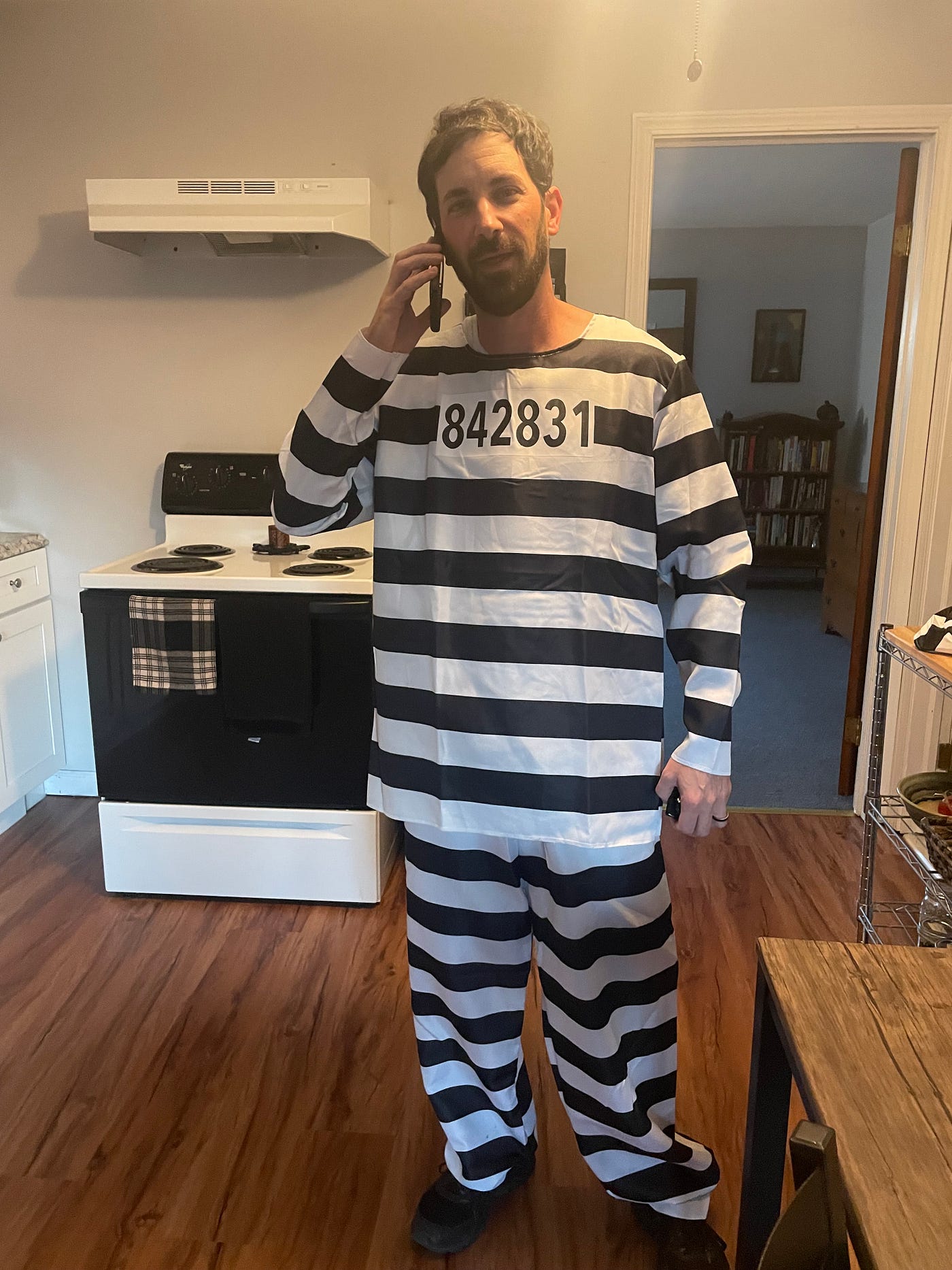
I think you mentioned in one of your recent podcast episodes that you’ve been working on a book based on your prison journals. Could you tell me a bit more about that project and what readers might expect from it?
Sure. When I went to prison, I actually had the idea that I was going to write a blog. My friend, Pat, the one we talked about earlier who helped start the record label, made a website for me. The plan was that I’d write by hand in prison, send him my writings, and he’d type them up and post them on the blog. That was the plan from day one.
It wasn’t so simple for me. I spent about a year being afraid to write. Looking back, it’s fascinating how difficult that was for me. I’d wake up in the morning, lying on my prison bunk, telling myself, I’m going to write today for the blog. And then… I just didn’t. Day after day went by like that, almost a year before I actually put pen to paper. I had to overcome that fear. I think I felt like an imposter. I’d dropped out of high school, never had a blog, never considered myself a professional in any field. So I kept thinking, Who am I to write something and put it out into the world? At a certain point in my bid, though, the folk-punk community, or the broader music scene, became aware that I was in prison. People started writing to me. That was an incredibly powerful experience.
But specifically, there was this kid, John — John Warmb from a band called Rent Strike. He wrote to me and asked a question about time: how I viewed time as someone locked up in prison. I wrote him back, just a regular letter, like I did for everyone who wrote to me. Then I thought, you know what, I’ll just copy this one and send it to Pat so he can type it up for the blog. That letter became the very first entry on my blog. The blog is still up, it’s called Preparing for Freedom. So if you want to get a sense of what the book will be like, a lot of what’s on that blog will be part of it. But in addition to that, I also kept a journal while I was in prison. At first, the idea was just to document my experience. But over time, it turned into something deeper, almost a spiritual practice. It became a way to engage with myself and to reflect on what I was going through.
I’ve got tons of notebooks filled with personal journals from prison, and I’m going through them now. My wife is helping me, and another friend of mine is going to help put it all together. We’re selecting pieces from those journals, and it’s going to be a pretty intimate look at my time inside. I’m really just sharing what’s in there, I never intended for those journals to be published. So it’s a very personal, unfiltered look into my life in prison. And yeah, I’m excited about it. I never planned on writing a book, but now that it’s happening, I’m really looking forward to it. I’ll probably end up doing a second one at some point, something broader, not just the prison journals, but about my overall experience.
One of the things I’ve been reflecting on while going through those journals is trying to understand why those gestures of support meant so much at the time, people writing me letters, donating to my commissary, or helping with my legal funds. I kept asking myself, why is this so important? It’s just words on paper. It’s just money. But there was something about it, something vital, that helped me survive. And I realized that in all my years of organizing, whether political or social, I’d never truly grasped the power of those small acts of care until I was on the receiving end of them.
One of the most important roles of any community is to witness what someone is going through. And that’s what meant so much to me. Because, like I said, during the first year of my bid, the community didn’t even know I was in prison. I had support from my family and a few close friends, but once the wider community found out and started reaching out, everything changed. My time inside was still hard, it still sucked, but it became easier to bear. And it wasn’t because people were sending money or writing letters, it was because they were witnessing my struggle. That witnessing validated my experience.
It sounds so simple, but I think one of the most vital functions of community is just that, to be a witness. Whether it’s incarceration, losing a job, or grieving a loved one, the role of a community isn’t just to make you feel supported, it’s to see you, to acknowledge what you’re living through. That realization blew my mind, that the act of witnessing itself can be so powerful. I’m surprised it took me so long to understand that.
And I think that’s one of the biggest things missing for so many incarcerated people, that witnessing. Most men, and women too, don’t have a community that sees what they’re going through. Their suffering often goes unseen, unacknowledged, and therefore it never feels validated.
Based on what you’ve just said about community and witnessing, it feels like the book might also carry some of that same spirit, a way for others to witness what you went through and what you learned from it. When do you think readers will be able to finally hold it in their hands?
My goal is to have the book finished by the end of this year, or at the latest, early next year, and ready to send off to the pressing plant. I haven’t really talked about this publicly yet, but the plan is to release it as part of a larger package, the book will come together with some records. I’m putting out a 12-inch vinyl featuring various tracks from Pat the Bunny’s career, covering all his different projects. The other side will have songs from Ceschi’s career.
We’re calling it The Friendship Collection. Every song on it, from both Pat and Ceschi, will have a personal connection to me: songs that were written about me, for me, or inspired by me. It’s really meant to highlight the friendship between the three of us.
Along with that, there will also be a 7-inch record featuring two bands I discovered after getting out of prison: The Looms and Trash Boat and the Ambush. So it’ll be a set: the 12-inch, the 7-inch, and the book, all released together. The idea is for it to serve as a benefit for a larger project I’m working on for the future.
Would you like to share a bit more about that larger project, or is it still under wraps for now?
So, after I got out of prison, I became a coffee roaster. And I started thinking about how I could combine that with the music world. I’ve got a few different ideas for how to do it, but the main goal is to open a café that also has a music venue attached to it. I want it to be something a bit bigger, not huge, but with room for maybe around 200 people. The project we just talked about, the book and the records, is connected to that. Next year is going to be a big one. I’m planning to put out a bunch of music releases to help fund this café-slash-venue project. The idea is to create a space that’s extremely musician-friendly. I’d like to make a living from the café side of things, and then have whatever money comes in from the music side go right back to the musicians and the broader music community.
[embed]
That all sounds amazing, and good luck with it. It actually brings me back to something you mentioned earlier. Around 2017, when your court case began, you said you felt like you were done with the music world. Was that feeling connected to what was happening at the time, with the case and everything leading up to prison? And what eventually changed? What made you want to reconnect with music again?
I mean, basically, at that point in my life, you know how it is, you’re just living day to day, going to work, doing what you have to do. For me, that meant being a full-time, professional marijuana dealer. When I got arrested, everything was upended. My whole life fell apart. I genuinely thought it was over. When you’re told you’re facing five to forty years in prison, and then it gets raised to ten to life because people keep cooperating, it’s hard to imagine any kind of future.
So the music world just fell to the side. I had to focus on surviving, on how to get through this, how to maintain my relationships, how to stay connected to my kids. I simply didn’t have the mental or physical capacity to be part of the music world anymore. I really believed I was supposed to move on from it, to walk away completely. Even when I first went to prison, I told myself, I’m done with music. It’s not going to be part of my life when I get out. I was making plans for a future that had nothing to do with music at all.
But then, as I said, once the music world found out I was in prison, people started writing to me. Folks began organizing benefit shows and putting out benefit records. My legal expenses were over fifty thousand dollars, and all of that ended up being covered through those benefits.
The amount of love and support I received from people, even from multiple countries, was incredible. I felt almost indebted — like I had to give something back to that community. But at the same time, I was conflicted. I thought that part of my life was over. I kept asking myself, what am I supposed to do when I get out? I felt like I was supposed to move on, but at the same time, I owed so much to these people. I also believed that if I went back into that world, I wouldn’t be growing, that I’d just be going back to where I started. But when I got out, I had this realization that really changed me. I understood that going on a journey and returning to where you started is not the same as never having left. Those are two very different things. I used to think that going back meant no growth, no change, but now I see it’s the opposite. I went on a journey and then came back, and that journey shaped me. Not just the incarceration, but everything that came with it: the spiritual journey, my home burning down, learning to be a father while I was locked up, figuring out how to maintain relationships and still give back to the community even from inside prison.
I learned a lot on this journey. I gained a lot of experience, and maybe, dare I say, even some wisdom. I say that lightly, but I do feel like I’ve come away with things that I now see as my obligation to give back to the community. That feels like my role right now. Some people have used the term scene elder, you can call it whatever you want, but I’m starting to accept that. It connects to what we talked about earlier: responsibility. If I’m going to be a part of this community, what’s my responsibility here?
I’ve gone through a lot. Even before prison, just the marijuana business itself was wild. People around me, people I knew, lost their lives over it. Someone was murdered, and that came up in my case. I’ve been through… well, I don’t know if we can swear in this interview, but I’ve been through some shit. And I figured out how to make my way through it.
Now I feel like it’s my obligation, as a member of this community, to give back and share what I’ve learned. I went on this journey, I came back with experiences and knowledge, and it’s my responsibility to pass that on. Honestly, if I hadn’t returned to this community, I don’t even know where I would’ve shared all that. I don’t know where I would’ve put everything I’ve been through and learned. The podcast has given me that outlet, it’s how I can give something back to the same community that supported and loved me so much. It feels like the right place to return all that energy to.
[embed]
It really feels like 2025 has been an incredible year for folk punk. Pat’s comeback with Friends in Real Life and their new album and EP, amazing new records from Apes of the State, Pigeon Pit, Mr. Michael Motorcycle, Walter Mitty and His Makeshift Orchestra, and of course the Myles Bullen record you released on Back on the Grind. Even Paul Baribeau seems to be back to folk punk after years of making electronic music.
A few years ago, people were saying that folk punk as a genre was dead, but to me, it feels quite the opposite now. From your perspective, as someone who’s been part of this scene for over twenty years and remains deeply connected to it, how do you see this moment?
I think folk punk is definitely in an interesting phase right now. Around 2017, it really felt like things were falling apart, people thought the genre might have run its course. Plan-It-X Records collapsed, there was a lot of messiness around that, and it kind of unraveled, which was a big loss since they’d been such a major force in the folk punk community. Pat retired from music around the same time. That was also the year I gave up everything I was doing. My friend Erik Petersen took his own life. It was a period when things genuinely felt like they were breaking down. I stepped away too, I was fighting my case and eventually went to prison.
When I got out, I really didn’t know what to expect from the scene. Someone had mentioned a band called Apes of the State to me before I went in, but I didn’t know anything about them. While I was in prison, people kept writing me letters telling me about them. So when I got out, maybe a couple of weeks after, I thought, all right, let me finally check out this Apes of the State. I sent them a message, and honestly, I was nervous to do it. But that very same night, April Hartman, their singer, called me. I’d left my phone number in the message on Bandcamp, and she actually called.
And I think Apes of the State, from what I can understand, because, you know, I was locked up and wasn’t around, really filled that void at the time. They kind of ushered in a new era for the folk punk community, one that feels broader and more inclusive than it was before. Not that the earlier folk punk scene was necessarily excluding people, but it just wasn’t as open-armed as this current era seems to be. That’s definitely something I notice now, the community is broadening in who it includes. And I think Apes of the State have played a really big part in that, for sure.
The other thing is, I’m really excited about my own role in the community, especially with trying to start this venue. I think of other folks too, like my friend Eric King, who I mentioned earlier. He was also incarcerated and has a lot of connections to the folk punk community. It feels like the scene is starting to reach into new territories, things like prisoner support and other kinds of community work. With the venue I’m opening, I want to bring that same spirit in, to involve community work that goes beyond the folk punk world itself. I’m curious to see how it can expand and contribute to communities outside of its own boundaries. There’s real potential for that, because as the folk punk community has broadened, it’s brought in more people and gained a greater ability to reach further. I think we can start contributing beyond ourselves, and that’s really exciting for me.
At the same time, there are things I’m a little less excited about. When any community grows, it can get watered down. Sometimes people come in who don’t really know the roots of it, who aren’t as interested in the core values, the ideas, the politics behind the music. And that’s fine, there’s nothing wrong with just listening to the music. But for me, a big part of folk punk has always been beyond the music. So I just hope it doesn’t lose too much of that. I don’t think it’ll ever get commercialized, it’s a hard genre to make commercial anyway, but I do hope it doesn’t drift too far from the things that made it meaningful in the first place.
That’s always the challenge with anything that grows, the bigger it gets, the harder it becomes to keep it rooted in its core beliefs and values, because so many new people come in, bringing so many different ideas. But I think we’re doing a good job as a community. Honestly, I wouldn’t be here today talking to you if it wasn’t for this scene. My life would be very different without the love and support I received from the folk punk community, and that came from people in multiple countries, all reaching out with care and encouragement. It’s not limited to one place anymore, it’s truly broadened. And I’m excited to see how we can use that momentum moving forward.
메타데이터
- post_id
- bab448d386d8
- slug
- what-supports-you-when-theres-no-one-left-to-support-you-bab448d386d8
- url
- https://medium.com/@michljarda/what-supports-you-when-theres-no-one-left-to-support-you-bab448d386d8
- canonical_url
- https://medium.com/@michljarda/what-supports-you-when-theres-no-one-left-to-support-you-bab448d386d8
- author_url
- https://medium.com/@michljarda
- status
- ok
- fetched_at
- 2026-07-24 11:33:09