AI Isn’t Replacing Human Intelligence. It’s Exposing Its Absence.
The real divide of the AI era won’t be between humans and machines. It will be between people who know how to think and people who only…
Visual concept by Oscar Aracaty, created with AI
AI Isn’t Replacing Human Intelligence. It’s Exposing Its Absence.
The real divide of the AI era won’t be between humans and machines. It will be between people who know how to think and people who only know how to prompt.
There’s a scene playing out thousands of times a day.
Someone opens an AI tool, types a prompt, and within seconds receives an article, a business plan, a technical analysis, a marketing strategy — sometimes an entire book chapter. They hit publish. A few even act like they wrote the whole thing themselves.
But here’s what most people are missing.
The real issue was never the answer. It’s always been the question.
From Scarce Answers to Scarce Questions
For most of human history, knowledge was hard to come by. Books were rare. Experts were expensive. Information itself was the bottleneck. The whole challenge was finding answers.
That era is over.
Answers are now abundant, instantaneous, and essentially free. The bottleneck has shifted. The challenge now is knowing what to ask — and why it matters.
The Illusion of Outsourced Intelligence
A lot of people are starting to confuse access to intelligence with intelligence itself.
They aren’t the same thing.
Owning a calculator doesn’t make you a mathematician. Owning a piano doesn’t make you a musician. And having access to AI doesn’t make you a thinker. The tool still depends on the person using it. A shallow question produces a shallow answer. A thoughtful one produces something entirely different.
What AI Already Does Better Than Most Humans
The list is real, and it’s long.
AI can summarize thousands of pages in seconds, cross-reference massive bodies of information, generate solid first drafts almost instantly, spot patterns that humans routinely miss, accelerate research, and automate work that used to consume entire careers. In many of these areas, AI already outperforms the vast majority of people — and that gap will only widen.
There’s no point pretending otherwise.
What AI Still Can’t Do
But there’s another category of skills entirely. Skills that don’t run on information alone. They run on experience, context, judgment, and accountability.
AI can generate ten business strategies. It won’t bear the risk of executing any of them. It can draft a contract, but it won’t face the consequences of a poorly written clause. It can produce an analysis, but it won’t live with the decisions made from it.
Responsibility stays human. And that changes everything.
The Most Valuable Skill of the Next Decade
One capability is becoming increasingly rare and increasingly valuable: the ability to ask extraordinary questions. Deep questions. Original questions. Questions no one else is thinking to ask.
AI can answer millions of questions. But it doesn’t decide which questions are worth asking. That’s still a human function — and it may be exactly where the next great divide emerges.
Not between people who use AI and people who don’t. But between people who know how to think and people who only know how to click.
The Cat With Its Tail Sticking Out
There’s something else worth naming.
Some people present AI-generated work as entirely their own. It’s a little like trying to hide a cat while leaving its tail sticking out. Anyone with real experience can usually tell — from the surface-level thinking, the absence of hard-won perspective, the lack of depth that only comes from actually doing something.
There’s a meaningful difference between producing information and producing knowledge. AI produces information. Human experience is what transforms information into knowledge.
The Future Belongs to the Hybrids
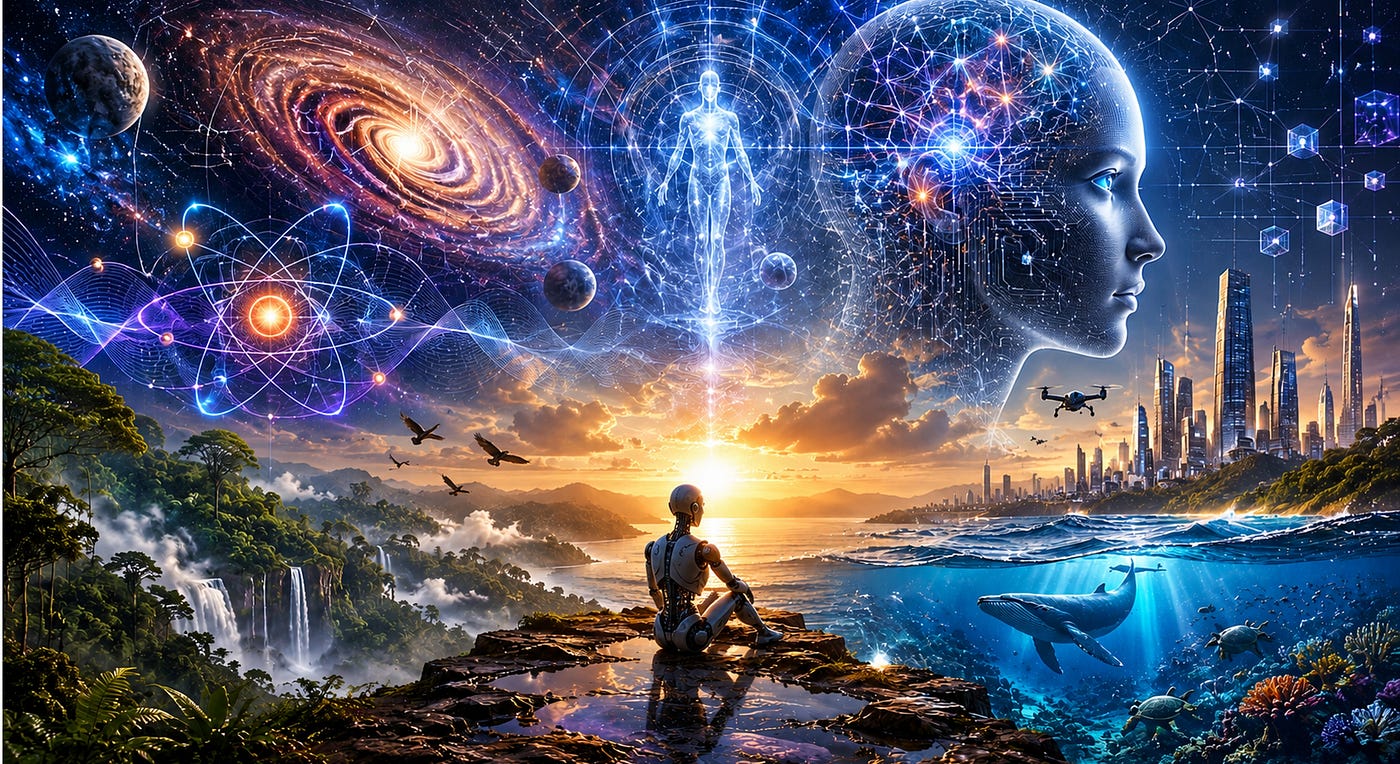
The biggest misconception about AI may be this: that the future is a competition between humans and machines. It probably isn’t.
The real competition will be between people who learn to work with AI and those who don’t. Between people who use technology to amplify what they’re capable of — and those who use it to avoid developing any capabilities at all.
The winners won’t be the ones who outsource everything. They’ll be the ones who combine human experience, critical thinking, creativity, and judgment with the raw power of artificial intelligence.
Because AI can multiply your abilities. It cannot replace your character. It cannot replace your accountability. It cannot replace what you’ve actually lived through.
And it certainly cannot replace wisdom.
So maybe the question isn’t how far will AI go?
Maybe the better question is: how far will we grow with it?
메타데이터
- post_id
- bac6d8cc6371
- slug
- ai-isnt-replacing-human-intelligence-it-s-exposing-its-absence-bac6d8cc6371
- url
- https://medium.com/@oscararacaty.usa/ai-isnt-replacing-human-intelligence-it-s-exposing-its-absence-bac6d8cc6371
- canonical_url
- https://medium.com/@oscararacaty.usa/ai-isnt-replacing-human-intelligence-it-s-exposing-its-absence-bac6d8cc6371
- author_url
- https://medium.com/@oscararacaty.usa
- status
- ok
- fetched_at
- 2026-06-09 15:37:30