The Day I Stopped Wanting New Clothes!
On discovering a garment that gets better the longer you live in it
The Day I Stopped Wanting New Clothes!
On discovering a garment that gets better the longer you live in it
I ruined a shirt last year.
Or so I thought.
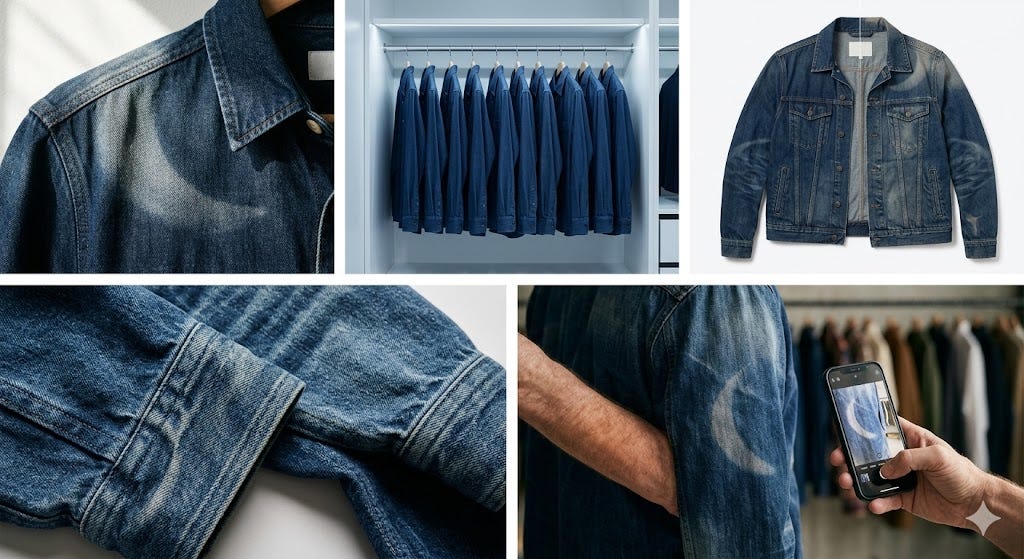
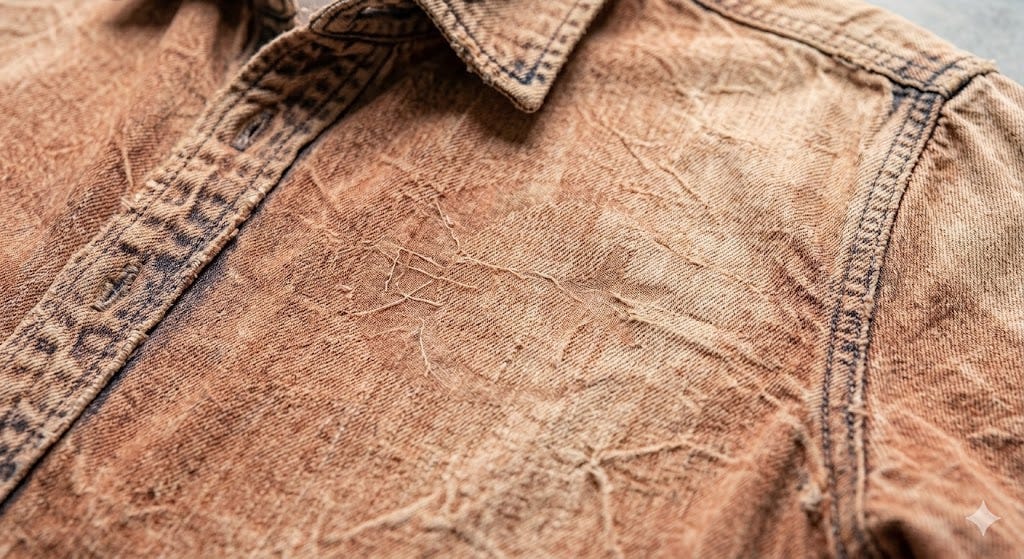
It came back from the wash with a watermark along the left shoulder, a faint crescent shaped gradient where the color had shifted maybe three shades lighter. I held it up in the window light and something strange happened: I liked it better. Not despite the change. Because of it. Because it looked, for the first time, like it belonged to someone. Like it had been somewhere.
I had been dressing for years without ever really thinking about what I was doing. Buying things because they were new. Replacing them because something newer appeared. Building a wardrobe that looked, season after season, like a very tidy kind of forgetting. Nothing in my closet remembered anything. Everything was clean and correct and utterly without history.
That watermark changed something.
The Question Nobody in Fashion Is Asking
The fashion industry is extraordinarily good at one thing: making you feel like what you have is not enough.
New season. New palette. New silhouette. The machinery runs on a very specific kind of dissatisfaction, the feeling that the best version of what you could wear is always just slightly ahead of what you currently own. Buy now. Upgrade soon. Start again.
I spent a long time inside that cycle without noticing I was in it.
What pulled me out was a concept so simple it felt almost embarrassing when I first encountered it: what if the best version of a garment is not the one you buy, but the one you end up with after a thousand ordinary days?
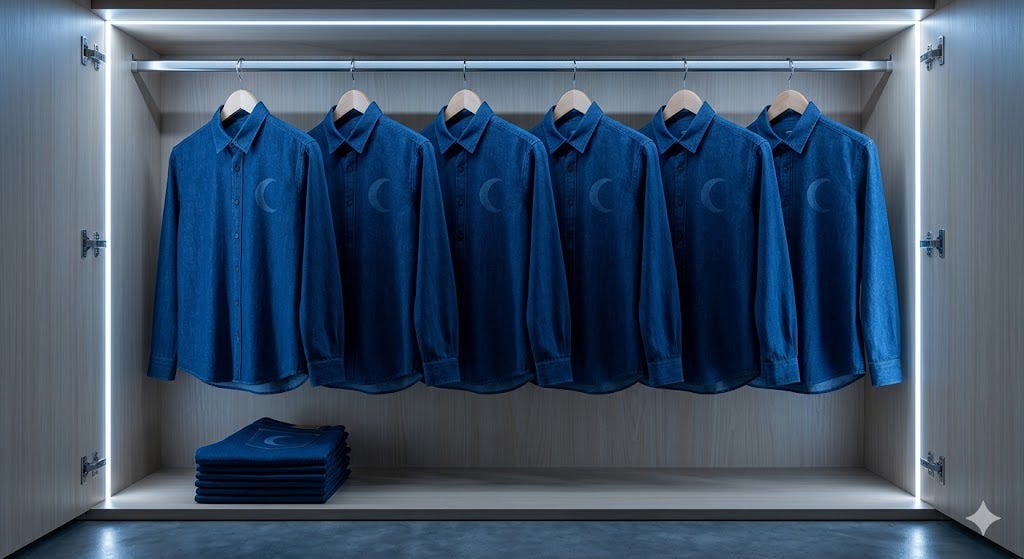
This is the premise behind The Living Pattern, a movement built around Bio-Denim and natural dye clothing designed not to resist time but to be transformed by it. Garments treated with botanical pigments, fermented indigo, and plant based mordants that respond to the specific chemistry of the body wearing them, the mineral content of the water washing them, the UV intensity of the sky above them.
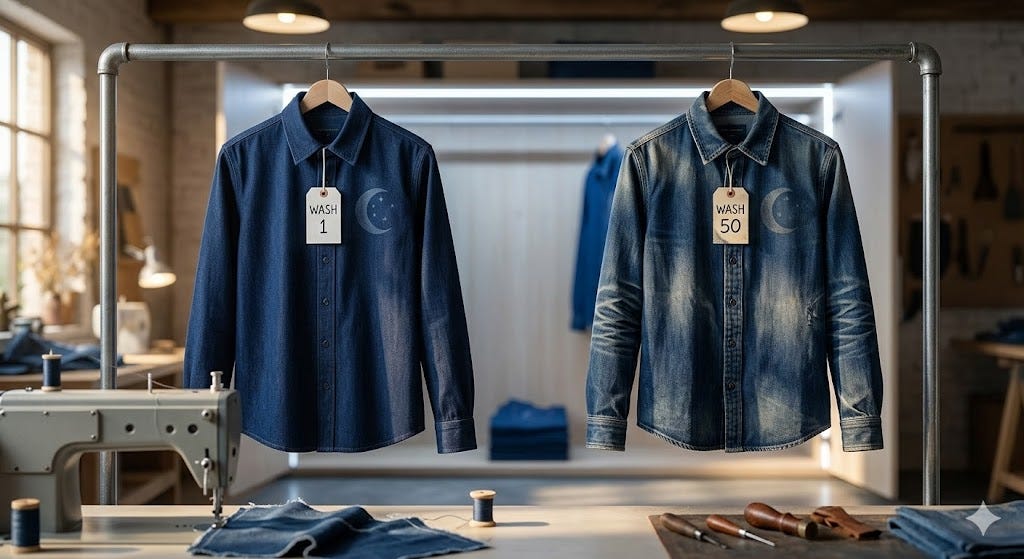
After fifty washes, no two pieces look alike.
Not because they were designed to look different. Because they were worn by different people, in different cities, living genuinely different lives.
What a Garment Owes You
We have a strange relationship with our clothes.
We ask them to make us look a certain way on the day we buy them. We rarely ask them to grow with us. We treat newness as quality and wear as failure. A scuff is a flaw. A fade is neglect. The ideal garment, in the logic of most modern fashion, is the one that looks exactly the same on day one thousand as it did on day one.
The Living Pattern disagrees with this completely.
In the world of Bio-Denim, a garment that has not changed is a garment that has not been lived in. The patina that develops over years of wear, the lightening along collar seams, the deepening of fold lines, the warmth that sun exposure brings to shoulders and sleeves, is not evidence of deterioration. It is evidence of a life.
High friction zones fade first. Protected creases hold their depth. Areas that meet sun warm in tone while shielded fabric stays cool. The result, after years of consistent wear, is something that cannot be called a faded shirt. It is a record. A topographic map of where you have been, written in gradient and cloth.
✨ The most valuable thing a garment can do is become irreplaceable. Not through scarcity engineered by a brand. Through time given by a person.
The Thing I Actually Changed
I have started treating my wardrobe differently since I fell into this world.
I buy less. I wear things more intentionally. I think about what a piece will look like in three years rather than three weeks. I have, improbably, become someone who photographs their clothes at intervals, not for content, but because I find myself genuinely curious to see what is happening.
What I did not expect was how much this would change the way I experience getting dressed.
There is something grounding about putting on a garment that carries evidence of your own history. That has absorbed, literally at the molecular level, something of the specific texture of your days. It is not sentimental in the way old band shirts are sentimental. It is quieter than that. More like the feeling of reading your own handwriting from years ago and recognizing yourself in it.
I stopped wanting new clothes the day I understood what old clothes could become.
Not old in the sense of worn out. Old in the sense of known. Old in the sense of having been somewhere with you and having something to show for it.
The pattern was never going to be printed.
It was always going to be yours.
Follow for more on slow luxury, intentional dressing, and the fashion world’s quiet revolutions.
메타데이터
- post_id
- bad4e2940aa6
- slug
- the-day-i-stopped-wanting-new-clothes-bad4e2940aa6
- url
- https://medium.com/@ar.khanmarketer308238/the-day-i-stopped-wanting-new-clothes-bad4e2940aa6
- canonical_url
- https://medium.com/@ar.khanmarketer308238/the-day-i-stopped-wanting-new-clothes-bad4e2940aa6
- author_url
- https://medium.com/@ar.khanmarketer308238
- status
- ok
- fetched_at
- 2026-07-13 06:23:13