Dust Is Not Just Dirt: Designing a Smarter Vacuum Strategy for Factories and Workshops
Introduction
Dust Is Not Just Dirt: Designing a Smarter Vacuum Strategy for Factories and Workshops

karcher tools Jodhpur, karcher tool supplier rajasthan, karcher tool dealer jodhpur
Introduction
Many factories and workshops treat vacuum cleaning as a housekeeping purchase. In reality, dust management is an operational risk issue. Fine dust affects air quality, machine reliability, worker comfort, product quality, and cleaning time. Choosing a vacuum solely on suction power often leads to clogged filters, excessive downtime, and machines that operators avoid using.
A smarter approach is to design a vacuum strategy: identify the dust type, collection points, operating duration, disposal requirements, and maintenance workflow. For buyers evaluating karcher vacuum cleaner jodhpur solutions, this framework produces better results than brand comparison alone.
Why Dust Classification Matters
Dust is not simply a cleaning issue; it is a critical factor that affects workplace safety, equipment performance, and overall operational efficiency. Different industries generate different types of dust, ranging from fine powder and metal particles to wood shavings and construction debris. Each dust type behaves differently and requires a specific cleaning approach. Understanding the characteristics of the dust being generated helps businesses select the most effective Kärcher vacuum cleaner and filtration system, ensuring efficient dust collection and cleaner working environments.
Proper dust classification also helps reduce maintenance costs and improve equipment lifespan. Fine dust can clog filters quickly, while abrasive particles may cause wear and tear on standard vacuum systems. By identifying the type, volume, and risk level of dust present in a facility, businesses can choose the right Kärcher cleaning solution for their operations. This results in better air quality, improved worker safety, enhanced productivity, and more reliable cleaning performance across industrial and commercial environments.
The Three Metrics That Matter More Than Peak Suction
Airflow stability over time: A machine that starts strong but loses performance as the filter loads creates hidden productivity losses.
Filtration effectiveness: Fine particles that pass through or escape during filter cleaning can undermine air-quality goals.
Downtime per shift: How often operators stop to empty containers, clean filters, or clear blockages often determines the real cost of ownership.
A Practical Layout: Source Capture + Area Cleaning
In many workshops, the optimal design is not one large vacuum. It is a two-layer system:
Source capture at the machine: Vacuums or extraction points positioned near dust-generating operations reduce airborne spread.
Scheduled area cleaning: Mobile industrial vacuums handle floors, corners, cable trays, maintenance zones, and spill-response tasks.
This approach reduces re-cleaning and helps prevent dust migration into offices, electrical rooms, and storage areas.
Selecting the Right Kärcher Vacuum Configuration
Selecting the right Kärcher vacuum configuration requires evaluating the specific cleaning challenges within your facility rather than focusing on suction power alone. Factors such as the type of dust or debris, cleaning frequency, operating hours, floor conditions, and waste volume all influence the ideal vacuum solution. Facilities dealing with fine dust may require advanced filtration systems, while workshops handling mixed wet and dry waste benefit from versatile wet-and-dry vacuum models.
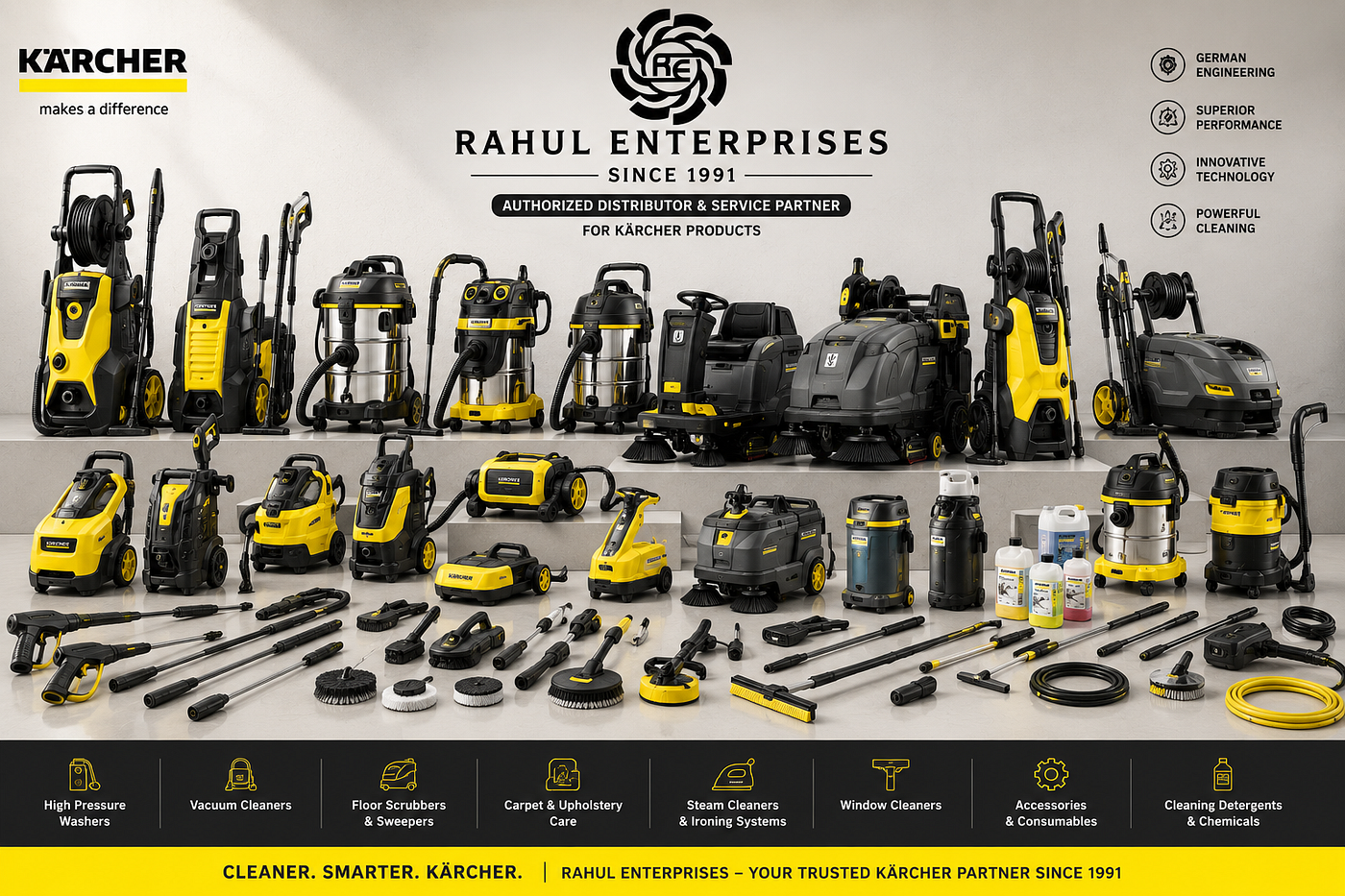
By matching the vacuum configuration to the actual application, businesses can improve cleaning efficiency, reduce maintenance requirements, enhance workplace safety, and achieve lower long-term operating costs. A trusted local partner like Rahul Enterprises can help assess these requirements and recommend the most suitable Kärcher vacuum solution for industrial, commercial, and institutional environments.
Vacuum audit checklist
- List all dust and debris types by area.
- Measure or estimate volume collected per shift.
- Record current filter-cleaning frequency.
- Track vacuum downtime and hose/blockage incidents.
- Identify areas where dust migrates after cleaning.
- Calculate operator minutes spent emptying containers and maintaining filters.
- Trial the proposed machine on the heaviest-load area, not the cleanest area.
Cost Drivers Hidden in “Cheap” Vacuum Purchases
- Frequent filter replacements
- Operator avoidance because the machine is cumbersome
- Excessive emptying trips due to small capacity
- Reduced airflow after short operating periods
- Increased re-cleaning because fine dust is not effectively captured
- Maintenance labour spent unclogging hoses and servicing overworked units
Over a multi-year period, these costs often exceed the initial price difference between entry-level and industrial-grade solutions.
Why Local Service Changes the Economics
Industrial vacuums are consumable-driven systems: filters, hoses, nozzles, wheels, seals, and sometimes motors require support. A nearby karcher cleaning dealer jodhpur or karcher tool dealer jodhpur can reduce downtime by improving access to parts, preventive maintenance, and operator training.
Why Rahul Enterprises for Kärcher Equipments and Solutions
For buyers comparing karcher vacuum cleaner jodhpur, karcher vacuum cleaner supplier Jodhpur, and broader karcher equipments and solutions Jodhpur offerings, Rahul Enterprises can support site assessment, machine selection, accessory configuration, operator onboarding, and maintenance planning. The practical value is matching the vacuum to the dust profile and workflow rather than selling a generic one-size-fits-all machine.
Conclusion
Dust management should be designed, not improvised. The right Kärcher vacuum solution is determined by dust type, filtration requirements, cleaning duration, and maintenance workflow ; not by peak suction numbers alone. Facilities that audit their dust profile, pilot machines in the highest-load areas, and secure local service support usually achieve better air quality, lower cleaning downtime, and more predictable operating costs.
FAQs
- Is Kärcher an Indian company?
No. Kärcher is a German-origin company with a global presence, including operations and partners in India.
2. Is Kärcher a German brand?
Yes. Kärcher is widely recognised as a German cleaning technology brand founded by Alfred Kärcher.
3. Who is the owner of Karcher?
Kärcher is privately held within the Kärcher Group and associated with the Kärcher family rather than being an Indian public-sector manufacturer.
4. What is Kärcher famous for?
Kärcher is best known for pressure washers, industrial and commercial cleaning equipment, vacuum systems, floor-care solutions, and autonomous cleaning technologies.
메타데이터
- post_id
- baf3b4afc5f2
- slug
- dust-is-not-just-dirt-designing-a-smarter-vacuum-strategy-for-factories-and-workshops-baf3b4afc5f2
- url
- https://medium.com/@marketing_41514/dust-is-not-just-dirt-designing-a-smarter-vacuum-strategy-for-factories-and-workshops-baf3b4afc5f2
- canonical_url
- https://medium.com/@marketing_41514/dust-is-not-just-dirt-designing-a-smarter-vacuum-strategy-for-factories-and-workshops-baf3b4afc5f2
- author_url
- https://medium.com/@marketing_41514
- status
- ok
- fetched_at
- 2026-08-02 09:08:29