2025–06–19 NPAW Conference Tokyo 2025 Seminar Report (en)
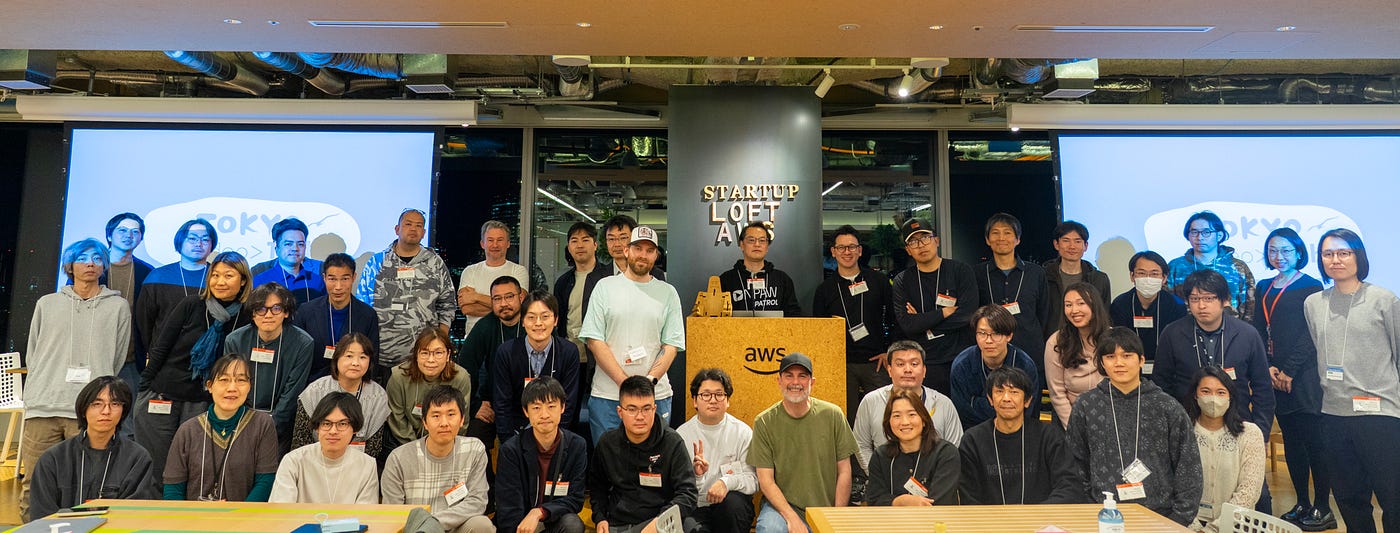
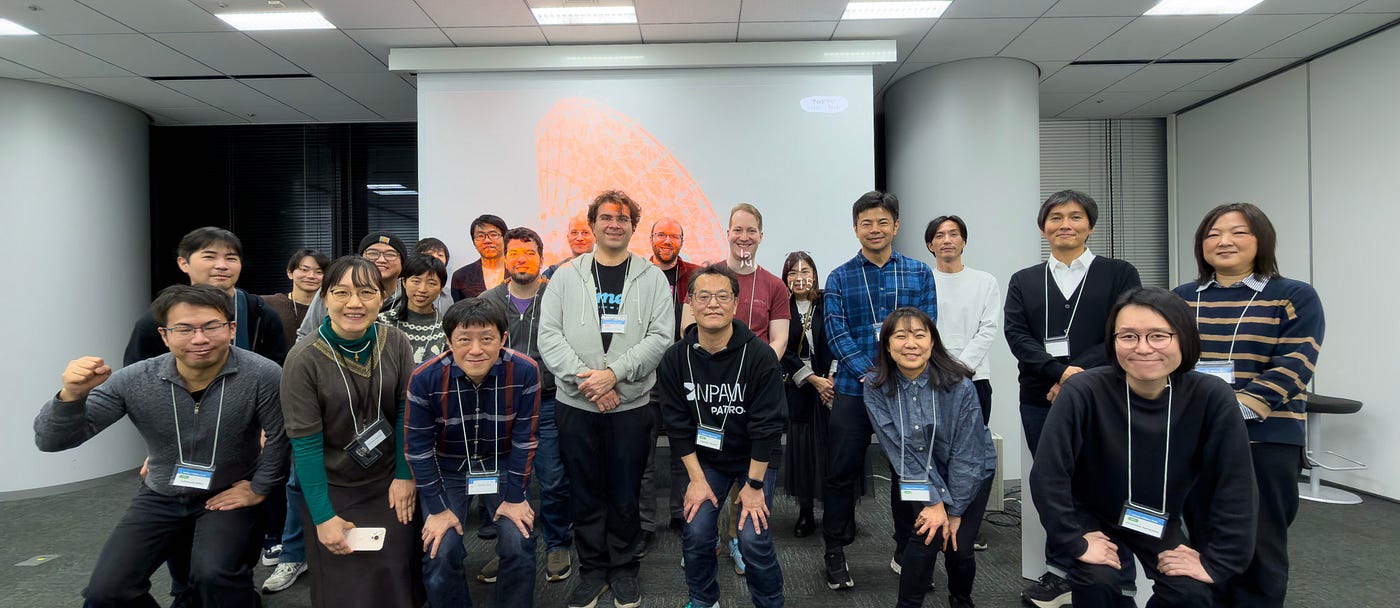
NPAW Conference Tokyo 2025 landed in Shibuya’s Abema Towers on June 19, 2025. Co-hosted by Tokyo Video Tech, the event brought together…
2025–06–19 NPAW Conference Tokyo 2025 Seminar Report (en)
NPAW Conference Tokyo 2025 landed in Shibuya’s Abema Towers on June 19, 2025. Co-hosted by Tokyo Video Tech, the event brought together video tech leaders — and here’s what went down.

Executive Summary
[Session 1] Creating a Seamless Viewing Experience at ABEMA with NPAW QoE Analytics Video
Mr. Goto, CyberAgent Inc. / AbemaTV
- Early detection of issues that QA may miss through visualization of the viewing experience Proprietary metrics and NPAW dashboards enable real-time monitoring of playback failures.
- Continuous improvement of user experience and support for personalized delivery Optimized video quality based on context such as time of day and device type.
- Enhanced quality assurance through integration of SRE practices and internal tools Tools like “Sphenix” and “Zeus” are integrated with NPAW to enable fast feedback loops for delivery parameter tuning.
[Session 2] Hulu’s Use of QoE Analytics and CDN Balancer
Mr. Takeuchi, HJ Holdings, Inc.
- Rapid issue identification and resolution using NPAW QoE Analytics data Playback failures on specific Chromecast versions were identified and resolved quickly by using NPAW.
- Secure, real-time data sharing with multiple CDNs NPAW enables secure, real-time data sharing with both Akamai and JOCDN, streamlining delivery issue detection and resolution.
- Leveraging playback data for security and user behavior analysis Detection of unauthorized downloads and account sharing through abnormal access patterns.
- Playback optimization through CDN Balancer and multi-CDN architecture Intelligent CDN selection based on quality metrics led to improved QoE.
[Session 3] Live Demos and Use Cases from NPAW’s European Product Team
- Improved incident response with multi-layer integrated monitoring Real-time visualization of QoE impacts across CDNs, apps, and players.
- Detailed measurement of network latency aligned with playback flow NPAW Monitoring Probes analyze DNS, TLS, CDN, and more at the device level.
- Application in bandwidth optimization and cost control Preventing over-delivery while preserving QoE to rationalize CDN traffic.
[Session 4] Midstream CDN Balancer Evolution and Live Streaming Applications
Presented by Renata from NPAW
- Live streaming enters the era of “flawless by default” In global events like the Super Bowl and F1, users expect zero latency or buffering, demanding ultra-reliable infrastructure.
- Dynamic CDN switching during playback with Midstream CDN Balancer Seamless transition between CDNs mid-stream to prevent playback disruption.
- A proactive strategy balancing resilience and cost Notable results included a 93% reduction in startup errors and 77% reduction in buffering — enhancing both QoE and efficiency.
[Session 5] User Behavior Analytics and Personalization with NPAW Intelligence
- End-to-end UX optimization including pre- and post-playback phases Identifies churn causes and UI issues, feeding insights back into experience design.
- Advanced personalization based on behavioral data Metrics like viewing patterns and recommendation conversion support higher LTV.
- Applicable to detecting account sharing and unauthorized usage Analyzes access patterns across regions/devices to support security initiatives.
Opening Remarks: Brian, General Manager APAC, NPAW

To kick off the conference, Brian, General Manager APAC, NPAW, took the stage and shared NPAW’s strategic outlook for the Asia-Pacific market, along with the company’s expectations for Japan.
He began by expressing his gratitude for the strong turnout at NPAW’s first-ever event in Tokyo. Amid growing interest in Quality of Experience (QoE), he introduced how NPAW’s solutions are uniquely positioned to help Japanese streaming providers tackle their operational challenges.
Throughout the event, real-world case studies from both domestic and international companies actively using NPAW will be presented, highlighting practical efforts and results in optimizing the viewing experience. Brian emphasized that this conference is not merely a product showcase, but an opportunity for the industry to exchange insights and take home actionable knowledge.
He also noted that members of the product team from NPAW’s Barcelona headquarters were in attendance and would be sharing updates on future product strategies and the latest developments in technology.
Brian concluded by stating, “I hope today’s conference will be a fruitful experience for all of you and offer useful takeaways to support your future business improvements,” before handing the session over to the first speaker.
Delivering a Seamless Viewing Experience on ABEMA with NPAW QoE Analytics Video
The first session of the conference featured Mr. Goto from CyberAgent Inc. / AbemaTV, who shared a detailed case study on how ABEMA utilizes the video QoE analytics tool “NPAW QoE Analytics Video.”

Visualizing Viewing Experience and Detecting Playback Issues
At ABEMA, the team has defined custom metrics to quantitatively assess user viewing experience, which are visualized on dashboards. This has made it possible to detect issues that were previously difficult to identify — for example, a live stream failing to play properly under specific conditions on ExoPlayer for Android devices.
While ideally such issues should be caught during QA, the vast combination of encoding settings, OS versions, and device variations makes complete coverage unrealistic. Therefore, it’s crucial to have a real-time monitoring system in place that can detect and respond to problems as they arise in actual user environments.
Delivering Context-Aware Viewing Experiences
Continuous measurement using NPAW also supports ABEMA’s vision: “a world where people naturally watch ABEMA videos anytime, anywhere.” The service optimizes video experiences based on time, location, user profiles, content types, and device characteristics. For example, high-resolution, artistic video is served on home TVs, while low-latency, real-time streams are prioritized during live sports viewing.
Verifying delivery quality with the Proprietary “Sphenix” Tool
To evaluate the impact of changes such as encoder settings, player configurations, CDN selection, or ad insertion methods, ABEMA developed its own testing tool, Sphenix. This tool performs long-duration playback tests on real devices and detects video degradation (e.g., stuttering) using VMAF Motion Score. By comparing this data with NPAW metrics, ABEMA can validate changes before deploying them to production, minimizing risk while accelerating improvements.
Applying SRE Concepts for Quality Assurance
For quantitative quality evaluation, ABEMA applies Site Reliability Engineering (SRE) principles by defining SLIs (Service Level Indicators) and SLOs (Service Level Objectives) based on NPAW’s QoE metrics. This approach enables consistent service quality management using objective data, rather than relying on subjective feedback from social media or app reviews.

Real-Time Quality Control with “Zeus”
ABEMA also operates its own real-time playback quality control system called “Zeus.” Leveraging near real-time data from NPAW, Zeus dynamically adjusts playback configurations — such as switching CDNs or enabling low-latency delivery — based on regional, network, or device-specific conditions. This enables strategic and flexible optimization of the viewing experience.
Conclusion
This session clearly demonstrated that ABEMA is not just using NPAW to detect and resolve issues, but as a foundation for continuously optimizing the user experience through data-driven operations. Their technical infrastructure and operational practices centered around NPAW offer valuable insights for other media providers aiming to enhance QoE.
Use of QoE Analytics and CDN Balancer at Hulu
In the second session, Mr. Takeuchi from HJ Holdings took the stage to share various use cases of NPAW Analytics at Hulu. His presentation covered how the platform supports troubleshooting viewing issues, enables data sharing with CDN providers, and even contributes to detecting unauthorized downloads.
Case Study: Playback Issues on Chromecast

At Hulu, operated by HJ Holdings, NPAW’s analytics platform is used for daily monitoring of viewing quality (QoE). By visualizing and analyzing data across multiple dimensions, the team can quickly detect issues and identify their root causes. One concrete case involved playback failures on certain versions of Chromecast (2nd generation). While such problems might be dismissed as isolated user-side issues, a deep analysis by device and player version using NPAW revealed that the issue was limited to a specific version. This insight enabled Hulu to work with Google during the canary release phase of the Chromecast software and resolve the problem before it reached the wider user base.
Real-time Data Sharing with CDN Providers
Hulu uses two CDNs: Akamai and JOCDN. With NPAW’s multi-account feature, Hulu can share data specific to each CDN — Akamai receives only its own QoE data, and the same applies to JOCDN. This setup enables secure and near real-time data sharing with both CDN providers. In the event of a delivery failure, all parties can investigate and respond quickly using the same dashboard, ensuring a streamlined operational workflow.
Detecting Unauthorized Downloads
An interesting use case highlighted in the session was the detection of unauthorized downloads. Since the playback patterns of normal viewing and those generated by download tools differ significantly, NPAW’s analytics can help flag suspicious accounts. Hulu then investigates and takes appropriate actions against users suspected of violating terms of service.
Optimizing Playback with CDN Balancer
To make the most of its multi-CDN setup, Hulu has also implemented NPAW’s CDN Balancer. This system selects the optimal CDN before playback begins and distributes traffic accordingly. As a result, while the join time (i.e., time to start playback) increased by about 11%, the buffer ratio dropped by approximately 45%, and startup errors were reduced by 12% — a significant improvement in overall viewing experience.

Conclusion
This session showed how NPAW Analytics helps Hulu keep their streaming experience stable and smooth by offering flexible data analysis and real-time monitoring. On top of that, it’s proving useful for spotting security issues and working efficiently with CDN partners — making it a tool that’s becoming more and more valuable in day-to-day operations.
Session 3 Report: Latest Features and Technical Demos by the NPAW Product Team
In Session 3, the NPAW product team from the company’s headquarters in Barcelona took the stage to present the latest product features and upcoming technology strategies. Their talk explored how NPAW is addressing the growing operational challenges that accompany increasingly sophisticated video delivery workflows.

End-to-End Incident Impact Analysis and Alert Consolidation
The session began with the introduction of NPAW’s integrated monitoring capabilities, which allow centralized management and analysis of alerts generated from various system layers — including CDN, encoder, player, and application.
This functionality enables teams to see how incidents across the stack affect actual user experience (QoE), helping to visualize root causes more clearly. By providing a unified, user-centric view of monitoring data that was previously fragmented, this tool significantly improves the accuracy and speed of incident response.
Real-Time Network Performance Measurement with NPAW Monitoring Probes
Next, the team introduced “NPAW Monitoring Probes,” a network diagnostics tool that collects and analyzes probes emitted from user devices and applications. This allows for real-time visibility into DNS resolution, TLS handshakes, CDN responsiveness, and initial buffering times.
Unlike traditional tools such as traceroute or ping, this solution captures latency at each step of the actual playback path, making it highly relevant for analyzing user-perceived performance.
Bandwidth Optimization and Cost Efficiency
The team also touched on efforts to minimize streaming bandwidth without compromising QoE by analyzing player bandwidth consumption and quality metrics on real device. For example, by identifying the minimum bandwidth required to stream a given bitrate reliably, operators can reduce CDN traffic costs and balance network load more efficiently.
This is especially important in mobile network environments, where user bandwidth usage is directly tied to QoE. The technology can therefore also contribute smarter network planning.

Strengthening Readiness for a Complex Streaming Ecosystem
To conclude, the team emphasized NPAW’s role as an “all-seeing sensor” in today’s increasingly diverse landscape of players, networks, and devices. They reiterated their commitment to continuously evolving the platform with new features and improvements that meet the changing needs of the industry.
Session 4 Report: NPAW’s Midstream CDN Balancing and Global Use Cases
In the fourth session, Renata from NPAW took the stage to present the company’s solution for ensuring stable viewing experiences during large-scale live broadcasts — Midstream CDN Balancer — along with real-world use cases.

Seamless Live Streaming Is Now the Baseline Expectation
At the start of the session, Renata emphasized that during global mega-events such as the Super Bowl, Formula 1 Grand Prix, and the FIFA World Cup, viewers now take for granted that live streaming will be seamless. This reflects an era of zero tolerance, where even minor playback issues are no longer acceptable.
In today’s environment, even slight delays or buffering can quickly spark negative reactions and reputational damage on social media. The session reinforced the critical importance of having a highly reliable delivery infrastructure that can uphold the expectation of “it just works.”
The Role and Mechanism of Midstream CDN Balancer
To meet these expectations, NPAW offers Midstream CDN Balancer. In traditional streaming setups, the CDN selected at the start of playback remains fixed throughout. In contrast, the midstream approach enables dynamic switching between CDNs even during playback.
For example, if a CDN experiences issues mid-stream, the system can automatically switch to an alternate CDN before viewers notice any impact — preventing buffering or stream interruptions. This allows streaming services to protect QoE (Quality of Experience) in real time.

Proven Impact of Midstream CDN Balancer
Real-world results of Midstream CDN Balancer were also shared:
A 93% reduction in startup errors
A 77% reduction in buffering ratio
By selecting the optimal CDN for each viewer, the solution maximizes network efficiency and evenly distributes load across CDN providers. This not only mitigates service disruptions but also helps maintain a stable user experience while optimizing CDN costs.
A Shift Toward Proactive, Data-Driven Quality Management
This session positioned Midstream CDN Balancer — and NPAW’s broader product suite — as tools for proactive quality management, not just reactive defense. By enabling real-time control rather than after-the-fact remediation, these solutions exemplify a forward-leaning approach to delivering uninterrupted user experiences. They serve as concrete examples of what it means to move from defensive to offensive QoE strategy.
Session 5 Report: Optimizing UX and Personalization with NPAW Digital Experience
The fifth and final session of the conference introduced NPAW’s new focus area: the Digital Experience product suite. This session explored how NPAW is expanding beyond traditional playback quality (QoE) to deliver data-driven optimization across the entire user experience (UX), along with practical analytical methods.

Lifecycle-Level User Experience Monitoring
NPAW Digital Experience enables tracking and analysis across the full user lifecycle — from acquisition, through engagement, to churn. By quantitatively identifying behaviors and experiences that influence continued viewing, services can make smarter decisions to retain users.
For example, visualizing patterns among churned users can reveal:
- Which content triggers drop-off
- Which UI elements introduce friction
These insights allow for targeted UX and UI optimization based on real data, supporting proactive improvement strategies.
Enhancing Personalization
With NPAW’s analytics capabilities, personalization strategies can be taken to a new level by leveraging user behavior and content preferences. Key metrics include:
- Most-watched genres
- Points in time where playback is stopped
- The percentage of plays initiated from recommendations
These insights enable more effective UI placements and content suggestions, ultimately aiming to improve viewer retention and increase LTV (Lifetime Value).
Addressing Account Sharing and Misuse
In addition to UX optimization, Digital Experience analytics also contributes to security and fraud detection. For example, anomalous access patterns — such as simultaneous logins from multiple regions or devices — can indicate potential account sharing or unauthorized use.
Toward Holistic Optimization of Streaming Services
While NPAW has traditionally focused on optimizing playback (QoE), the Digital Experience suite marks a strategic expansion into comprehensive UX optimization. By addressing not only playback quality but also pre- and post-viewing experiences, NPAW provides a powerful toolkit for enhancing the end-to-end competitiveness of streaming platforms.
This session highlighted a clear message: in today’s landscape, success hinges on managing the entire viewer experience — not just what happens during playback.

Conclusion
NPAW Conference Tokyo 2025 covered the cutting edge of the video streaming industry — from optimizing Quality of Experience (QoE), to personalizing the entire user experience (UX), implementing real-time control, and operating with reliability-focused metrics. With real-world case studies from leading domestic services like ABEMA and Hulu, as well as global use cases and product updates shared by NPAW’s development team, the conference offered participants practical and actionable insights.
One thing became unmistakably clear: to stay competitive in the evolving streaming landscape, services must go beyond basic monitoring and embrace a scientific, data-driven approach to continuously improving the viewing experience.
메타데이터
- post_id
- bb0a219f2d44
- slug
- 2025-06-19-npaw-conference-tokyo-2025-seminar-report-en-bb0a219f2d44
- url
- https://medium.com/tokyo-video-tech/2025-06-19-npaw-conference-tokyo-2025-seminar-report-en-bb0a219f2d44
- canonical_url
- https://medium.com/tokyo-video-tech/2025-06-19-npaw-conference-tokyo-2025-seminar-report-en-bb0a219f2d44
- author_url
- https://medium.com/@ksakai
- status
- ok
- fetched_at
- 2026-06-11 12:34:08