Final Blogpost Group 5
WE DID IT!
Final Blogpost Group 5
WE DID IT!
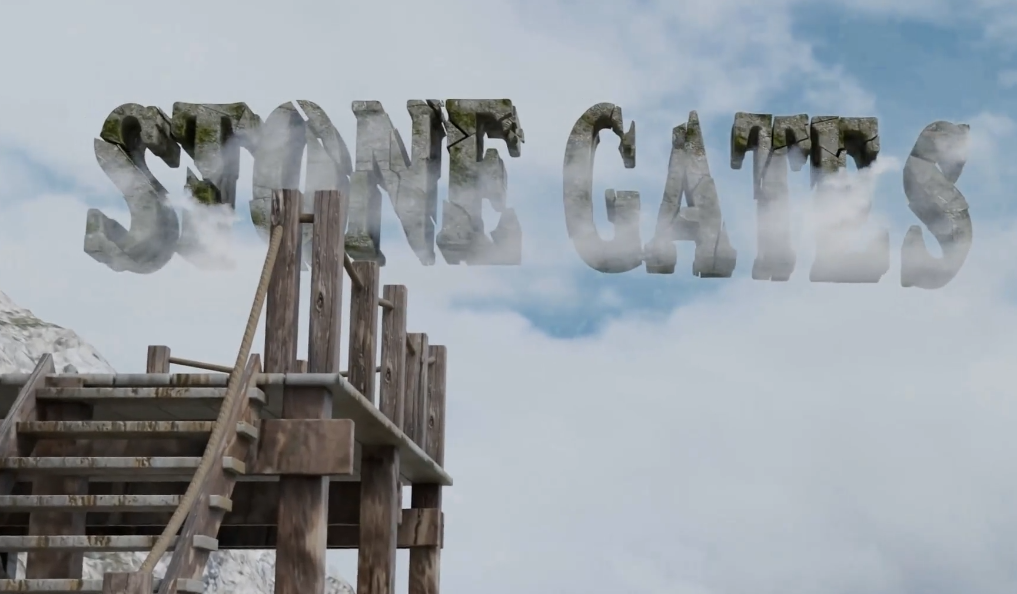
Stone Gates Thumbnail | Screenshot from Trailer made by Bruno Mueller
Goethe’s Stone Gates — the Mixed Reality experience we conceptualized and developed over the past few months — is finished! Of course, with more time, the project could have evolved even further. No creative or technical endeavor is ever truly “done,” but as the deadline now lies behind us, we can proudly call this version complete.
From Concept to Reality
Over the past months, we moved through various stages — ideation, concept development, and finally, the realization of our Mixed Reality experience. Each phase challenged and refined us, both individually and as a team.
Our vision was to create an XR experience with a strong scientific and historical foundation. Goethe’s fascination with mineralogy inspired us to craft an interactive, immersive journey into his world. Throughout the process, we continuously iterated, tested, and refined our ideas based on feedback and development principles.

Elias opening the Crack of Goethe’s Stone Gates | Screenshot by Miriam
Key MileSTONES & Achievements
The first playable version of Goethe’s Stone Gates was a huge milestone, made possible by the seamless integration of different components. Every team member played a crucial role, contributing expertise in different areas:
- 3D Modeling & Environments — Created realistic objects and detailed environments that enhance immersion.
- Interactive Mechanics — Designed and implemented engaging interactions to guide users through Goethe’s Sorting World.
- Historical & Scientific Research — Curated and integrated Goethe’s mineral collection to make the experience both educational and engaging.
- UI & User Experience Optimization — Iterated based on user feedback to improve clarity, usability, and accessibility.
- Rock Generation System — Developed a system with randomized but reproducible shaders, ensuring unique yet consistent results.
- Collaboration and communication — worked with regular check-ins, both online and in-person, that helped us stay aligned. One challenge we faced was integrating different components developed by individual team members into a cohesive whole. Debugging and refining this integration was a complex but necessary step to ensure a smooth user experience.

A glance into the world behind your walls.. | Screenshot by Miriam
Next Time we would..
- Start Building Earlier — One major lesson we learned was the importance of early testing in a built version of the application. Initially, we only ran the project within Unity, which led to unexpected build issues when it was time for user testing. This forced us to reschedule, leaving little time for meaningful adjustments beyond the most critical fixes. While we successfully incorporated key user feedback, an earlier build cycle would have allowed for a more polished final product.
- Prioritize Development Alongside Concepting — Our workflow was heavily focused on planning and task division before the Christmas break, leaving little room for actual development. While ideation and concept refinement are crucial, starting development earlier — if the course structure had allowed for it — would have given us more time to refine and enrich the application. A more iterative balance between conceptualization and implementation would have been beneficial.
- Trust the User More — Looking at the final product, we realized that we had put more effort than necessary into guiding the user through interactions. In practice, users intuitively followed the intended flow and correctly sorted the minerals. This insight taught us that well-designed interactions often speak for themselves, reducing the need for excessive instructions.
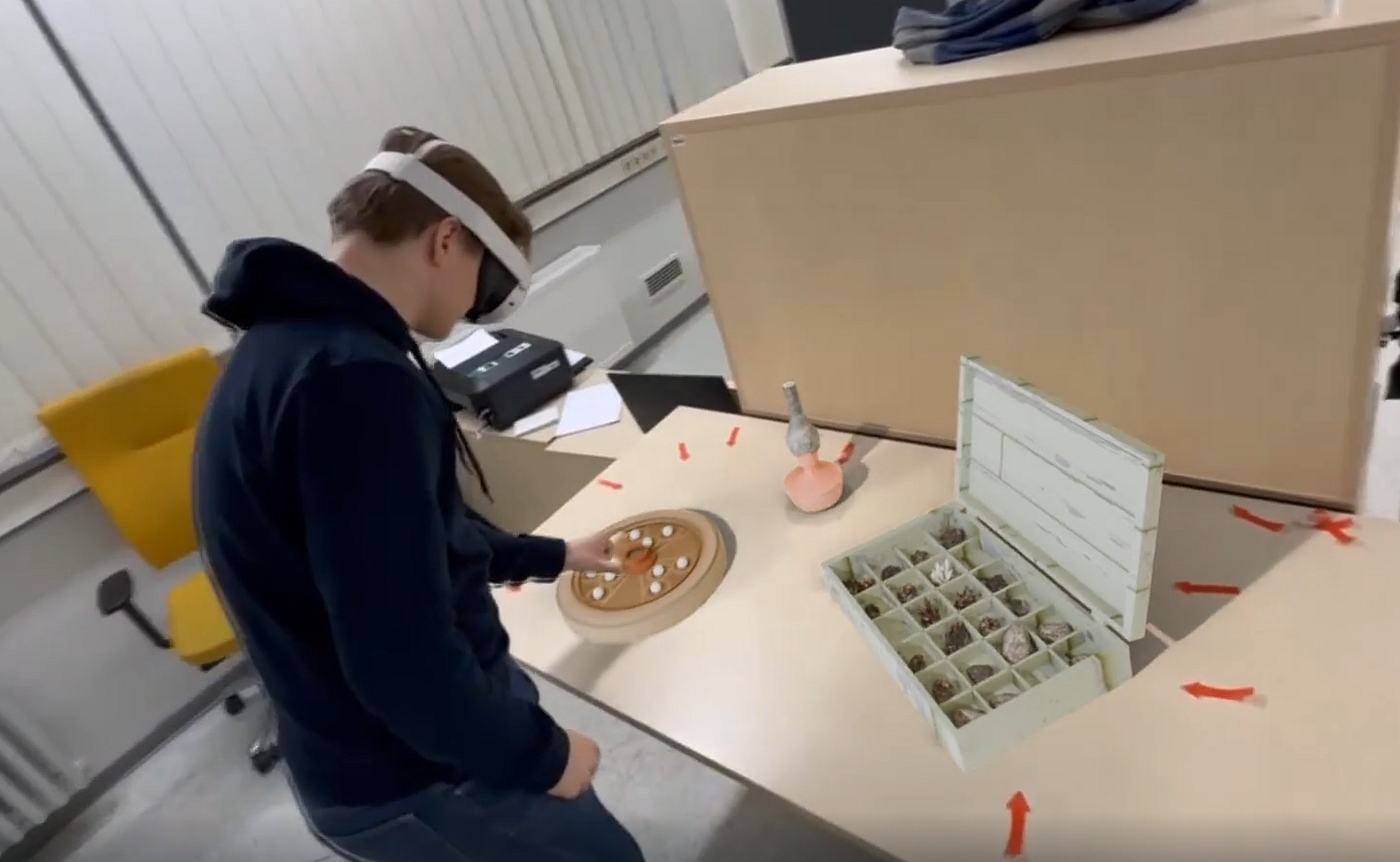
Elias sorting the minerals | Screenshot by Miriam
Future Potential
This project has the potential to be taken to the next level. As an educational experience, it offers an engaging way to explore the world of minerals — where they are found, what properties they have, and how they have shaped our history. By actively interacting with these ancient stones — some of which have existed longer than the dinosaurs — users can dive into a fascinating world of shimmering crystals and geological wonders.
Designed for museum and educational applications, Goethe’s Stone Gates provides an enhanced reality where users can engage with up to 18,000 minerals — something that would be nearly impossible to showcase in a physical space. With further development, the experience could be expanded with additional environments connected to the minerals’ origins, more complex interactions, and refined mechanics that make the sorting process feel even more immersive and realistic.
Given more time and resources, deeper integration of scientific insights and historical context could transform this project into a truly compelling mixed reality experience — one that not only educates but also inspires curiosity and exploration.
Final Reflections
The development of Goethe’s Stone Gates has been an intense but rewarding journey. As a team, we overcame technical challenges, iterated on design ideas, and worked collaboratively to bring this vision to life. From initial sketches to a fully functional prototype, our project has been shaped by both our ambitions and the practical realities of development.
Reflecting on the past months, we take pride in what we’ve accomplished as a team. The experience has not only strengthened our technical skills but also taught us valuable lessons about teamwork, iteration, and problem-solving. No project is without its challenges, but navigating them together has been one of the most rewarding aspects of this journey.
We hope our experiences can serve as inspiration for future students tackling similar projects. Our advice? Stay flexible, communicate often, and test your ideas early and often!
Thank you to everyone who followed our journey.
_
Semester: P5 Group Name: Trouble Turtles Group members: Elias Bormann, A. Bersu Dertli, Bruno Mueller Md Zunaed Alam Tanim, Miriam Author of the story: Miriam Date: 13.02.2024
메타데이터
- post_id
- bb21ebdd27be
- slug
- final-blogpost-group-5-bb21ebdd27be
- url
- https://medium.com/project5/final-blogpost-group-5-bb21ebdd27be
- canonical_url
- https://medium.com/project5/final-blogpost-group-5-bb21ebdd27be
- author_url
- https://medium.com/@wiceartworks
- status
- ok
- fetched_at
- 2026-06-29 02:33:43