भारत का भूला हुआ थर्मोपाइले: जब 20 वीरों ने 6,000 मुगलों की फौज का रास्ता रोक दिया था
How Mewar’s tactical ‘Ghost City’ shattered Emperor Aurangzeb’s pride and triggered one of the most brutal last-stands in history.
भारत का भूला हुआ थर्मोपाइले: जब 20 वीरों ने 6,000 मुगलों की फौज का रास्ता रोक दिया था
How Mewar’s tactical ‘Ghost City’ shattered Emperor Aurangzeb’s pride and triggered one of the most brutal last-stands in history.
मेवाड़ का वो चक्रव्यूह जिसने औरंगज़ेब के घमंड को मिट्टी में मिला दिया और उदयपुर को रातों-रात एक ‘Ghost City’ बना दिया।
इतिहास अक्सर तारीखों और राजाओं के नाम में उलझकर रह जाता है, लेकिन कुछ कहानियाँ ऐसी होती हैं जो पन्नों से निकलकर सीधे आपकी रूह को छू लेती हैं। सन 1680 की शुरुआत में मेवाड़ की धरती पर एक ऐसा ही अकल्पनीय वाकया हुआ था। यह कहानी सिर्फ शौर्य की नहीं है; यह कहानी है एक बेजोड़ सैन्य रणनीति (Military Strategy) की और उन 20 जांबाज़ों की जिन्होंने मौत के सामने खड़े होकर भी अपनी चौखट का सौदा नहीं किया।
रणनीति: रातों-रात गायब हुआ एक आलीशान शहर
जनवरी 1680 में, मुगल बादशाह औरंगज़ेब अपनी पूरी ताकत और 50,000 से अधिक सैनिकों की टिड्डी दल जैसी फौज लेकर मेवाड़ की राजधानी उदयपुर की तरफ बढ़ रहा था। उसका मकसद साफ था — मेवाड़ के स्वाभिमान को कुचलना।
लेकिन जब मुगल सेना ने उदयपुर की सीमा में कदम रखा, तो वहाँ कोई ढोल-नगाड़े या तलवारें उनका स्वागत करने के लिए नहीं थीं। वहाँ सिर्फ एक डरावना सन्नाटा था।
‘Scorched Earth Policy’ — एक अचूक चाल महाराणा राजसिंह प्रथम ने एक ऐसी रणनीति बनाई थी जिसकी मुगलों ने कल्पना भी नहीं की थी। उन्होंने पूरी प्रजा, बच्चों, बुजुर्गों, अनाज के एक-एक दाने और शाही खजाने को रातों-रात अरावली की सुरक्षित वादियों (छप्पन के पहाड़ों) में शिफ्ट कर दिया था।
जब औरंगज़ेब शहर में घुसा, तो उसे एक भव्य लेकिन पूरी तरह से खाली ‘भुतहा शहर’ (Ghost City) मिला। मुगलों के पास खाने को रसद नहीं थी और न ही लड़ने के लिए सामने कोई फौज थी। 50,000 की फौज बिना लड़े ही मनोवैज्ञानिक रूप से हारने लगी थी।
चोक पॉइंट: जगदीश मंदिर की संकरी सीढ़ियाँ
इस बेइज्जती से बौखलाए औरंगज़ेब ने अपने सेनापति हसन अली खान को पहाड़ों में तबाही मचाने भेजा और जनरल रुहुल्लाह खान को 6,000 हथियारबंद सैनिकों की टुकड़ी देकर उदयपुर के सबसे प्रतिष्ठित और भव्य जगदीश मंदिर (जगन्नाथ राय मंदिर) को तोड़ने का काम सौंपा।
मुगलों को लगा कि जब पूरा शहर खाली है, तो मंदिर गिराना बच्चों का खेल होगा। लेकिन जैसे ही वे मंदिर के करीब पहुंचे, उनका सामना मेवाड़ के चक्रव्यूह के आखिरी और सबसे घातक हिस्से से हुआ।
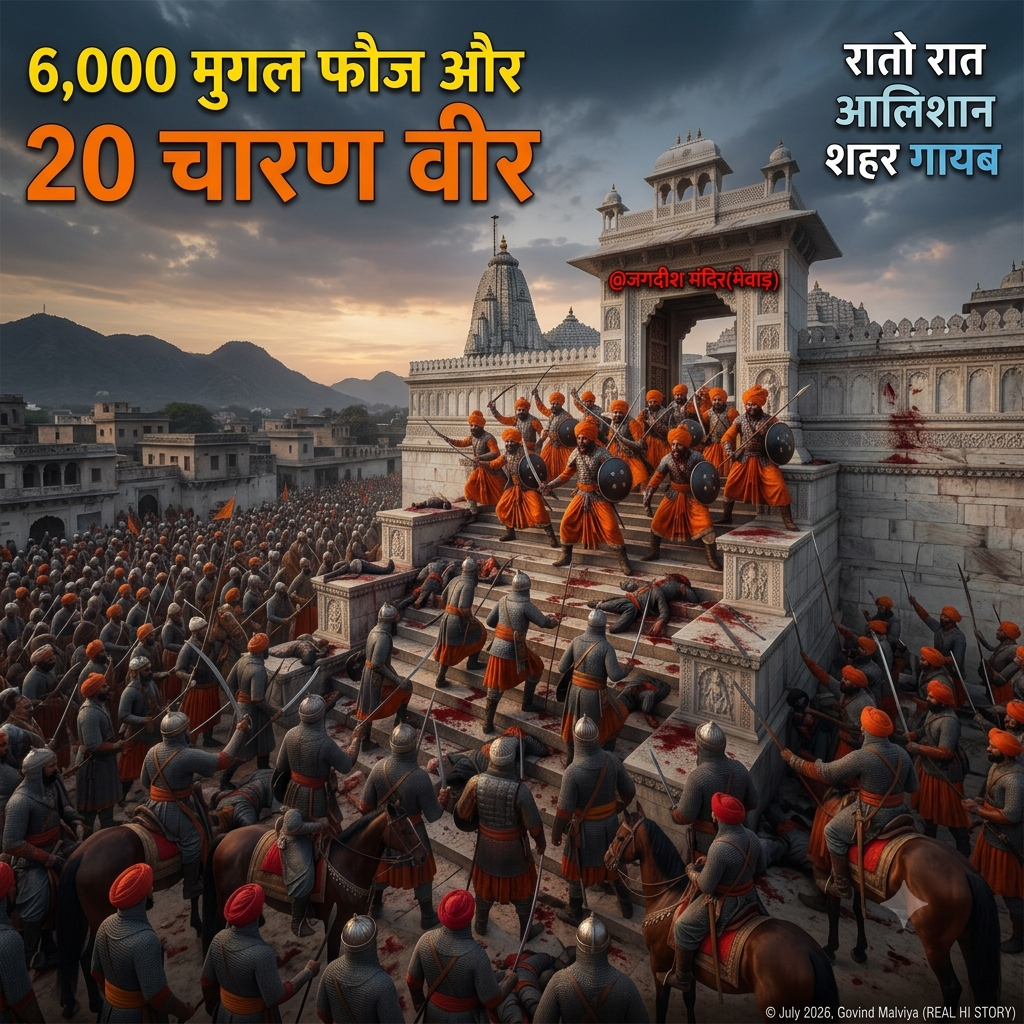
जगदीश मंदिर एक बहुत ऊंचे चबूतरे पर स्थित था। वहाँ तक पहुँचने का एकमात्र रास्ता था — एक बेहद ऊंची, संकरी और खड़ी सीढ़ी। सैन्य विज्ञान में इसे ‘Choke Point’ कहा जाता है। इस संकरी जगह के कारण मुगलों के घुड़सवार बेकार हो गए। घोड़ों को पीछे छोड़ मुगलों को पैदल ही आगे बढ़ना था।
और उन सीढ़ियों के सबसे ऊपरी मुहाने पर, मंदिर के गर्भगृह को अपनी पीठ के पीछे सुरक्षित रखकर खड़े थे — नरूजी चौहान और सौदा बारठ (चारण) परिवार के मात्र 20 जांबाज वीर।
वो खूनी खेल जिसने मुगलों की रूह कंपा दी
जैसे ही मुगल सैनिकों ने सीढ़ियां चढ़नी शुरू कीं, इन 20 वीरों की तलवारों ने वो तांडव मचाया जिसकी मिसाल इतिहास में बहुत कम मिलती है। संकरी सीढ़ियों की वजह से एक बार में केवल 3 या 4 मुगल ही ऊपर आ सकते थे। और जो भी ऊपर आता, उसे ये वीर वहीं काटकर नीचे गिरा देते।
- घंटों तक यह खूनी मंजर चलता रहा।
- सफेद संगमरमर की वो सीढ़ियां मुगलों के खून और लाशों से पूरी तरह पट चुकी थीं।
- नीचे 6,000 की फौज खड़ी थी, लेकिन ऊपर जाने की हिम्मत किसी में नहीं हो रही थी।
सौदा बारठ परिवार के एक-एक वीर का शरीर तीरों और भालों से छलनी हो चुका था, कई के शीश कट चुके थे, लेकिन जब तक उनके शरीर में आखिरी सांस बाकी थी, उन्होंने मुगलों को गर्भगृह की चौखट पार नहीं करने दी। उन्होंने अपने प्राणों की आहुति दे दी, लेकिन मंदिर की पवित्रता और मेवाड़ के गौरव को आंच नहीं आने दी।
हम इन्हें क्यों भूल गए?
दुनिया ग्रीस के 300 स्पार्टन्स के बारे में जानती है, लेकिन हमारी अपनी माटी के इन 20 अमर सेनानियों की गाथा इतिहास के पन्नों में कहीं दबकर रह गई। अगली बार जब आप उदयपुर की खूबसूरत वादियों में जाएं और जगदीश मंदिर की उन सीढ़ियों पर कदम रखें, तो एक पल के लिए रुककर सोचिएगा — आप उस ज़मीन पर खड़े हैं जिसे 20 वीरों ने 6,000 मुगलों के खिलाफ अपने खून से अमर किया था।
ऐतिहासिक साक्ष्य (Historical Evidences)
यह कोई काल्पनिक लोककथा नहीं है, इसके प्रामाणिक लिखित दस्तावेज आज भी मौजूद हैं:
- वीर विनोद (कविराज श्यामलदास): द्वितीय खण्ड, पृष्ठ 471–472 (सौदा बारठ परिवार के बलिदान और खाली उदयपुर का सबसे पक्का लिखित प्रमाण)।
- उदयपुर राज्य का इतिहास (जी.एच. ओझा): प्रथम खण्ड, पृष्ठ 585–586 (हसन अली खान की फौज और जगदीश मंदिर युद्ध का प्रामाणिक विवरण)।
- मआसिर-ए-आलमगीरी (साकी मुस्तैद खान): पृष्ठ 117–119 [अंग्रेजी अनुवाद] (समकालीन मुगल साक्ष्य जिसमें औरंगज़ेब को शहर खाली मिलने और मंदिर पर हुए भारी राजपूत-चारण प्रतिरोध का कबूलनामा है)।
- जगन्नाथ राय प्रशस्ति (जगदीश मंदिर): उत्कीर्णन वर्ष 1652 (यह शिलालेख उस मंदिर के स्थापत्य का अकाट्य प्रमाण है, जिसकी रक्षा के लिए यह ऐतिहासिक जंग हुई)।
India’s Forgotten Thermopylae: The Night 20 Warriors Defied an Army of 6,000
How Mewar’s tactical ‘Ghost City’ shattered Emperor Aurangzeb’s pride and triggered one of the most brutal last-stands in history.
History is often written by the victors or limited to grand campaigns, but sometimes, the most profound stories are found in the narrow corridors of time. In the early days of 1680, a psychological warfare and a subsequent last stand took place in Udaipur that rivals any military feat in the world. This is the story of an calculated retreat, a strategic trap, and 20 ultimate warriors who chose to become a human shield rather than let an invader cross the threshold of their faith.
The Strategy: The Disappearance of Udaipur
In January 1680, the Mughal Emperor Aurangzeb marched toward Udaipur, the crown jewel and capital of Mewar, with a massive column of over 50,000 heavily armed soldiers. He anticipated a bloody siege, a desperate defense, and a decisive victory to crush the spirit of Mewar once and for all.
However, as the Mughal vanguard breached the city gates, they were met not by clashing steel, but by a deafening, terrifying silence.
The Flawless ‘Scorched Earth Policy’ Maharana Raj Singh I of Mewar had executed a brilliant tactical retreat. Under his strict orders, the entire civilian population, children, elders, the royal treasury, and even every single grain of harvest had been moved overnight into the impenetrable Aravalli mountains (specifically the Chhappan hills).
Aurangzeb entered a magnificent, grand, yet entirely dead ‘Ghost City’. The Mughal army had no supply lines left to plunder and no enemy army in sight to fight. A force of 50,000 was left starving and psychologically broken without firing a single arrow.
The Choke Point at the Grand Temple
Infuriated by this humiliation, Aurangzeb sent his general Hasan Ali Khan into the mountains to track the Maharana, while commanding another elite general, Ruhullah Khan, with a detachment of 6,000 armed soldiers, to locate and demolish Mewar’s architectural marvel — the Jagdish Temple (Jagannath Rai Temple).
The Mughals assumed that with the city deserted, bringing down the temple would take mere minutes. They were wrong. They were marching straight into a tactical meat-grinder.
The Jagdish Temple was built on an exceptionally elevated platform, accessible only through a steep, narrow flight of stone stairs. In military terminology, this was a classic ‘Choke Point’. The narrow structure rendered the feared Mughal cavalry useless. The soldiers had to dismount and climb on foot.
At the absolute summit of these stairs, guarding the inner sanctum with their backs to the deity, stood just 20 warriors led by Naruji Chauhan and the brave Charan clan of the Sauda Barath family.
The Bloodbath on the Pristine Marble
As the Mughal infantry pushed up the stairs, the swords of these 20 men unleashed an absolute nightmare. Due to the extreme narrowness of the ascent, only three or four Mughal soldiers could attack simultaneously. Whoever reached the top tier was instantly cut down by the relentless strikes of the defenders.
- For hours, this grim execution continued uninterrupted.
- The pristine white marble stairs of the temple turned completely crimson, blocked by the growing pile of enemy corpses.
- An army of 6,000 stood at the base, paralyzed with fear, unable to bypass a handful of determined men.
One by one, the warriors of the Sauda Barath family were riddled with arrows and spears. Even as their bodies were broken and many were decapitated, their reflexes and absolute resolve held the line. As long as a single breath remained among those twenty, the 6,000-strong Mughal force could not cross the threshold of the Jagdish Temple’s inner sanctum. They bought time with their blood, ensuring the sacred core remained untouched.
A Story Left Untold
While the global narrative celebrates the legendary stand of the 300 Spartans at Thermopylae, the story of these 20 immortals remains buried under the dust of local folklore. The next time you climb the steep stairs of the Jagdish Temple in Udaipur, pause for a moment. You are walking on stones that were once washed by the blood of twenty men who held off six thousand.
Primary Historical References
This account is verified by multiple primary and contemporary sources:
- Veer Vinod (Kaviraj Shyamaldas): Vol. 2, Pages 471–472 (The definitive chronicle of Mewar documenting the Sauda Barath sacrifice and the evacuation of Udaipur).
- History of Udaipur State (G.H. Ojha): Vol. 1, Pages 585–586 (Detailed breakdown of Ruhullah Khan’s tactical failure at the temple).
- Maasir-i-Alamgiri (Saqi Mustad Khan): Pages 117–119 [English Translation by Sir Jadunath Sarkar] (The official contemporary Mughal court record admitting the discovery of an empty city and the unexpected fierce resistance at the temple).
- Jagannath Rai Prashasti: Inscribed in 1652 (The structural monument itself stands as a primary witness to the geography of the battlefield).
Disclaimer: यह लेख केवल शैक्षिक (Educational), ऐतिहासिक शोध (Research) और सूचनात्मक (Informational) उद्देश्यों के लिए है। इसमें प्रस्तुत सभी तथ्य प्रामाणिक ऐतिहासिक ग्रंथों और समकालीन दस्तावेजों के गहन अध्ययन पर आधारित हैं। इसका उद्देश्य केवल भारत के अनसुने ऐतिहासिक गौरव और रणनीतिक कौशल को सामने लाना है। This article is strictly for educational, research, and informational purposes based on verified historical texts. The objective is to highlight the strategic military history and unsung heroism of the region.
© 18th July 2026, Govind Malviya (REAL HI STORY).
drmalviya0@gmail.com
History #IndianHistory #MilitaryStrategy #Mewar #Udaipur #UntoldStories #Warfare #RealHiStory
메타데이터
- post_id
- bb32175ba24b
- slug
- भारत-का-भूला-हुआ-थर्मोपाइले-जब-20-वीरों-ने-6-000-मुगलों-की-फौज-का-रास्ता-रोक-दिया-था-bb32175ba24b
- url
- https://medium.com/@drmalviya0/%E0%A4%AD%E0%A4%BE%E0%A4%B0%E0%A4%A4-%E0%A4%95%E0%A4%BE-%E0%A4%AD%E0%A5%82%E0%A4%B2%E0%A4%BE-%E0%A4%B9%E0%A5%81%E0%A4%86-%E0%A4%A5%E0%A4%B0%E0%A5%8D%E0%A4%AE%E0%A5%8B%E0%A4%AA%E0%A4%BE%E0%A4%87%E0%A4%B2%E0%A5%87-%E0%A4%9C%E0%A4%AC-20-%E0%A4%B5%E0%A5%80%E0%A4%B0%E0%A5%8B%E0%A4%82-%E0%A4%A8%E0%A5%87-6-000-%E0%A4%AE%E0%A5%81%E0%A4%97%E0%A4%B2%E0%A5%8B%E0%A4%82-%E0%A4%95%E0%A5%80-%E0%A4%AB%E0%A5%8C%E0%A4%9C-%E0%A4%95%E0%A4%BE-%E0%A4%B0%E0%A4%BE%E0%A4%B8%E0%A5%8D%E0%A4%A4%E0%A4%BE-%E0%A4%B0%E0%A5%8B%E0%A4%95-%E0%A4%A6%E0%A4%BF%E0%A4%AF%E0%A4%BE-%E0%A4%A5%E0%A4%BE-bb32175ba24b
- canonical_url
- https://medium.com/@drmalviya0/%E0%A4%AD%E0%A4%BE%E0%A4%B0%E0%A4%A4-%E0%A4%95%E0%A4%BE-%E0%A4%AD%E0%A5%82%E0%A4%B2%E0%A4%BE-%E0%A4%B9%E0%A5%81%E0%A4%86-%E0%A4%A5%E0%A4%B0%E0%A5%8D%E0%A4%AE%E0%A5%8B%E0%A4%AA%E0%A4%BE%E0%A4%87%E0%A4%B2%E0%A5%87-%E0%A4%9C%E0%A4%AC-20-%E0%A4%B5%E0%A5%80%E0%A4%B0%E0%A5%8B%E0%A4%82-%E0%A4%A8%E0%A5%87-6-000-%E0%A4%AE%E0%A5%81%E0%A4%97%E0%A4%B2%E0%A5%8B%E0%A4%82-%E0%A4%95%E0%A5%80-%E0%A4%AB%E0%A5%8C%E0%A4%9C-%E0%A4%95%E0%A4%BE-%E0%A4%B0%E0%A4%BE%E0%A4%B8%E0%A5%8D%E0%A4%A4%E0%A4%BE-%E0%A4%B0%E0%A5%8B%E0%A4%95-%E0%A4%A6%E0%A4%BF%E0%A4%AF%E0%A4%BE-%E0%A4%A5%E0%A4%BE-bb32175ba24b
- author_url
- https://medium.com/@drmalviya0
- status
- ok
- fetched_at
- 2026-07-30 02:52:00