2026 MicroSD Card Market Trends: The “Super Storage Cycle” Driven by AI
In 2026, the MicroSD card market is rapidly evolving from a simple consumer accessory into a critical component of AI-driven data…
2026 MicroSD Card Market Trends: The “Super Storage Cycle” Driven by AI

In 2026, the MicroSD card market is rapidly evolving from a simple consumer accessory into a critical component of AI-driven data infrastructure. Powered by the explosive growth of AI computing, data center expansion, and edge intelligence devices, MicroSD cards are experiencing a structural transformation characterized by stronger demand, higher specifications, tighter supply, and more resilient pricing.
Below is a structured analysis based on the four key frameworks you provided.
1. Changes in the NAND Market: From Cyclical Fluctuation to AI-Driven Structural Shortage

The most important shift in 2026 is not within MicroSD itself, but in the upstream NAND Flash industry.
1. AI fundamentally reshapes NAND demand
Traditional NAND demand came from:
· Smartphones
· PCs
· Consumer storage cards
However, from 2025–2026 onward, the structure is changing:
· AI data centers (training + inference)
· Enterprise SSDs
· Automotive and edge AI devices
These applications share key characteristics:
· Dramatically higher capacity per device
· Heavier continuous write workloads
· Preference for high-performance TLC/QLC enterprise SSDs
According to industry forecasts, the global memory market is entering a multi-year AI supercycle in 2026, with enterprise storage taking an increasingly large share of NAND demand (TechInsights market outlook, 2026).
2. Supply-side structural tightening
The key issue in 2026 is not a lack of absolute capacity, but:
Capacity is being reallocated.
Main trends:
· HBM (AI memory) receives top priority
· Enterprise SSD production is prioritized
· Consumer-grade products are deprioritized
As a result:
· Consumer NAND supply becomes tighter
· MicroSD and USB flash products fall into “low priority allocation”
· Price transmission is delayed but structurally supported upward
Industry data shows that:
· Both NAND and DRAM markets remain in tight supply conditions
· AI-driven demand is a key contributor to sustained pricing strength (BusinessWire/Omdia 2026 semiconductor outlook).
3. Conclusion: MicroSD benefits from upstream spillover effects
MicroSD is not the core battlefield, but it is affected in three ways:
· Rising NAND costs increase baseline production costs
· Reduced low-end capacity tightens supply
· Industrial/high-end segments gain priority allocation
�� Final result: Low-end margins compress, while high-end value increases significantly.
2. Capacity Analysis: Advanced 3D NAND + Conservative Expansion

1. Transition into 200+ layer 3D NAND era
In 2026, the industry is characterized by:
· 200-layer → 300-layer → higher stacking technologies
· Continuous increase in chip density
· Long-term cost-per-bit reduction trend remains intact
However, a key contradiction emerges:
Lower cost per bit does NOT translate into lower market prices.
Because supply-demand dynamics have shifted structurally.
2. Slower capacity expansion
Capital expenditure trends show:
· Moderate growth (low to mid single-digit or low double-digit levels)
· Focus on technology upgrades rather than aggressive expansion
Corporate strategy:
· Avoid overcapacity cycles
· Prioritize high-margin AI-related products
This leads to:
· Limited total bit supply growth
· High-end products crowding out low-end allocation
· Slower supply growth than demand rebalancing
3. Gradual exit of MLC and low-end NAND
A major structural shift:
· MLC NAND continues to phase out from mainstream usage
· Replaced by TLC and QLC technologies
Implications:
· Higher cost pressure for industrial/specialized storage
· Persistent supply tightness in entry-level products
3. AI Era Storage Demand: MicroSD Becomes an “Edge AI Storage Node”
If MicroSD in the early 2020s was mainly a “recording tool,” by 2026 it is becoming:
A data carrier for edge AI systems.
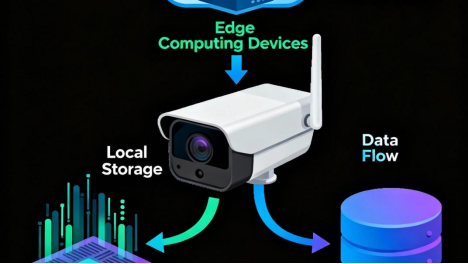
1. Explosion of AI-powered cameras
Typical applications:
· Smart surveillance cameras
· AI dash cameras
· Industrial vision inspection systems
Key characteristics:
· 4K/8K video streams
· Real-time AI inference + local caching
· Continuous 24/7 writing workloads
�� Requirements for MicroSD now include:
· High endurance write cycles
· Stable sustained performance
· Long-term reliability under continuous operation
2. Automotive and IoT expansion
Applications include:
· GPS trackers
· Fleet management systems
· ADAS-assisted recording systems
Key characteristics:
· Continuous recording with interruption recovery
· High-temperature environments (60–85°C)
· Zero-data-loss requirements
�� Result: Strong demand growth for industrial-grade MicroSD cards
3. Core shift in AI edge devices
AI is no longer centralized in the cloud:
· On-device inference
· Local caching
· Partial local training storage
This creates a fundamental shift:
Storage is becoming part of the AI system itself, not just an accessory.
4. Future Trends: Structural Segmentation of the MicroSD Market

After 2026, the MicroSD market is expected to split into three distinct layers:
1. Consumer-grade market (declining or stagnating)
Characteristics:
· Reduced smartphone/camera dependency
· Increasing cloud substitution
· Intense price competition
Trend: �� Commoditization and shrinking margins
2. High-performance consumer/professional segment (stable growth)
Applications:
· GoPro / action cameras
· Drones
· High-end imaging devices
Trend:
· Widespread adoption of UHS-II / UHS-III standards
· Driven by 4K/8K video content creation
3. Industrial / Edge AI storage (core growth engine)
This becomes the main growth driver:
Key applications:
· AI surveillance systems
· Automotive electronics
· Industrial automation
· Security systems
Core requirements:
· High TBW (total bytes written endurance)
· Wide temperature range (-40°C to 85°C)
· High data integrity and reliability
�� This represents the second growth curve of MicroSD.
Conclusion: MicroSD Is Evolving from Storage Media to AI Infrastructure Component
The essence of the 2026 industry can be summarized as:
NAND supply is being reallocated by AI, and MicroSD is being upgraded into an edge AI storage node.
Key trends over the next three years:
· AI continues absorbing major NAND capacity
· Consumer segment gradually declines
· Industrial and edge AI demand surges
· High-reliability MicroSD becomes the primary growth driver
메타데이터
- post_id
- bb355b2db9c3
- slug
- 2026-microsd-card-market-trends-the-super-storage-cycle-driven-by-ai-bb355b2db9c3
- url
- https://medium.com/@couchpotato0425/2026-microsd-card-market-trends-the-super-storage-cycle-driven-by-ai-bb355b2db9c3
- canonical_url
- https://medium.com/@couchpotato0425/2026-microsd-card-market-trends-the-super-storage-cycle-driven-by-ai-bb355b2db9c3
- author_url
- https://medium.com/@couchpotato0425
- status
- ok
- fetched_at
- 2026-07-08 21:45:35