From Paychecks to Ownership: A Practical Theory of Turning Labor Income into Capital
Most working people understand salary in a simple way. A job provides monthly cash flow. That cash flow pays rent, food, mortgage…
From Paychecks to Ownership: A Practical Theory of Turning Labor Income into Capital
Photo by charlesdeluvio on Unsplash
Most working people understand salary in a simple way. A job provides monthly cash flow. That cash flow pays rent, food, mortgage, transportation, education, insurance, and other daily costs. Savings protect the household from emergencies. A company also understands salary in a simple way, but from the opposite side. Payroll is a cost, yet it is also an investment. A firm pays employees because their labor, skill, judgment, and time can help create products, serve clients, improve operations, reduce risk, or generate profit.
This relationship looks ordinary because it happens every day. Yet there is a deeper economic structure behind it. A worker sells labor to receive cash flow. A company buys labor because it expects the return from that labor to exceed the cost. If the business did not expect that, the job would not exist for long. In this sense, wages are not only expenses. They are part of a company’s capital allocation decision.
The interesting question is what the worker should do after receiving wages. If all income is consumed, the person remains only a seller of labor. Even if the salary is high, the income still depends on future employment. A more durable wealth path begins when part of the paycheck is converted into ownership of productive assets. That ownership may come through broad market index funds, high-quality companies, private business interests, real estate, or other productive assets. The key idea is simple: labor income should gradually become capital ownership.
This article develops that idea into a practical framework. It is not a promise of easy wealth, and it is not a stock-picking formula. It is a way to understand why salary alone rarely creates financial independence, and why disciplined investment of surplus income can change the structure of a person’s financial life.
Salary Is Cash Flow, Not Wealth Ownership
A salary solves an immediate problem. It provides predictable cash flow. For most households, this is the foundation of financial stability. Regular income makes planning possible. It supports debt payments, family expenses, education costs, and everyday consumption.
But salary has a limitation. It is tied to work. The employee must continue to provide time, energy, skill, and availability. Even a well-paid professional faces this constraint. If work stops, salary usually stops as well. Bonuses and promotions may increase income, but they do not remove the dependence on employment.
Ownership works differently. A shareholder of a good business does not need to work inside that business to participate in its profits. A property owner does not need to personally operate every part of the rental market to receive rent. A holder of a broad market fund participates indirectly in the earnings of many companies. Capital income is not effortless, because risk and uncertainty remain, but it is less directly tied to one person’s daily labor.
This distinction matters because salary and wealth are often confused. A high salary can create wealth only if part of it is saved and invested. Without that conversion, income may rise while net worth remains fragile.
A simple formula captures the issue:

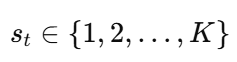
Here, W_t is wage income, C_t is consumption, and S_t is surplus income available for saving or investment.
The next step is more important:

Here, A_t is accumulated assets, and r_t is the return on those assets.
The long-term change does not come from salary alone. It comes from the repeated movement of surplus income into assets, and from the return generated by those assets over time.
Why Companies Pay Wages Instead of Just Buying Stocks
A company can use money in many ways. It can hire employees, buy equipment, develop products, acquire another business, repurchase shares, pay dividends, or invest in financial assets. When a firm chooses to pay salaries, it is making a judgment: the expected return from labor is higher than the alternative use of that cash.
That does not mean each employee is underpaid in a simple or unfair way. Wages are shaped by skill, labor market supply, bargaining power, industry structure, location, and the employer’s profitability. Some people are underpaid. Some are highly compensated. Many are somewhere near the market price for their role.
Still, the company’s logic is clear. Labor must create more value than it costs, otherwise the business model breaks. The difference between labor cost and business output becomes part of the firm’s gross profit, operating profit, or long-term enterprise value.
From the employee’s side, the same relationship can feel uneven. A worker may help build systems, serve customers, write code, sell products, manage risk, or improve operations. The company captures the scalable value of that work. The employee receives a fixed or semi-fixed wage. If the firm grows rapidly, shareholders may benefit far more than workers who only receive salaries.
This is not always exploitation in a crude sense. It is the basic structure of capitalism. Ownership has upside. Labor has income. The practical question is not whether this structure feels perfectly fair. A more useful question is how a worker can participate in both sides.
The Core Theory: Labor Income Capitalization
The idea can be called labor income capitalization.
The worker begins with labor income. After paying for life and maintaining a safety buffer, part of the remaining cash is used to buy ownership in productive assets. Over time, the person is no longer only a wage earner. The household balance sheet starts to include claims on business profits, market growth, dividends, rents, or other asset-based returns.
The process looks like this:

This is not a moral argument against companies. It is a practical response to how income is distributed. A person who only sells labor receives labor income. A person who also owns assets receives part of the return to capital.
This framework also avoids a common mistake. The goal is not to “take back” money from one’s employer. That language may sound emotionally satisfying, but it is not precise. The better goal is to reduce dependence on a single source of income. Buying high-quality assets is not revenge against a company. It is a way to participate in the broader system of enterprise ownership.
The strongest version of the theory is this:
Use wages for cash flow. Use surplus wages to buy productive assets. Use assets to reduce long-term dependence on wages.
What Happens When the Same Paycheck Goes into Different Buckets
The theory becomes clearer when we put numbers beside it. Suppose two workers earn the same income and both can save $6,000 per year after normal living expenses. The first worker keeps the surplus in a safe cash or GIC-style bucket. The second worker keeps an emergency reserve first, then invests the annual surplus into a broad market index fund.
This is not a prediction. Markets do not move in a straight line, and safe interest rates change over time. The example only shows how different asset buckets can produce different long-term wealth paths.
Assume the cash/GIC bucket earns 2.5% per year. Assume the broad market investment bucket earns 7.0% per year. Each worker contributes $6,000 at the end of every year. Taxes, fees, and inflation are ignored to keep the comparison clean.

The early years do not look dramatic. After five years, the difference is only about $3,000. This is why many workers underestimate the importance of asset allocation. The result feels slow at the beginning.
The gap becomes meaningful after ten years. By year twenty, the market investment bucket is almost $93,000 ahead. By year thirty, the difference is over $300,000, even though both workers saved the same $6,000 per year.
The lesson is not that everyone should put all money into stocks. The cash bucket is still necessary. It protects the household from job loss, medical costs, family emergencies, and forced selling during market downturns. The problem appears when the entire surplus stays permanently in low-return assets. Safety is useful. Permanent under-ownership is costly.
A better structure uses two buckets. The first bucket protects life. The second bucket builds ownership.

The working person needs both. Cash protects the present. Ownership changes the future.
Why “Good Companies” Still Require Price Discipline
Many people understand the idea of buying high-quality companies. They look for strong brands, growing revenue, high margins, durable products, excellent management, or leadership in a major industry. That instinct is reasonable. A poor company can destroy capital even when the overall market is strong.
But quality alone is not enough. A great company can still be a bad investment if the price is too high. Future return depends on both business performance and purchase valuation.
A simple stock selection framework can use four dimensions:

Here, Q represents quality, G represents growth, V represents valuation, and M represents momentum.
Quality may include return on equity, free cash flow, margins, balance sheet strength, and competitive advantage. Growth may include revenue growth, earnings growth, industry expansion, and reinvestment opportunity. Valuation may include price-to-earnings ratio, free cash flow yield, EV/EBITDA, or comparison with historical ranges. Momentum may reflect price strength, earnings revisions, or market confirmation.
This scoring model is not magic. It is only a discipline. The purpose is to avoid buying a company only because the story sounds attractive. Strong narratives often become dangerous when everyone already agrees with them.
A worker turning salary into capital should care about durability. The asset does not need to be exciting every month. It needs to survive cycles, compound value, and fit the investor’s risk capacity.
Broad Ownership Is Often Better Than Heroic Stock Picking
Some investors can analyze individual companies well. Many cannot, or they do not have enough time. A full-time worker may already spend most of the day earning income. Researching stocks after work can become inconsistent, emotional, or too dependent on news.
Broad market funds solve part of this problem. They allow a person to own a large group of businesses without needing to predict which firm will win next year. This is why a practical plan often starts with core assets rather than individual stocks.
One possible structure is:

The core may include broad index funds or diversified ETFs. Quality stocks can serve as a smaller return-enhancement layer. Cash provides flexibility and reduces forced selling during emergencies.
A moderate version might look like this:
70% core diversified assets 20% selected high-quality companies 10% cash or short-term reserves
A more aggressive person may use a larger individual-stock allocation. A more conservative household may hold more cash and bonds. The exact numbers are less important than the structure. Concentration should be intentional, not accidental.
This point matters for employees of excellent companies too. Someone working at Nvidia, Microsoft, Apple, Google, or another strong firm may naturally receive stock compensation or want to buy company shares. That can be reasonable. The danger appears when salary, bonus, career path, and investment portfolio all depend on the same company. If the business or industry turns down, both labor income and capital value may fall at the same time.
So the rule is not “never own your employer’s stock”. A better rule is:

The Worker’s Real Advantage Is Dual Participation
A worker should not think only like an employee. Nor should every worker pretend to be a professional investor. The realistic goal is dual participation.
On one side, the person improves labor income. Better skills, stronger industry knowledge, negotiation, job mobility, and practical productivity can raise wages. A larger surplus becomes possible when income grows faster than consumption.
On the other side, accumulated savings move into assets. Over many years, returns begin to matter more. At first, almost all progress comes from saving. Later, investment returns may become a major source of wealth growth.
This transition can be measured through one useful ratio:

At the beginning, the ratio may be near zero. After years of investing, it may reach 10%, 20%, or more. The exact number is not the point. The trend tells whether the household is still fully dependent on labor or gradually building a second engine.
This is where the theory becomes practical. A person does not need to quit a job to become less dependent on wages. Dependence declines as assets grow relative to annual spending.
A Practical Monthly System
A useful implementation can be simple.
When salary arrives, money can be divided into three buckets.
The first bucket covers normal living expenses. This prevents investing from becoming chaotic. Basic costs should not depend on whether the market had a good month.
The second bucket builds and maintains an emergency reserve. Six to twelve months of essential expenses is a reasonable range for many households. The number depends on job stability, family responsibility, debt, and health risk.
The third bucket goes into long-term investment. This should happen before lifestyle spending absorbs the surplus. Waiting until the end of the month often leads to inconsistent investing.
A basic rule could be:

Here, E_t is the amount needed to maintain the emergency reserve or cover planned short-term obligations.
Once the reserve is full, more surplus can move into long-term assets. The allocation may be automatic, monthly, or quarterly. Automation helps because it reduces the number of emotional decisions.
Every quarter, the investor can review four questions:
- Has the emergency reserve changed?
- Has income or spending changed?
- Has any single stock become too large?
- Are the original reasons for owning each asset still valid?
This review should be boring. A good system does not require constant drama.
The Risk of Turning a Good Theory into Bad Behavior
The labor income capitalization idea can be misused. Someone may hear “buy high-quality stocks” and start chasing popular names at extreme valuations. Another person may believe that investing is guaranteed to compensate for low wages. A third person may take too much risk because salary feels stable today.
The theory works only when risk control is included.
Three rules help.
First, emergency cash comes before aggressive investing. A forced sale during a market decline can damage years of progress.
Second, diversification protects the worker from overconfidence. Even excellent companies can disappoint.
Third, skill development remains part of the investment plan. Human capital is still the main asset for many workers, especially early in life. A better job, stronger skill set, or higher-value profession may increase investable surplus more than small differences in portfolio return.
This last point is often ignored. A person earning $70,000 and saving $5,000 per year may benefit more from raising income to $100,000 than from trying to increase portfolio return by two percentage points. Investment skill matters, but earning power creates the fuel.
Conclusion
The main problem with being a worker is not work itself. Productive work creates income, structure, skill, and social value. The problem is remaining only a worker forever. A household that relies only on wages has limited upside and concentrated income risk.
A better financial structure gradually combines labor income with capital ownership. Salary pays for life. Surplus income buys productive assets. Investment returns slowly reduce dependence on future paychecks.
The final lesson is practical:

This does not require heroic investing. It requires a repeated conversion of labor income into assets, with enough discipline to avoid concentration, overvaluation, and emotional decisions. Over time, the worker is no longer only selling time to companies. Part of the worker’s income begins to come from owning pieces of productive businesses.
That is the real meaning of making wealth distribution more reasonable at the personal level. It does not wait for a company to voluntarily share more upside. It uses the market to turn part of earned income into long-term ownership.
About me
With over 20 years of experience in software and database management and 25 years teaching IT, math, and statistics, I am a Data Scientist with extensive expertise across multiple industries.
You can connect with me at:
Email: datalev@gmail.com | LinkedIn | https://shenggang.substack.com
메타데이터
- post_id
- bb52788d076d
- slug
- from-paychecks-to-ownership-a-practical-theory-of-turning-labor-income-into-capital-bb52788d076d
- url
- https://medium.com/write-a-catalyst/from-paychecks-to-ownership-a-practical-theory-of-turning-labor-income-into-capital-bb52788d076d
- canonical_url
- https://medium.com/write-a-catalyst/from-paychecks-to-ownership-a-practical-theory-of-turning-labor-income-into-capital-bb52788d076d
- author_url
- https://medium.com/@datalev
- status
- ok
- fetched_at
- 2026-06-13 07:35:29