Node.js vs. Next.js: Selecting the Best Framework for App Development
In this evolving competitive digital world, mobile applications have become a trend since they are key for businesses that want to grow…
Node.js vs. Next.js: Selecting the Best Framework for App Development

Next.js vs. Node.js
In this evolving competitive digital world, mobile applications have become a trend since they are key for businesses that want to grow. However, it is tough to decide when choosing the best technology stack between Next.js Vs Node.js.
Both frameworks are popular for carrying out a streamlined development approach. Node.js & Next.js both have strong communities, but they are utilized for different goals. Both frameworks are considered a powerhouse because they boost efficiency & productivity. Various market surveys said that only 2% of global websites leverage Node.js, whereas Next.js is booming with modern-age capabilities. Read on the blog to find the truth.
The following blog will take you to the brief about JavaScript frameworks comparison- Next.js vs. Node.js. We’ll describe the crucial differences, benefits, and use case scenarios so that you can make a valuable decision. By the end of this blog, you will get a clear grasp of which framework Next.js vs. Node.js aligns with your mobile app development.
What is Next.js?
This open-source best framework for app development is used for the development of server-side React applications. This framework comes with a bundle of a comprehensive range of features & tools for designing scalable, high-performance & optimized web apps.
It’s popular as a versatile framework of Node.js Development Company since it has rendering techniques that integrate with React to build single-page apps. The Popular platforms that use this framework are Hulu, TikTok, Twitter, Nike, etc.
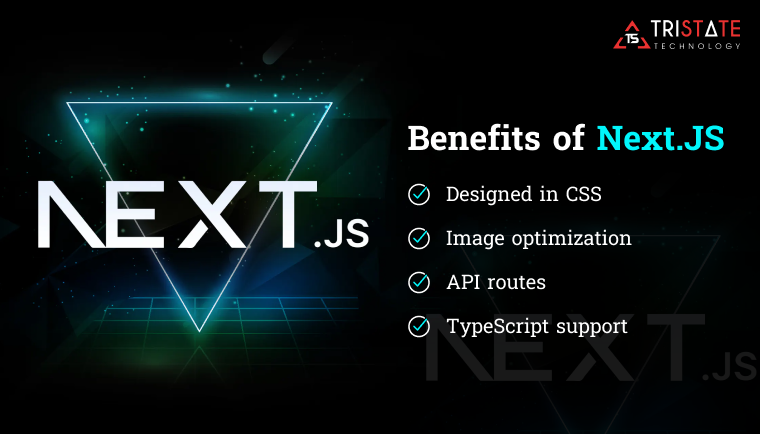
Benefits of Next.js
Benefits of Next.js
- Designed in CSS
The CSS data can be smoothly imported from the JS source by using Next.js. It further minimizes the overwriting & reduces the time taken to code.
- Image optimization
With the help of the latest version, the users can automatically optimize the images & components.
- API routes
Next.js enables the development of API routes with a page that helps to easily design the backend functionality within the same projects. It also streamlines the deployment & minimizes the overhead.
- TypeScript support
It offers optimal support for TypeScript, enabling developers to write type-safe code that catches earlier errors & boosts code maintenance.
Cons of Next.js
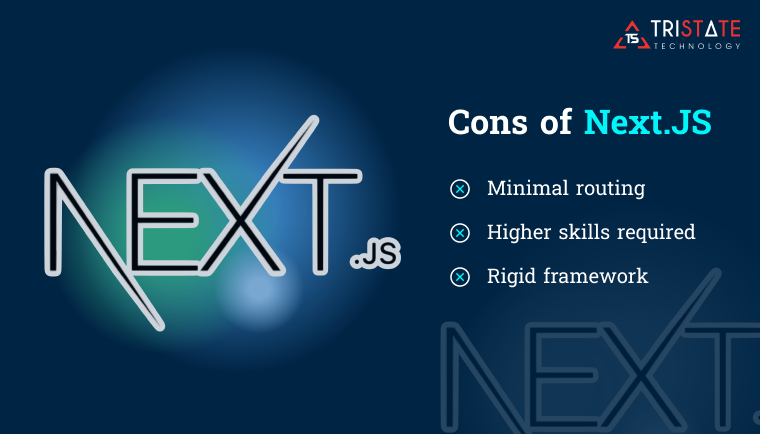
- Minimal routing
It utilizes basic page-based routing options that are convenient for designing easy applications but not suitable for complex applications.
- Higher skills required
To perfectly use this framework requires a highly professional & skilled programming expert to code.
- Rigid framework
It has a rigid framework, which means it prevents the developer from thinking outside of the box when it comes to integrating features.
What is Node.js?
Node.js is the open-source JavaScript framework that can run on the V8 JavaScript code and enable developers to generate server-side codes. It is compatible to run on popular platforms such as Linux, Unix, Windows, macOS & more.
Node.js for app development, is a completely free event-driven model which allows data-intensive & real-time applications. It works well in scenarios where API support is necessary for asynchronous data.
This single-threaded model enables the handling of concurrent connections, which makes it less time-consuming and more efficient on the server.
However, it could crash in programs where huge computing power is required. The most popular companies that use Node.js development services are Netflix, Trello, Walmart, Twitter & Uber, etc.
Also Read: Why Node.JS is the best for Enterprise App Development?
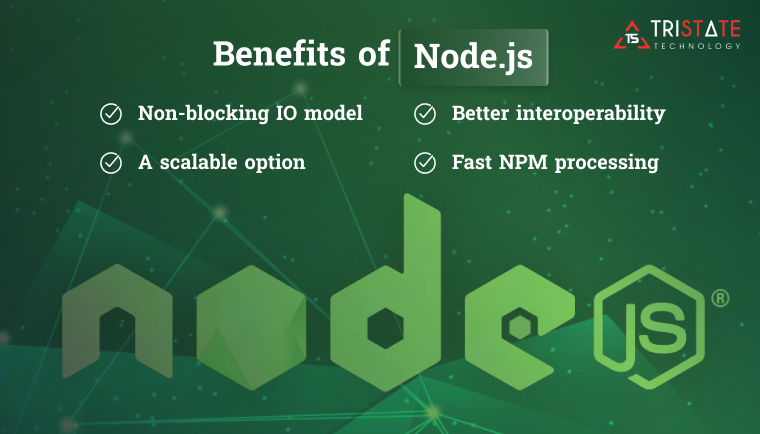
Benefits of Node.js
Benefits of Node.js
- Non-blocking IO model
Node.js is able to run on a single thread, delivering huge productivity, better flexibility & superior performance. It allows a smart execution timeline, which is a better option for live applications.
- A scalable option
The single-threaded architecture allows Node.js to concurrently handle multiple connections while handling horizontal scaling. It is suitable for developers to divide their applications into easier and smaller to manage scenarios.
- Fast NPM processing
Node.js allows faster processing by classifying the codes into cohesive, manageable, and smaller bits that ultimately improve the UI/UX process.
- Better interoperability
Node.js developers use JavaScript for both the server & client-side code. Furthermore, it improves the development lifecycle, speed & performance.
Cons of Node.js
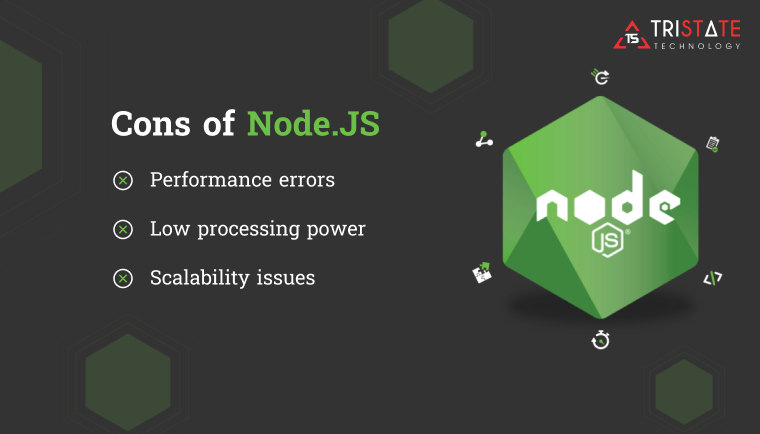
- Performance errors
Developing an app requires a lot of CPU power, but Node.js has a single-threaded loop architecture. So, it can hinder performance.
- Low processing power
Another drawback is the low processing power of single-threaded behavior. It impacts the efficiency of the app & hampers productivity during the development process.
- Scalability issues
Since this is a single-thread architecture, it might hinder developers from designing the best multi-core processors and doesn’t support vertical scaling.
Next.js vs. Node.js: Understand the brief difference in their functionality
If you want to understand the Next.js vs Node.js comparison, it is necessary to have a brief understanding of their functionality & roles within the development procedure. What to choose between Next.js vs. Node.js is based on the project need. Both frameworks offer exceptional functionalities & benefits with dynamic scope.
However, here we share brief differences in Next.js vs. Node.js based on multiple project factors. Based on these factors, decide which is better Next.js or Node.js for app development.
1. Key functionalities
Next.js streamlines mobile app development by expanding React &Node.js’ features. It consists of features such as server-side rendering, which is capable of routing, TypeScript support server-side rendering, etc.
On the other hand, Node.js enables JavaScript coding to run outside of web browsers. It allows us to balance input/output tasks that include file access, network requests, and event-driven programming.
2. Usage
Next.js is widely utilized for web applications based on the client side, along with other server-side rendering capabilities. With the help of Next.js, businesses can design and develop SEO-friendly, optimized-performance websites.
Node.js is useful for a huge number of applications, including server-side scripting, Command-line tool development & API building.
3. Capacity
Next.js is concerned with the utilization of the React framework to build server-side rendering with static-generated web applications. Next.js is popular for developing client-side web applications & delivering native server-side rendering capabilities with streamlined optimization.
On the other side, Node.js is used for the server-side execution of JavaScript coding, which makes it simple to design the various applications.
4. Application & Implementation
Next.js has improved server-side rendering features that are mostly employed for developing client-side web applications. It is popular for developing online applications which are optimized for performance & search engines.
On the other hand, Node.js is used for API development, command-line tools development, backend development, and server-side scripting.
5. Development Framework
Next.js offers hybrid development by collaborating with the execution of JavaScripton the client side. Talking about Node.js, JavaScript is useful for server-side implementation.
6. Routing System
Next.js delivers in-built file-based routing, which assists in streamlining the navigation & complete code organization. On the contrary, Node.js is a built-in routing system that uses frameworks like Express.js for robust routing.
7. Community support
Next.js has an increasing number of communities that are equipped with advanced knowledge and increasing resources. It helps a number of developers stay alert about the latest developments.
On the other side, Node.js featured an advanced community, extensive resources & superior support.
8. Organizing Code & File System
Next.js uses a well-defined structure for files to boost the upkeep & administration. Node.js offers a flexible file system & code organization. This is all about what is the difference between Next.js and Node.js?
Also Read: The Comprehensive Details of NextJS for a Well-versed Tech Future
When to choose Next.js vs. Node.js?
When choosing between Next.js vs. Node.js for backend development requirements, you must know when to use it.
Node.js is the ideal option when you require a powerful JavaScript runtime that enables streamlining the handling of server-side logic & building robust applications. The event-driven architecture verifies scalable options for large-scale operations. It has huge frameworks & libraries that allow developer versatility & flexibility.
Businesses can use Next.js to simplify the methods of rendering by generating HTML requests, resulting in efficient loading & increased SEO capabilities.
Furthermore, you must know businesses can use both Node.js & Next.js together in multiple scenarios. You can utilize Node.js for backend scenarios, whereas Next.js is used for client-facing components.
The decision to choose Next.js vs. Node.js is based on the specific need & project goals. When deciding on a factor, look for technology differences, scalability requirements, development preferences, routing needs, and others.
What to choose between Next.js vs. Node.js?
Next.js is comparatively new compared to Node.js vs. Next.js. To understand what to decide between 2 frameworks, you must be aligned with the necessary details of structure, functional flow & interface.
Next.js is the right approach to make if you want to develop simple & complex rendered React components, Static React web pages & SSR apps. It is widely useful for designing & developing an SEO-friendly website. However, in some scenarios, you can Hire Node.js Developers when finding Node.js is the only choice.
However, it is according to your project goals & needs. If you give priority to server-side rendering & faster development, then Next.js is the best choice. However, if you want to control the server side and effective real-time data, Node.js is popular as the scalable and flexible option.
Wrapping up
It’s hard to find a precise response to what is best: Next.js vs. Node.js. In the end, both frameworks provide useful methods and resources for web development. Specific demands, scope, desired features, and developer opinions all influence the decision.
The server-side rendering & React integration features of Next.js may be more advantageous for some applications than others. Some may choose Node.js due to its cross-platform compatibility and appropriateness for developing real-time apps or APIs.
Although there are several alternatives to Next.js & Node.js, developers use them because of their vast USPs.
Ultimately, when it comes to web development, the framework and runtime both provide excellent tools and solutions. A few considerations, including features, size, functions, etc, will play a role in choosing between the two.
Such services are provided by several web development service providers, and you can talk with them to learn which framework matches your project goals.
메타데이터
- post_id
- bb66adcb4bec
- slug
- node-js-vs-next-js-selecting-the-best-framework-for-app-development-bb66adcb4bec
- url
- https://medium.com/@tristate/node-js-vs-next-js-selecting-the-best-framework-for-app-development-bb66adcb4bec
- canonical_url
- https://medium.com/@tristate/node-js-vs-next-js-selecting-the-best-framework-for-app-development-bb66adcb4bec
- author_url
- https://medium.com/@tristate
- status
- ok
- fetched_at
- 2026-07-22 16:53:25