What is Populism? Widespread Unhappiness and the Will to Power
TL;DR: Denying popular discontent or opposing viewpoints is a bad idea, if we believe the Greeks.
What is Populism? Widespread Unhappiness and the Will to Power
TL;DR: Denying popular discontent or opposing viewpoints is a bad idea, if we believe the Greeks.
What is the Will to Power? At its roots, it can often be seen in nature as the drive for living things to live and grow. In Greek myth, trying to cage or conquer nature has never gone well for mankind. In Homer’s Odyssey, Tiresias, the blind seer, warns Odysseus. He tells him in a prophecy not to harm the sacred cattle of Helios, the sun god, on his quest to return home to Ithaca:
“When you have come to the island Thrinakia you will find there grazing the cattle and fat sheep of Helios, whom the all-seeing Sun God keeps for his own delight. If you only hold your temper and keep your hands away from them, you may all make your way back to Ithaka, after much hardship. But if you injure them, I foretell to you ruin for your ship and your companions, and even if you yourself get clear, you will come home late, in bad case, with all your companions lost, in a ship that is a stranger’s, and you will find affliction in your house.”
-Homer, The Odyssey, Book 11
In Greek tragedy, the concept of páthos (πάθος), or heroic suffering, is shown here in the form of destiny, divine retribution, and cosmic harmony. The tragic meaning of pathos is “that which unfolds or befalls”, or “things will happen as they must” (in the world of Greek myth). While today many do not believe in the concept of destiny, the inexorable drive of the plot of the universe is what drives many Greek plays and myths.
Odysseus and his men become stranded on an island during a storm and run out of food. The island is inhabited by the sacred cattle during his voyage, and Odysseus recounts Tiresias’ warning to his crew. They ignore the prophecy and give in to hunger, slaughtering the cattle and eating them. Zeus fulfills the prophecy by sending a thunderbolt down, killing the men and destroying Odysseus’ ship.
To me, literature and history are often a prophecy. When we read things from the past, it’s almost like we are consulting the oracle at Delphi, who imparts wisdom from the all-seeing god Apollo as in a dream. It’s almost like the spirits of our elders are warning us and trying to tell us the lessons from the past, and as humans we always seem to ignore their warnings and history seems to repeat itself despite this. Why? We decide that history is boring and old, it happened a long time ago, and is no longer relevant. However, we ignore reoccurring patterns and the Will to Power of culture at our own risk.
Odysseus’ men suffer the unfolding of pathos, in that they try to deny the natural order of the world and are destroyed as the plot of the universe punishes them for their cosmic crime. When we talk about populism, we talk about human nature. When we try to ignore the will and feelings of the masses, we find that human nature reacts to any suppression of their desires and their own unhappiness by attempting simply to express their own Will to Power as it exists in their own human nature. Within ourselves, we may hold a version of the driving force of the universe, if we are part of the fabric of reality.
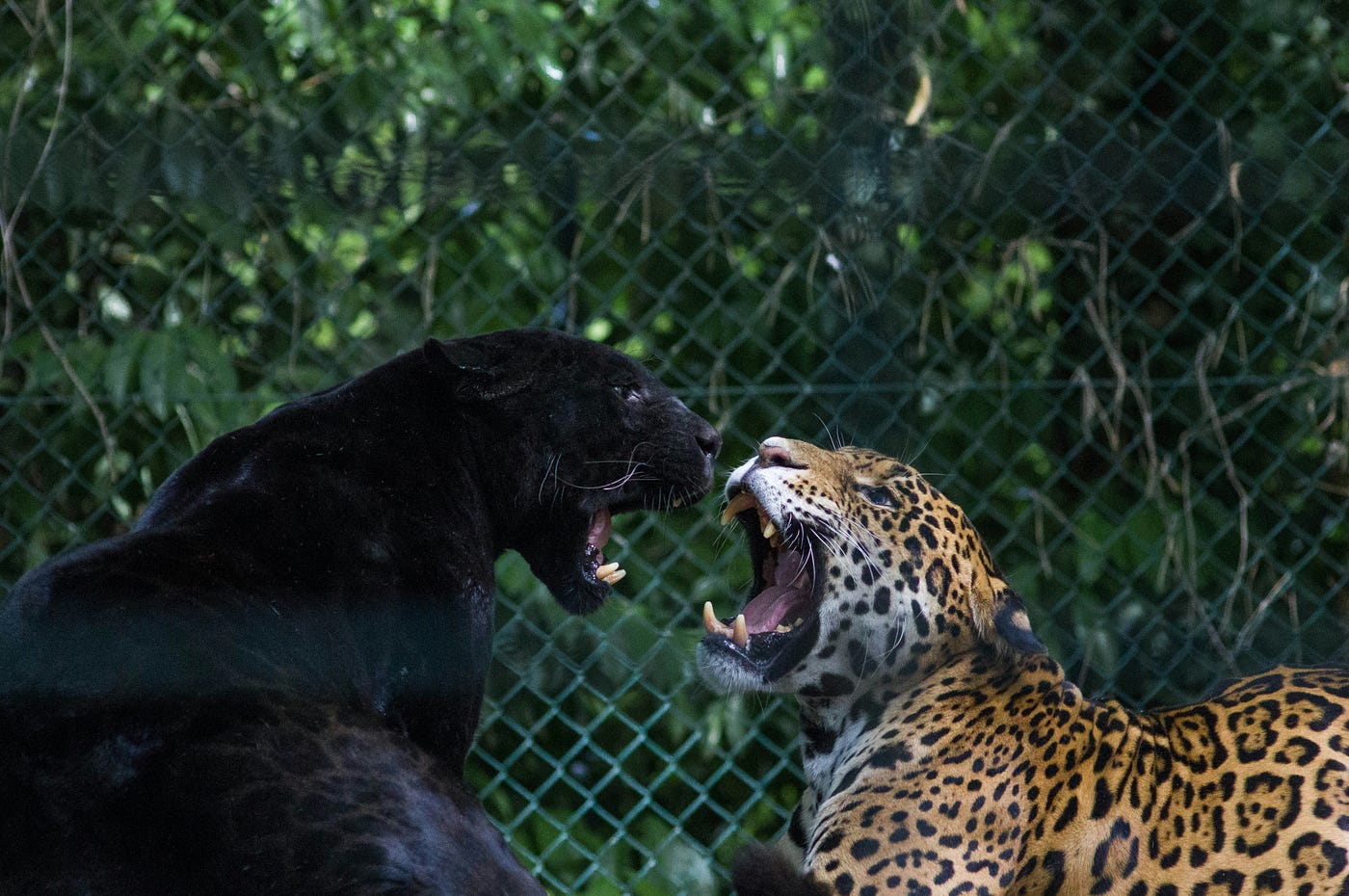
Dionysus, the god of wine and revelry, often embodies pathos in personified form. Dionysus is the embodied suffering and striving of the natural world and of the cosmic order. Dionysus also represents the Will to Power as a popular cultural force. The procession of Dionysus (his pompeˊ) arrives in the form of satyrs and maenads (goatlike creatures and insane female followers). Dionysus also arrives accompanied by various animals, like panthers, snakes, and boars. Dionysus and his followers arrive adorned with both poison ivy and vines. The maenads strike the ground or rocks with their wands (thyrsus) and draw wine, milk, and honey from the earth as if by magic.
Dionysus draws more followers wherever he goes and in whichever city he enters in myth. Whenever he enters a place he demands that we recognize his presence and legitimacy. Attempting to suppress or deny him results in the god asserting himself: The Sparagmos or ritual dismemberment of the denier by the mob driven mad by Dionysus. Dionysus expresses himself in a form that appears cruel and lacks restraint, and the sparagmos also represents the loss of individuality into a primordial unity or within the crowd or mob.
Dionysus arrives in the form of a foreigner from the East of Greece (now modern day regions like Turkey and India). He represents all that is alien to the ordered, measured, and “civilized” world of Greek city-states like Thebes or Athens. He arrives as a disguised, effeminate stranger dressed in robes and with long hair. He challenges the moral, militaristic, and ordered world of people like King Pentheus in a chapter of the myth of Dionysus as told by Euripides. In this case the king denies the will of the people as they desire to be free and revel, at least for a time, when Dionysus arrives in their city.
King Pentheus is the main antagonist in the Bacchae by Euripides, who attempts to deny the legitimacy of Dionysus once he and his cult demand official recognition when he arrives in Thebes. The inhabitants of the city start to adorn robes and drink wine, and join in the revelry in ecstatic dance. Even elders like aforementioned Tiresias and King Pentheus’ grandfather engage in the ecstatic dance of the cult and ritual of Dionysus, get drunk on wine and lose their identities and become one with mob or procession:
But here is another wonder — I see Teiresias the soothsayer in dappled fawn-skins [250] and my mother’s father — a great absurdity — raging about with a thyrsos. I shrink, father, from seeing your old age devoid of sense. Won’t you cast away the ivy? Grandfather, will you not free your hand of the thyrsos? [255] You persuaded him to this, Teiresias. Do you wish, by introducing another new god to men, to examine birds and receive rewards for sacrifices? If your gray old age did not defend you, you would sit in chains in the midst of the Bacchae, [260] for introducing wicked rites. For where women have the delight of the grape-cluster at a feast, I say that none of their rites is healthy any longer.
Chorus Leader Oh, what impiety! O stranger, do you not reverence the gods and Kadmos who sowed the earth-born crop? [265] Do you, the child of Echion, bring shame to your race?
-Euripides, “Bacchae”, The Tragedies of Euripides. T. A. Buckley, Ed., Vol. I, Perseus Digital Library, Henry G. Bohn, 1850, Lines 215–265, http://data.perseus.org/citations/urn:cts:greekLit:tlg0006.tlg017.perseus-eng1:215-265.
The chorus leader here speaks for the group: “You are denying the reality and existence of the god of things begot from nature”. Even esteemed figures like famed Teiresias and those with important social roles, lose their identities and become one with the masses, mingling with the everyday man and woman in the crowd of revelers. Is the importance of feeling one with the ordinary person or at least understanding them by becoming one of them not important?
One of the most fascinating parts of the cult of Dionysus is the Sparagmos, or ritual dismemberment. An example of this can be seen in the Bacchae, once King Pentheus is lured into the wilderness by Dionysus. Dionysus is imprisoned by the King but escapes, and Pentheus attempts to pursue him. King Pentheus is the main antagonist in The Bacchae by Euripides, where he plays the tyrant king or curmudgeon, who believes the men of the city should be soldiers and women should stay in their homes. However, he is ripped limb from limb by his own mother as punishment by Dionysus for the denial of his divinity. Agave (his mother) and her two sisters are driven mad by the god and infused with divine enthousiasmós, or strength and vigor:
But she, foaming at the mouth and twisting her eyes all about, not thinking as she ought, was possessed by Bacchus, and he did not persuade her. [1125] Seizing his left arm at the elbow and propping her foot against the unfortunate man’s side, she tore out his shoulder, not by her own strength, but the god gave facility to her hands. Ino began to work on the other side, [1130] tearing his flesh, while Autonoe and the whole crowd of the Bacchae pressed on. All were making noise together, he groaning as much as he had life left in him, while they shouted in victory. One of them bore his arm, another a foot, boot and all. His ribs were stripped bare [1135] from their tearings. The whole band, hands bloodied, were playing a game of catch with Pentheus’ flesh.
His body lies in different places, part under the rugged rocks, part in the deep foliage of the woods, not easy to be sought. His miserable head, [1140] which his mother happened to take in her hands, she fixed on the end of a thyrsos and carries through the midst of Kithairon like that of a savage lion, leaving her sisters among the Maenads’ dances. She is coming inside these walls, preening herself [1145] on the ill-fated prey, calling Bacchus her fellow hunter, her accomplice in the chase, the glorious victor — in whose service she wins a triumph of tears.
Euripides, “Bacchae”, Lines 1114–1152, http://data.perseus.org/citations/urn:cts:greekLit:tlg0006.tlg017.perseus-eng1:1114-1152
When liberals ignored the reality of inflation and popular discontent, they did so at their own peril and lost the last US election. They tried save the world, and painted everyone else as boogiemen and irrational “Others”. If we simply read different forms of expression as varying manifestations of competing wills to power, we can see that suppression can sometimes just cause a drunken reveler to strike their wand to the ground, and make it spring up wine, milk, and honey, in accordance to the irrepressible forces of the cosmic order of things, and nature just continues to assert itself. This is simply the natural order of things: the masses expressing their dissatisfaction in the form of populist upheaval.
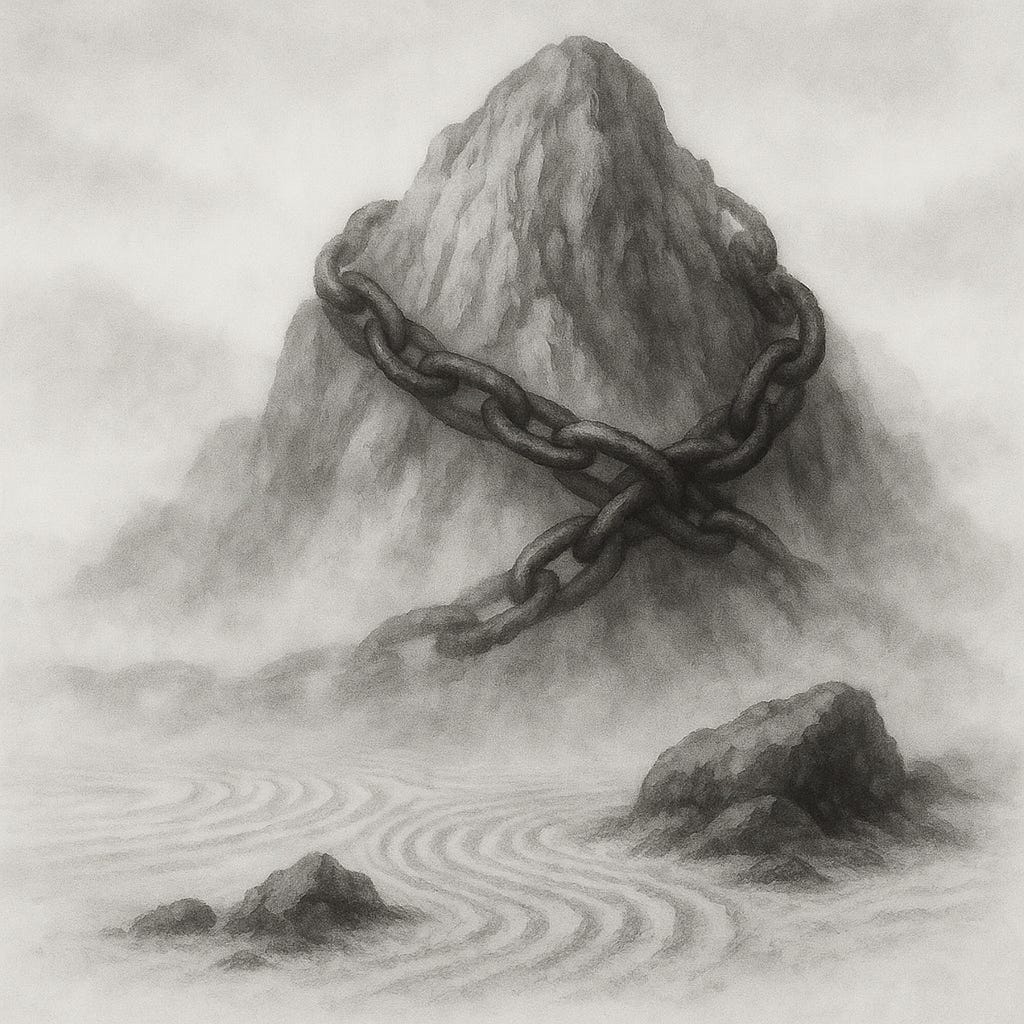
Modern news exhibits the characteristic of an echo chamber. News outlets do not want to talk about opposing viewpoints, and attempt to deny them any legitimacy or discussion at all. The reason for this is that Socratic debates don’t sell, and people don’t want to hear things they disagree with. It’s much easier to find comfort in our individual identities and ideologies as we float adrift on it as a raft or refuge among the chaotic sea of existence. However, we must not ignore the cries and suffering of the people. Democracy is beautiful because everyone has a voice, and ignoring that voice runs the risk that our society be torn apart by itself, by the nature of the chaos of reality, like the waves of the sea of existence or like a ritual sparagmos of Dionysus. We can celebrate the absurdity and inertia of the forces of chaos. The cosmos will push forward with or without us, and we can attempt to deny reality at our own risk, or we can try to find a way to make the journey livable and suffering easier to bear.
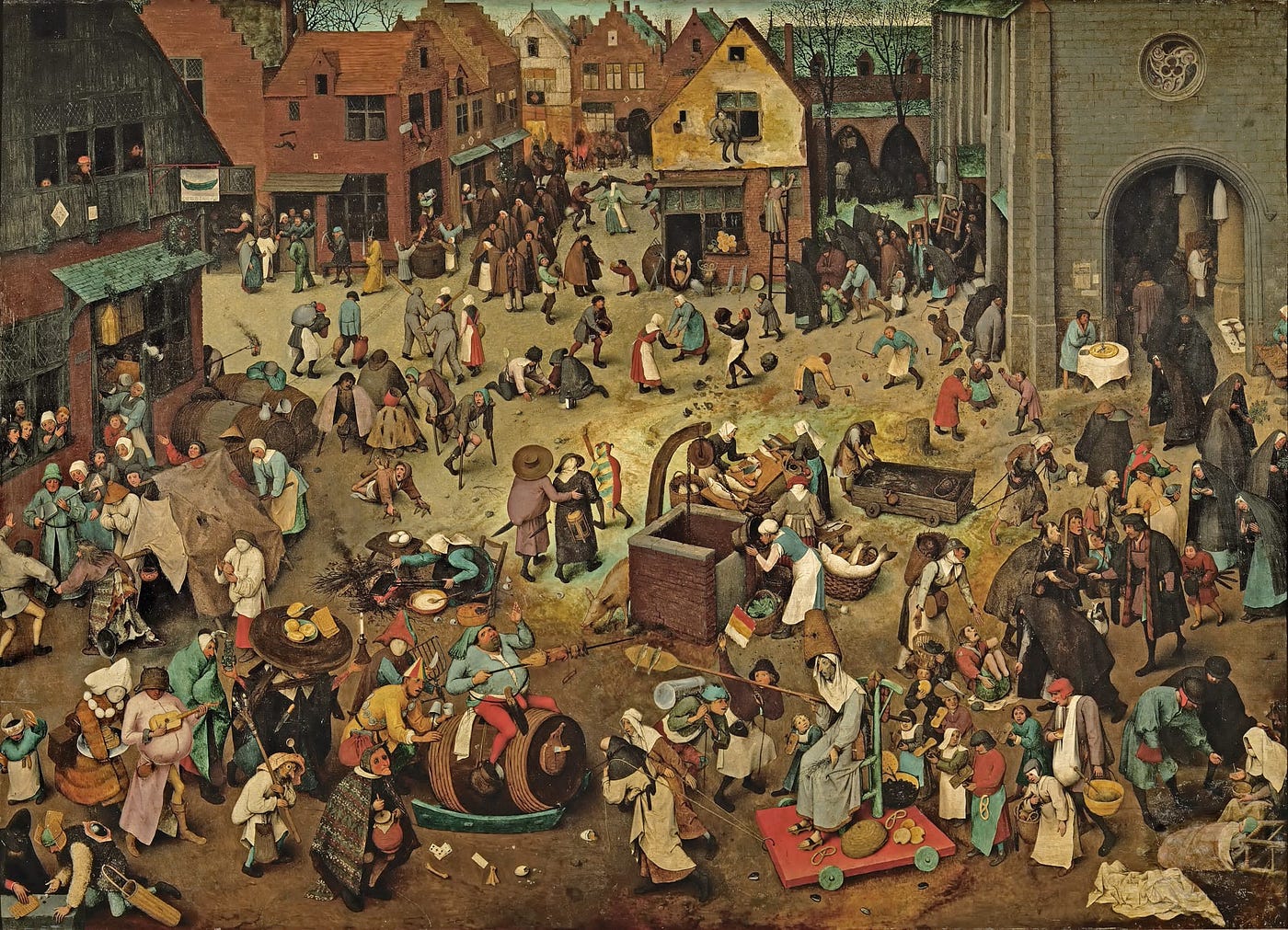
This painting shows the tension between Reason and chaos, or Folly and civic order and morality. The Fight Between Carnival and Lent, Pieter Brueghel the Elder, Public domain, via Wikimedia Commons
메타데이터
- post_id
- bb70d09429fc
- slug
- what-is-populism-widespread-unhappiness-and-the-will-to-power-bb70d09429fc
- url
- https://medium.com/@framedways/what-is-populism-widespread-unhappiness-and-the-will-to-power-bb70d09429fc
- canonical_url
- https://medium.com/@framedways/what-is-populism-widespread-unhappiness-and-the-will-to-power-bb70d09429fc
- author_url
- https://medium.com/@framedways
- status
- ok
- fetched_at
- 2026-08-03 22:09:20