The Workers’ Party’s Tardy Reckoning: Reactive Discipline or Genuine Accountability?
In the ever-evolving landscape of Singaporean politics, the Workers’ Party (WP) has long positioned itself as a beacon of integrity and an…
The Workers’ Party’s Tardy Reckoning: Reactive Discipline or Genuine Accountability?
In the ever-evolving landscape of Singaporean politics, the Workers’ Party (WP) has long positioned itself as a beacon of integrity and an alternative to the dominant People’s Action Party (PAP). Yet, recent developments surrounding party leader Pritam Singh’s conviction raise uncomfortable questions about the opposition’s commitment to self-policing.
On January 3, 2025, the WP announced the formation of a disciplinary panel to investigate whether Singh breached the party’s constitution following his conviction for lying to a parliamentary committee. This move, while ostensibly a step toward accountability, feels suspiciously belated — prompting speculation that it’s more a response to external pressure than an internal drive for justice.
Let’s rewind to the crux of the matter.
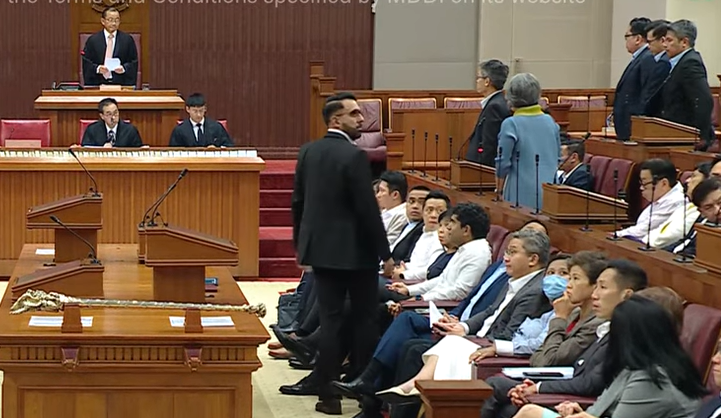
Singh was convicted on December 4, 2024, on two counts of providing false testimony to the Committee of Privileges (COP), stemming from the infamous Raeesah Khan saga. Khan, a former WP MP, had lied in Parliament about accompanying a rape victim to a police station — a falsehood Singh allegedly encouraged her to maintain before later advising clarification.
The court fined him $14,000, upholding the charges despite his appeals. The WP’s constitution, which Singh himself invoked in 2023 when ousting two members over an extramarital affair, explicitly demands “honesty and frankness” in dealings with the party and the public. By any reasonable standard, Singh’s conviction appears to flout these principles.

So why did the WP wait nearly a month to initiate this disciplinary process?
The timeline is telling. Singh’s conviction came down on December 4, but the Central Executive Committee (CEC) only convened on January 2, 2025, to discuss it — conveniently after Leader of the House Indranee Rajah, a PAP stalwart, publicly lambasted the case’s “disturbing” facts on December 17 and flagged an upcoming parliamentary debate on January 12.

This sequence suggests the WP’s action isn’t proactive governance but a defensive scramble. Had the party truly prioritized accountability, the panel could — and should — have been formed immediately post-conviction. Instead, this delay paints the WP as reactive, only springing into action when the PAP’s spotlight intensified the scrutiny. It undermines the opposition’s narrative of moral superiority and risks eroding public trust at a time when Singaporeans crave genuine alternatives.
Complicating matters is the role of Sylvia Lim, the WP’s chairwoman and a key figure in the CEC.
Lim herself was entangled in the COP inquiry, with sanctions deferred pending the outcome of related investigations. As the one confirming the request for a special cadre members’ conference — signed by over 20 cadres and potentially aimed at debating Singh’s leadership — Lim’s involvement in overseeing the disciplinary process raises eyebrows.
Is she truly impartial, or does her own history in the scandal create a conflict of interest? The WP prides itself on transparency, yet deferring the conference until after the panel’s three-month review feels like stalling. Lim’s stewardship here demands closer examination: If the party is serious about renewal, shouldn’t she recuse herself to avoid any perception of bias?

This episode also spotlights a broader generational question for the WP.
With Singh’s leadership now under a cloud and Lim’s tenure potentially tainted by association, is it time for fresh blood to steer the ship? Jamus Lim, an economist with a knack for articulate, data-driven critiques of government policy, has earned plaudits for his parliamentary interventions on issues like inequality and education. He Ting Ru, a lawyer with a focus on environmental and social justice, brings a progressive edge that resonates with younger voters. Both represent the WP’s future — energetic, ideologically diverse, and unburdened by the baggage of past scandals.

Handing the reins to figures like Jamus and He Ting Ru could invigorate the party, signaling a commitment to evolution rather than entrenchment. The WP has historically thrived on its underdog appeal, but clinging to compromised leadership risks stagnation. A special cadre conference, if it finally materializes, could be the perfect forum to debate this transition. After all, Singapore’s opposition landscape needs vitality, not vulnerability.
In the end, the WP’s disciplinary panel might deliver justice, but its timing reeks of political expediency.
For a party that critiques the establishment’s flaws, it’s a stark reminder: True accountability starts at home, and sooner rather than later. If the WP fails to seize this moment for introspection and renewal, it may find itself sidelined not by the PAP, but by its own reluctance to change.
메타데이터
- post_id
- bb7143e3a77e
- slug
- the-workers-party-s-tardy-reckoning-reactive-discipline-or-genuine-accountability-bb7143e3a77e
- url
- https://medium.com/@phoebeloh/the-workers-party-s-tardy-reckoning-reactive-discipline-or-genuine-accountability-bb7143e3a77e
- canonical_url
- https://medium.com/@phoebeloh/the-workers-party-s-tardy-reckoning-reactive-discipline-or-genuine-accountability-bb7143e3a77e
- author_url
- https://medium.com/@phoebeloh
- status
- ok
- fetched_at
- 2026-08-11 06:16:31