Mental Fabrication 2.0
Buddhist philosopher, Nagarjuna, taught that all phenomena are “empty.” This may strike many Theravada Buddhists as an odd idea. The Pali…
Mental Fabrication 2.0
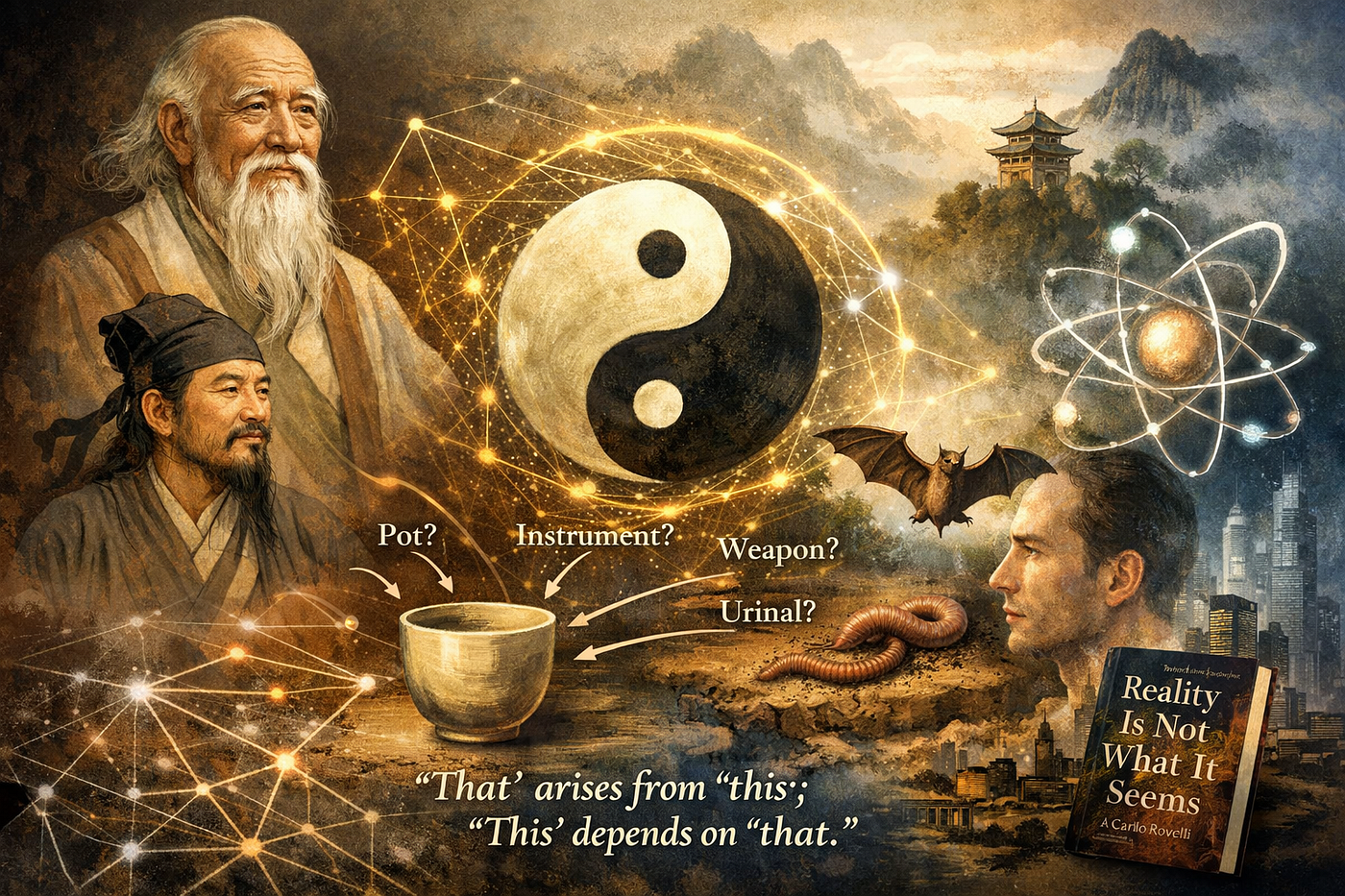
Buddhist philosopher, Nagarjuna, taught that all phenomena are “empty.” This may strike many Theravada Buddhists as an odd idea. The Pali Canon seems to refer to phenomena in concrete and absolute terms. Yet, even in original Buddhism, there is the important teaching of the Five Aggregates, with “Mental Formation” being one of them. Unfortunately, most Buddhists are not aware of its immense implications. This essay is an attempt to elaborate on how “reality” is manufactured.
I grew up in a culture where people frequently claimed to see ghosts and spirits. But the debate over what is real and what is imagined stretches far beyond my hometown. Across the globe, people argue about the existence of paranormal phenomena, from Bigfoot and UFOs to the Bermuda Triangle and the Loch Ness Monster. In 2015, the “Dress” controversy took social media by storm, with people divided over whether a photo of a dress was blue and black or white and gold. While some debates seem trivial, others have far-reaching consequences.
Take the case of the Slender Man stabbing in 2014 in Waukesha, Wisconsin. Two 12-year-old girls, Morgan Geyser and Anissa Weier, lured their friend Payton Leutner into the woods and stabbed her 19 times. The girls believed they had to kill Payton to prove their loyalty to Slender Man, a fictional character from the internet. The attack was premeditated, leaving Payton for dead, but she survived. This horrifying act raised important questions about the impact of internet culture, mental illness, and the responsibility of minors in violent acts.
Beyond these dramatic headlines, religious communities also wrestle with the reality of concepts like heaven, hell, the afterlife, and reincarnation. In today’s world, people frequently question whether these beliefs should be understood literally or figuratively. But before we even ask these questions, we need to ask: What do we mean by “real”?
In this essay, I will argue that reality, at its core, is fundamentally personal. In addition, it is the result of our mental formation. Our perception of the world is shaped by our individual experiences, biases, and cognitive frameworks, making reality a unique construct for each person. Here are several key points to explore this idea:
1. Reality Is What We Perceive
Reality begins with perception. Each of us experiences the world through our senses, interpreting stimuli in ways that are entirely unique to us. A vibrant sunset to one person might be seen as simply a shift in daylight to another. This subjective experience is the foundation upon which we build our understanding of reality. What we perceive becomes our reality, and it’s influenced by our unique cognitive makeup and sensory interpretation.
2. The Influence of Top-Down Processes
Our perception is not just a passive reflection of external stimuli; it is shaped by top-down processing — the way our brain interprets information based on prior knowledge, beliefs, and experiences. This means that two people witnessing the same event may interpret it in completely different ways depending on their backgrounds and emotional contexts. For example, someone who has had positive experiences with dogs might interpret a barking dog as playful, while someone with negative experiences might see it as a threat. Our internal frameworks act as filters, shaping how we experience the world. Similarly, a soldier suffering from PTSD might hear fireworks and interpret them as gunshots or explosions. These differences illustrate how personal history and mental states shape the way we experience reality.
3. Subjective Experience of Reality
Reality is inherently subjective. Our mental frameworks, shaped by personal history and emotional experiences, mean that no two people experience the world in exactly the same way. Our interpretation of events is deeply personal, and this makes our reality something we each create from the inside out. Take Morgan Geyser’s experience, as documented by investigative journalist Kathleen Hale. As a child, Morgan reported hearing voices and seeing colors and figures that no one else could perceive. She described one such figure, Sev, an anime-like character who seemed fully real to her, even feeling his heartbeat. This illustrates that what Morgan experienced was undeniably real to her, even if it wasn’t shared by anyone else.
4. Heaven and Hell as States of Personal Reality
In light of this, concepts like heaven, hell, angels, and demons can be understood as states of subjective reality. These aren’t necessarily fixed places but rather states of emotional or psychological experience. For some, heaven might be a state of bliss or fulfillment, while hell could represent suffering, despair, or regret. These realms can be understood as psychological conditions, shaped by personal experiences and emotional states. A person’s emotional well-being, for example, can feel like their own personal heaven, while feelings of guilt or isolation might feel like hell. This framework allows us to understand these concepts as deeply personal rather than objective realities.
5. The Role of Karma
The concept of karma — the law of cause and effect — plays a central role in shaping personal realities. Karma suggests that our actions, choices, and intentions have consequences that ripple through our lives, creating a continuous cycle that shapes our experiences. In the context of subjective reality, karma reinforces the idea that our present reality is influenced by our past actions. Positive actions may lead to fulfilling experiences, while negative actions can result in hardship. Karma, therefore, isn’t just a moral or spiritual principle; it’s a powerful force shaping how we perceive and engage with the world. Our past decisions are reflected in the present realities we encounter.
6. Overlapping Realities
While our individual realities are shaped by personal experiences, shared cultural frameworks mean that many of our realities overlap. We may each have a unique perspective, but the common experiences of being human — cultural norms, societal values, and collective history — create points of intersection. For example, a belief in heaven or hell might be interpreted differently across cultures, but the underlying emotional and psychological themes of fulfillment and suffering are common threads in many people’s lives. These overlapping realities create a collective framework in which we can connect with others while still maintaining our personal perspectives.
7. Insights from Augmented Reality
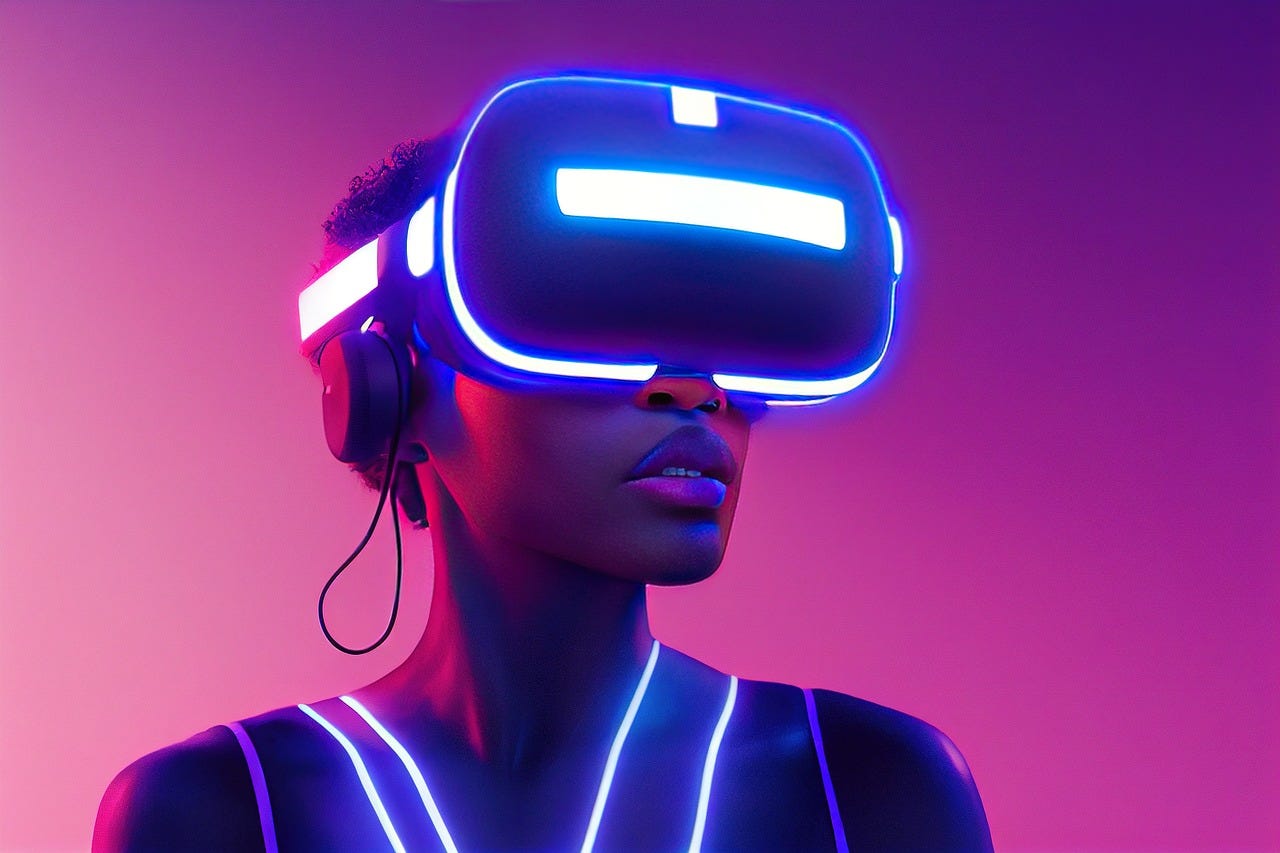
The way our top-down processing shapes our perception of reality is remarkably similar to how we create augmented reality (AR) through technology. Both involve taking external stimuli and interpreting, altering, or overlaying them with a filter that’s shaped by prior knowledge, experiences, beliefs, and expectations. The process of blending the real world with an added layer of meaning or enhancement is central to both our cognitive experience and how we use technology to craft new, interactive environments.
(a) Filtering and Interpreting Information: At the core of top-down processing is the idea that we don’t just passively receive information from the world around us. Instead, we actively filter and interpret that information based on our previous experiences, beliefs, and mental frameworks. Our brains take raw data from our senses and apply a “filter” that makes sense of it, shaping it into a version of reality that is unique to each individual.
In the same way, augmented reality (AR) takes real-world inputs — like the view through a camera — and overlays digital elements onto it. The technology “filters” the real world through algorithms and contextual data to enhance it with virtual objects, text, or images. For instance, an AR app may superimpose navigation directions onto the view of a street or display an interactive character in your room. Just as top-down processing helps us interpret reality through a personalized lens, AR creates a filtered or enhanced version of the world, adding context, meaning, and interaction to the raw reality around us.
(b) Layering Meaning Over Reality: Top-down processing works by adding meaning to sensory information, often based on expectations or pre-existing knowledge. For example, when we see a shadow, we don’t just see a shape — we interpret it as something familiar, like a person or an object, based on our previous experiences. This interpretation adds depth to our perception of reality.
Similarly, AR allows us to layer new, virtual meanings over the physical world. The technology superimposes digital data, like names, facts, or even animations, onto physical spaces or objects. For instance, an AR app might display the name of a historical figure when you point your phone at a statue, providing new context and meaning. Just as our brains enrich our perception of the world, AR technology enhances and recontextualizes the physical world by adding layers of virtual information that modify the way we interact with and understand our environment.
(c ) Creating Personal Realities: Earlier, we have discussed how each individual’s perception of reality is shaped by their personal history, expectations, and beliefs — often leading to subjective realities. The impact of past experience can take an extreme form. Medical research suggests that sexual trauma can have a profound effect on the brain, potentially leading to changes in brain structure and function. These changes are often linked to the way the brain processes emotions, stress, and memories.
With AR, we can similarly create personalized versions of reality. For example, AR gaming apps like Pokémon Go allow players to interact with virtual creatures that are overlaid on their physical surroundings. The AR experience is unique to each player, depending on where they are, what devices they use, and even their level of engagement with the game. AR apps can even be customized to reflect individual preferences, tailoring the digital content to each user’s needs or interests. This customization mirrors the way our brain constructs a version of reality shaped by personal factors, making the experience of the world — and of AR — highly individual.
(d) Expectation and Reality: Expectations play a huge role in both top-down processing and the use of AR. In top-down processing, our expectations influence how we perceive reality. For example, if someone believes they’re in a scary environment, they may interpret innocent sounds or shadows as threatening. Our brain uses expectations and prior knowledge to predict what we should expect, and those predictions can drastically alter how we perceive the world.
Similarly, AR can be used to manipulate or even create expectations by overlaying digital elements that expect certain reactions. For instance, AR apps in the field of shopping can virtually try on clothes or makeup, setting up an expectation of how an item will look on a person before they physically interact with it. By adding digital information that matches our expectations or wishes, AR can shape how we see and interact with the world, making it feel like a more tailored, immersive reality. Much like top-down processing influences our expectations in real life, AR influences our expectations of the world by adding new layers of information that guide our reactions.
(e) Interaction Between Real and Virtual Worlds: Both top-down processing and AR involve an interaction between the real world and a modified or virtual world. In top-down processing, we take sensory input from the real world and alter it based on our internal models, creating a personalized version of reality. In AR, the real world is likewise combined with virtual elements, creating an interactive experience where the physical and digital worlds merge.
For instance, AR can overlay a virtual object onto a real-world environment, and through interaction (like moving or clicking on it), the user can change the digital overlay or reveal more information. This mirrors how top-down processing works: as we encounter the world, we continually adjust our internal models based on new sensory input, and we react accordingly.
(f) Shaping Our Perception of Space and Time: Both top-down processing and AR can also shape how we perceive space and time. For example, in AR, digital objects can be placed at specific coordinates in physical space, and they can even respond to the movement of the user, creating a sense of depth and time. Similarly, in our daily lives, top-down processing helps us navigate space and time based on expectations. If we enter a familiar space, we may have a preconceived sense of where things are and what will happen next, influencing our actions and experiences.
AR can also manipulate time by creating the illusion of things happening out of sequence or in different time periods. An AR app might allow someone to look at an old historical building and see how it appeared centuries ago, merging past and present into a single experience. In this way, both our cognitive processes and AR technology can reshape how we perceive the flow of time and space.
(g) Understanding the construction of reality through technology: The similarities between top-down processing in our brains and the creation of augmented reality through technology are striking. Both processes rely on layering information over raw sensory input, filtering our perceptions through a personal or programmed lens. Whether it’s the brain’s interpretation of reality or the digital world created by AR, both involve enhancing, modifying, or reshaping what we experience based on expectations, past experiences, and contextual influences. As technology continues to evolve, the lines between perception and augmented reality will likely continue to blur, showing just how deeply our minds and technology shape the world around us.
Conclusion
In conclusion, reality is not a singular, objective entity; it is a deeply personal experience. Our perceptions, shaped by our unique histories, beliefs, and cognitive processes, form the foundation of our individual realities. Concepts like heaven and hell, as well as the consequences of our actions (karma), are part of this intricate web of personal experience. While our realities may differ, the shared human experience forms a rich tapestry of overlapping perceptions, making our realities simultaneously distinct and interconnected. Ultimately, what is real to us is determined by the way we experience and interpret the world around us. The recent advance in Augmented Reality allows us to catch a glimpse of the reality-construction process. Typically, our mental construction of reality is subconscious and subtle. But the advent of AR technology offers us a rare opportunity to better understand the way “reality” is manufactured.
메타데이터
- post_id
- bb72f232999c
- slug
- why-reality-is-always-personal-bb72f232999c
- url
- https://medium.com/@kleong54/why-reality-is-always-personal-bb72f232999c
- canonical_url
- https://medium.com/@kleong54/why-reality-is-always-personal-bb72f232999c
- author_url
- https://medium.com/@kleong54
- status
- ok
- fetched_at
- 2026-07-08 19:15:55