How Airbus Nearly Failed and Then Changed the Skyline Forever
Airbus is one of the largest manufactures for aircraft from small commuter jets to the largest passenger plane in the skies.
How Airbus Nearly Failed and Then Changed the Skyline Forever
Airbus is one of the largest manufactures for aircraft from small commuter jets to the largest passenger plane in the skies.
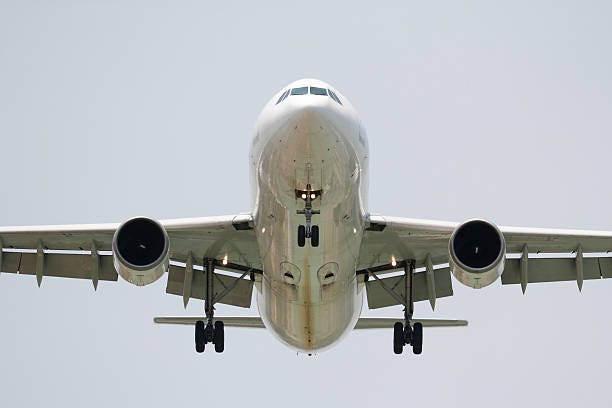
Airbus A300, the very first twinjet widebody aircraft (Credit: Istockphoto.com)
Photo: An Airbus A300 the world’s first twin engine widebody jet.
But did you know that when Airbus was first founded, the company came dangerously close to bankruptcy?
In 1972, Airbus unveiled its very first jet, the A300. At the time American giants like Boeing, McDonnell Douglas, and Lockheed were skeptical. They doubted there was room in the market for another large jet let alone one from a European consortium.
The idea behind Airbus’s creation stemmed from two main factors. First, European aircraft makers faced intense competition from the U.S. industry. Second, there was growing demand for a new 200 seat widebody airliner in Europe during the booming air travel years of the 1960s.
Many aircraft built in Europe such as the Sud Aviation Caravelle or BAC One Eleven were produced in small numbers mostly serving their home airlines. A collaborative approach seemed like the only viable path forward.
In 1966, aerospace firms from France, West Germany, and the United Kingdom began discussions on a joint project. Britain later withdrew in 1969 leaving France and West Germany to establish Airbus Industrie in December 1970. Hawker Siddeley, however, remained involved by designing the aircraft’s wings.
Construction of the first A300 began in 1969 and the prototype rolled out in 1972. The A300 was unique for its time powered by just two engines instead of the three or four found on similar sized jets. Its twin engine widebody design offered greater fuel efficiency, lower operating costs, and easier maintenance.
To appeal to the U.S. market, Airbus equipped the plane with American made systems, components, and engines, specifically two General Electric high bypass turbofan engines. The A300’s first flight took place on October 28, 1972 lasting one hour and 25 minutes. The test program was remarkably smooth with few technical problems.
Yet despite the technical success, Airbus struggled to sell the A300. The 1973 oil crisis hit just as the aircraft entered service dampening airline spending. Even a Boeing vice president dismissed the A300 as “a typical government airplane,” predicting that “only a dozen or so” would ever be sold before Airbus went bankrupt.
Early on, only two airlines placed orders, Spain’s Iberia and France’s flag carrier Air France, which began operating the jet in 1974 on its London Paris route.
To attract more buyers, Airbus took the A300 on a six week demonstration tour across the Americas in 1973. The effort caught the attention of Frank Borman, the former astronaut turned CEO of Eastern Air Lines, one of the “Big Four” U.S. carriers.
Between 1975 and 1977, Airbus sold no new aircraft and several A300s sat unsold in storage at Toulouse. Calls to halt production grew louder. Still, Airbus leadership refused to give up convinced that their fuel efficient design would eventually pay off.
Their persistence was rewarded in 1977 when Eastern Air Lines agreed to lease four A300s for a free in service trial. Impressed by the aircraft’s fuel savings compared to others in the fleet, Borman placed an order for 23 additional A300s making Eastern the first U.S. customer. That moment marked Airbus’s breakthrough as a true global competitor to Boeing and McDonnell Douglas.
The A300 also became the first jetliner certified for ETOPS (Extended range Twin engine Operational Performance Standards) allowing twin engine planes to fly long overwater routes previously restricted to three or four engine aircraft.
By the late 1970s, sales of the A300 had tripled helped by rising fuel prices that favored efficiency. The A300’s success forced American manufacturers to rethink their approach eventually leading Boeing to develop its own twin engine widebody, the 767.
The A300’s twin engine configuration set a new industry standard and paved the way for Airbus’s future lineup: the short haul A320 in 1987, the long range A330 and A340 in 1993, and later the high capacity A380 to challenge Boeing’s 747.
Today, Airbus stands shoulder to shoulder with Boeing as a global leader in aviation. By continually integrating new technologies and responding to airlines’ changing needs, Airbus transformed itself from a struggling consortium into one of the most innovative forces in aerospace history.
But what are your thoughts on the success of Airbus and have you flown on an Airbus aircraft? Please let me know by leaving a comment!
메타데이터
- post_id
- bb75f7d7a166
- slug
- how-airbus-nearly-failed-and-then-changed-the-skyline-forever-bb75f7d7a166
- url
- https://medium.com/@nolskiiy/how-airbus-nearly-failed-and-then-changed-the-skyline-forever-bb75f7d7a166
- canonical_url
- https://medium.com/@nolskiiy/how-airbus-nearly-failed-and-then-changed-the-skyline-forever-bb75f7d7a166
- author_url
- https://medium.com/@nolskiiy
- status
- ok
- fetched_at
- 2026-07-13 06:23:13