They Tagged Him 1385: The Story of Pelumi Onifade
On Tuesday, June 24, 2026, a magistrate in a Lagos coroner court opened a sealed envelope from the Lagos State DNA and Forensic Centre and…
They Tagged Him 1385: The Story of Pelumi Onifade
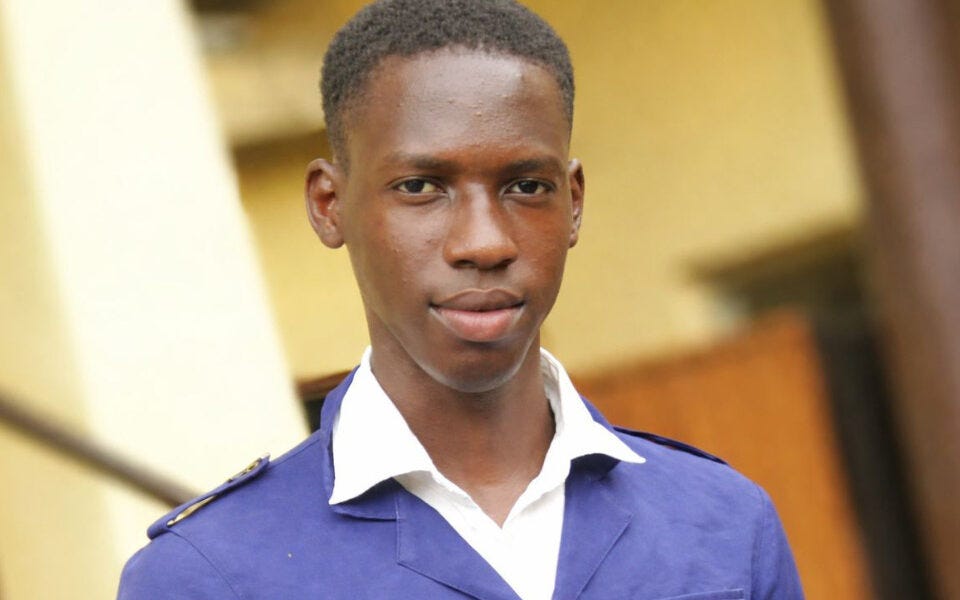
Image Credit: ICIR Nigeria
On Tuesday, June 24, 2026, a magistrate in a Lagos coroner court opened a sealed envelope from the Lagos State DNA and Forensic Centre and read aloud what Adebose Onifade had spent nearly six years trying to prove: that her son was dead, that the state had him, and that nobody had bothered to tell her.
Mrs. Onifade wept inconsolably as investigating magistrate Temitope Oladele announced that the genetic analysis had confirmed a biological relationship between her and the previously unidentified body tagged 1385, which had been lying in the Ikorodu General Hospital mortuary since November 2020. The body was her son, Pelumi Emmanuel Onifade, 20 years old, journalist with Gboah TV, last seen alive on October 24, 2020, in the Agege area of Lagos.
Many Nigerians who saw the news this week were encountering the story for the first time. That is itself an indictment of the sheer volume of injustice that competes for space in this country. But the story of Pelumi Onifade is not new. It is a story that has been waiting, patiently and painfully, for someone in authority to show the most basic institutional seriousness, but finding instead, at every turn, delay, obstruction, and contempt.
Onifade was covering the #EndSARS protests on October 24, 2020, when he was reportedly arrested by police officers in Agege. He had identified himself as a journalist and was wearing clothing that clearly indicated he was a member of the press. Days after his disappearance, an unidentified body was deposited at a mortuary in Ikorodu, raising concerns that it could be Onifade. However, the remains were not officially identified, leaving his family searching for answers for several years. He was not a protester. He was a young man with a camera trying to document history, and for that, the instruments of the Nigerian state appear to have killed him and then misplaced him in a mortuary under a tag number.
To understand what makes this story so enraging, you have to understand the context in which Pelumi disappeared. The #EndSARS protests of October 2020 were one of the most significant expressions of civic energy in Nigeria’s post-independence history. Starting in early October, for nearly two weeks, young Nigerians took to the streets across the country, demanding the disbandment of the Special Anti-Robbery Squad (SARS), a police unit that had spent years terrorising the very citizens it was supposed to protect. The unit extorted, assaulted, abducted, and killed with near-total impunity. The protests were largely peaceful, according to several investigations. They were organised with remarkable efficiency. They spoke, for a brief and extraordinary moment, to something genuine and urgent in the Nigerian national mood.
The government’s response was to send in the army. On the evening of October 20, 2020, a large number of peaceful youths were at the Lekki toll gate plaza, continuing the demonstrations despite a curfew, when officers of the Nigerian Army shot at them, injuring and killing unarmed, defenceless protesters without provocation or justification, while they were waving the Nigerian flag and singing the national anthem.
DJ Switch, who was present, livestreamed the shooting in real time. Video evidence circulated globally within hours. Amnesty International conducted its own on-the-ground investigation the following day and confirmed that the Nigerian army and police killed at least 12 peaceful protesters in Lekki and Alausa, with evidence gathered from eyewitnesses, video footage, and hospital reports.
The government’s response to all of this evidence was not remorse. It was denial, coordinated and shameless. The governor of Lagos State, Babajide Sanwo-Olu, initially denied reports of any loss of lives, but later admitted in an interview with a CNN journalist that “only two persons were killed.” Information Minister Lai Mohammed described the incident as a “phantom massacre” and threatened to sanction CNN journalists for their investigation into the matter.
The Nigerian Army initially denied involvement altogether, before eventually admitting, in testimony before a judicial panel, that it had deployed soldiers to the toll gate on the governor’s orders. Surveillance cameras had been removed from the toll gate shortly before the shooting. The next morning, Lagos State Waste Management Authority trucks with brushes underneath were brought to the scene to clean up bloodstains and other evidence, while police officers picked up bullet casings. These are not the actions of a government that had nothing to hide.
Lagos State eventually set up a Judicial Panel of Inquiry, chaired by retired Justice Doris Okuwobi. When its report was submitted in November 2021, it made for devastating reading. Contrary to the official narrative of one or two persons dying, the panel confirmed nine people dead and four more missing, presumed dead — a total of 13.
The panel found that soldiers shot directly at protesters, as confirmed by the Lagos State ballistic expert, and that this resulted in deaths and other physical injuries. It recommended the sanctioning of military and police officers responsible, a public apology to protesters, and the memorialisation of October 20 as a date of reckoning.
The federal government rejected the report, with a minister calling it “nothing but the triumph of fake news and the intimidation of a silent majority by a vociferous lynch mob.” The Nigerian government of the All Progressive Congress(APC) failed to implement any of the panel’s recommendations. Then, in July 2024, the ECOWAS Court of Justice ruled that the Nigerian government was guilty of human rights abuses for its actions at Lekki that night. Nothing changed.
It is into this landscape of official impunity that the story of Pelumi Onifade must be placed. He disappeared four days after the Lekki massacre, on October 24, in a city that was still smouldering with aftermath violence and security crackdowns. He was reportedly shot and arrested by policemen attached to a Lagos State Task Force while covering the protests. A body matching his description turned up at the Ikorodu mortuary, tagged 1385, one of six unidentified bodies brought to the Lagos State University Teaching Hospital on November 3, 2020. His family and colleagues suspected the connection immediately. The state appeared to be in no hurry to confirm or deny it.
What followed was nearly six years of bureaucratic obstruction that would be farcical if the subject were not a dead 20-year-old and his grieving mother. The coroner’s inquest only commenced in October 2024, following a July 2024 Federal High Court order directing the Lagos State Government to investigate the circumstances of Onifade’s death and to prosecute those responsible.
When the court ordered LASUTH to perform a post-mortem examination of body 1385, the hospital cited a strike as the reason for non-compliance, then submitted a report claiming that DNA samples had been destroyed when the DNA centre was burned during the EndSARS protests. The lead counsel for Media Rights Agenda, Alimi Adamu, pointed out a fundamental inconsistency: the DNA centre was burnt on October 23, 2020, before Pelumi’s death on October 24, meaning that DNA samples collected from his family days after his death could not possibly have been among those destroyed.
In other words, the state institution had submitted a document with a timeline that contradicted itself, in a case involving its own potential culpability in a journalist’s death, and presented it to a court without apparent embarrassment.
On June 23, 2026, the DNA confirmation was finally read into the record. The matter has been adjourned to July 7, 2026. The cause of death has still not been formally established. No one has been charged. No one has faced any consequences. Adamu, the MRA lawyer, captured the moment with a line that deserves to be quoted in full: “Six years after he disappeared, DNA has finally given Pelumi Onifade a name, a body, and a place in history.”
A name. A body. A place in history. These are the things the Nigerian state owed this young man from the moment it is alleged to have taken his life. It took a wrongful death suit, a Federal High Court order, a coroner’s inquest, repeated contempt of court by a teaching hospital, years of advocacy by Media Rights Agenda, and nearly six years of a mother’s refusal to stop asking questions before the state conceded even this minimum.
The people who were in government when Pelumi Onifade was killed continue to operate in Nigerian political life without consequence. The officials who described the Lekki massacre as a phantom have never apologised. The soldiers and police officers identified by the panel as responsible for the shootings have never been sanctioned. And the APC and its supporters who spent years insisting that nobody was killed, that the massacre was fake news, that the protesters and their allies were liars and agitators — many of them are still in positions of authority, still shaping the country that Pelumi Onifade will never grow old in.
Just to be clear: The report that the panel submitted to the Lagos State Governor explicitly classified the military’s lethal violence against peaceful protesters at the Lekki Toll Gate as a “massacre”. The Lagos State Judicial Panel of Inquiry explicitly addressed this point on page 294 of its official report. They wrote:
“The atrocious maiming and killing of unarmed, helpless and unresisting protesters, while sitting on the floor and waving their Nigerian flags and while singing the National Anthem can be equated to a ‘massacre’ in context.”
Tag number 1385 had a mother who wept in open court when she finally got the answer she already knew. He had a name. He had a career he was building. He went out with a camera to bear witness, because someone had to. The least this country owes him is the truth about who killed him, and the decency to ensure they answer for it. The name of a politician “Bolarinwa Oluwasegun Abiodun” is being linked to his death. But who knows.
The inquest continues on July 7. We should be watching.
메타데이터
- post_id
- bb807de369e0
- slug
- they-tagged-him-1385-the-story-of-pelumi-onifade-bb807de369e0
- url
- https://medium.com/measured-voices/they-tagged-him-1385-the-story-of-pelumi-onifade-bb807de369e0
- canonical_url
- https://medium.com/measured-voices/they-tagged-him-1385-the-story-of-pelumi-onifade-bb807de369e0
- author_url
- https://medium.com/@tosinadeoti
- status
- ok
- fetched_at
- 2026-06-27 18:20:27