The Voice That Has Always Known Where You Were Hiding
There is a moment, usually around the edge of something important, when the voice gets loud.
The Voice That Has Always Known Where You Were Hiding
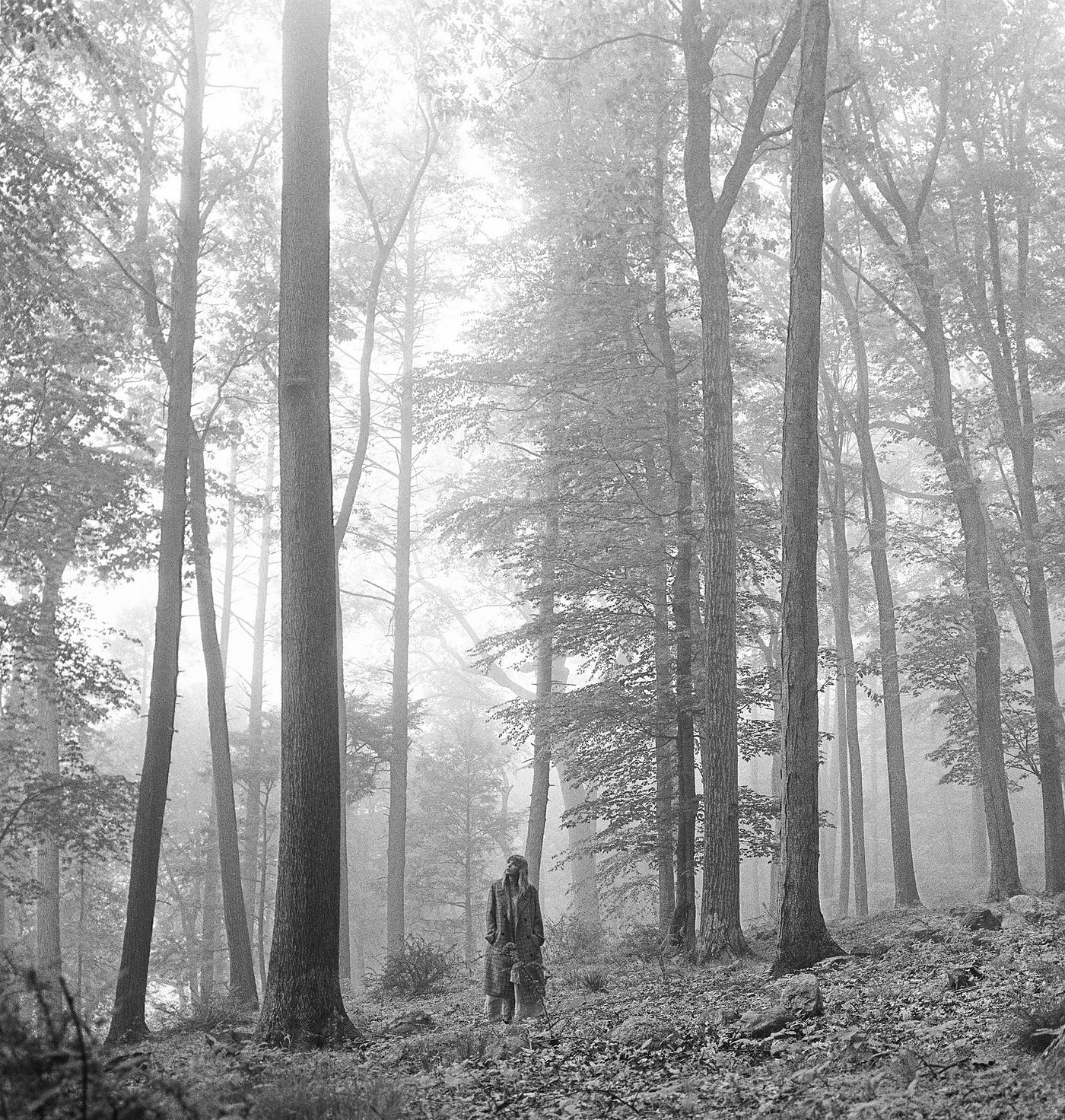
Photo by Dmitry Ratushny on Unsplash
There is a moment, usually around the edge of something important, when the voice gets loud.
Not the ordinary hum of self-doubt. Something older. More specific. A voice that knows exactly which word will stop you — not because it wants to hurt you, but because it has been doing this work, faithfully, for decades.
You’re about to leave a relationship that hasn’t held you in years, and it says: Who do you think you are to want more than this?
You’re about to submit something you made, something real, and it says: Not yet. Not good enough. Not ready.
You’re standing at what feels like a threshold — a genuine beginning — and the voice rises like a sentinel. Familiar, relentless, intimate in a way almost nothing else is.
Most of us have learned to call this voice the inner critic. We are told to challenge it, replace it, silence it. We are handed affirmations. We are told to choose positive self-talk.
But if you have ever sat with this voice long enough, actually to listen, you may have noticed something strange: it doesn’t respond to argument. It doesn’t quite work when you prove it wrong. It seems to operate by a different logic entirely.
Carl Jung noticed this, too.
What Jung Understood That Affirmations Don’t Touch
Jung’s contribution to our understanding of the inner life was radical, and it remains radical: the psyche is not one unified self.
It is a community. A chorus. A population of inner figures, each with their own history, their own wounds, their own way of making themselves known.
He called these figures complexes — autonomous clusters of feeling, memory, and belief that have taken on a kind of independent life within the psyche. A complex doesn’t just influence how you feel. It can feel, in a real sense, like a different part of you. It can speak in the first person. It can hijack a perfectly ordinary Tuesday afternoon and replace it with the emotional reality of a nine-year-old being told their drawing isn’t good enough.
The inner critic is one of these complexes.
It formed — usually in childhood, sometimes over years of accumulated experience — around moments of shame, conditional love, failure, or punishment when a parent’s approval depended on performance. When belonging required achieving. When expressing a particular feeling — anger, desire, grief, wildness — resulted in withdrawal, ridicule, or punishment.
The psyche is pragmatic. It learned: there is a standard I must meet. And I need a voice to enforce it, before anyone else can.
That voice became the inner critic.
What is crucial to understand — and what distinguishes the Jungian view from nearly every popular treatment of this subject — is that the inner critic was not born malicious.
It was born protective.
It was trying to keep a child safe from the unbearable pain of not being enough. It learned the rules of the environment — what was dangerous to express, what was rewarded, what must be hidden — and it became a guardian.
The tragedy is not that it formed. The tragedy is that it stayed. It speaks its warnings into a completely different life — your adult relationships, your creative work, your spiritual longing, your deepest desires — with the same old urgency, as if the original danger were still present.
As if you were still nine years old, and the approval of the room still determined your survival.
The Inner Critic and the Shadow: Closer Than You Think
Shadow work has, in recent years, become a cultural conversation. It appears on social media in prompts, challenges, and infographics. And there is something genuinely important in this reach — the recognition that we carry disowned parts of ourselves, and that integration matters.
But Jung’s understanding of the Shadow was more specific, more unsettling, and more compassionate than the popular version.
The Shadow, in his map of the psyche, is everything we have pushed out of conscious awareness. Not just the dark or aggressive impulses — though those could be there — but also the tender, creative, ambitious, grieving, desiring parts of us that were once judged unacceptable. The anger we weren’t allowed to have. The desire we were taught to be ashamed of. The grief that had no room. The wildness that was shaped, early and firmly, into something manageable.
The inner critic and the Shadow are not the same thing. But they are close neighbors. The inner critic is often the guardian of the Shadow: the voice that keeps you from expressing what was once forbidden.
Don’t be too much! Don’t want too much! Don’t take up space!
That isn’t wisdom. That is the sound of an old wound trying to keep you small, because once, being small kept you safe.
In alchemy — a tradition Jung drew on extensively — this confrontation with the disowned material was called the nigredo: the blackening, the descent into darkness. Not a punishment, but a necessary stage. The place where old forms dissolve before something new can be made.
The inner critic is the voice that makes the descent feel like falling.
Shadow work, when done with care and support, is the process of learning to descend with a lantern rather than flee the dark. It is not a challenge or a prompt set. It is slow, careful work that deepens with time and, ideally, with the presence of someone trained to hold it — a therapist, an analyst, a trusted guide.
I name this not to create obstacles, but to honor the real weight of what you are touching when you go inward at this level.
The Threshold and the Critic’s Loudest Hour
There is a pattern I observe in clinical work, and in my own inner life: the inner critic gets loudest at thresholds.
Thresholds — genuine ones — are moments of irreversibility. You leave a country. You end a marriage. You begin a creative life after decades of putting it off. You stop performing a version of yourself and begin reaching toward something truer.
These are the moments when the inner critic does not quiet. It amplifies.
Why?
Because change, at its depth, is a kind of death. The death of the old identity. The old role. The old story you have been living about who you are and what you are allowed to want.
The inner critic’s entire function was to protect the old structure. And the old structure is precisely what a threshold dismantles.
In ancient mythologies, every threshold had a guardian—the Sphinx before Thebes, with its riddle that demanded genuine self-knowledge. The river Styx requires something of the one who would cross. The trickster at the crossroads, who cannot be bribed or reasoned with, only met honestly.
The inner critic at your threshold is playing this ancient role.
It is not a sign that you should turn back.
It is almost always a sign that something real and meaningful is happening. That you are approaching something that matters. That the crossing, if you make it, will change you.
The question is not whether you will feel afraid.
The question is whether you have enough inner ground — enough witnessing capacity, enough self-compassion, enough support — to cross despite the fear.
Beginning a Different Relationship with the Voice
The work is not to silence the inner critic.
The work is to stop serving it.
Jung called the deeper practice of engaging the autonomous figures of the inner world active imagination — a way of turning inward and entering into genuine dialogue with the characters who live there, not arguing with them or suppressing them, but listening and responding from a deeper part of yourself.
This is slow work. It deepens with therapeutic support. But there are smaller practices that can begin a different relationship with the critic — not to fix it, but to create distance between you and the complex, and between the complex and your decisions.
The first practice: notice the grammatical shift.
Instead of "I am a failure," try: "There is a voice saying I am a failure." Instead of "I am not enough," try: "Something in me is saying I am not enough."
This shift — however small it sounds — is not semantic. It moves the inner critic from identity to character. You are not the voice. You are the one who can hear it. That distance is where freedom begins.
The second practice: ask what it is afraid of.
Not rhetorically. Get quiet, and genuinely ask the voice, "What are you trying to protect me from?"
Beneath the cruelty, beneath the relentless standard-keeping, there is almost always a terrified younger part. Not a monster. A child, doing the only thing they knew how to do with the material they were given.
The third practice: offer what was needed then, but couldn’t get.
Reassurance. Presence. The message, spoken inwardly: you are enough. Not because you have performed, not because you have produced, but because you exist. Because your existence does not require justification.
This is what depth psychology calls tending the wounded child — not bypassing the wound, but returning to it with adult compassion. With the understanding that the wound was real, the protection it generated made sense, and you no longer needed to live as if the original danger were still present.
The Slow, Sacred Work
The inner critic is not going away. That is not the goal.
What changes — slowly, with practice, often with support — is your relationship to the voice.
You stop believing it is the truth.
You begin to recognize it as a story. An old story, from an old wound, spoken by an old character who is doing its very best with what it learned in a world that no longer exists.
And as you develop the witnessing capacity — that part of you that can hear the critic without collapsing into it — something new becomes possible.
You can step toward what matters.
You can cross the threshold.
Not because the voice is gone. But because you have stopped letting it make decisions for you.
If you are navigating a threshold right now — a life transition, a loss, a beginning you are afraid to name — I want you to know: you do not have to do this alone. The inner work is real, and the support for it exists.
You are guided. You are loved. And your path is sacred.
— Dr. RB
To discuss further, schedule your session below: https://cal.com/lafarfalla-influens/threshold-session-60-minutes https://cal.com/lafarfalla-influens/threshold-session-90
메타데이터
- post_id
- bb8bcc474c78
- slug
- the-voice-that-has-always-known-where-you-were-hiding-bb8bcc474c78
- url
- https://medium.com/@dr.rb_17075/the-voice-that-has-always-known-where-you-were-hiding-bb8bcc474c78
- canonical_url
- https://medium.com/@dr.rb_17075/the-voice-that-has-always-known-where-you-were-hiding-bb8bcc474c78
- author_url
- https://medium.com/@dr.rb_17075
- status
- ok
- fetched_at
- 2026-07-10 14:10:06