Headlong Into the Darkness: The Doors
Crate Diving at Home, Chapter 9
Headlong Into the Darkness: The Doors
Crate Diving at Home, Chapter 9

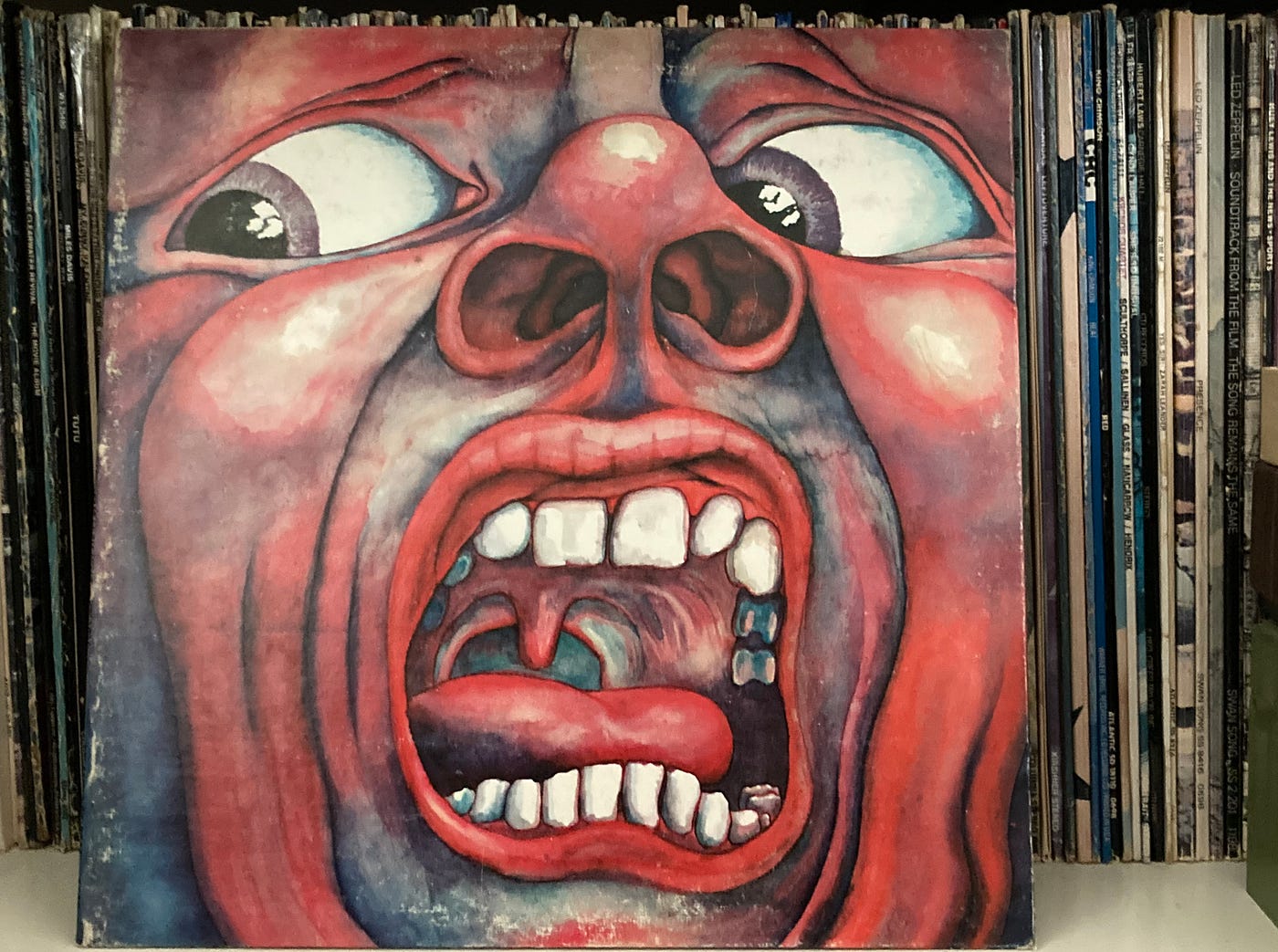
Photo of Author’s copy of “The Doors” © Vantage Studios
When I was six, our first-grade teacher asked what we wanted to be when we grew up. I awaited my turn, and then informed her that it was highly unlikely any of us would live that long. The year before, while I was in kindergarten, we had weekly bomb shelter drills, and I guess that kind of thing leaves a strong impression.
Of course, they always lied to us about the purpose of the drills. They didn’t mention atomic bombs. The Russians were only a vague, looming threat, sort of like Sauron. Were we supposed to be scared? Or reassured?
My parents followed news and politics, and argued a lot. He was a McCarthy Republican. She was a Stevenson Democrat. About the only thing they seemed to agree on was that there was a strong likelihood we could be vaporized any day. With only 20 minutes’ warning.
My mom cared a lot about our education and political awareness. So, in the middle of the Vietnam era and the civil rights protests of the late 1960s, I knew more about Vietnam and about the history of civil rights than my teachers did. That made me even more of a geek among my age group — none of them seemed at all concerned with any of that.
The ones who did care were the generation just ahead of ours, the generation of hippies, anti-war protests, civil rights marches, flower-power, and the “free speech” movement. I think it is accurate to say that it was a major advance toward achieving America’s most important aspirational goal: freedom of expression.
Music was, of course, central to that expression. Rock music came into its own in the 1960s and became the universal language of everything from romance to angst to political revolution. It would spread across the globe, and for a few decades, it was the dominant form of popular music worldwide. It even found its way past the censors into the Soviet Union.
Sadly for me, the greatest bands in rock history didn’t belong to my generation. They belonged to that counterculture generation, the ones just a few years older than me. I hung out with some of them when I could, but I felt as though I was looking through a peephole, into a world just a little beyond my understanding.
For my peers and me, the first we knew of the Doors was when “Light My Fire” blazed across the radio firmament. There had never been something that sounded like this. It was deliciously dark — the carnival organ strains and Jim Morrison’s ominous voice, singing about love becoming a funeral pyre.
Actually, I didn’t know quite what the title meant. I was well into a schoolboy crush at the time, but it was only years later that I realized the connection between my feelings and someone lighting someone’s fire. Talking about sex was so off-limits that it never occurred to me someone might sing about it!
My Aunt Sylvia — the one who would take me to my first rock concert — bought me the album.
It got a lot of play (as you can see!) Over the years, it has repeatedly morphed, becoming something different from one decade to the next.
Of course, it hasn’t actually changed. I have. Over time, I learned that the “other side” referred to Nietzsche. “The Crystal Ship” was a breakup song, with elements of sexual abandon. “Alabama Song”, a cover of a song originally written by Elizabeth Hauptmann for a 1927 German musical, was about debauchery. Some of the songs referenced psychedelic drugs.
And so on. All stuff that went right over my head when the album first came out.
Then, there was “The End,” which was the song I most identified with, and which I now think of as the band’s masterpiece. It was originally written about the end of a relationship, but was also full of allusions to death and the end of the world. No wonder I grokked it!
The band’s name directly evokes the idea of a portal, crossing from our reality into something else. The most riveting thing about “The Doors” was that they literally transported us there. They did so with a combination of gorgeous arrangements, unsettling lyrics, and Jim Morrison’s unique voice — haunted, sarcastic, and vaguely Satanic.
Ozzie Osbourne was later nicknamed the “Prince of Darkness,” but I think Morrison was the original. There has never been anyone else who so effortlessly gave you a glimpse into the void.
For me, this belongs on any serious list of the greatest rock or pop albums of all time.
[embed]
Thank you Kevin Alexander and The Riff for publishing!
메타데이터
- post_id
- bb92bcee60f3
- slug
- headlong-into-the-darkness-the-doors-bb92bcee60f3
- url
- https://medium.com/the-riff/headlong-into-the-darkness-the-doors-bb92bcee60f3
- canonical_url
- https://medium.com/the-riff/headlong-into-the-darkness-the-doors-bb92bcee60f3
- author_url
- https://medium.com/@chahsu
- status
- ok
- fetched_at
- 2026-06-11 05:11:55