🥚 A Classic Deviled Egg Recipe That Deserves a Spot at Every Holiday Table
There’s something timeless about deviled eggs. They’re the first to disappear at potlucks, the unsung heroes of family reunions, and the…
🥚 A Classic Deviled Egg Recipe That Deserves a Spot at Every Holiday Table
There’s something timeless about deviled eggs. They’re the first to disappear at potlucks, the unsung heroes of family reunions, and the humble appetizer that somehow manages to feel both nostalgic and elegant. This particular recipe comes from a vintage card tucked into my aunt’s old recipe tin — yellowed with age, smudged with paprika fingerprints, and still absolutely perfect.
I’ve made these eggs for Easter brunches, Fourth of July picnics, and even Christmas Eve spreads. They’re simple, satisfying, and endlessly adaptable. So whether you’re hosting a holiday gathering or just craving a bite of retro comfort, this one’s for you. — Raising chickens I currently have plenty of eggs and am always looking for more ways to use them.
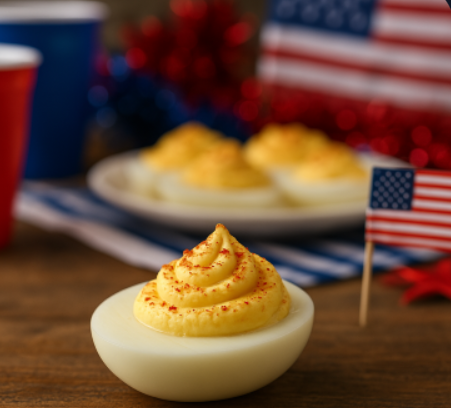
4th of July eggs
🧾 The Original Recipe: Perfect Deviled Eggs (Makes 18 halves)
Ingredients:
- 9 eggs
- 1/4 cup mayonnaise
- 1 1/2 teaspoons prepared mustard
- Pinch of salt
- 1/8 teaspoon pepper
- 1 teaspoon sweet relish, drained (optional)
- 1/4 teaspoon paprika (for sprinkling)
Instructions:
- Place eggs in a large saucepan and cover with water. Bring to a boil. Once boiling, remove from heat, cover, and let sit for 20 minutes (23 minutes for extra-large or jumbo eggs).
- Drain and run cold water over the eggs. Add ice cubes and let cool for 5–10 minutes.
- Peel the eggs, slice in half lengthwise, and remove yolks to a bowl.
- Mash yolks with mayonnaise, mustard, salt, pepper, and relish (if using) until smooth.
- Spoon or pipe the mixture back into the egg whites. Sprinkle with paprika.
- Cover lightly with plastic wrap and refrigerate until ready to serve.
🎄 Holiday Twists to Elevate the Classic
Want to dress these up for your next holiday gathering? Here are a few festive variations:
✨ For Christmas:
- Add a pinch of finely chopped chives and roasted red pepper on top for a red-and-green garnish.
- Mix in a bit of horseradish or Dijon mustard for a spicier, wintery kick.
🐣 For Easter:
- Use pastel-colored egg whites by soaking peeled eggs in natural food dyes (like beet juice or turmeric water) for a few minutes.
- Add a touch of honey mustard and top with a sprig of dill for a springy flavor.
🎆 For the Fourth of July:
- Swirl in a bit of sriracha or hot sauce for a bold, smoky flavor.
- Top with crumbled bacon and a tiny American flag toothpick for flair.
(Personally, I’ve started adding capers. I found another recipe from Home Chef-and added a take on a recipe from Craftsy and fell in love with the taste. )
💬 Why This Recipe Still Works
There’s a reason this recipe has stood the test of time. It’s not fussy. It doesn’t call for truffle oil or microgreens. It’s just good. The kind of good that reminds you of folding chairs in the backyard, paper plates, and someone’s aunt insisting you take “just one more.”
So go ahead — make a batch. Share them with friends. Or eat them all yourself while standing at the fridge. I won’t judge.
If you have a favorite deviled egg variation or a memory tied to this dish, I’d love to hear it in the comments. Let’s keep the tradition alive — one paprika-dusted bite at a time.
Deviled eggs have a surprisingly rich and global history that spans centuries and continents. Here’s a look at how this humble dish evolved into the holiday staple we know and love today:
🏛️ Ancient Origins: From Rome to Andalusia
- Ancient Rome: The earliest known version of deviled eggs dates back to ancient Rome. Roman cooks would boil eggs, remove the yolks, and mix them with spicy sauces like vinegar, oil, and pepper before stuffing them back into the whites. These were often served at the beginning of lavish meals — a practice so common it inspired the phrase ab ova usque ad mala (“from eggs to apples”) to describe a full-course Roman feast.
- 13th Century Andalusia (Spain): A more recognizable precursor to modern deviled eggs appeared in a 13th-century Andalusian cookbook. The recipe called for mixing egg yolks with cilantro, pepper, onion juice, and murri (a fermented sauce), then stuffing the mixture back into the whites and securing the halves with a stick.
The “Deviled” Name: 18th Century England
- The term “deviled” began appearing in English cookbooks in the late 1700s to describe foods that were spicy or zesty. By the 19th century, it was commonly used for dishes like deviled ham, deviled kidneys — and eventually, deviled eggs.
- In some parts of the U.S., especially in the South, the term “deviled” was considered too irreverent for church functions, so alternatives like “stuffed eggs,” “salad eggs,” or even “angel eggs” became popular.
American Evolution: From Fannie Farmer to Picnic Favorite
- 1896: The first American recipe resembling today’s deviled eggs appeared in The Boston Cooking-School Cook Book by Fannie Farmer. It introduced mayonnaise as a binding agent, a now-standard ingredient.
- 1920s–1940s: Deviled eggs gained popularity in the U.S., especially at picnics, potlucks, and holiday gatherings. By the 1940s, they were a staple of American entertaining, often served cold and dusted with paprika.
🥚 A Timeless Classic
Today, deviled eggs are beloved across cultures and cuisines. In France, they’re called œufs mimosa; in Italy, uova ripiene; and in Sweden, fyllda ägg. Each variation reflects local tastes — some include anchovies, caviar, or even pickled herring.
Despite their global journey, the essence of deviled eggs remains the same: a simple, satisfying dish that brings people together. Whether you’re making them from a vintage recipe card or adding your own holiday twist, you’re participating in a culinary tradition that’s thousands of years old.
🥚 Vintage vs. Modern Deviled Eggs: A Side-by-Side Comparison
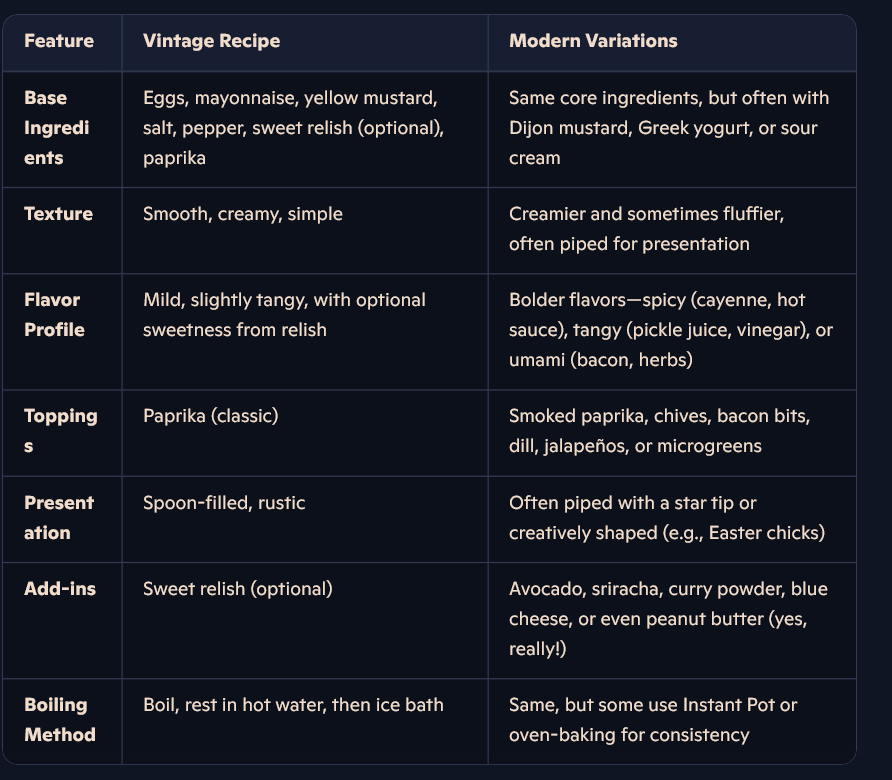
Comparison Chart
🧪 Notable Modern Techniques
- Greek Yogurt or Sour Cream: Used to lighten the filling or reduce fat while adding tang.
- Pickle Juice or Vinegar: Adds brightness and depth without the sweetness of relish.
- Baking Soda in Boiling Water: Helps eggs peel more easily.
- Piping Bags: Used for a polished, swirled look — especially for parties or holidays.
🧁 Creative Modern Variations
- Avocado Deviled Eggs: Creamy and green, with lime juice and cilantro.
- Bacon & Cheddar: A smoky, savory twist.
- Spicy Sriracha or Cajun: For heat lovers.
- Easter Chicks: Eggs are cut across the top and decorated with olive eyes and carrot beaks.
🧡 Why the Vintage Recipe Still Holds Up
Despite all the innovation, the vintage version remains beloved for its simplicity and balance. It’s easy to make, crowd-pleasing, and endlessly adaptable. Think of it as the “little black dress” of appetizers — always in style, but ready for accessories.
메타데이터
- post_id
- bbaaee7a1185
- slug
- a-classic-deviled-egg-recipe-that-deserves-a-spot-at-every-holiday-table-bbaaee7a1185
- url
- https://medium.com/kids-koupons-and-krafts/a-classic-deviled-egg-recipe-that-deserves-a-spot-at-every-holiday-table-bbaaee7a1185
- canonical_url
- https://medium.com/kids-koupons-and-krafts/a-classic-deviled-egg-recipe-that-deserves-a-spot-at-every-holiday-table-bbaaee7a1185
- author_url
- https://medium.com/@k-richter
- status
- ok
- fetched_at
- 2026-07-15 21:11:46