How to Design a Scalable OTT Platform Architecture for Live Streaming
Introduction
How to Design a Scalable OTT Platform Architecture for Live Streaming
Introduction
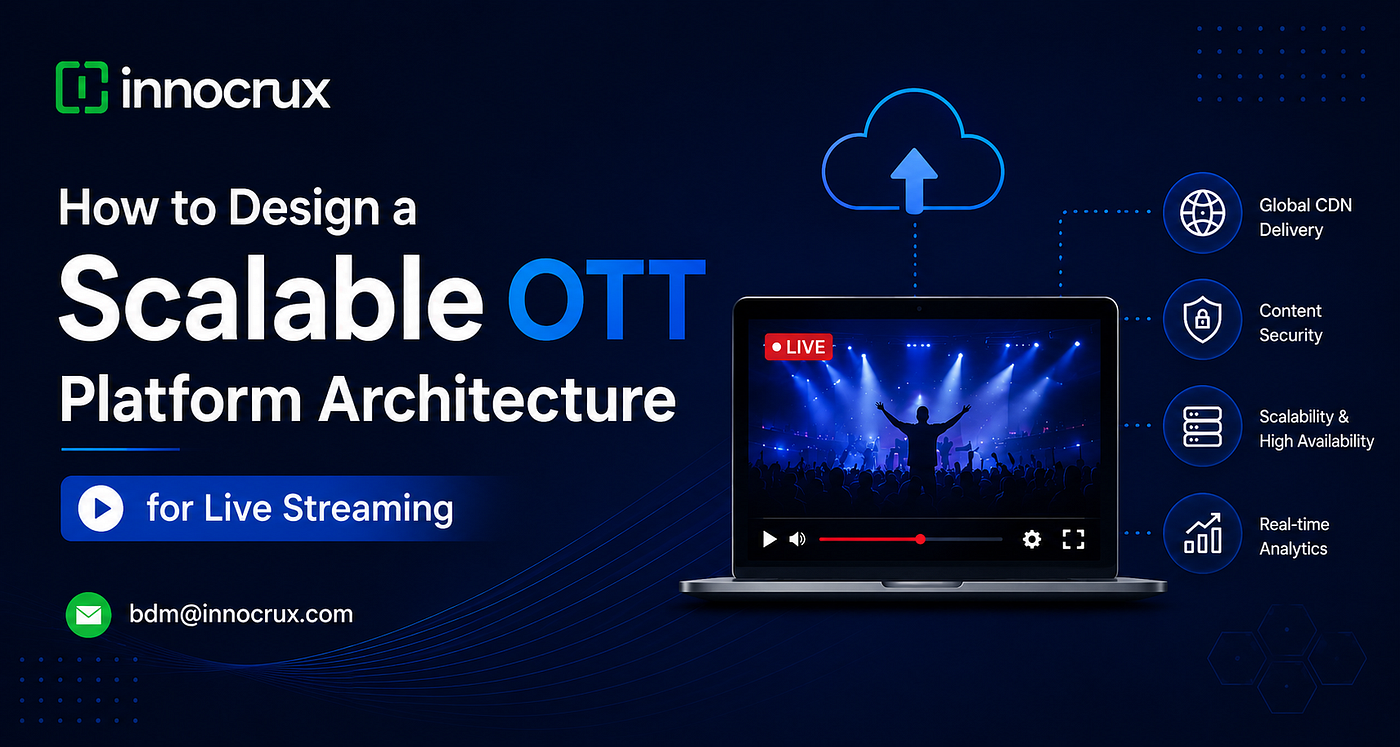
Live streaming has become a critical service for broadcasters, media companies, sports organizations, educational institutions, and enterprises. Whether you’re streaming live sports, concerts, news, religious events, or corporate meetings, delivering uninterrupted, high-quality video to thousands — or even millions — of viewers requires more than just a video player. It requires a scalable OTT platform architecture.
A well-designed **OTT (Over-the-Top) **architecture ensures your platform can handle traffic spikes, deliver low-latency streaming, protect premium content, and provide a seamless viewing experience across multiple devices.
In this guide, we’ll explore the essential components of a scalable OTT platform architecture, best practices for live streaming, and how businesses can build a future-ready streaming platform.
What Is OTT Platform Architecture?
OTT platform architecture is the complete technology stack that enables video content to be ingested, processed, secured, delivered, and streamed to viewers over the internet without relying on traditional cable or satellite providers.
A modern OTT platform includes:
- Video ingestion
- Live transcoding
- Media storage
- Content Delivery Network (CDN)
- Digital Rights Management (DRM)
- Video Content Management System (CMS)
- Monetization engine
- Analytics platform
- Multi-device applications
- Streaming APIs
Each component works together to ensure viewers receive a smooth, secure, and high-quality streaming experience.
Why Scalability Matters in Live Streaming
Live streaming traffic is unpredictable. A sporting event, product launch, or breaking news broadcast can generate massive spikes in concurrent viewers within minutes.
Without a scalable architecture, platforms may experience:
- Video buffering
- Playback failures
- Server overload
- Increased latency
- Poor user experience
- Revenue loss
A scalable OTT platform automatically allocates resources based on viewer demand, ensuring consistent performance even during peak traffic.
Key Components of a Scalable OTT Platform Architecture
1. Live Video Ingestion
The streaming process begins with video capture from cameras or broadcasting equipment.
Popular protocols include:
- RTMP
- SRT
- RTP
- WebRTC (for interactive streaming)
The ingest server receives the live feed and forwards it for processing.
2. Live Video Encoding and Transcoding
Different viewers have different internet speeds and device capabilities.
A scalable platform transcodes the source video into multiple resolutions such as:
- 240p
- 360p
- 480p
- 720p HD
- 1080p Full HD
- 4K Ultra HD
Adaptive Bitrate Streaming (ABR) automatically switches between these quality levels based on network conditions.
Modern OTT providers use GPU-based transcoding to improve speed while reducing infrastructure costs.
3. Origin Server
The origin server stores and distributes the master video stream before it reaches CDN edge servers.
Functions include:
- Video packaging
- HLS generation
- MPEG-DASH generation
- Token authentication
- Stream management
A reliable origin server prevents downtime during heavy traffic.
4. Content Delivery Network (CDN)
The CDN distributes video content through edge servers located around the world.
Benefits include:
- Reduced buffering
- Faster startup time
- Lower latency
- Improved global performance
- High availability
Many enterprise OTT platforms use Private CDN or Multi-CDN strategies to improve reliability and optimize video delivery.
5. Video Storage
Live streams are often converted into Video on Demand (VOD) assets.
Cloud object storage provides:
- High durability
- Automatic backups
- Global accessibility
- Cost-efficient scalability
Recorded videos can then be organized using a Video CMS.
6. OTT Content Management System (CMS)
The OTT CMS acts as the control center of the streaming platform.
It allows administrators to:
- Upload videos
- Schedule live events
- Manage categories
- Control metadata
- Publish content
- Manage users
- Configure monetization
A modern CMS should support automation and API integrations.
7. Multi-Device Video Player
Viewers expect consistent playback across multiple platforms.
A scalable OTT platform supports:
- Web browsers
- Android
- iPhone & iPad
- Android TV
- Apple TV
- Fire TV
- Roku
- Samsung Smart TV
- LG webOS
Using HTML5 players with Adaptive Bitrate Streaming ensures smooth playback regardless of device.
8. Digital Rights Management (DRM)
Premium content requires strong protection.
Modern OTT platforms integrate:
- Widevine
- FairPlay
- PlayReady
Additional security measures include:
- AES encryption
- Token authentication
- Watermarking
- Secure playback URLs
- Geo-blocking
- Device restrictions
These features help prevent piracy and unauthorized access.
9. Monetization Engine
A scalable OTT platform should support multiple revenue models.
Common monetization options include:
- Subscription Video on Demand (SVOD)
- Advertising Video on Demand (AVOD)
- Transactional Video on Demand (TVOD)
- Hybrid monetization
- Pay-Per-View (PPV)
Supporting multiple monetization models allows businesses to maximize revenue.
10. Analytics Dashboard
Real-time analytics help operators monitor platform performance.
Key metrics include:
- Concurrent viewers
- Playback success rate
- Buffer ratio
- Viewer retention
- Watch time
- Revenue
- Geographic distribution
- Device usage
- Bitrate performance
Analytics enable continuous optimization of user experience and infrastructure.
Best Practices for Designing a Scalable OTT Platform
Use Cloud-Native Infrastructure
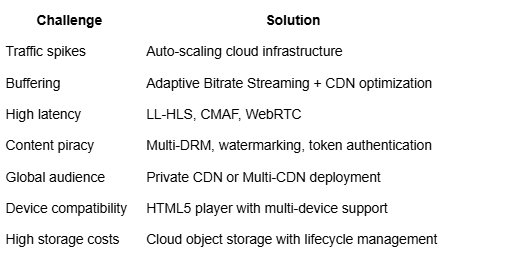
Cloud platforms allow automatic scaling during traffic spikes while reducing infrastructure management.
Implement Adaptive Bitrate Streaming
ABR ensures viewers receive the best possible quality without interruptions.
Use Low-Latency Streaming Protocols
Protocols such as Low-Latency HLS (LL-HLS), CMAF, and WebRTC reduce delays, making them ideal for live sports, auctions, gaming, and interactive events.
Deploy a Multi-CDN Strategy
Using multiple CDN providers improves redundancy, availability, and global performance.
Optimize Video Encoding
Modern codecs like H.265 (HEVC) and AV1 reduce bandwidth consumption while maintaining excellent video quality.
Prioritize Security
Implement Multi-DRM, encrypted streaming, watermarking, and tokenized URLs to protect premium content.
Monitor Performance Continuously
Use analytics and automated alerts to identify issues before they affect viewers.
Common Challenges and Solutions
Why Businesses Choose White-Label OTT Platforms
Developing an OTT platform from scratch can take months and require significant investment.
White-label OTT solutions offer:
- Faster deployment
- Lower development costs
- Built-in monetization
- Multi-device applications
- Video CMS
- DRM integration
- Private CDN support
- Analytics dashboard
- API integrations
- Ongoing maintenance and updates
This allows businesses to focus on content creation and audience growth rather than infrastructure management.
How Innocrux Helps Build Scalable OTT Platforms
Innocrux provides an end-to-end OTT solution designed for broadcasters, media companies, educational institutions, sports organizations, and enterprises.
Key capabilities include:
- White-label OTT platform
- Live streaming and **Video on Demand (VOD)**
- Private CDN for high-performance video delivery
- GPU-powered video encoding and transcoding
- Multi-DRM content protection
- Low-latency streaming
- Built-in OTT CMS
- Multiple monetization models (SVOD, AVOD, TVOD, PPV)
- Advanced analytics dashboard
- Apps for Web, Android, iOS, Android TV, Apple TV, Roku, Fire TV, Samsung Tizen, and LG webOS
With scalable cloud infrastructure and enterprise-grade security, Innocrux enables organizations to launch and grow reliable streaming services that can handle audiences of any size.
Conclusion
Designing a scalable OTT platform architecture is essential for delivering reliable, secure, and high-quality live streaming experiences. By combining cloud infrastructure, adaptive bitrate streaming, private CDN, DRM, a modern OTT CMS, and advanced analytics, businesses can support growing audiences without compromising performance.
Whether you’re launching a new streaming service or upgrading an existing platform, investing in a scalable architecture today prepares your business for future growth and evolving viewer expectations. Partnering with an experienced **OTT solution provider like Innocrux** can help you accelerate deployment, reduce operational complexity, and deliver exceptional streaming experiences across every screen.
메타데이터
- post_id
- bbae6083e577
- slug
- how-to-design-a-scalable-ott-platform-architecture-for-live-streaming-bbae6083e577
- url
- https://medium.com/@serenaryder2k/how-to-design-a-scalable-ott-platform-architecture-for-live-streaming-bbae6083e577
- canonical_url
- https://medium.com/@serenaryder2k/how-to-design-a-scalable-ott-platform-architecture-for-live-streaming-bbae6083e577
- author_url
- https://medium.com/@serenaryder2k
- status
- ok
- fetched_at
- 2026-07-23 09:49:07