VAULT ECHOES#22 — NEVERMIND BY NIRVANA
“Take your time, hurry up, the choice is yours, don't be late”
VAULT ECHOES#22 — NEVERMIND BY NIRVANA
“Take your time, hurry up, the choice is yours, don't be late”

Nevermind: The Album That Redefined Rock for a Generation
It was the start of 1991 and the world was glued to TV screens watching Operation Desert Storm. American-led coalition forces launched a massive air campaign against Iraq in January, followed by a lightning-fast ground war in late February that kicked Saddam Hussein’s army out of Kuwait. Victory parades rolled through American cities. It felt like a triumphant moment — smart bombs, quick win, “mission accomplished.”
But behind the celebrations, something felt off. The U.S. economy was sliding into recession. Factories were laying people off. Young folks graduating high school or college were staring at a future that didn’t look anything like the shiny 1980s dream they’d been sold. At the same time, on the other side of the world, the Soviet Union was collapsing in real time. Republics were breaking away one after another. By December the red flag came down over the Kremlin for good, ending the Cold War that had defined the entire 20th century.
It was a strange, uneasy mix of military triumph and quiet anxiety. The old order was cracking. In music, hair-metal bands with huge hair and even bigger solos still dominated, alongside Michael Jackson’s big-budget Dangerous album. Corporate rock and pop felt polished, expensive, and fake. A whole generation — later called Generation X — was growing up cynical, bored, and angry at the phoniness around them.
This was the exact atmosphere into which a scruffy three-piece band from rainy Aberdeen, Washington, dropped their major-label debut on September 24, 1991. Nobody at the record company expected it to do much. They pressed only about 46,000–50,000 copies at first. But Nevermind didn’t just sell records. It became the soundtrack for everyone who felt left behind by the victory parades and the glossy videos. It turned the music world upside down in a matter of months.
Artist
Nirvana was Kurt Cobain on vocals and guitar, Krist Novoselic on bass, and Dave Grohl on drums. Kurt was the main songwriter and the emotional center — a skinny, intense guy with a voice that could whisper and then explode into a scream that sounded like it was ripping his throat apart. He grew up rough in small-town Washington, dealing with family breakup, feeling like an outsider, and battling chronic stomach pain that would haunt him for years.
Krist was Kurt’s best friend and musical anchor from the early days — tall, steady, with a great sense of humor. They started playing together in the late ’80s, soaking up whatever weird, heavy, punky music they could find in the Pacific Northwest. Dave Grohl joined in late 1990 after the band had already recorded early versions of several Nevermind songs. He brought a powerful, precise drumming style from the Washington D.C. hardcore punk scene and instantly clicked.
Their first album, Bleach (1989), came out on the tiny Seattle indie label Sub Pop. It was recorded for something like $600 and sounded raw, heavy, and cheap in the best way. It got them underground attention but almost no money. By 1991 they had signed to DGC Records (a Geffen imprint) for their second album. The band looked like regular flannel-wearing dudes, not rock stars. That relatability — combined with Kurt’s gift for turning personal pain and sarcasm into unforgettable melodies — became their superpower.
Influence
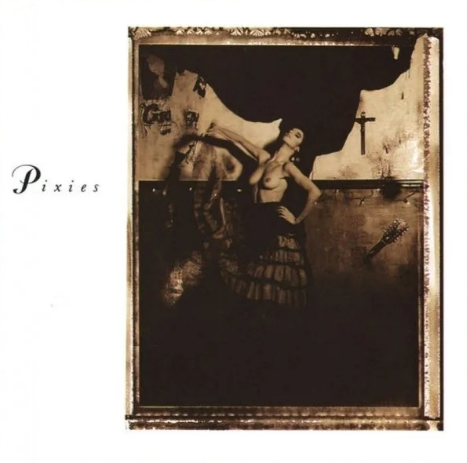
Kurt didn’t want to sound like the hair-metal or corporate rock that ruled the charts. He was obsessed with contrast and dynamics — soft, pretty parts that suddenly crash into loud, distorted chaos. He openly admitted he was “ripping off the Pixies,” especially their 1988 album Surfer Rosa. The Pixies’ trick of quiet verses exploding into walls of noise became the blueprint for Nevermind’s biggest songs.
Locally, the Melvins were Kurt’s biggest early mentors. Buzz Osborne of the Melvins turned teenage Kurt onto punk records, taught him about heavy, sludgy riffs, and showed him the anti-mainstream attitude. Kurt even drove the Melvins’ tour van and helped carry their gear. He later said he learned “almost everything” from watching them rehearse. Other big influences included the Wipers, Sonic Youth, Black Sabbath and Led Zeppelin, and even the Beatles.
What made Nirvana special was the mix: punk’s anger and “we don’t care about your rules” attitude + pop’s ability to get stuck in your head + heavy rock’s weight. Kurt wanted songs that felt dangerous but were still catchy. That combination let them bridge the underground and the mainstream without completely selling out their soul — at least at first.
Album
Nevermind contains 12 main tracks (plus one secret noisy jam at the end) and runs about 42–49 minutes depending on how you count the hidden track. Producer Butch Vig recorded most of it in May 1991 at the legendary (and cheap) Sound City Studios in Van Nuys, California. Some songs, like “Polly,” carried over almost unchanged from earlier 1990 demo sessions at Smart Studios in Wisconsin. Andy Wallace mixed it to make it radio-friendly while keeping the edge.
The themes are alienation, frustration with fake culture, troubled relationships, anti-sexism, and personal pain. Kurt’s lyrics are often mumbled, sarcastic, or stream-of-consciousness, but the emotion hits hard.
Standout tracks and what they mean to me:
- Smells Like Teen Spirit — The massive opener and lead single. That simple, hypnotic riff locks in immediately. The lyrics mock teen apathy and fake rebellion (“Here we are now, entertain us”). It became the anthem for a generation that felt bored and used by the system.
- Come As You Are — Hypnotic bass and riff. It’s about acceptance but also warns about hypocrisy in relationships and scenes (“Come as you are, as you were…”). Many fans tie it to Kurt’s recent breakup with Tobi Vail of Bikini Kill.
- Lithium — Classic quiet-loud structure. It jumps between whisper and full scream. The song deals with using faith, meds (lithium is used for bipolar disorder), or anything to hold mental health together. Kurt battled depression and chronic pain.
- Polly — One of the darkest and most stripped-down tracks. It’s almost acoustic. Kurt wrote it from the kidnapper’s point of view after reading about a real 1987 abduction, rape, and torture case near Tacoma. It’s horrifying and anti-violence at the same time — his way of processing real-world darkness.
- Something In The Way — Sparse, haunting closer. Kurt sings softly over simple chords about feeling invisible or homeless. It was inspired by his own teen experiences sleeping rough sometimes. The quiet tension is devastating.
The whole album feels like a diary of Generation X frustration wrapped in feedback, melody, and irony. It made people who felt angry or lost feel seen.
Chart
Nevermind did not explode immediately. It debuted at #144 on the Billboard 200 with roughly 6,000 copies sold in the first week. DGC had modest hopes — maybe 250,000 total sales. They shipped only about 46,000–50,000 copies at first. Many stores in the middle of the country didn’t even have stock for weeks.
Then the video for “Smells Like Teen Spirit” hit MTV’s late-night show 120 Minutes, moved into heavy daytime rotation, and everything changed. Kids saw the high-school gym full of flannel-wearing misfits moshing while cheerleaders spelled out “anarchy.” Radio followed. Sales snowballed.
On January 11, 1992, Nevermind knocked Michael Jackson’s Dangerous out of the #1 spot on Billboard. It held the top position for two weeks. Worldwide sales eventually passed 30 million copies. In the U.S. it was certified Diamond (10 million+). It made Geffen/DGC a fortune and turned Nirvana into instant superstars.
Awards were light on Grammys (the alternative category was still new), but it dominated critics’ polls and the video won big at the MTV Video Music Awards. The real victory was cultural: it killed the hair-metal era almost overnight and made alternative/grunge the new mainstream sound.
Trivia
- The baby on the cover — Kurt came up with the idea while watching a TV show about water births with Dave Grohl. He wanted a naked baby swimming underwater chasing a dollar bill on a fishhook (a comment on greed or the music business luring artists). Photographer Kirk Weddle shot 4-month-old Spencer Elden (son of a friend) in a pool. The dollar and hook were added later. Geffen worried about nudity; Kurt suggested a sticker that read: “If you’re offended by this, you must be a closet pedophile.” The image became one of the most iconic album covers ever.
- “Polly” came from a real crime and earlier sessions — The song is based on a horrific 1987 kidnapping and assault case near Tacoma that Kurt read about in the newspaper. He wrote it from the attacker’s perspective to expose the evil. Musically, it was one of the tracks kept almost exactly as recorded during the 1990 Smart Studios demos with Butch Vig — minimal and chilling.
- The hidden track was an accident — After finishing “Something In The Way,” the band was frustrated or just messing around and launched into a loud, chaotic noise jam they called “Endless, Nameless.” The tape kept rolling. They liked the raw, unpolished energy and stuck it on as a secret track at the end (you had to sit through silence to hear it). It perfectly matched the album’s “we don’t care about being perfect” attitude.
- The label had no clue it would be huge — DGC was focused on other acts and expected modest sales. Initial pressings were small. Kurt was dealing with severe stomach pain the entire time and the early pressure of major-label life was already weighing on him. Within months, one video and word-of-mouth turned them into the biggest band in the world.
Afterthought
Nevermind is one of those rare records that feels both completely of its moment and still fresh decades later. The production is crisp and radio-ready, but the soul is ragged, honest, and punk as hell. Kurt’s voice cracks with real emotion on the quiet parts and then rips open on the loud ones. You can feel the boredom, the anger, the sarcasm, and the pain.
For anyone studying how music intersects with history and psychology, this album is a textbook example. It captured the exact cultural mood of 1991 — post-war let-down, economic anxiety, end of the Cold War, and Generation X disillusionment — but the feelings of alienation and “everything feels fake” are timeless. It proved that underground ideas could conquer the world without losing their core.
There’s also a sad lesson here. The sudden massive fame Nevermind delivered sped up Kurt’s personal struggles with depression, chronic pain, and the pressures of being turned into a reluctant spokesman for a generation. He wanted success and money, but he hated the corporate machine and the “sell-out” accusations from old fans. The album made millions and changed countless lives, but it also showed the double edge of overnight stardom.
The best tracks still hit like a gut punch today. That opening riff of “Smells Like Teen Spirit” is eternal. “Polly” still chills your spine. “Something In The Way” still feels heartbreakingly lonely. It’s not a flawless album — some tracks feel like sketches — but the whole thing is greater than the sum of its parts. It gave a generation permission to be loud about feeling lost and angry.
If you’re on that musical path — digging into music history, cultural change, or just wanting to understand why certain albums matter — Nevermind is essential. It shows how a few simple riffs, honest emotion, and perfect timing can shift the entire culture. It’s flawed, loud, beautiful, and necessary listening.
메타데이터
- post_id
- bbaeaa5f4e5b
- slug
- vault-echoes-22-nevermind-by-nirvana-bbaeaa5f4e5b
- url
- https://medium.com/@phil.kleyn/vault-echoes-22-nevermind-by-nirvana-bbaeaa5f4e5b
- canonical_url
- https://medium.com/@phil.kleyn/vault-echoes-22-nevermind-by-nirvana-bbaeaa5f4e5b
- author_url
- https://medium.com/@phil.kleyn
- status
- ok
- fetched_at
- 2026-06-24 04:09:36