Establishing a Data-driven Decision Making Culture for Your Workplace
Introduction
Establishing a Data-driven Decision Making Culture for Your Workplace
Introduction
The average adult makes **more than 35,000 decisions per day** — everything from what to eat for breakfast and what to wear to work, to more meaningful decisions that impact entire organizations, their employees, and the people they serve.
Given the multitude of choices we face each day both individually and collectively, it’s no wonder so many organizations are embracing data-driven decision making — i.e., assembling and analyzing data to generate actionable insights, overcome biases, and make the most informed strategic judgments. Thought leaders are leveraging this data (in particular first-party data collected via one-on-one interactions with customers, donors, guests, and other supporters) to shape everything from product development to marketing campaigns to staffing considerations and beyond: in fact, Gartner projects that as of 2023, **more than one-third of large organizations will employ analysts who practice “the discipline of decision intelligence**, which includes decision modeling.”
Many continue to grapple with this digital transformation, however. According to the 2022 installment of **NewVantage Partners’ annual survey**, which tracks the progress of corporate data initiatives, just 26.5 percent of organizations have established a truly data-driven workplace culture.
The foundation of a successful and efficient data-driven organization lies in the data itself — consolidating and cleaning it, making it securely available to all relevant stakeholders, and ensuring its insights are accurate, actionable, and readily accessible to the decision makers steering the organization’s future. This eBook explores the fundamentals of a data-driven decision making culture, best practices for implementing a data-driven philosophy across the organization, and the role **Civis Platform** plays in fostering an environment where data-informed insights and innovations triumph over guesswork and gut instinct.
What is data-driven decision making, and why does it matter?
In its most elemental form, data-driven decision making means leveraging data about the organization, its operations, its customers, and prevailing market forces to produce reports and visualizations that guide the organization towards its strategic goals. Data can be collected and analyzed to inform:

Organizational Growth
Data insights empower executives and thought leaders to better understand a wide range of functions, operations, and departmental activities, enabling them to more confidently make the critical business decisions that translate to long-term business success.

Knowledge and Innovation
Organizations can leverage data insights to implement incremental changes, improve employee productivity, and gain a richer understanding of key audiences, translating to more relevant, personalized messaging and experiences.

Improved Communication and Collaboration
Organizations operating across departments as a cohesive, data-driven unit can easily share critical insights and more effectively partner on a variety of initiatives.

New Opportunities
Data insights uncover compelling new paths to explore. An organization armed with a deep, data-informed understanding of its core activities and assets can more easily identify new products and services to develop, untapped audiences to engage, and competitive advantages to exploit.
Data-driven Decision Making in Action
- Organizational Growth
- Knowledge and Innovation
- Improved Communication and Collaboration
- New Opportunities
How LCV fueled organizational growth
The League of Conservation Voters (LCV) drives environmental progress through political action, leveraging its national advocacy movement, 30 state affiliates, and grassroots support to influence environmental policy, enforce legislative accountability, and impact election outcomes.
But to clean up the planet, LCV had to clean up its own data. The organization supports two internal data teams — a campaign team (dedicated to voter canvassing, supporter mobilization, and related electoral efforts) using NGP VAN and Catalyst as its chief databases, as well as a fundraising team reliant on Salesforce as its database of record — resulting in scattered and siloed data insights that undermined its ability to track financial progress, membership growth, and other critical metrics.
LCV adopted Civis Platform in 2015, developing a data warehouse to contain and consolidate its fundraising and marketing data operations. Platform sits at the center of LCV’s tech stack, between Salesforce and the organization’s other fundraising and marketing tools, effectively serving as both a data archive (rendering moot Salesforce’s own data storage limitations) and as a computing tool to aggregate and send historic data back into Salesforce, enabling more informed audience segmentation translating to more precise, effective marketing and fundraising campaigns.
The results speak for themselves. Between 2009 and 2014 — the five-year period prior to adopting Platform — LCV increased its revenue by 170 percent, and between 2015 and 2020, its first five years using Platform, revenue skyrocketed 390 percent. And there are no signs of slowing growth: LCV raised $140 million in 2021, compared to $21 million in 2009.

**Civis Platform Helps LCV Scale and Accelerate Their Fundraising Program with Clean, Accurate Data**
A recent Forrester Consulting study determined that organizations reliant on data management tools to make decisions are 58 percent more likely to beat revenue goals than those that have not yet adopted a data-first mindset. Moreover, data-driven organizations are 162 percent more likely to dramatically surpass their revenue goals.
How to make data-driven decisions
Effectively leveraging data to inform the decision-making process depends on the following:
- Knowing your mission. Before you begin collecting data, identify the looming questions you must answer to achieve your organization’s goals. Develop a clear, mission-centric data collection strategy to simplify the overall process and ensure no resources are wasted.
- Assembling your data sources. Organizations collect data across many different channels and systems — everything from Salesforce to website signups to point-of-sale interactions. Determine which of these sources are relevant to your goals, as well as whether this data could be incorporated into additional projects moving forward.
- Cleaning and organizing your data. Prepare raw data for study by removing or updating anything incorrect, incomplete, or irrelevant. Experts recommend creating a data dictionary — a table to catalog each variable and what it means within the project’s overall context.
- Conducting statistical analysis. Build statistical models to analyze the data you’ve cleaned. Testing different models (e.g., linear regressions or decision trees) can help determine which method is best suited to your data set. You must also decide how to most effectively present the information you uncover, making sure it is clear and accessible to all relevant stakeholders.
- Drawing conclusions. Determine what new insights you gained from the data you collected and analyzed, and what they suggest for the future of your organization. Here are three key questions to consider:
- What am I seeing about this data that I already knew?
- What new information did I learn?
- How can this new information be put to use?
Four steps to establishing a data-driven decision making culture

Step 1: Create a data roadmap
It isn’t difficult to obtain the data your organization needs to make smarter, more informed decisions. There’s more than enough to go around: experts estimate that humankind collectively produces 2.5 quintillion bytes of data each day. But data is all but worthless if it isn’t used the right way. Set objectives and expectations for precisely how each department within your organization will use its data, and build out a comprehensive roadmap for how that data will revolutionize your current decision-making processes.
Step 2: Define data roles
Pivotal roles include data engineers (persons responsible for building, managing, and operationalizing data pipelines in support of data and analytics use cases) and data stewards (persons responsible for ensuring the proper documentation of data and facilitating its availability to authorized users). In addition, each non-technical department or domain within your organization should have access to any data relevant to its functional needs — for instance, the sales department should have access to customer behavioral data, marketing content performance insights, supporter transaction history, etc.

Step 3: Identify key performance indicators (KPIs)
Each department in your organization measures or estimates performance based on different requirements, which means you’ll need to observe different types of data to survey risks and forecast success. For example:
- Marketing metrics include the lead generation funnel (prospects with a high likelihood of turning into customers), conversion rate (the percentage of visitors or prospects who ultimately turned into customers), and viral outreach (comments, likes, followers, views, or shares on content).
- Search engine optimization (SEO) metrics include organic conversions, keyword rankings, backlinks and domains, and quality of backlinks.
- Sales metrics include KPIs accomplishment (the number of sales staffers consistently meeting their key performance indicators) and SWOT analysis of sales funnels (i.e., strengths, weaknesses, opportunities, and threats).
- Customer success metrics include customer satisfaction rate, daily conflict reports and resolutions, and time required to resolve each conflict.
- Management metrics include employee satisfaction, project actual cost vs. estimated cost, and ROI of each project or campaign.

Step 4: Partner with Civis Analytics
You’ve now reached a fork in the road. You can choose to forgo a data management platform, turning a four-step program into a much more complex and time-consuming process that encompasses:
- Streamlining your data collection process (Consolidating and cleaning all relevant data to make it accurate, accessible, and usable, most likely by building your own central data repository)
- Adopting the proper data analysis tools (Acquiring the portfolio of open-source and premium business intelligence solutions necessary to transform data insights into easy-to-understand graphical reports)
- Recruiting data science experts
- Keeping your data relevant and fresh at all times
- Securely storing and auditing changes to your data
Or you can join forces with Civis, and let Civis Platform do all these things for you.
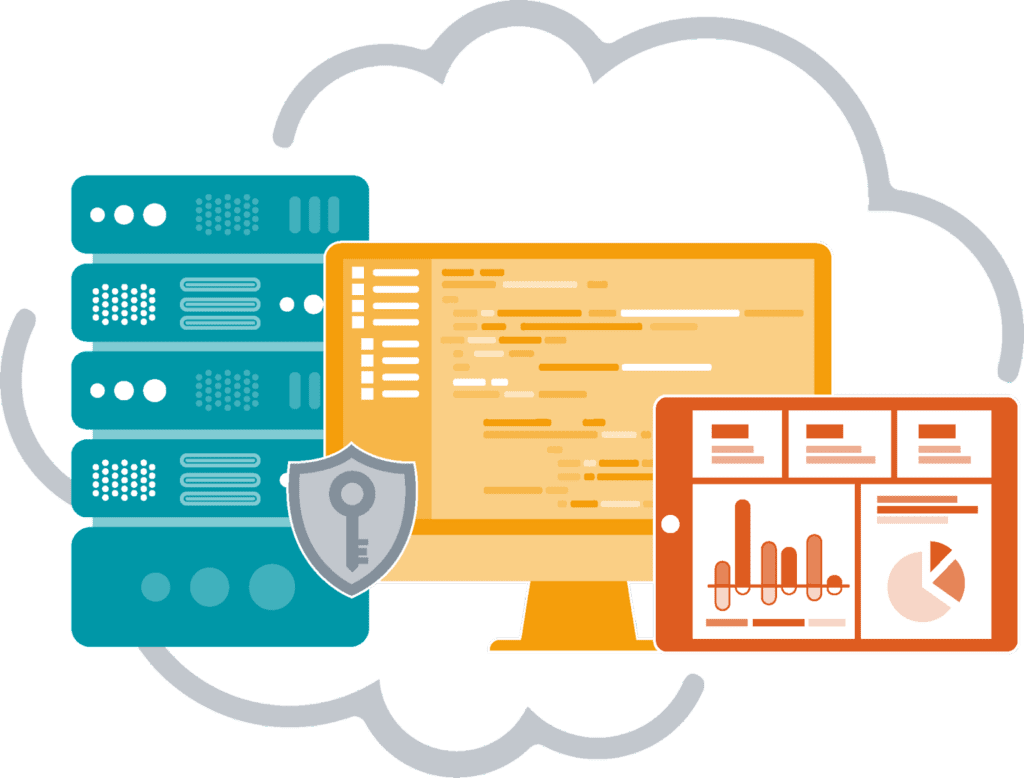
**Civis Platform* is an all-in-one data warehouse and analytics engine that enables organizations to unify and unleash the data insights at their fingertips. Nonprofits, advocacy groups, government agencies, and commercial brands of all shapes and sizes rely on Civis Platform to empower their data teams to deliver the insights that inform and illuminate the decision making process; in fact, Platform was developed by data teams expressly for* data teams.
The flexible, scalable Civis Platform dismantles data silos and democratizes access and information, all in one central location. Platform’s analytics engine fits seamlessly atop this data warehouse, offering analysts and data scientists the tools to more clearly identify and interpret strategic findings.
You can use Civis Platform to:
- Consolidate data from different systems and sources to establish a comprehensive, unified view
- Link together person-level data from multiple sources to create a unique, stable identifier for each individual
- Identify the messages that effect change and inspire your audiences to take action
- Research, cut, and export lists of individuals, and activate audiences through a range of channels
- Simulate media allocation scenarios for your campaigns, track historical marketing performance, and optimize media allocation and budget based on persuasiveness or backlash
- Fill the gaps in your data with hundreds of person-level attributes — demographics, activities, and interests — modeled on millions of individual nationwide survey responses
- Build and automate reporting workflows in seconds using Platform’s native reporting tools, export HTML or Google Sheets reports, or develop custom dashboards with our integrations
No less important, Platform does all of it out of the box — no expensive, hard-to-manage tech stack required. Its comprehensive data warehouse, integration, and governance system stores your first-party data, integrates with outside systems, and manages permissions, all in a secure, SOC 2-compliant environment.
Conclusion
Data-driven decision making redefines all facets and phases of an organization’s culture, culminating in a more robust bottom line, enhanced creativity and commercial success, and greater employee engagement and collaboration. **McKinsey & Company forecasts** that by 2025, “Smart workflows and seamless interactions among humans and machines will likely be as standard as the corporate balance sheet, and most employees will use data to optimize nearly every aspect of their work.”
Why wait until 2025? Contact Civis Analytics today to fulfill your organization’s data-driven destiny.
메타데이터
- post_id
- bbc96c2bfa6f
- slug
- establishing-a-data-driven-decision-making-culture-for-your-workplace-bbc96c2bfa6f
- url
- https://medium.com/@CivisAnalytics/establishing-a-data-driven-decision-making-culture-for-your-workplace-bbc96c2bfa6f
- canonical_url
- https://medium.com/@CivisAnalytics/establishing-a-data-driven-decision-making-culture-for-your-workplace-bbc96c2bfa6f
- author_url
- https://medium.com/@CivisAnalytics
- status
- ok
- fetched_at
- 2026-06-21 07:44:09




